RPS considers eliminating annual substitutes, asks city for Airbnb tax money to fill last-minute budget gap
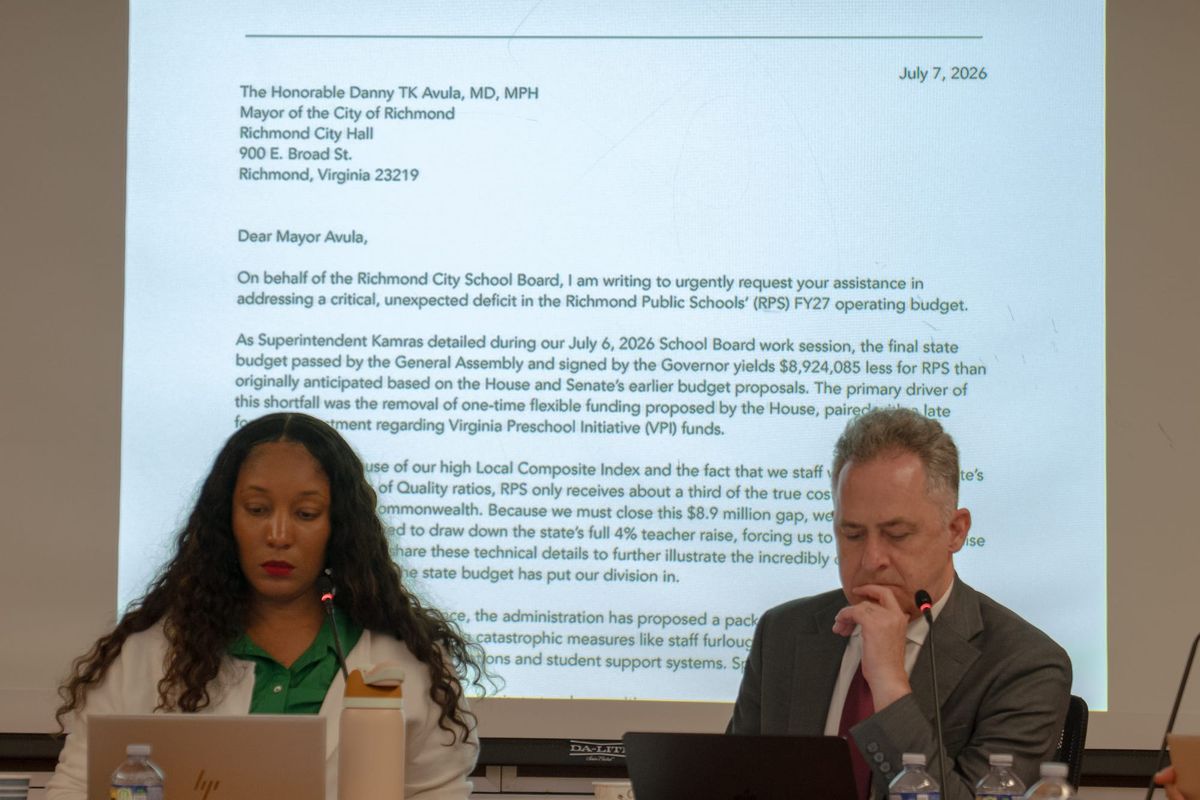
Richmond Public Schools is facing another $8.9 million budget deficit for the upcoming fiscal year following the state’s delayed budget, and the administration is recommending that the division eliminate all 88 annual substitutes to be in balance.
Superintendent Jason Kamras told the Richmond School Board that the annual substitutes play a critical role in the schools as “they are in every sense, a member of the faculty.”
“None of these proposed reductions are ideal, and I do not want to make any of these reductions,” Kamras said.
The state’s finalized budget was supposed to be ready by April so that local governments could finalize their own budgets by July 1, but an impasse within the Democratic party, partially over tax breaks for data centers, caused the delay.
RPS approved a budget in June before the start of the new fiscal year that assumed a roughly $20 million increase in state funding based on a previously released budget proposal. Richmond schools are instead getting an $11 million increase.
Board member Anne Holton (6th District) said the gap left her “befuddled.”
“I do think we need to, at some point, do a look back to what went wrong,” she said. “Because something went wrong in our estimation process this spring.”
Asking for help
Annual substitutes are contracted teachers who are assigned to a school building for the year full-time, are expected to fill in as needed any time and help with other daily tasks outside of the classroom. The positions stemmed from available COVID-era funding and Kamras said they served schools well.
Cutting them would save RPS about $4.5 million next year.
Administrators are still recommending that RPS retain long-term and daily substitutes. Long-term substitutes are teachers who fill classroom vacancies until a licensed teacher is hired or comes back from, for example, parent leave. Daily substitutes step in when a teacher calls out sick.
In some cases, current teachers will step in and take on an additional class of work on days when their colleagues are out. An earlier budget cut reduced the stipend they receive for that work from $55 an hour to $35 an hour.
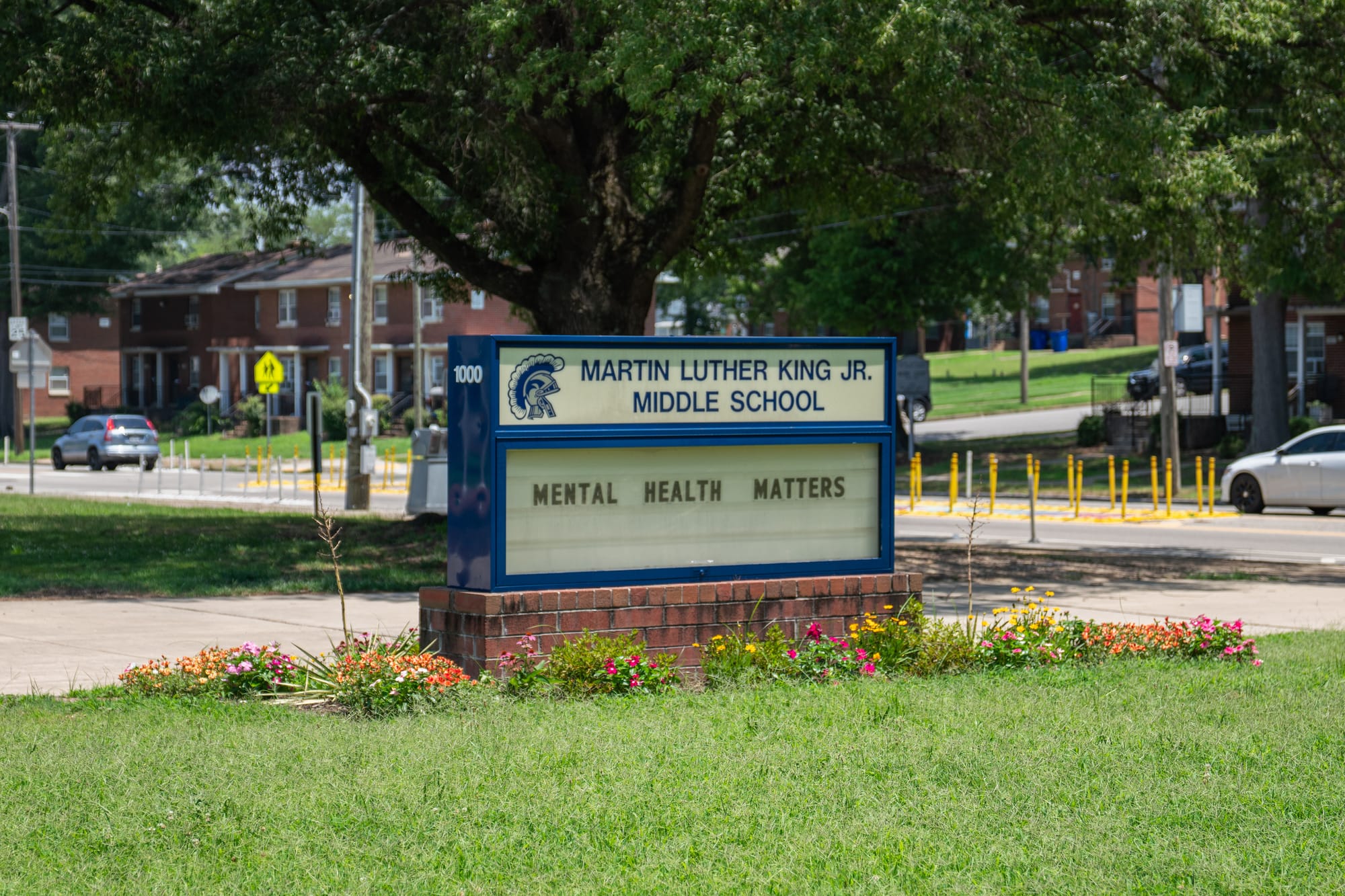
The administration is also recommending the elimination of 15 teacher vacancies, mainly from middle and high schools. It is unclear exactly which schools those vacancies would come from. That’s alongside reducing some mental health support contracts by 10%, an item that was previously at risk before pushback from school community members.
“We really scrubbed all kinds of things we could find and landed on fairly desperate measures, if I’m being honest,” Kamras said.
After a night of deliberation over the proposed cuts on Monday, the Board voted Tuesday to send a letter to Mayor Danny Avula requesting that the city urgently step in to fill the gap using the $5.6 million in delinquent taxes the city recently received from short-term rentals, emergency funds and any other revenue source. The idea came from 4th District representative Wesley Hedgepeth.
 Sarah Vogelsong
“Because these millions represent unbudgeted revenue that was not accounted for during the budget adoption process, it provides a timely and easy opportunity to help us stabilize our division budget,” the letter reads.
Board members expressed disappointment and shock with the additional budget deficit, coming on the heels of a budgeting process that included the elimination of 46 full-time positions from the central office and the closure of Richmond Virtual Academy, the division’s former virtual school.
 Victoria A. Ifatusin
That disappointment was also vocalized in public comment, where some school community members highlighted the alleged embezzlement and mismanagement of funds conducted by former director of facilities Bobby Hathaway.
“What are we teaching our kids about managing money? If leadership cannot manage a budget, what are we teaching our kids?” said Debra Winston, a teacher who worked at the Richmond Virtual Academy.
What’s next
The governing body discussed potential alternatives to the cuts that the administration will now review, like reducing or eliminating external contracts, removing currently vacant central office roles, and furloughing leadership, including Board members themselves.
Members also asked for clarity on what impact each proposed cut could look like from school to school.
“If you have two annual subs in a classroom, perhaps that’s also a class or building that’s going to have one of these vacancies eliminated and the class size is increased. Perhaps then it’s also going to be a school that’s going to lose their CIS coordinator or their mental health professional,” said Wesley Hedgepeth (4th District). “That could be four adults that know our kids that are no longer there.”
In an effort to save the annual substitutes, Holton requested the administration to check if any of the 88 can fill current teacher vacancies, which numbered 115 as of July 2. It is expected that the vacancy number will go down to 85 after the division receives long-term substitutes from external companies.
These proposals and impacts will be discussed at a special meeting, likely occurring on July 23.
Crunching the numbers
Members have called for a better and stable budget process moving forward, potentially including a funding formula that would eliminate the need to negotiate with City Council.
 Victoria A. Ifatusin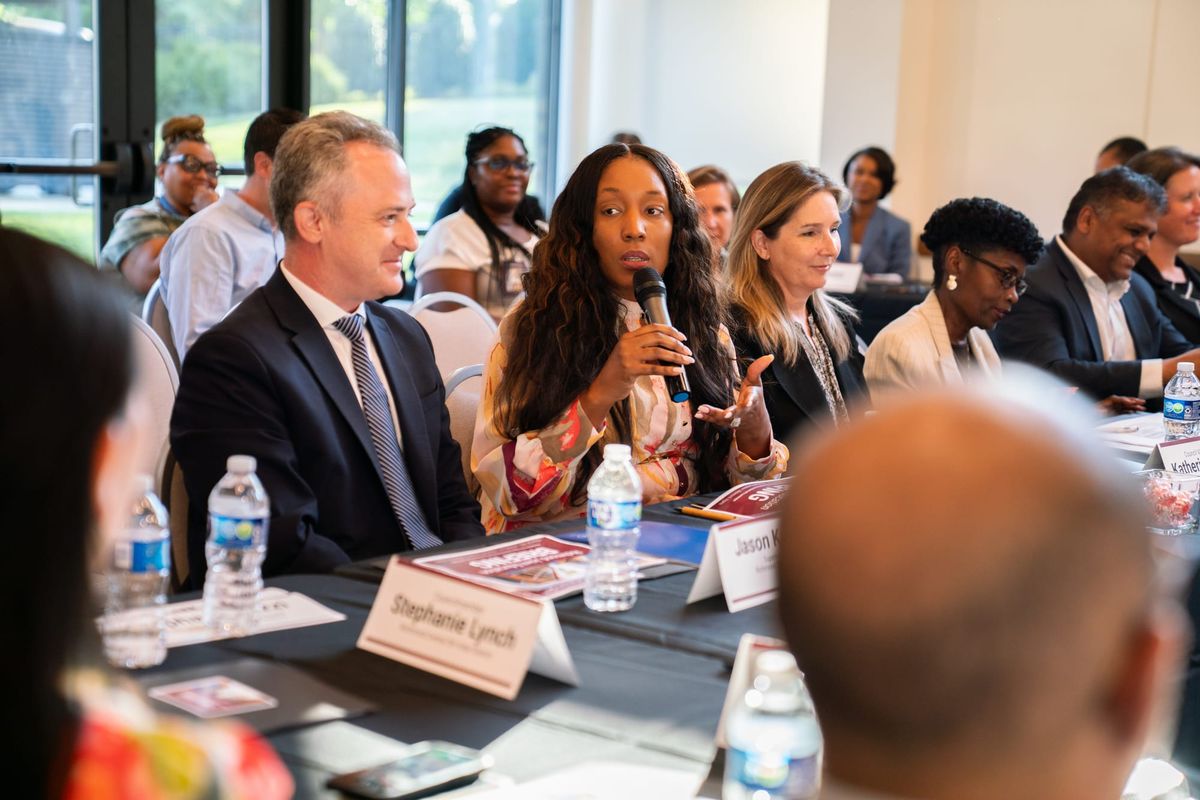
Stephanie Rizzi (5th District) noted that the division’s budget has increased every year, in large part due to commitments made during collective bargaining, but feels external support hasn’t risen accordingly.
“I’m not blaming collective bargaining, but I do think that we are operating with limited funds. If the state or the city doesn’t continue to fund this important initiative, we are going to hit this wall over and over again,” she said, pointing to Gov. Abigail Spanberger’s veto on a bill that would have allowed collective bargaining across Virginia. “We do need to talk about in the long term how we are going to be able to fund this.”
The state budget does include a 4% raise for teachers, which RPS says it cannot afford to accept. The funding is only provided for positions outlined in the State Department of Education’s Standard of Quality – legal requirements that provide the baseline resources for schools that local divisions have to follow. RPS, however, has many more employees.
Accepting the raise would also require a local match due to RPS’ assigned local composite index (LCI), which determines a school division’s ability to pay for its own education costs.
The district’s LCI is 0.57, meaning the state expects RPS to pay more than half for school expenses.
“Put simply, it actually costs us about 65 cents for every 35 cents we take for teacher raises from the Commonwealth,” Kamras said.
The division’s 2% raises and 1.17% step increases still remain in place for teachers.
Both Chesterfield County and Henrico County public schools will be accepting the raises, providing 5% and 4% to teachers respectively. Both divisions have lower LCI’s compared to RPS – 0.36 and 0.43 respectively – making their local match easier to fund.
 Victoria A. Ifatusin
Katie Ricard (2nd District) and other Board members echoed the need for the state to change Richmond’s LCI. The state is currently working to reform its school funding formula.
“Had our LCI been better, we would not have been hurt as badly,” Ricard said.
Estimates gone wrong
As Holton recounted, Kamras and the administration provided presentations during budget season explaining the various state funding scenarios. Holton described him as working off “the most optimistic scenario,” but said the worst-case scenario was only $4 million less, not $9 million.
“I feel like the estimates we were given were off the mark. It just doesn’t make sense,” she said.
Kamras responded that he could provide an “even worse worst-case scenario” for next year’s budget and plan for more severe circumstances, but it is hard to anticipate what the final outcome will be from the state.
He added that state legislators told him and other Board members that the division “should not be worried but that things would be demonstrably better,” regarding the finalized budget, which Board Chair Shavonda Fernandez (9th District) and Ricard corroborated.
“In our mind, we were being … to Mr. Kamras’ point, very conservative, because some had shared we would get even more than what we had anticipated,” Fernandez said.
Board members express gratitude for the increase while also promising to continue to lobby for the district’s needs.
They ultimately underscored the academic achievements of the division, including higher graduation and test-pass rates, saying that they are still performing well while being funded with little. They said that the division is serving some of the most high-needs students in the state.
“I am aware personally of students who’ve struggled to get shoes, clean clothes, and healthy food, daily,” Rizzi said. “We have to make sure that they are the ones who get impacted the least by this.”
Contact Reporter Victoria A. Ifatusin at vifatusin@richmonder.org