School Board approves substitute teacher outsourcing contracts in split vote
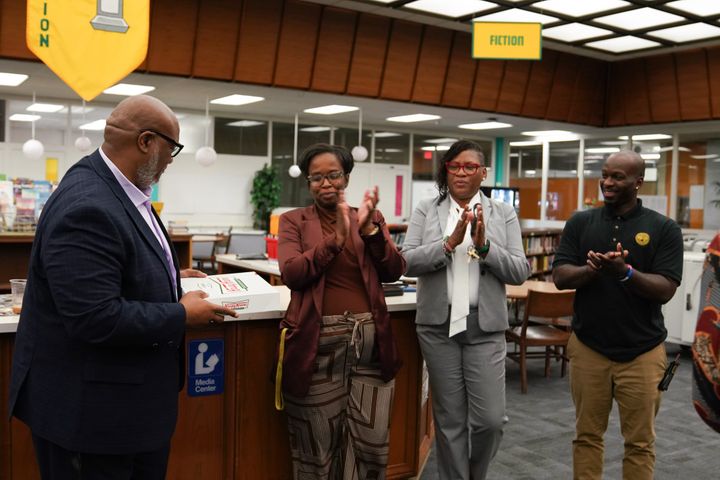
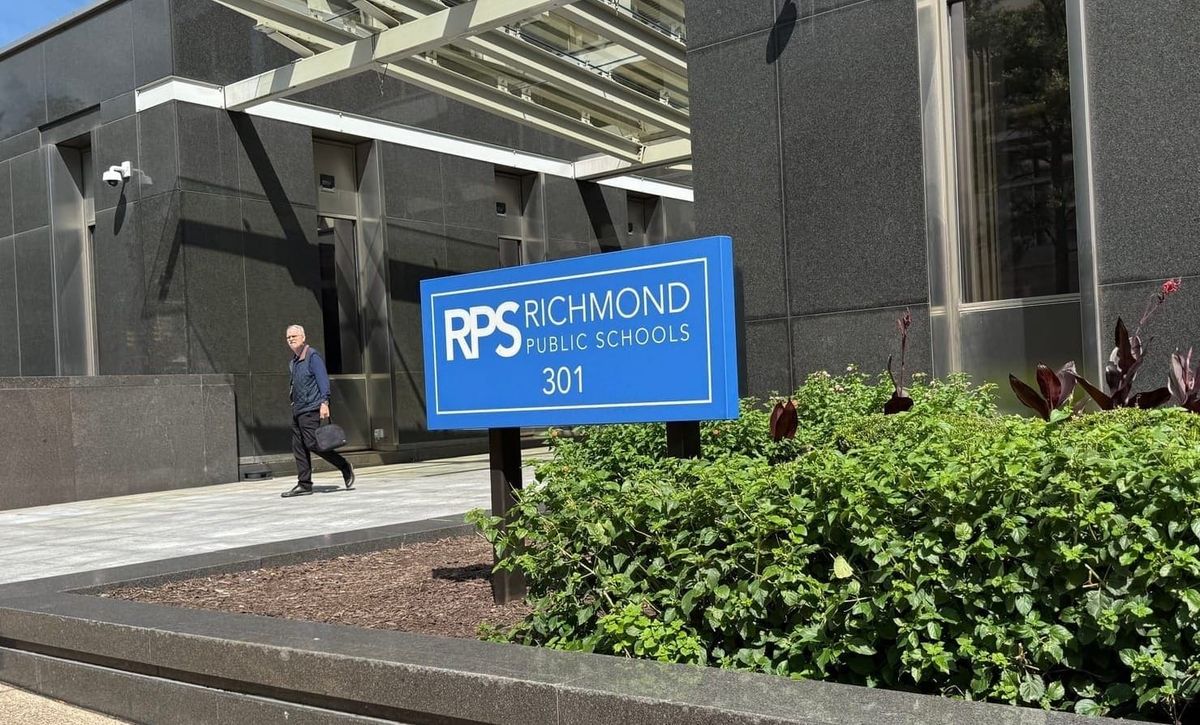
After two nights of long conversations among elected officials and school administrators earlier this month, the Richmond School Board voted 5-4 to approve a contract that would outsource the hiring of some substitute teachers for Richmond Public Schools.
Scoot Education, the recipient of the contract, was granted access to hire 15 people through its TeachStart fellowship, who will work as long-term substitute teachers while earning their teaching certification.
The contract was originally listed on the consent agenda, meaning it would be passed without discussion, but the Board agreed to take it out to allow deliberation.
“I believe deeply that recruiting and training full-time teachers, people who will be in the classroom every day with our kids, is a core part of our work, and I oppose contracting it out,” said Ali Faruk (3rd District). Working in government, he continued that he has seen “it not go well” when core government functions are externally contracted.
 Victoria A. Ifatusin
The company’s fellowship is similar to the division’s Supporting and Empowering Educator Development program (SEED), which helps RPS employees obtain their teacher license for free without health insurance and benefits. Scoot Education offers the opposite – health insurance and benefits are covered, but tuition is on the fellows.
The deliberation follows last month’s meeting, where administrators first presented the contract for an initial read by the Board. Superintendent Jason Kamras requested that members bypass a second read, a typical procedure that usually occurs the next month, so that the governing body could approve the contract soon after. He asked the Board to do this to get a head start on the hiring process for the approaching school year.
It drew immediate hesitation from the Board, some of whom still took issue with the administration’s attempted process during the May meeting.
“We haven't really had time to … do all the things that we really would typically do when we have the option to discuss this in a more broader and a long-term span,” said Board Chair Shavonda Fernandez (9th District). “And so I don't feel comfortable with rushing the governance process.”
But previously skeptical members changed their tune and expressed a willingness to “take a risk,” citing the division’s teacher vacancies. RPS is currently short 93 teachers as of last month. Chief Talent Officer Elizabeth Veliz also shared with the Board before the conversation that the division had 34 resignations in May – although it is unclear what positions they were. (Veliz announced after the meeting she is leaving the role.)
“As we continue to see teacher shortages and long-term subs in our building, we do need to think creatively about how we're nurturing our next group of teachers. And that is going to require some creative thinking,” said 2nd District representative Katie Ricard.
Vice Chair Matthew Percival (1st District), who works as a government contractor, said that contractors can bring in a smaller team with expertise in an area that allows them to “accomplish a task much more quickly, more efficiently.”
At a time when cuts are being made to Richmond schools’ budget as a result of rising expenses, Scoot Education could cost the division roughly an additional $729,000 if all teacher slots are filled. Its TeachStart fellowship has only been around for four years, but Veliz said she felt confident with the results the company has provided on their work with other divisions.
For example, the company helped bring up filled teacher rates from 60% to 95% in the South San Francisco Unified School District, she said.
“They have far more resources than we do to be able to recruit candidates into their programs,” she told members, adding that her team currently has only two recruiters who search for long-term subs.
Still, Veliz said she wanted proof of their work within RPS, and asked for a pilot that would allow 15 teachers, in comparison to the 30-50 teachers she said the company suggested providing.
“I’m hearing that this is essentially a pilot, an experiment to address our persistent challenges in filling teacher positions,” said Anne Holton (6th District). “And as such, I’m inclined to vote in favor of allowing the experiment.”
Board members also noticed another similar contract administrators were requesting approval for. University Instructors has worked with the division for over 20 years providing tutors to students, members and administrators said, but the company is starting a new endeavor similar to Scoot Education. It is unclear roughly how much it would cost the division.
They too would be under a pilot program, also providing 15 substitute teachers who would eventually become fully licensed professionals. University Instructors would not provide health benefits and members would pay out of pocket for tuition, Veliz indicated. Both companies are also national organizations, but Scoot Education is based in Washington, D.C. while University Instructors is based in Richmond.
The University Instructors contract passed as part of the consent agenda.
The administration maintains that the contracts would be cost effective, as the division looked at the costs of existing vacancies to conduct a cost benefit analysis.
“This program will yield us about $400,000 to $600,000 savings compared to our vacancies. So, we are using our vacancy dollars to fund this program," Veliz said.
Questions still lingered from Board members, like what would happen if the agencies are unable to fill the spots and whether or not the teachers would stay in the division. Fernandez said questions were also asked of Scoot Education, but they did not receive answers in time.
Veliz said that the division won’t pay anything until all spots are filled. She added that the school culture and leadership are factors that play into whether or not a teacher would leave.
“Given the national shortage of qualified teachers in our country, I would hope that we have less than 30 long-term subs available,” she continued. “But given where we are and the labor market, that’s going to be challenging.”
Contact Reporter Victoria A. Ifatusin at vifatusin@richmonder.org