No easy answers in sight for Richmond Public Schools’ $8.9M budget hole
The Virginia General Assembly’s last-minute budget deal has created an urgent math problem for Richmond Public Schools. And city officials don’t appear to have an immediate plan for how to solve it.
Because RPS relied on an erroneously rosy prediction for how much funding the division would receive from the state, the school system has a roughly $8.9 million hole in its budget for the fiscal year that began last week.
The late-arriving clarity from the state on what the number would be — which came well after the city and RPS had wrapped up the local budget process — has sent Richmond officials scrambling to regroup in time for the school year that starts in late August.
School leaders have asked Mayor Danny Avula and the City Council for more money to help address the shortfall. But after an initial conversation at City Hall Thursday, it’s unclear where the city might find that money and how it could be allocated to RPS in time to avoid cuts or disruption.
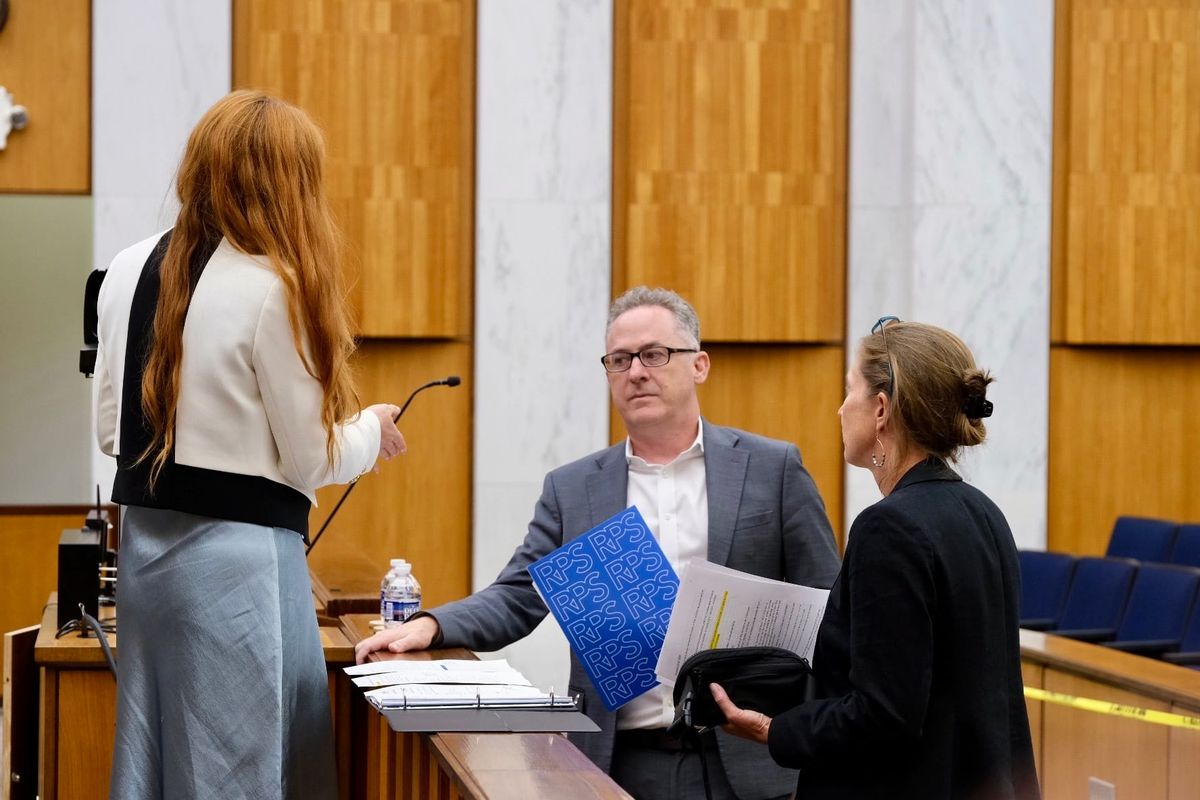
“We’re in a bit of a conundrum,” Councilor Stephanie Lynch (5th District) said at Thursday’s meeting of the Council’s Education and Human Services Committee after getting a budget update from RPS Superintendent Jason Kamras.
 Victoria A. Ifatusin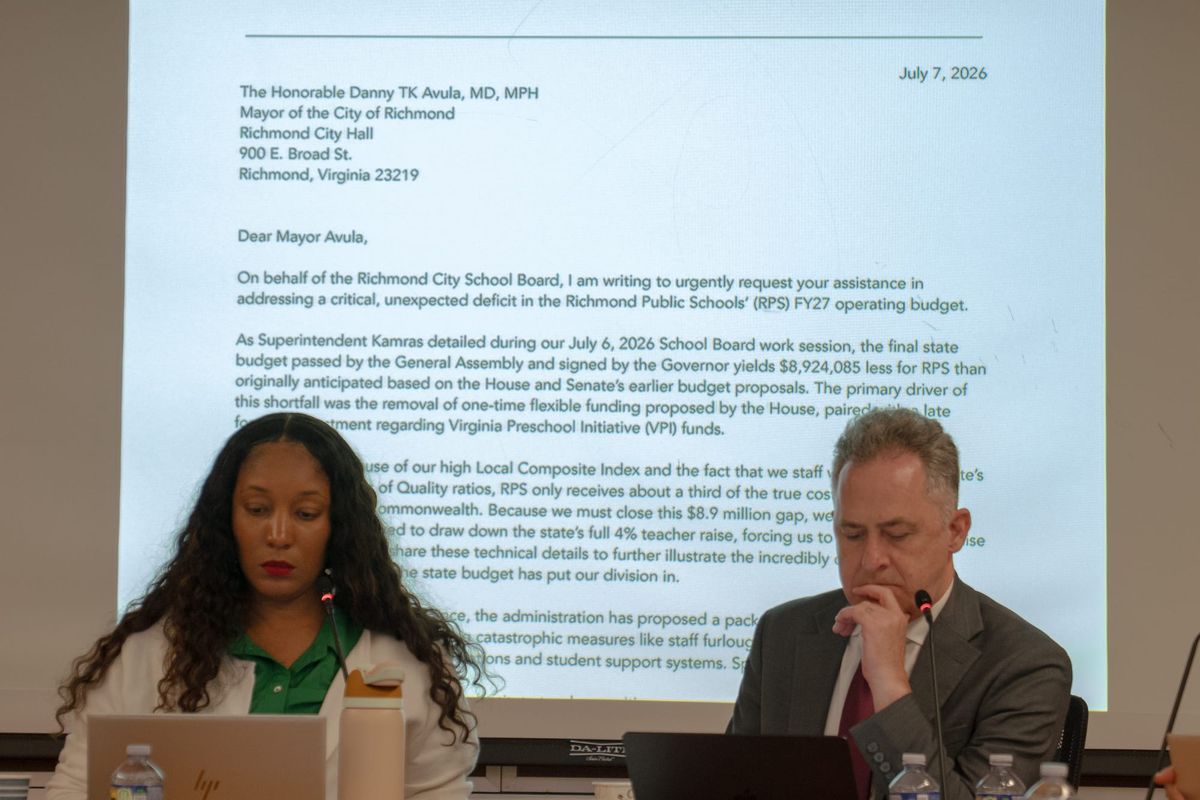
The budget shortfall is the latest flashpoint in Richmond’s recurring and politically sensitive debate over how to fund city schools. School leaders often see it as part of their role to vigorously advocate for more funding, but those requests often frustrate Council members and the mayor’s office by ratcheting up public pressure to find more money or risk being criticized as unsupportive of schools and children.
After receiving a record $257 million in local funding for schools, the Richmond School Board sent a letter to Mayor Danny Avula and the Council this week asking for more. In the letter, School Board Chair Board Chair Shavonda Fernandez (9th District) suggested the city could use some of the $5.6 million in unbudgeted revenue the city expects to receive from ramping up tax enforcement on short-term rentals offered through platforms like Airbnb and VRBO.
In a reply Thursday, Avula acknowledged receipt of the letter.
“The situation is challenging, and all of us who are invested in the long-term success of RPS must find a path forward together,” Avula wrote to Fernandez. “We are reviewing your request and expect to have more clarity in the coming weeks.”
Lynch, who chairs the Council’s education-focused committee, said the short-term rental money might not be a viable solution because hotel and lodging taxes are dedicated to the Greater Richmond Convention Center Authority and the city receives a portion back at the end of the calendar year.
“That’s not just here,” Lynch said. “That means that there’s some considerable digging under the couch cushions and some really creative thinking that needs to happen in order to fill that gap any time prior to when the school year starts.”
In a press call with reporters later Thursday, Avula also indicated the short-term rental money wasn’t a viable solution.
“We can’t allocate money that we haven’t certified and don’t know exactly how much it’s going to be or exactly when it’s going to come,” Avula said.
The mayor added “we care a ton about RPS” and said his team is exploring options to help. When asked if he thinks it’s doable to come up with the full $8.9 million, Avula said the schools should also look at their own options.
“There’s no windfall I’m aware of that can help fill that,” the mayor said.
Fernandez, the School Board chair, said the schools already had to close a $21 million gap between the division’s needs and the funding available. Another $9 million in cuts, she said, “would be devastating to RPS.”
“If there’s any emergency funding that the city might be able to explore to help to at least offset if not all but some,” Fernandez said.
Kamras has proposed a variety of cost-cutting measures to close the gap, such as eliminating 88 annual substitute teaching positions, cutting 15 vacant teacher positions, selling extra vehicles and eliminating non-essential travel and food for meetings.
Cutting annual substitutes, Kamras said, is “one of the most difficult items.”
“We have received a lot of feedback from our schools and our constituents who have very clearly stated that that is something they would like to avoid,” Kamras said. “And it’s fair to say the board and myself would like to avoid that as well.”
The shortfall arose, Kamras said, from the elimination of about $9M in one-time flexible funding that RPS was expecting to be in the state budget. Because the state funding that didn’t materialize was one-time money, RPS would not have been able to rely on it for future years. That means that even if RPS got the money this year, it would create an almost $9M hole for the next budget cycle.
Though Kamras said he’s grateful for state funding RPS receives, he noted the city’s dilemma is partly a result of state officials’ waiting until June 29 to pass a spending plan for the fiscal year that started July 1.
“Had we received the budget from the state several months ago, we would have managed through this as part of the normal budget process,” Kamras said. “When the state does things at the last minute, it does have implications for localities.”
The superintendent told city officials that the division would benefit from getting guidance soon on whether it should expect additional money. The longer the issue drags on into the summer, Kamras said, the more potentially “disruptive” it would be to the start of the school year.
 Graham Moomaw
Sales tax resolution moves forward
At the same meeting, the Council’s education committee gave an initial greenlight to a proposal to have Richmond voters weigh in on whether the city should enact a new sales tax of up to 1% to fund school construction and major school renovations.
The plan to put the question on the ballot in November now heads to the full Council for an expected vote on July 27.
Council members, school leaders and the mayor’s team all agreed Thursday that they will work to provide more information to voters about how the extra tax money would be used.
“We will be giving you all an update on a more comprehensive plan before your vote on July 27th,” Avula Chief of Staff Lawson Wijesooriya told Council members.
David Rose, a contract financial advisor to the city who works for Davenport and Co., said the tax would generate around $45 million to start, but the number could grow over two decades to around $65 million per year.
“I do think it is a generational opportunity to ensure that all students in Richmond Public Schools have buildings that are worthy of them,” Kamras said at the hearing.
In a memo sent to Avula Thursday, Councilor Kenya Gibson (3rd District) asked for a variety of steps to be taken to "build public confidence” heading into the possible ballot referendum. Specifically, she asked Avula to commit that the new tax revenue won’t be used to replace existing funding, a rundown of the extra revenue for schools generated by the 1.5% additional meals tax adopted in 2018 and a request that the School Board pass a “comprehensive school facilities plan.”
“I believe we can win the support of our residents, but we cannot ignore the deep distrust many have in their government,” Gibson wrote. “There will be skepticism that new revenue will result in new investment.”
At Thursday’s meeting, Lynch said the city should consider any potential impacts on local restaurants, with the proposed sales tax expected to add to the costs of dining out in Richmond in addition to the higher meals tax adopted eight years ago.
“These are families. These are small businesses that are really at the heartbeat of our city,” Lynch said. “I do want to be mindful about how we involve them and include them.”
Contact Reporter Graham Moomaw at gmoomaw@richmonder.org