For some Richmond students, virtual school became a lifeline. Now it's about to disappear.
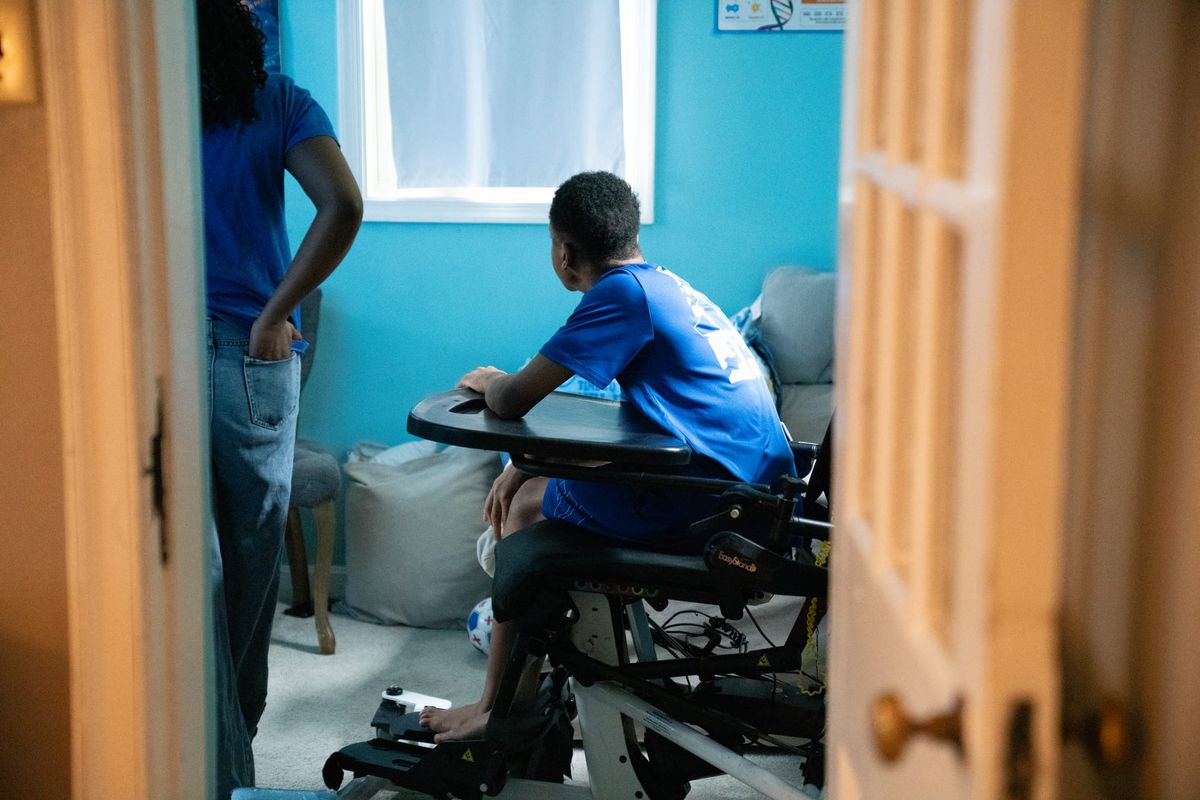
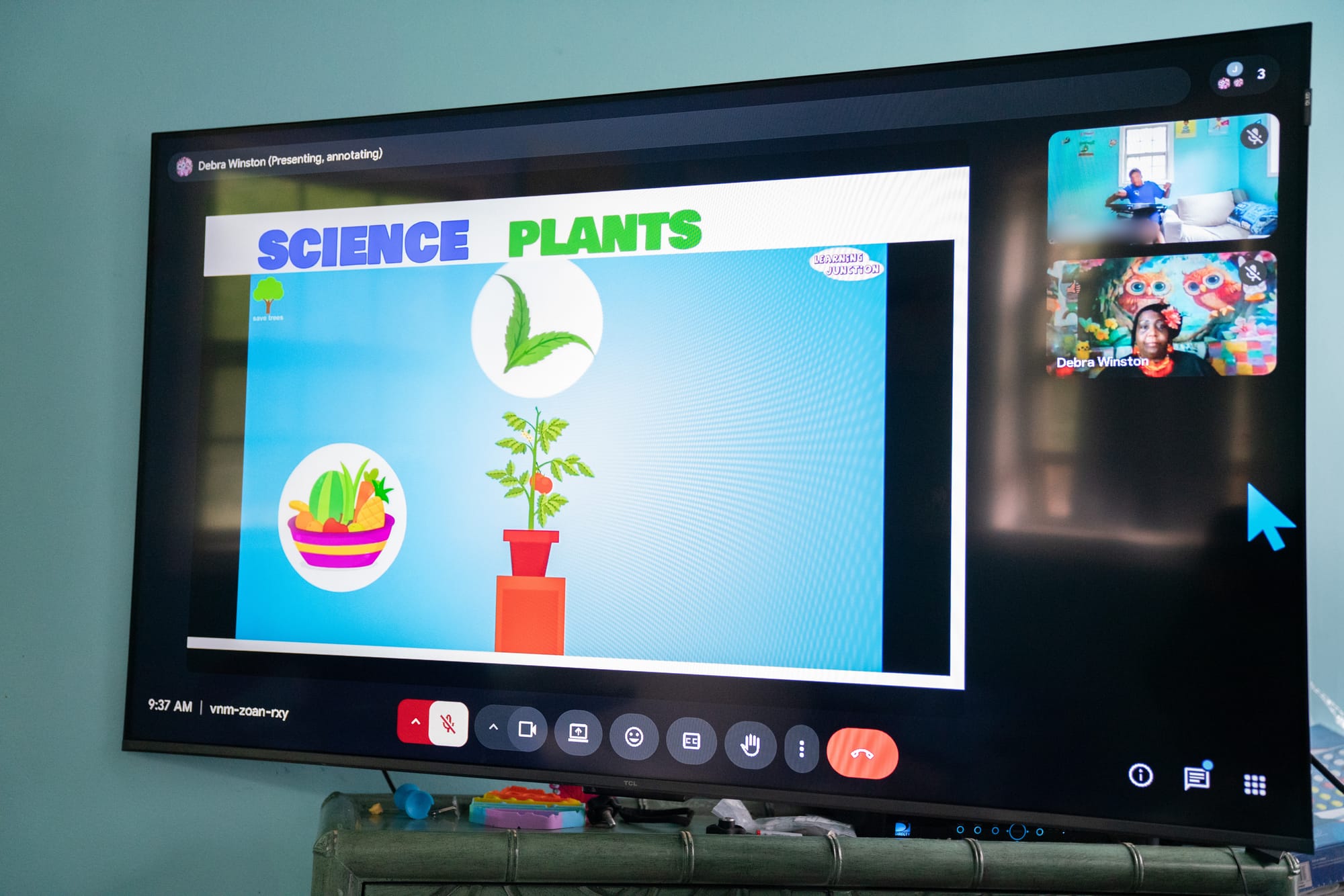
At the beginning of his English class on Thursday morning, Ms. Winston performed an emotion check with 13-year-old Liam.
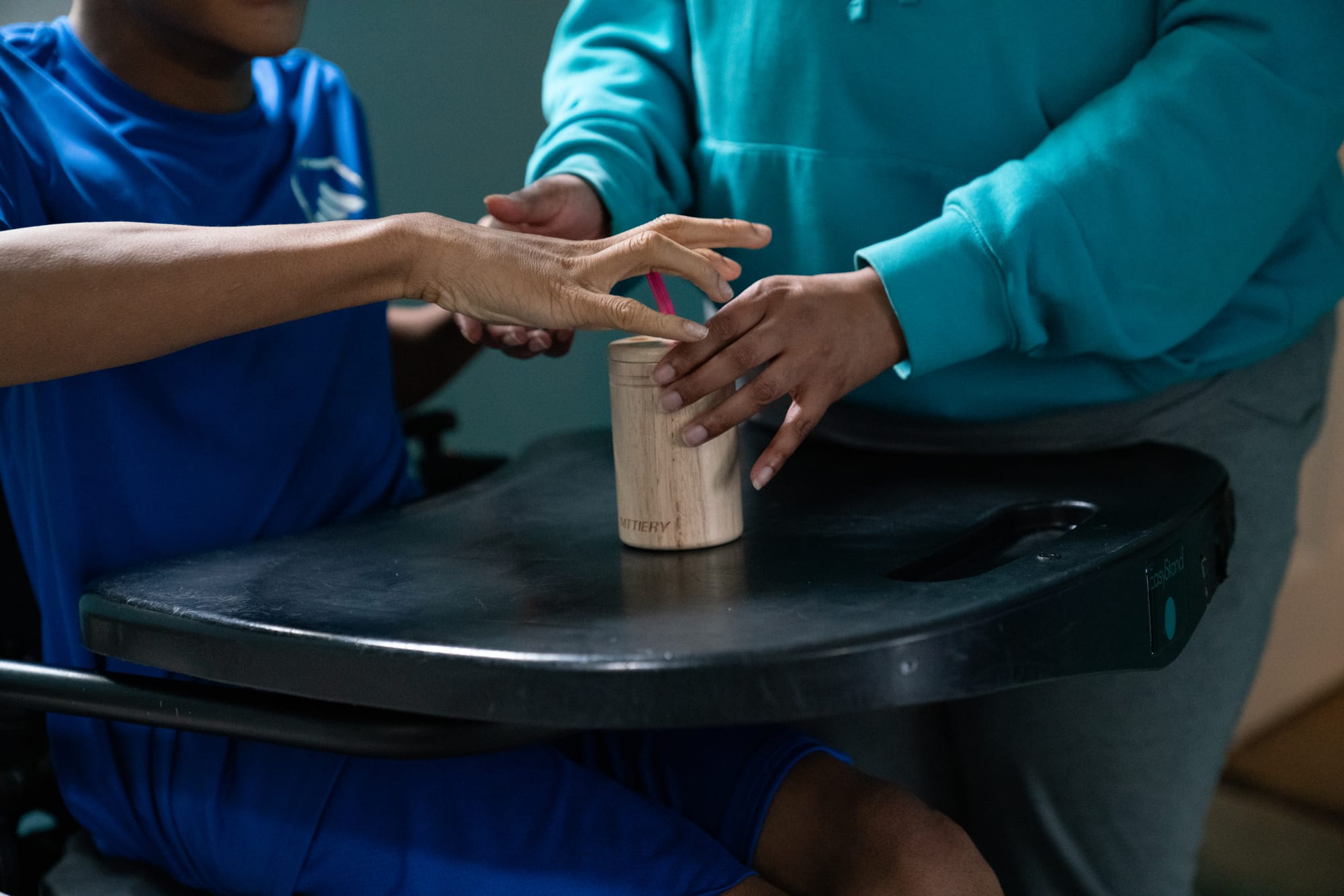
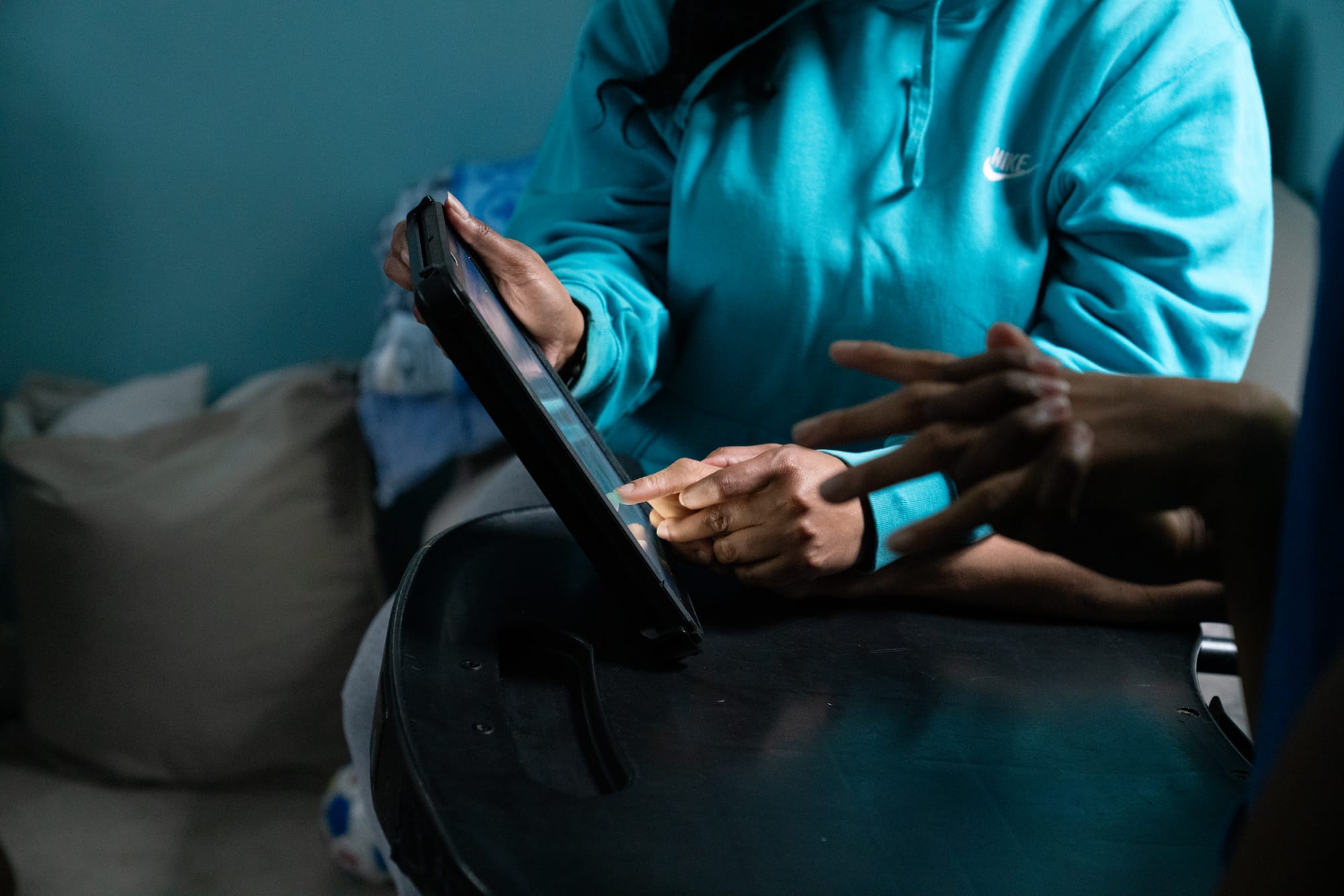
She says she’s feeling like 34, pointing to a happy emoji face, then asks Liam what he’s feeling. With the help of an instructional assistant and using a long pointer that reaches about three to four feet, he taps on the large television screen.
He was feeling 20 – mad. But through the classes, all occurring at his Northside home, Liam was pretty giggly.
Liam, whose parents asked that his real name not be used, started his day listening to a brief story about family genes and answered questions using a digital communication device that tested his reading comprehension.
“He told me yesterday that he looks like mommy,” said Ashley Anderson, his instructional aide.
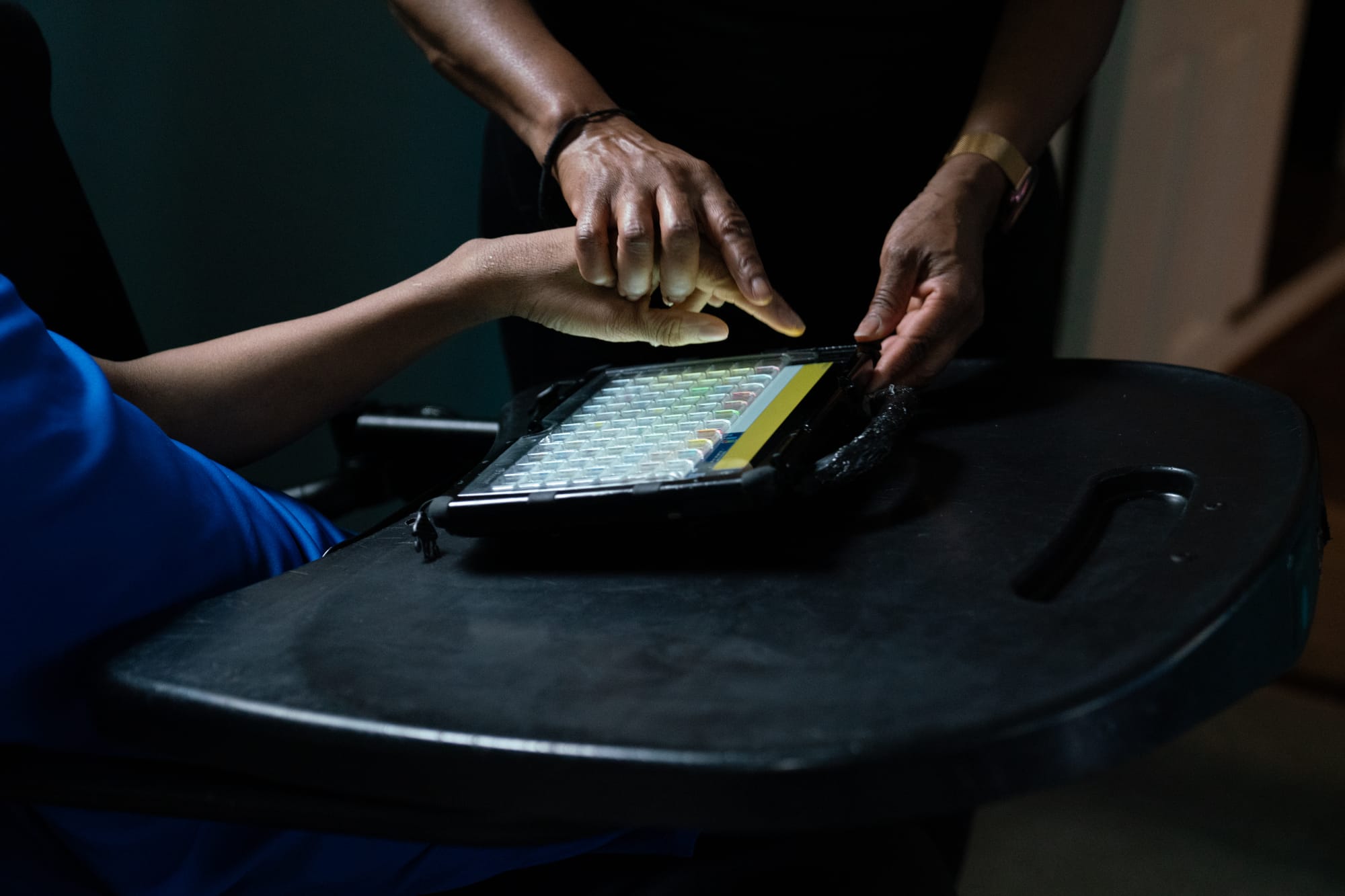
Liam is non-verbal and has a form of cerebral palsy that limits his mobility. He is also sensitive to movement, noise and other stimuli. His mom, Jacqueline Wilson, said that learning from home, specifically through the Richmond Virtual Academy, is “the best option” for her son to have access to an adequate education.
“He has absolutely thrived in this learning platform,” she said.
But the school seems to have an end date in close sight.
Liam is one of the 157 students currently attending what is likely going to be the final year of the Richmond Virtual Academy, an online school option for Richmond Public Schools students.
Its future has been debated during a contentious budget cycle after Superintendent Jason Kamras proposed killing it. He cited a lack of funding, as well as recent price hikes to fuel which will increase transportation costs across the board.
“We are at this very difficult juncture where the funding simply isn’t there,” he told The Richmonder in an interview.
City Council allocates a block of money to RPS each year, which the School Board then chooses how to spend.
This year’s funding, which is scheduled to be approved by Council on Monday, will provide an $8 million boost, giving $257 million overall.
But that money is needed to cover collective bargaining obligations, and other costs are rising too. Draft budgets by the Superintendent show that to meet those obligations, there will have to be spending cuts.
On top of closing the school, with approval from the School Board, RPS will also likely let go of 46 full-time central office positions.
The cost to run the Virtual Academy next year is currently budgeted at $3.2 million.
The school’s per-pupil spending as a share of budgeted money is $20,449; a division spokesperson said the equivalent figure for traditional schools would be about $12,970, though it is hard to create an exact comparison because of the difficulty of removing district-wide overhead costs.
 Victoria A. Ifatusin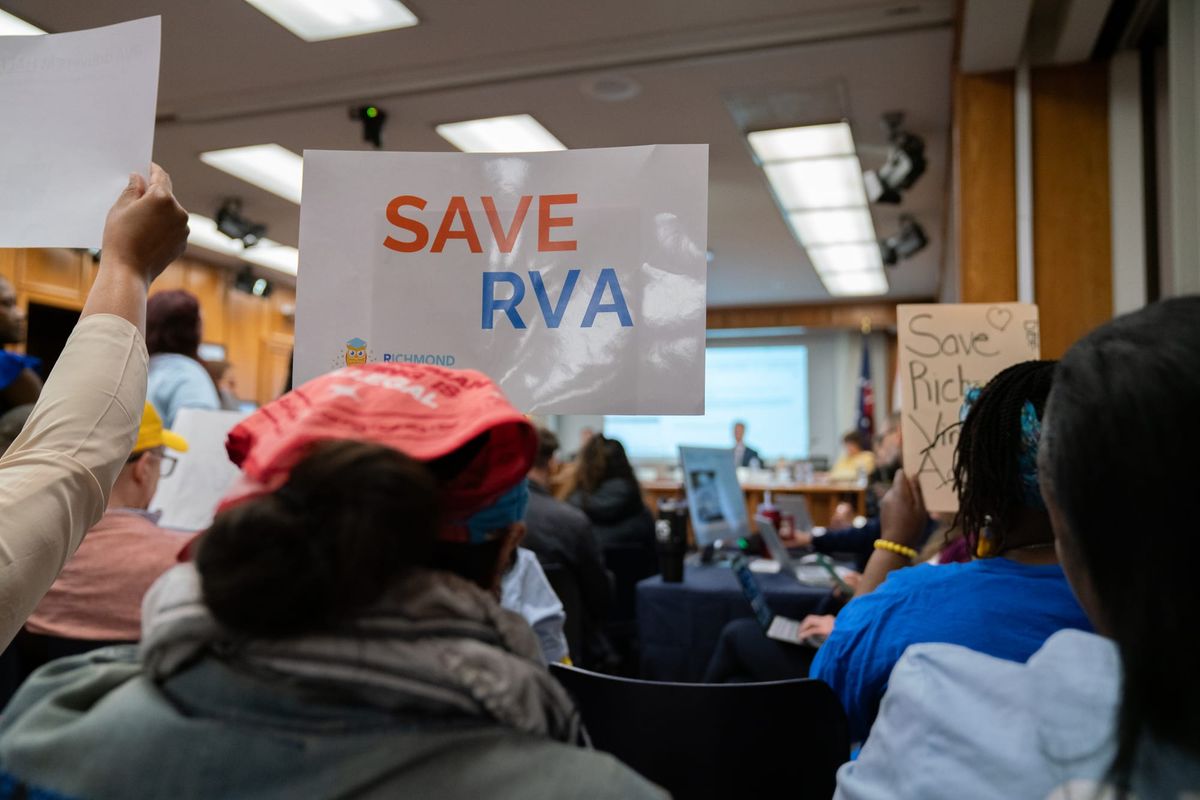
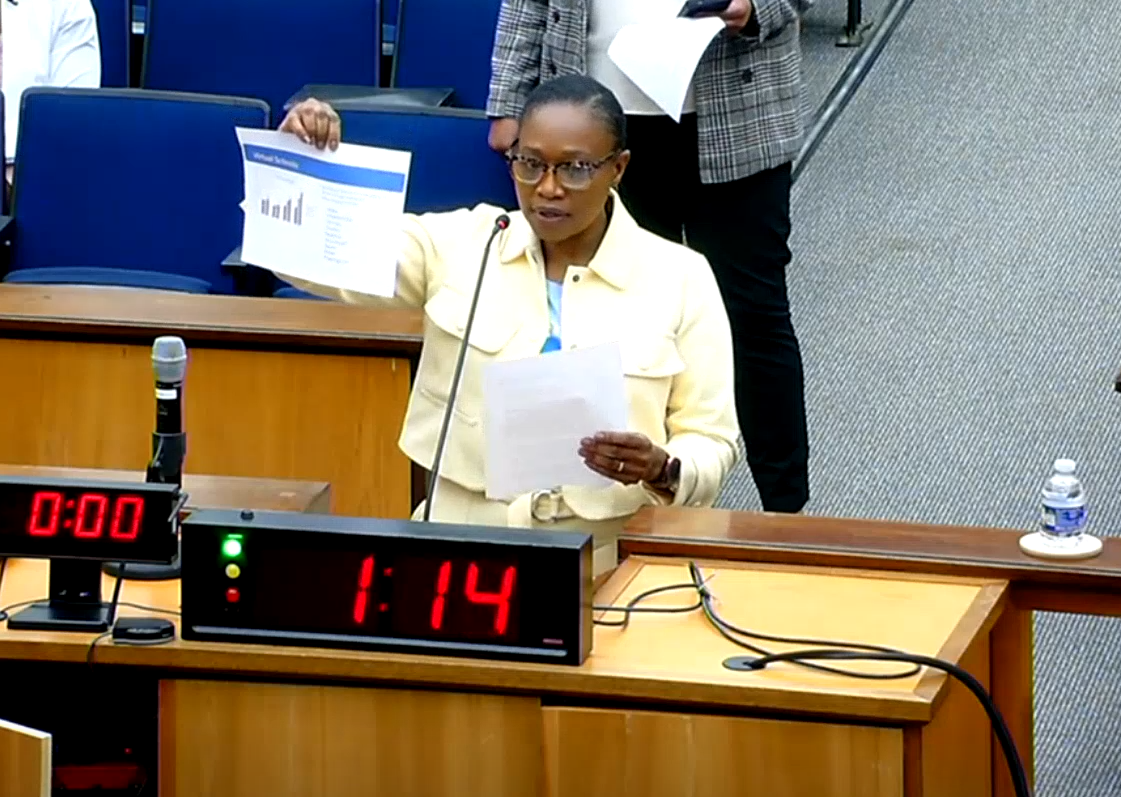
During its budget work session, City Councilors asked whether bringing the students back into the school building would still cost the division, since it would require more staff, and for students with special needs, more equipment and intensive support.
Kamras said that the majority of the funds associated with the academy are staff salaries – roughly $2.2 million of the $3.2 million. Those teachers and staff would move into existing vacancies at other schools, which are already accounted for in the budget.
In an effort to try and save the school, emails show that Principal Cyndi Robinson proposed a more streamlined version of the school that would operate on a less than $1 million budget. Robinson has been vocal about saving the school.
When The Richmonder reached out to Robinson for comment, she responded that media inquiries must be coordinated with the division. After that coordination, Robinson told The Richmonder that she “must focus my efforts on supporting my staff, scholars, and families as we navigate the remainder of the school year.”
A more affordable version of the school had also been requested of the administration by School Board Chair Shavonda Fernandez (9th District) and Stephanie Rizzi (5th District). City Councilors further asked Kamras during an April meeting if the city could provide less money for a scaled-down school, to which he said he couldn’t speak to that because the Board had not discussed it.
He later told The Richmonder that such a plan had been explored, but because City Council couldn’t provide the $1 million to fund it, “that option is not really on the table.”
Born of the pandemic
Richmond Virtual Academy is a K-12 school that accepts students through a lottery system. The school is fully accredited and compliant with state laws, according to the State Department of Education.
Students at the school passed English reading and writing state assessments at a higher rate than the rest of the division, but trailed in math, science and history tests.
The school has also had low chronic absenteeism – 3% for the 2024-2025 school year, compared to the division’s 21% that same year, according to VDOE.
The academy arose out of the COVID-19 pandemic, when students across the country were forced to stay home and adapt to a different learning model.
That learning model resonated with some families and their students, resulting in many of them asking RPS to keep it in place even after the division opened up its school doors again.
School administrators officially presented the academy as a program in April 2021 that families could opt into if they did not want their child to be in person.
But what started as a reason to avoid COVID-19 for some families turned into a program allowed their kids to learn better and avoid having to deal with issues that may arise from in-school learning, like dealing with social anxiety and bullying.
So when the program was first at risk of closing in 2022, supporters showed up in droves.
“I would not have advocated for virtual learning as the solution to my son's struggles in secondary school prior to the pandemic,” wrote parent Kara Brault Stup to School Board members in February that year. “I can see more every day how virtual learning is the solution for him and could be the solution for many other students who do not engage well with in-person schooling.”
They not only requested that the program be saved, but also that the program turn into an official school of record. The School Board agreed, compromising with the administration to downsize the program from 65 full time positions to 30 and later approving a resolution that required Kamras to proceed with making Richmond Virtual Academy an official school.
But the school was operating on one-time federal COVID-era funding, which was not going to last forever.
“When it became a school of record, that was a signal of an intention to try to maintain it as a school, as part of our portfolio,” Kamras told The Richmonder. “But of course everything is always contingent on funding.”
The funding challenge has emerged elsewhere as well. Henrico County Public Schools have also moved to close their virtual schooling option for students in kindergarten to second grade, noting low enrollment among the early education students.
Kamras also stated that enrollment has been low at the school. But parents and school staff have expressed otherwise, saying that the school received more than 200 new applications for the upcoming school year.
‘The best option’
Liam was among the first students of the official Richmond Virtual Academy.
He started his educational journey being homeschooled, his mom said. His occupational therapist later convinced her to move him into a traditional school building so that he could interact with other kids outside of his siblings. So she enrolled him into Northside’s Linwood Holton Elementary in 2018.
But it was a “fight” to get everything he needed to attend school in person, like a Rifton chair designed for students with needs, a walker, and a one-to-one aide, Wilson told The Richmonder.
“They would push back,” she said, referring to school administrators. “They would say, ‘there would be a classroom aid,’ and I said, ‘no that’s not enough because he can’t do anything on his own.’”
Liam was eventually assigned to a special education advocate who helped design his IEP, which required the extra support Wilson demanded, as well as reports showing Liam’s progress. But even after the IEP was implemented, Wilson said it took months before that equipment came and she and his advocate felt the reports were not accurately reflecting the work he was doing.
But then, the pandemic hit, and Liam, like all other kids in the school division, moved to online classes.
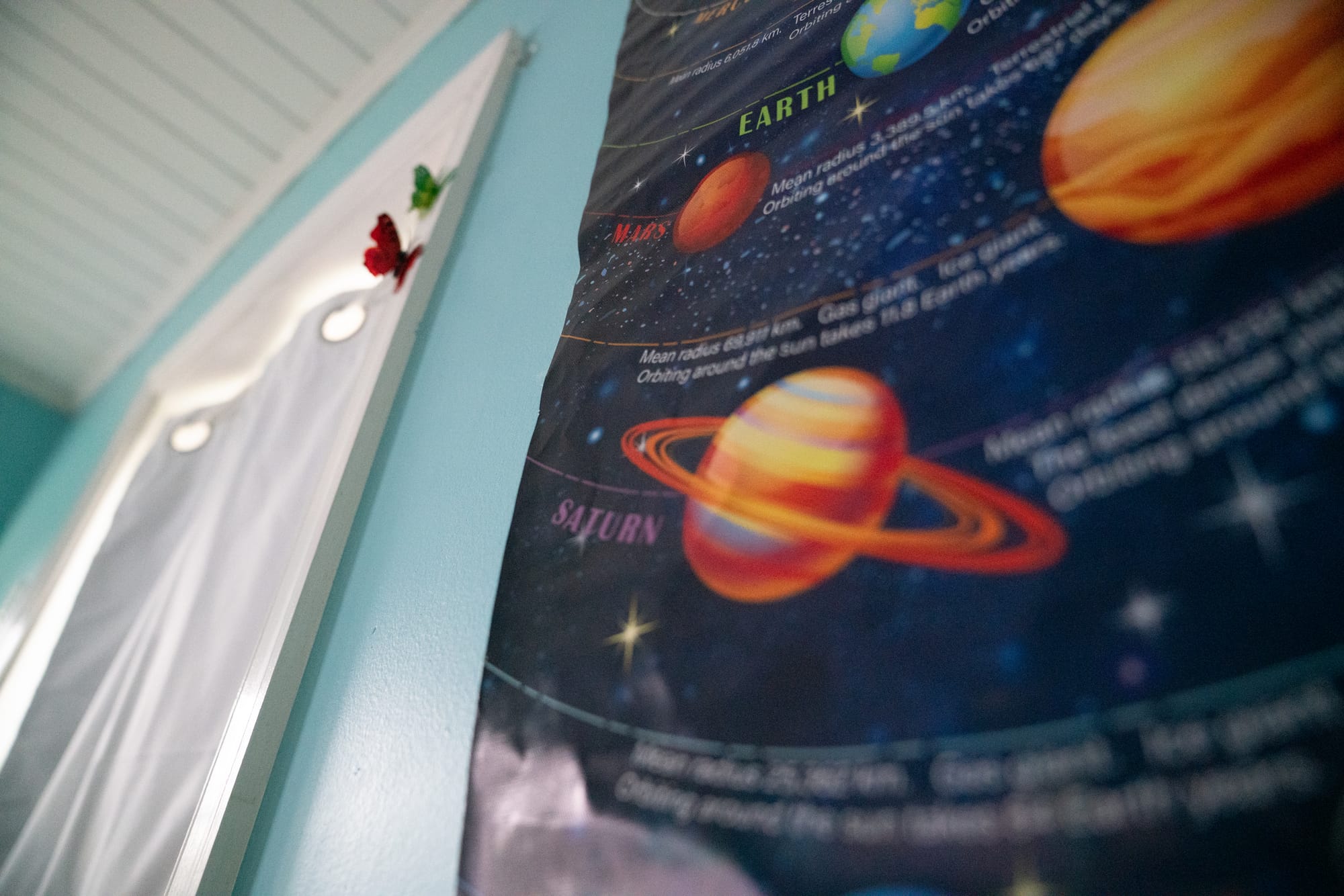
Unlike when he was in person, Wilson said she is able to witness Liam’s learning progression through the virtual school and she can help him progress further by being part of the experience, like decorating his at-home classroom with posters related to what he may be learning that day.
“The biggest difference for me is that I can be a part of his education. I can see what he's learning. And I have resources where I can bring it to life,” she said.
Wilson added that Liam’s impulsive behaviors may disrupt the classroom environment and other students around him due to his sensitivity to stimuli and disabilities. That includes throwing things or spitting if he’s frustrated, which Wilson said she has gotten notes about from school teachers when he was in person.
“What do you want me to do?” she said. “At 3 o’clock in the afternoon, I can’t tell him to stop in real time.”
She said the behaviors were his form of communication, but addressing it requires consistency that she said a teacher may not have the time to do while working with other students.
“If he throws things here at home, no big deal. We don't have to worry about another student getting hit. … At home, he’s safe and other students aren’t at risk.”
Anderson, Liam’s instructional aide, told The Richmonder that she previously worked in a school building with students with various needs. She said she prefers working directly with Liam at home, as “the caseload is less … and easier to focus on one kid with their IEP and their goals and learning their behavior, versus 10.”
Contrary to Wilson, Adam Rose, another Richmond Virtual Academy parent, learned about the school well after it became a school of record.
His son, Jack, was struggling as a student at Appomattox Regional Governor's School in Petersburg, experiencing depression and many tiresome days that spanned from leaving home at 6 a.m. to coming back around 10 p.m. To add to the mental toll Jack was experiencing, his mother was later diagnosed with stage four cancer during his junior year.
Rose said he waited for a seat to open up in the academy, and was able to successfully place Jack in school. Immediately, Rose said he noticed differences in his son.
“He went from being despondent, basically not leaving his room and his phone and not talking at dinner, to applying to college, having open conversations with us,” he said. “It was a total pivot for him.”
Jack graduated from the virtual academy in 2024 and is currently at VCU.
Rose’s daughter, Alice, was also in a similar situation, dealing with mental health and learning differences that made her a target for social alienation from classmates while schooling at Open High.
“There was no learning happening,” he said. (Jack and Alice are not their real names.)
Doctors recommended taking her out of the school and she was briefly placed in Homebound, a temporary virtual schooling option provided by the division for students who have documented needs.
For her own well-being, school administrators from Open High recommended enrolling her into Richmond Virtual Academy. The school allowed Alice to focus on her mental health, “not having fight or flight to get through the school day.”
“I was amazed by the school’s ability to meet our kids where they were. They were very quickly able to assess where they were,” he said.
Potential alternatives
As part of his budget, Kamras offered to pay the tuition fees for students who may be interested in the state’s Virtual Virginia program, something Henrico is not doing. The program serves K-12 students, costing the division $4,550 per year for K-5 students and $450 per course for students in grades 6-12. Being part of the program means that students would still be a student in RPS.
For students with special needs, he said the division would also pay for needed equipment, and for any additional support a student would need, like a speech therapist, they could go to their home school to receive those services.
But Rose said that Virtual Virginia and Richmond Virtual Academy are like “night and day.” His daughter takes courses with both schools, allowing him to see the difference.
Because the Virtual Academy is based in Richmond, the classes, usually occurring during the day, are synchronous and allow students to occasionally meet in person to conduct science projects and outside of school for field trips.
Virtual Virginia, on the other hand, doesn’t allow for that same type of collaboration because students are all over the state. Even accessing classwork shared by classmates can be difficult because the technology does not allow for students from other districts to see each other's work, he said.
“Sometimes it's hard just to know, when is something due?” he said.
Classes are asynchronous, meaning students are simply given schoolwork to work on their own. If students want to meet with teachers for additional assistance, they often have to sign up for appointments that usually occur on weeknights, Rose said.
He added that his daughter has an accommodation that requires her to receive more time on her tests. But Virtual Virginia uses technology-administered exams that automatically time students.
“So then we end up going back and forth with teachers being like, ‘hey we need more time and what do we do?’” he said.
He continued: “It’s not the same as R.V.A. It is vastly inferior to the experience, particularly for kids who require extra help.”
Back in 2022, Kamras also had concerns about Virtual Virginia, specifically for high schoolers, saying that families have told him that the state school is not “an appropriate instructional pathway for the overwhelming majority of our students.”
“It is a program that is for very independent students who are at or above grade level and require little to no support. Unfortunately that’s just not the average student anywhere – it is certainly not the average student here in RPS,” he said in a May 2022 meeting. “I would strongly advise against us continuing with Virtual Virginia as the primary provider of instruction for our high school students. I think that would be doing a disservice to them.”
Outside of Virtual Virginia, private companies around the country offer virtual classes to students. Wilson said that she’s reached out to several of them and learned that they require minimum GPA and SOL scores. For example, Virginia Virtual Academy, a private school based in Staunton, requires students in grades 6-12 to have a minimum 2.2 in core subjects. Liam wouldn’t qualify, as he does not have a GPA, nor does he take SOLs.
Back to 2026, Kamras further told City Councilors that the idea that the students can only be served in virtual schooling was a “false narrative.”
When asked about his confidence that in person schooling would work for the academy’s students, especially those with special needs, Kamras said that the majority of the division’s special needs students are being served in the traditional school environment.
“I respect the perspective of parents who may feel that the virtual environment is the best option for their children and I would never counter what a family feels is best for their children,” Kamras said. “All that I was articulating was that we have the capacity, the ability, the resources, the personnel, the equipment and so on to serve young people of all needs in the traditional setting.”
Others pushed back against that.
“The equity policy on student achievement … acknowledges that students with different needs require different supports in order to reach their full potential, and for many students that’s Richmond Virtual Academy,” said 4th District School Board member Wesley Hedgepeth in a March meeting. He was a staunch proponent for keeping the virtual school.
School supporters have further shared that the academy became a safe haven for students with learning, mental health, behavioral and physical disabilities that can be difficult to navigate in a traditional school setting, or in some cases, were caused by the in-person school setting, like students dealing with bullying.
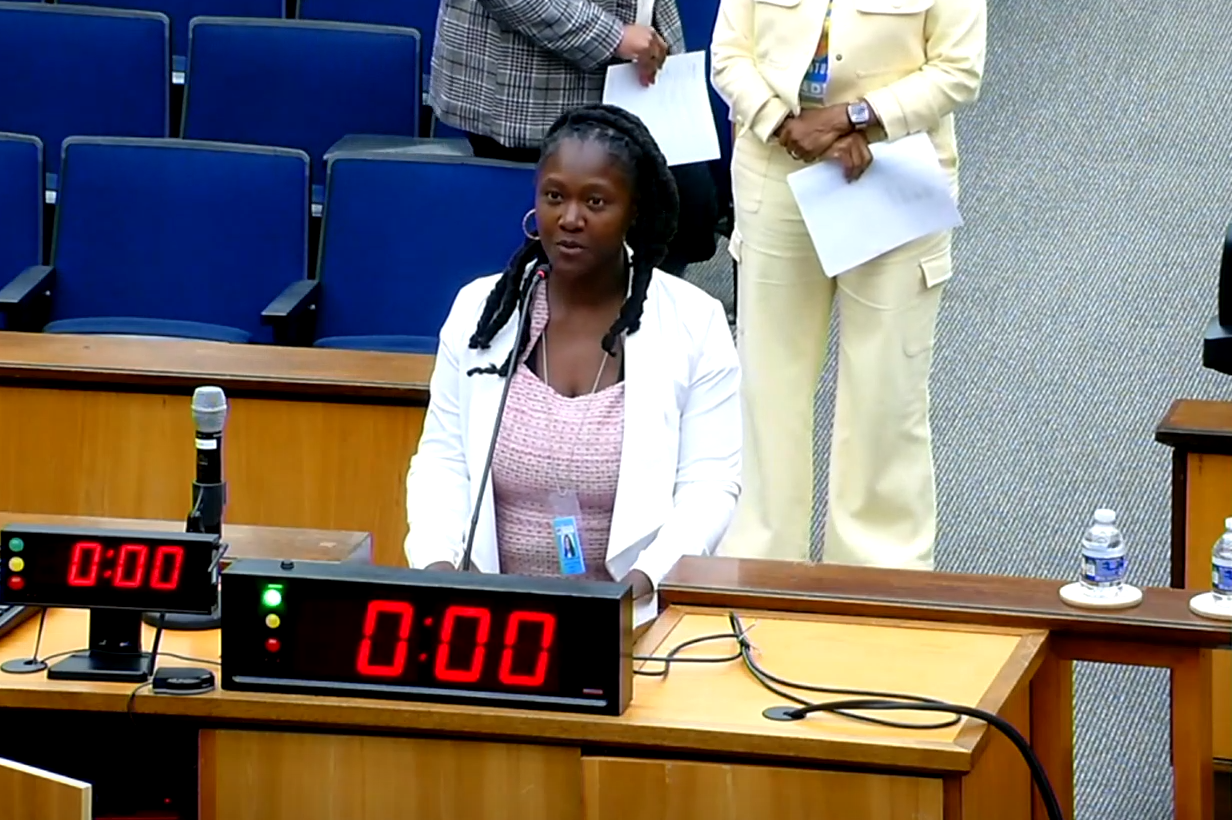
“Learning from home gave me peace. It gave me focus. It gave me room to breathe without fear of bullying. My confidence grew, my anxiety faded and my academic performance soared,” said an 11th grade student of Richmond Virtual Academy, speaking to Board members Tuesday night.
Wilson pointed to a recent video showing an RPS employee allegedly biting the hand of an elementary student.
“That happened outside. Imagine what’s happening inside behind closed doors,” she said.
Rose added that students would still have to deal with bullying and the impacts it can have on their mental health.
“My kids, most of these kids, were failed by in-person school,” he told Board members in a March meeting.
Liam is getting prepared to enter the 7th grade next school year, but Wilson said she is still contemplating what the best option would be for her son if the academy were to close.
“R.V.A. has allowed us to have a setting that is least restrictive for Liam,” she said.
Next year would be Rose’s daughter’s last year of high school. Rose said she will continue schooling with Virtual Virginia and get her diploma from a local high school. But that option is still not ideal.
“It’s adding stress to our stressful family,” he said. “Regardless of the outcome, this is not the way school should be closed. This is not the way we should treat our students.”
Contact Reporter Victoria A. Ifatusin at vifatusin@richmonder.org. This article has been updated to reflect the correct name of Virginia Virtual Academy and corrected to reflect a more accurate per-pupil spending comparison.