Anne Holton will run for her Richmond School Board seat in November’s special election
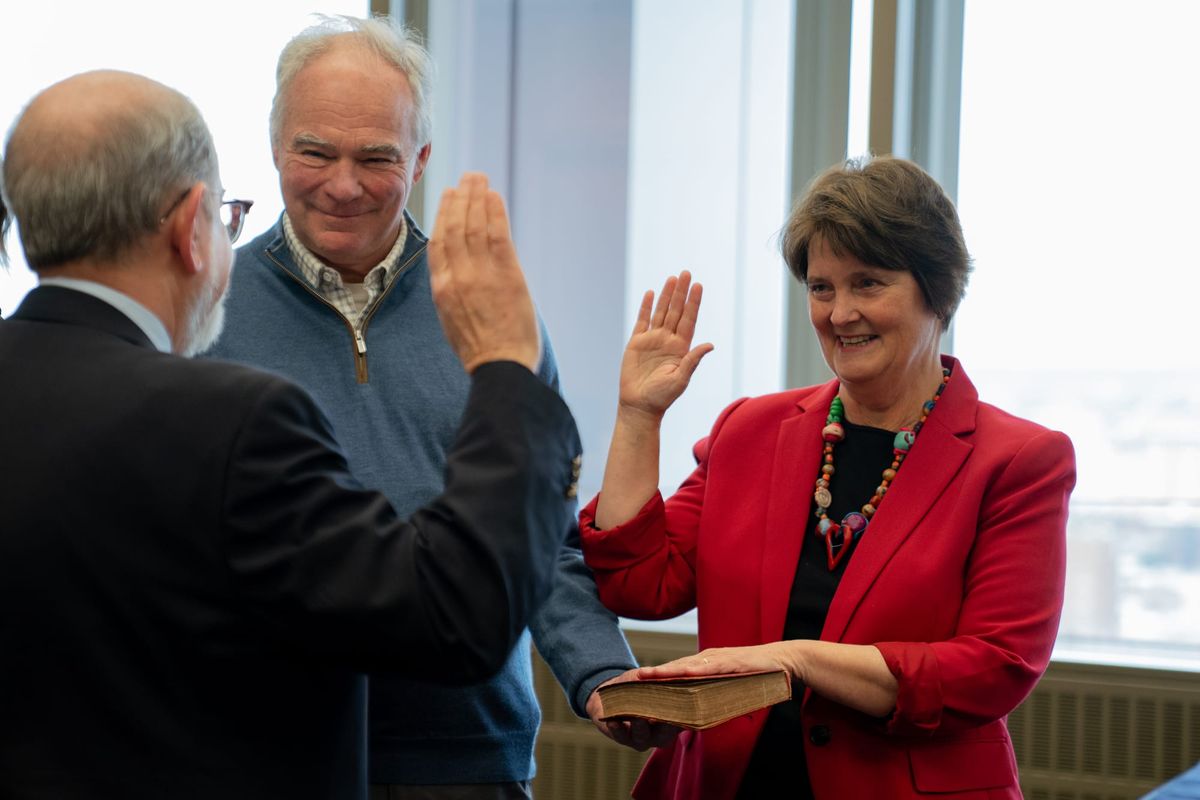
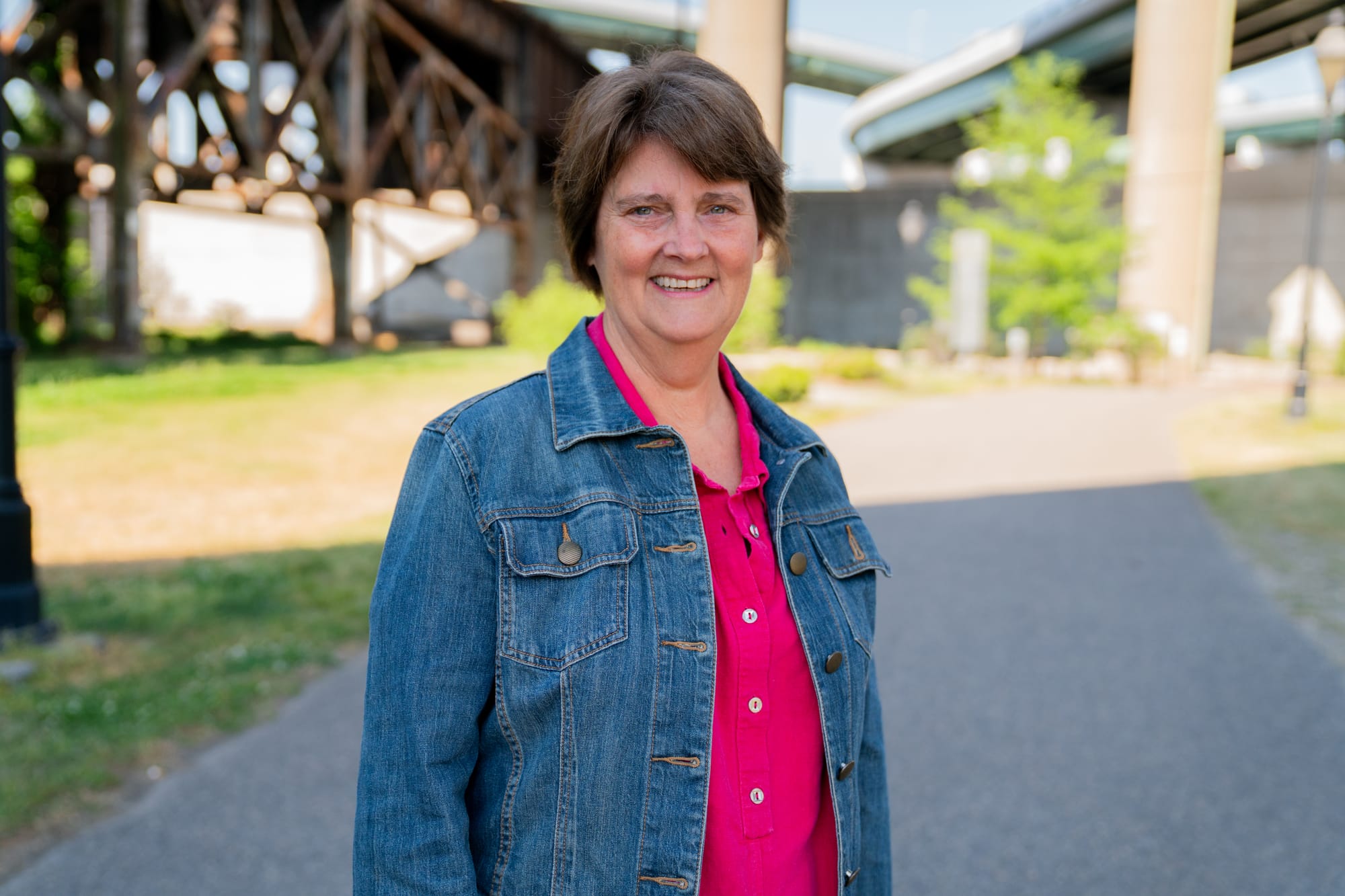
Anne Holton has been involved in campaigns since she was 5 years old. But this is the first time she’s on the ballot herself.
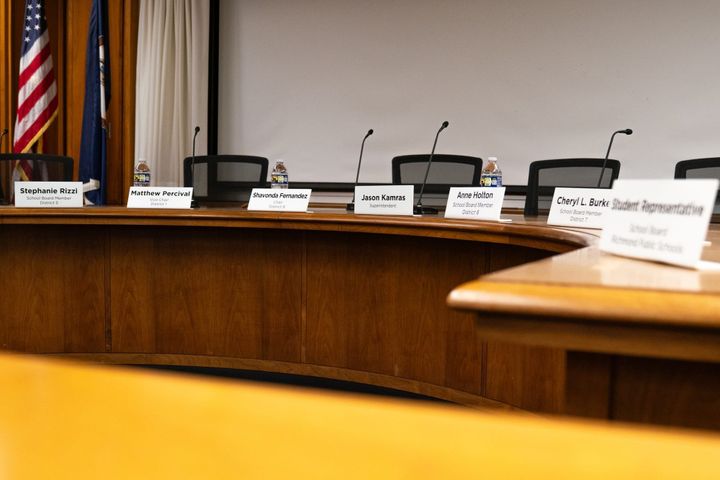
After nearly three months of serving on the Richmond School Board, she told The Richmonder that she will be running for the 6th District seat in the upcoming special election in November. The seat was previously held by Shonda Harris-Muhammed, who left the dais unexpectedly last December to become the acting superintendent of Southampton County Public Schools.
Holton, who is married to U.S. Senator Tim Kaine (D-Virginia), was selected to fill the role on an interim basis in February, a role which was also sought by four other candidates. She is the first and currently only candidate on the ballot.
Richmond Public Schools has a lot of good things going for it, Holton said, and she wants to be part of moving the needle further.
“They've got a good Board, a good superintendent. And it just felt like an opportunity moment when I could be part of helping move things in the right direction,” she said.
High school graduation rates reached 80% in the 2024-2025 school year, the highest the district has seen since 2016. English learners in the city had better Standards of Learning scores than neighboring counties, and beat the statewide average. Early literacy rates are also up this winter. The division has implemented a 200-day calendar for schools to allow for more learning, one of which – Oak Grove Bellemeade Elementary – is in the 6th District. State data shows that teachers in RPS are making more than the neighboring counties.
All of these Holton noted for why “RPS is on the rise,” a catchphrase commonly used by school leaders. She also lauded additional investment into the district.
“The city has stepped up its game significantly on funding for schools,” she said, pointing to former Mayor Levar Stoney, who created a funding plan that gives RPS roughly $200 million for school construction every five years.
But on the other hand, Holton said the state has lagged behind on providing money to the division, as well as other school districts in Virginia. For that reason, the former state secretary of education and Virginia Board of Education member is centering her campaign on advocating for more funding into the division, and leaning on her experience to be able to successfully do so.
That funding could go towards providing more educational options for students, she said, especially high-needs students in the 6th District.
What it means to represent the 6th
Serving the 6th District means serving some of the division’s most high-needs students, who experience “a lot of challenges” and “a lot of barriers” to a successful education, she said. Some students in the district come from impoverished homes, often in neighborhoods where there is a concentration of poverty. Three of the city’s six public housing developments are in the 6th – Hillside, Whitcomb and Mosby courts.
Other students are English learners who come from immigrant families “striving hard to help their kids be successful and join the American Dream,” Holton said.
For those reasons, she said, additional funding into RPS is critical, specifically from the state level. Those funds, while for the entire district, can further help those students.
“I would want folks to know … serving children with lots of extra needs can be successful,” she said. “But it takes extra investment.”
 Victoria A. Ifatusin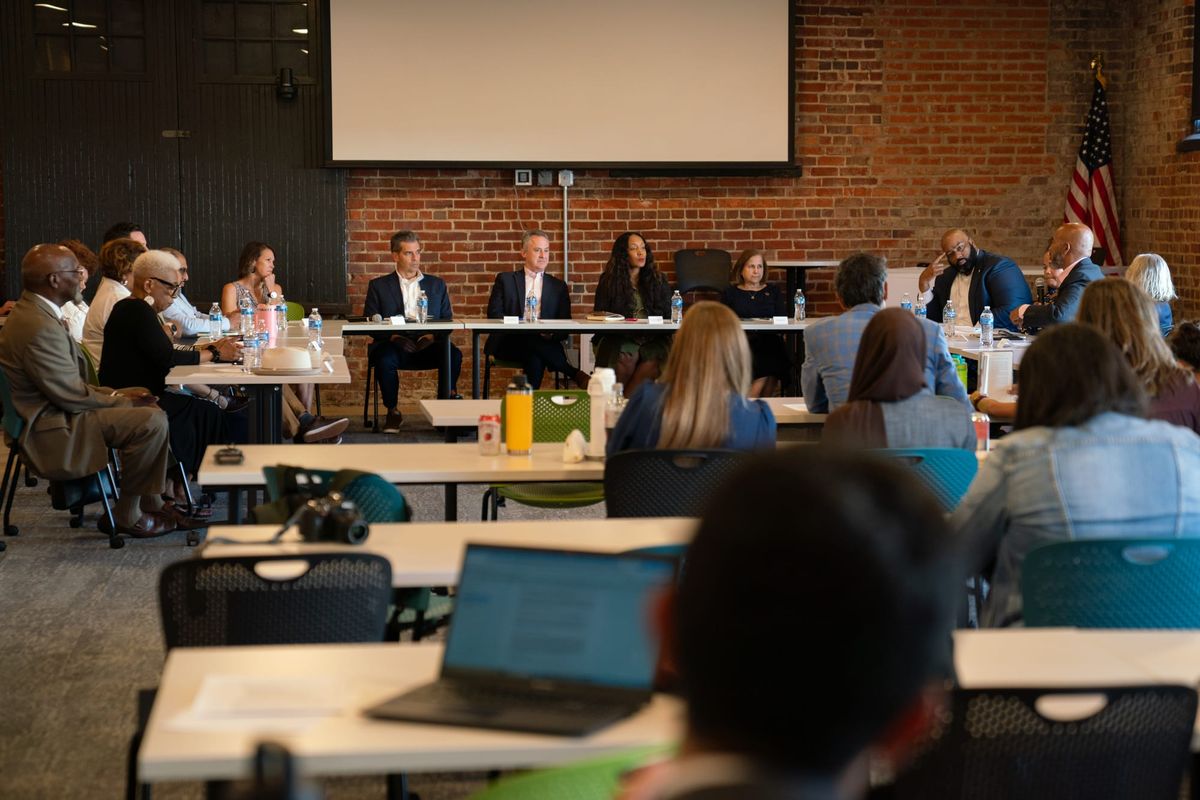
Holton was the state secretary of education under former Gov. Terry McAuliffe from 2014 to 2016, before being later appointed to the Virginia Board of Education a year later, serving until 2025. She said that while working at the state level under McAuliffe, Virginia began increasing its investment to local school divisions, but it has not made the kind of investment that would allow for more 200-day schools, which is partly funded by the fundraising nonprofit Richmond Ed Fund, as well as reading interventionists for pre-k to 2nd grade or additional tutoring.
Another aspect of the 6th District is the fact that it is a historically and still predominantly Black district that Holton acknowledges is facing some level of gentrification.
That topic was raised at a March School Board meeting, where 6th District resident Hope Elliott told members during public comment that the district “is facing displacement and gentrification pressures,” and that city leaders “have turned a blind eye to the issues facing Black, Brown and working class people.”
“The recent appointment process … was more importantly reinforcing the racist and classist systems that have kept Brown, Black, and working class Richmonders dispossessed and disenfranchised,” she said. “Representation matters.”
When asked about the comment, Holton told The Richmonder that she understands and agrees with the sentiment, but also believes that her experience of schooling in RPS allows her to bring “different things to the table.”
Holton is the daughter of Linwood Holton, the first elected Republican governor of Virginia since the Reconstruction era. He was known for supporting civil rights and racial integration of public schools in Richmond, sending his own children to help desegregate schools. Anne Holton did so at the current Martin Luther King Middle School – previously Mosby Middle – by attending the school as a student from 1970 to 1972, before doing the same at Open High.
She added that she is ultimately “a proponent of all success for all children” and has “an obligation to go above and beyond” in listening to members of the 6th, ensuring that she understands and represents those perspectives.
Gun violence
In the last seven years the district has lost over 50 students to guns, according to a recent press release from the division. The 6th District specifically was the home of 18-year old Zion Terry and 14-year old Sadie Terry, the John Marshall High and Thomas Henderson Middle school students who were fatally shot at home in Highland Park this month. It was also the home of 15-year old Darkell Jones, a Richmond Technical Center student who was killed a month before while riding his scooter on the Southside.
Holton, a former juvenile domestic relations court judge, pointed to a broader issue of needing to issue tighter restrictions on guns.
“It’s just inexcusable that our country is wealthy and successful as we are in so many ways that we are uniquely experiencing this epidemic that’s killing our young people,” she said.
Following Zion Terry's death, Holton said Superintendent Jason Kamras held a virtual faculty meeting to prepare teachers for consoling classmates.
“When they thought they were gonna be focused on teaching on Wednesday and when they thought their students were gonna be focused on learning, they're all focused on grieving,” she said.
She continued: “To attract teachers, God bless them, who are willing to work in that environment, with those kinds of repetitive, awful, horrendous losses like that, it takes an extra special person. And we ought to be paying them like superstars.”
Ian Stewart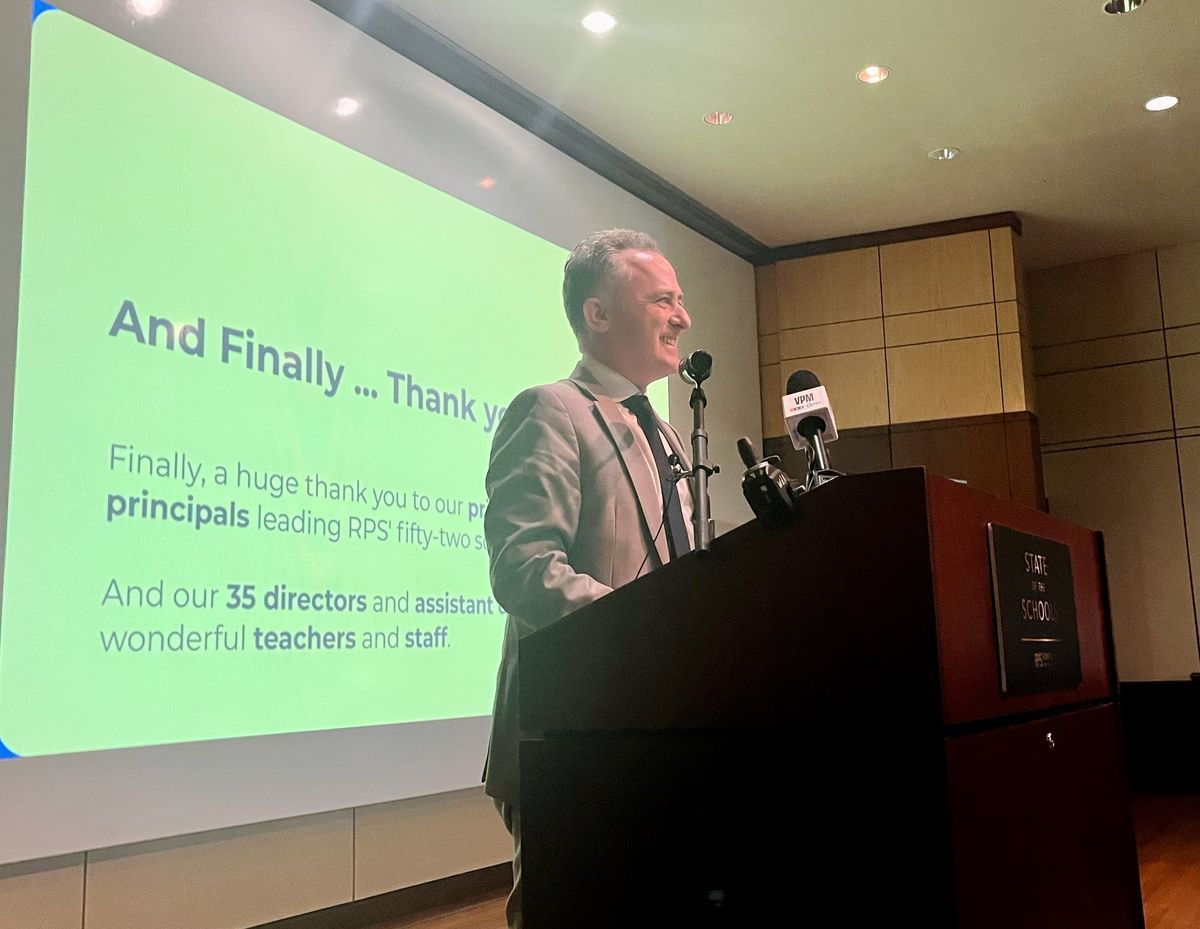
Balancing the budget
Holton described her time on the Board so far as “a blast,” and was quick to laud her colleagues. She added that she’s been impressed with Kamras, who is among the many RPS superintendents she’s been tracking for years.
“Having continuity and stability and vision that lasts is huge,” she said, referring to Kamras’ seven years of leading the schools. “Before that it had been a long time since we'd had a superintendent who lasted.”
Since joining as an interim member, Holton has had to make a variety of decisions.
She is used to focusing on student academics, she said, so voting on artificial turf over grass at the new Richmond High School for the Arts was something she “knew precisely nothing about.” But it was a good example of something that matters to students’ health, she said.
At the same time, she was thrown into a tense budget cycle, making decisions at a time when Kamras proposed making several cuts, including the Richmond Virtual Academy. Parents and students of the academy spoke to Board and City Councilors during public comment sessions to express that the school is vital to students’ academic success, with some saying that there is no other option for some students.
Graham Moomaw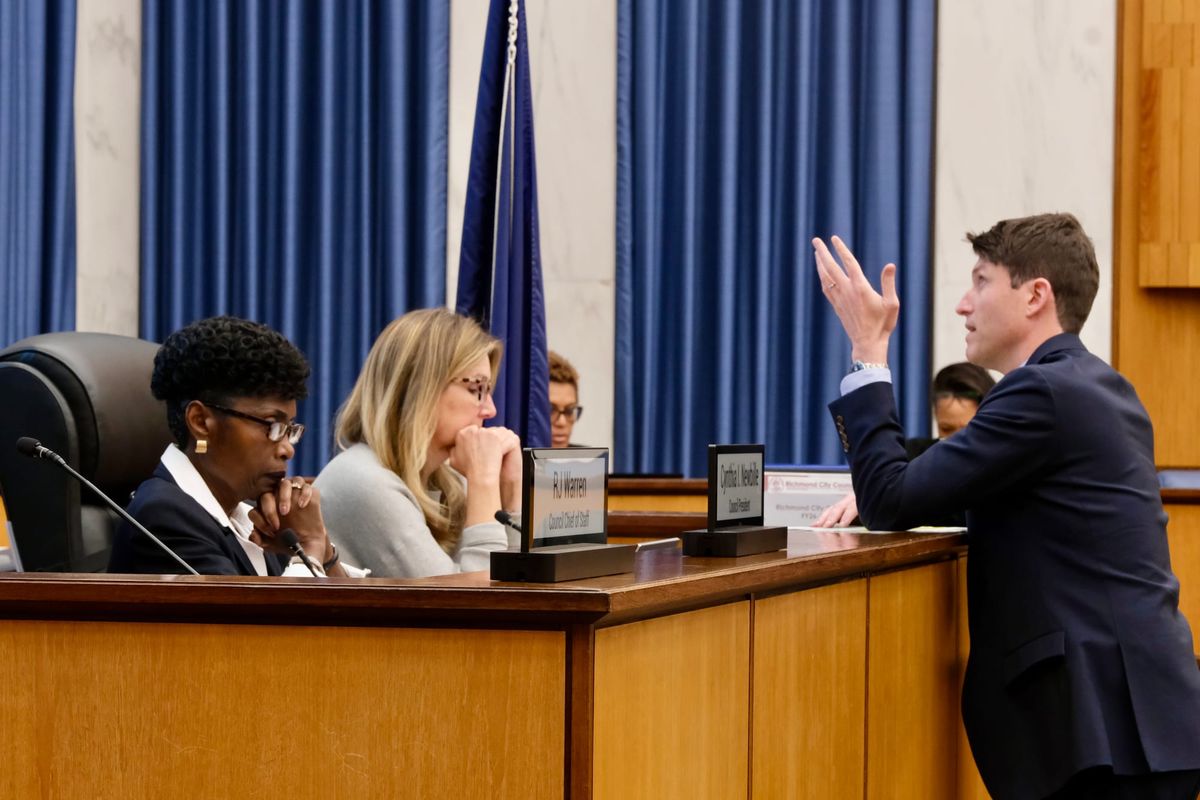
Before sending an approved budget over to Mayor Danny Avula for his consideration, Board members voted 6-2 to propose a budget that would also include funding the academy. Holton was one of the two members who dissented.
Holton told The Richmonder that the Board had priorities of first paying for teacher raises, a higher share of health insurance premiums, mental health services and summer school if the city provided more money. Anything that came after that would be hard, she said.
“My position on the Richmond Virtual Academy was if we're gonna have to cut it, it's so much better to cut it in March than in June. Because it affects everybody who's working there intensely,” she said.
Kamras warned Board members in March that if the division does not receive the funds to keep the academy, he could not guarantee that currently vacant positions within Richmond schools for the academy’s teachers would still be available. Holton referred to that as part of her reasoning for voting no.
She added that while the academy was meeting students’ needs, she was convinced that such needs could be met elsewhere, ideally in the traditional school system or through the state’s Virtual Virginia program.
City Councilors, who parents and students also advocated to, recently worked to find extra funds to save the academy, but ultimately were unable to do so. The budget will be finalized later this month, putting the ball back into the School Board’s court to decide if it will work to find funds to keep the virtual school running.
The budget process has also garnered a debate on whether RPS is efficiently spending its money. The Richmond Education Association, the union representing the division’s teachers, called for an external audit into the budget following the proposed cuts and changes to the budget after it was first presented in January.
Holton said having a good audit system is crucial, and she is happy that the Board has hired a new auditor. But she believes that the call for an external audit is based on the public watching the Board make difficult decisions on money, in turn causing the idea that there’s likely waste somewhere in the system.
“I’m sure there’s some waste. And that’s one of the things that our auditor can help us [detect],” she said. "However, I really think the biggest part of the gap between the need and the revenues is, the energy would be better focused on helping increase the state investment,” she said.
Holton has been gathering signatures from potential voters, and said that she has so far heard a mix of comments from residents. She said parents see that “RPS is on the rise,” whereas non-parents are used to having “low expectations” of Richmond schools.
She said she wants to help tell the RPS story to non-parents and a broader audience.
“I bring my passion for RPS … and to help us stay focused on keeping the main thing, the main thing, which is student success,” she said.
Contact Reporter Victoria A. Ifatusin at vifatusin@richmonder.org