Chesterfield students showcase AI skills at district’s first generative tech fair
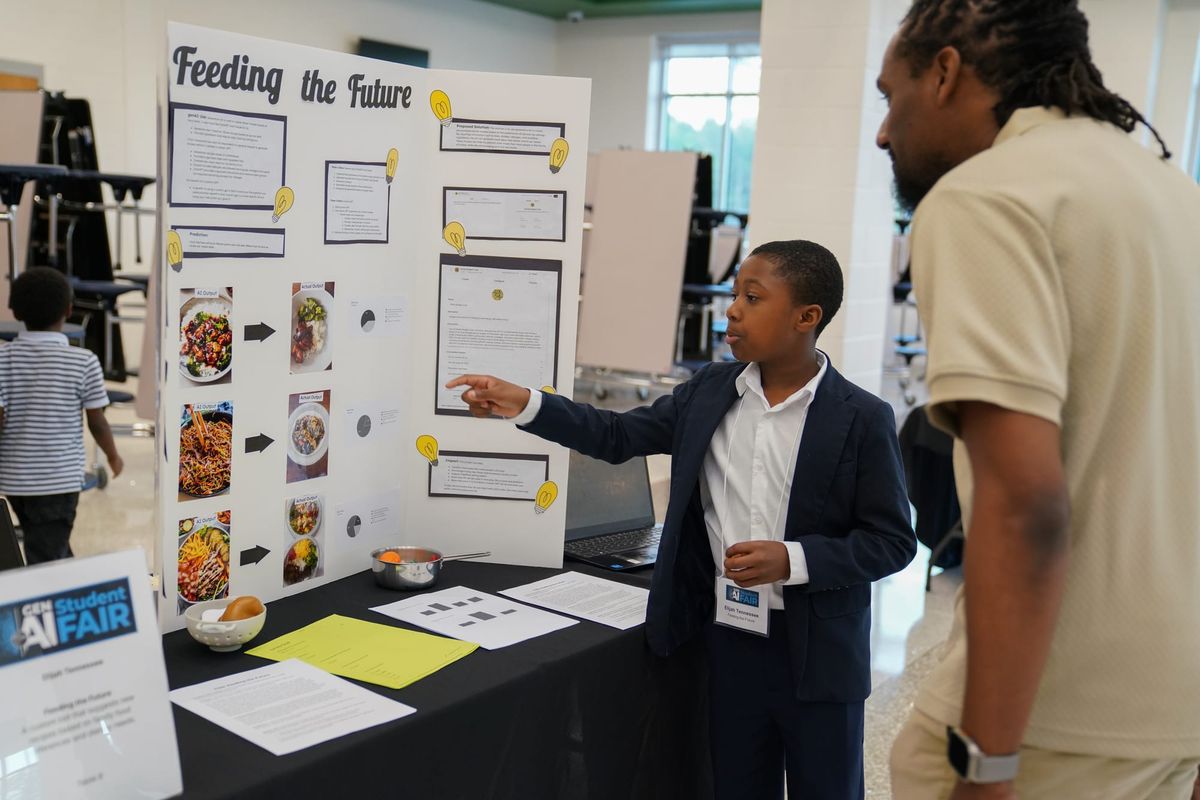
Sixth grader Elijah Tennessee is a picky eater.
In an effort to find what is right for him, the Deep Creek Middle School student input his likes and dislikes – along with his family’s – into ChatGPT. The artificial intelligence system returned a list of seven recipes for a week based on the dietary preferences, ranging from chicken and broccoli to hamburger salads. Elijah said he enjoyed most of them.
“You can have a meal that you would prefer,” he said.
Elijah’s use of AI was among the twelve projects showcased at a generative artificial intelligence fair hosted by Chesterfield County Public Schools.
Students from some of Chesterfield's elementary, middle and high schools presented ideas integrated with AI platforms like Open AI’s ChatGPT and Google’s Gemini, that could be used in school, in the workforce or in their personal lives.
Those ideas varied from an AI-powered study coach to a website that analyzes and evaluates startup ideas.
Chad Maclin, the division’s career technology education director, said administrators have seen exhibitions like this at a higher education level around the country, but not at the local school district level. The students opted to undertake the task, as none of the projects were assigned for a class.
“These are all student-initiated initiatives and projects that they’ve come up with on their own to solve a problem that is in their world,” he said.
The division is so far embracing the use of AI, as the fair is the second part of a three part series related to showing how the division interweaves AI in schools, Maclin said.
During the first part, Chesterfield teachers presented at a local conference – EdTech RVA – in March to show they were using the technology in classroom instruction or administrative operations. The third part will bring teachers, students and workforce members together at a regional summit to understand what the job market needs with generative AI.
Chesterfield is currently building its AI policy, Maclin said.
“We don’t want to put guardrails that restrict creativity. We only want guardrails that are protective in nature,” he said.
Richmond Public Schools recently introduced its AI policy, which allows for the use of it, while prohibiting some of its functions, like generating images of real people or school activities. The Richmond School Board is still reviewing the policy and it has not yet been implemented.
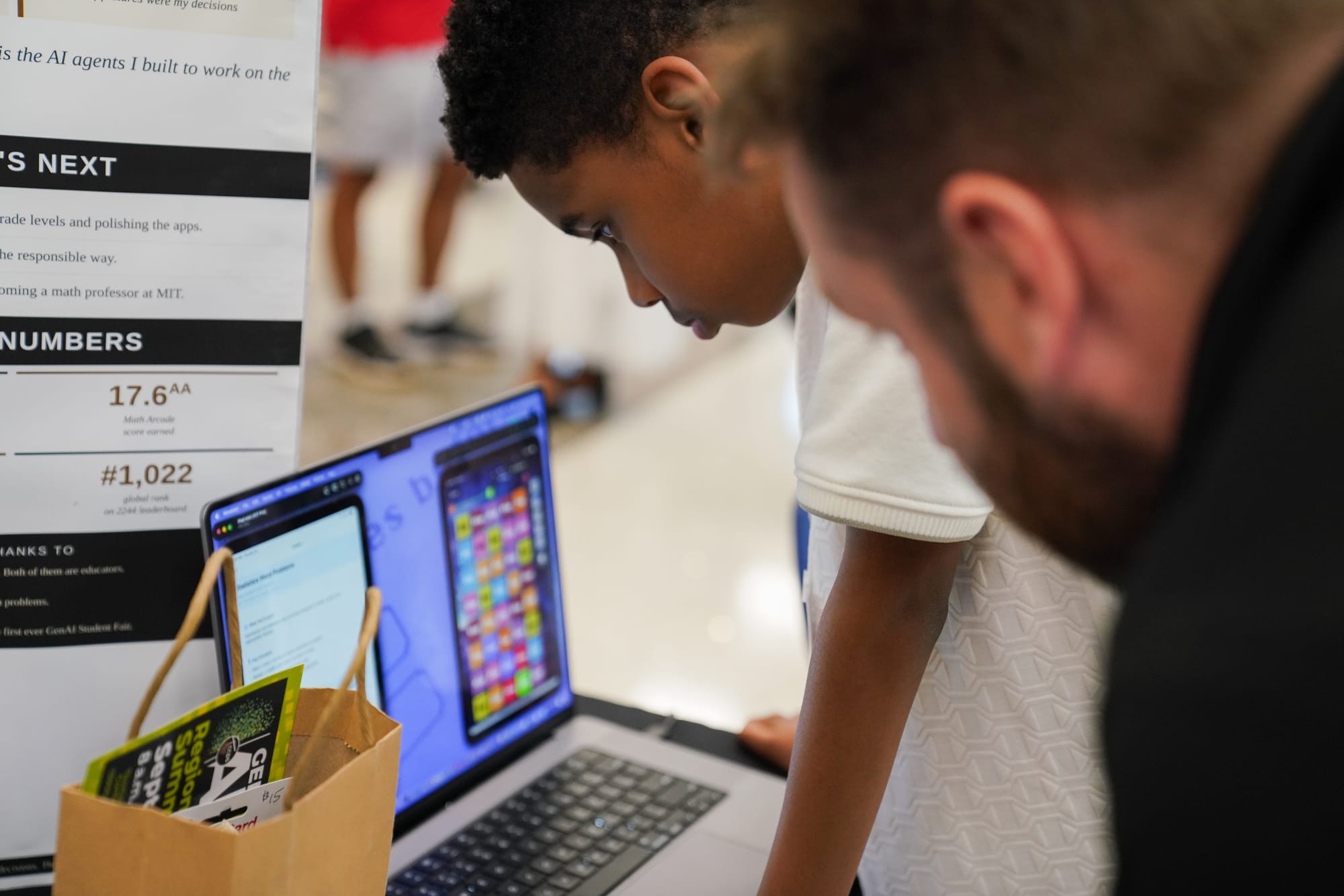
Angel Henderson, another sixth grader from Deep Creek, has been coding for eight months. That time resulted in a digestible math textbook accompanied with a merging game that combines two of the same numbers. He said the product can be used in the future when he becomes a math professor at the Massachusetts Institute of Technology.
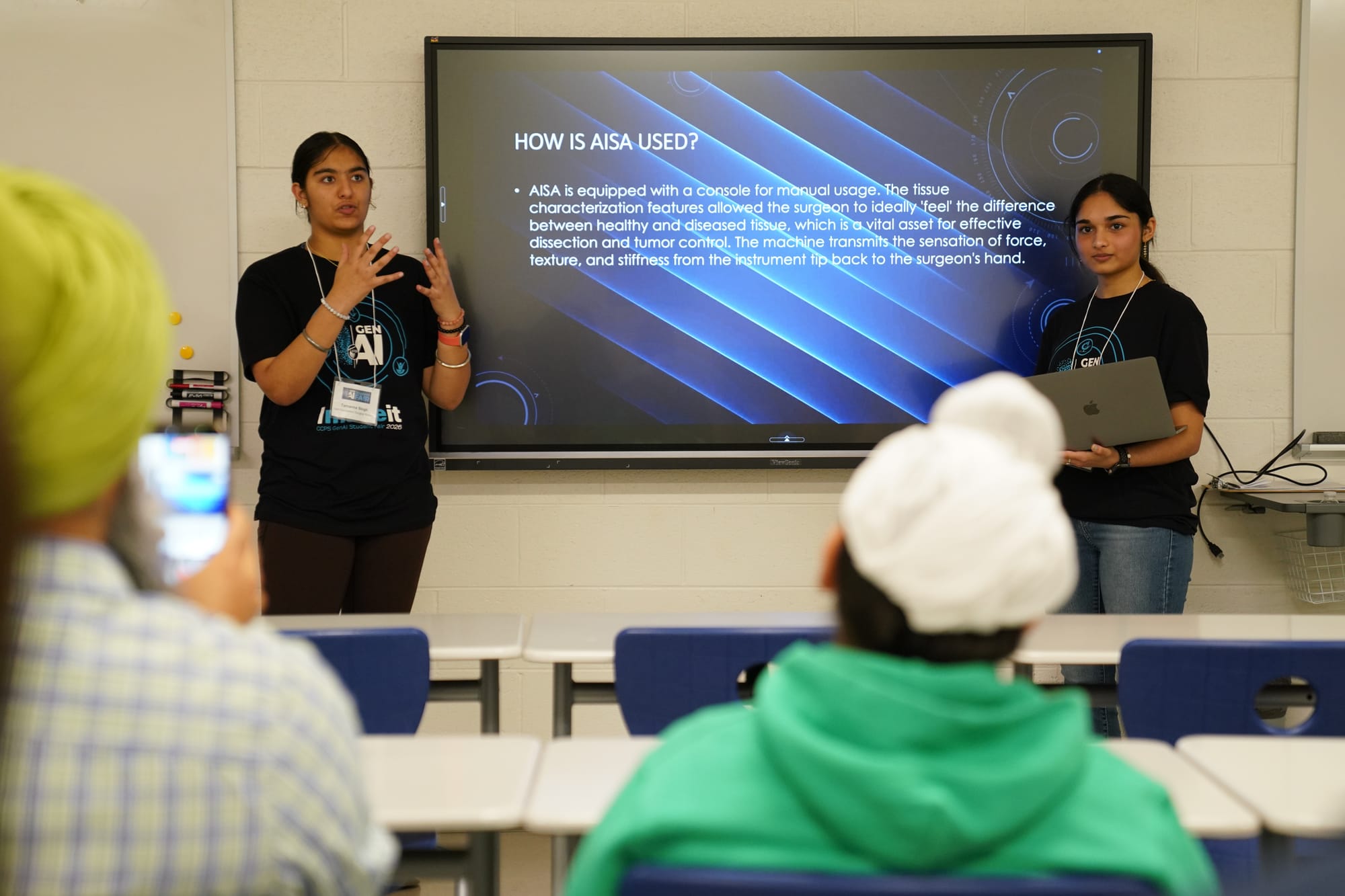
Cosby High School students Tamanna Singh and Pahal Patel both aim to be surgeons in the future. Based on research they’ve studied, they realized that surgical operations could go more smoothly with the use of AI, as psychological factors like stress can cause human errors. Surgeons are also more likely to make bigger incisions to better see what they are treating, which can lead to more blood loss, the students said.
That led to their potential invention of AISA, a robot assistant designed to improve surgical precision. The pen-like product would still be handled by humans, but provide feedback to surgeons if the robot senses a mistake that may occur. It would also make smaller incisions, and have a camera attached to it for surgeons to see what they are doing.
“Robotic surgery makes it 60% to almost 100% less complicated and provides more recovery time and less patient error and dissatisfaction,” Pahal said.
When asked about general concerns and hesitancy in using AI, Maclin said that the focus is to figure out how the tools can be used to improve the academic experience for students and teachers.
“It's here; it's not going to roll back. So how can we ensure we're using it for really good, substantial improvements?” he said.
Contact Reporter Victoria A. Ifatusin at vifatusin@richmonder.org