Richmond's Flag, Part 2: Honoring the legacy of Black boatmen
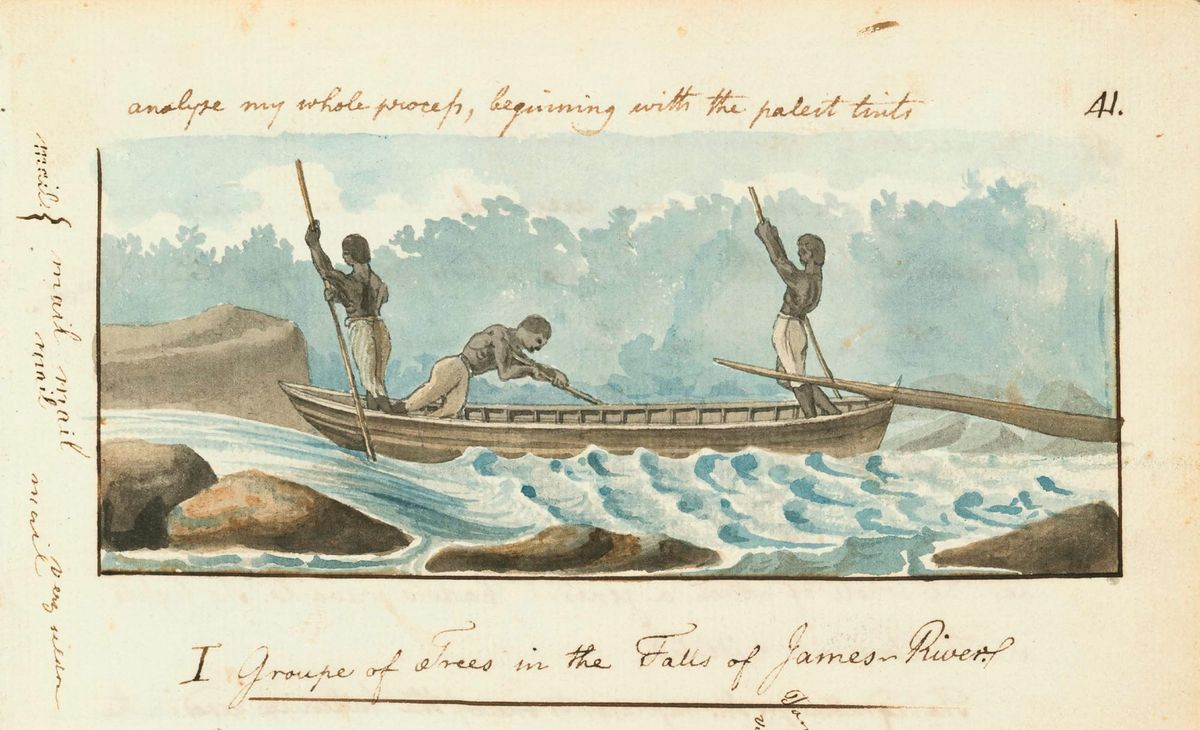
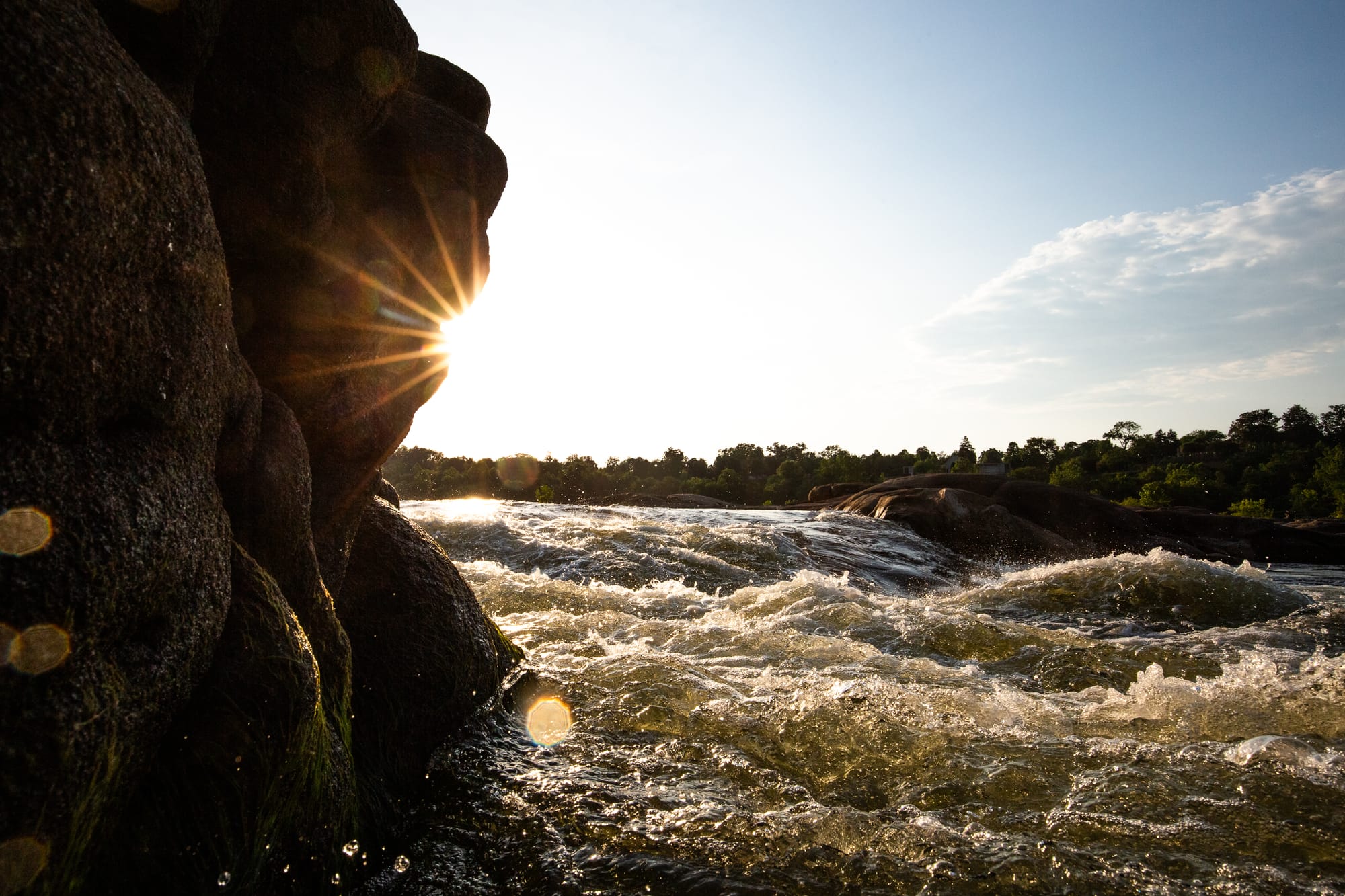
"...we were intercepted with great craggy stones that [stand] in midst of the river, where the water falleth so rudely and with such a violence as not any boat can possibly pass..."
These words by Captain John Smith from ‘A True Relation of Virginia’ in 1608 describe the Falls of the James in Richmond, the most dramatic stretch of the 340-mile-long river. The roar of the falls marks the point where the river crosses the Atlantic Seaboard Fall Line, a geologic feature where rapids form as rivers cut into bedrock and transition from the Piedmont to the Atlantic Coastal Plain regions of states along its length.
In Richmond, the falls marked a stopping point for early seafaring vessels traveling upriver. To facilitate trade with the interior of Virginia and other points west, special boats were required to contend with the river’s fall line and additional rapids found upstream.
The James River Batteau was created for this task. The long, flat-bottomed, wooden boat was designed by Virginian Anthony Rucker with the help of his brother Benjamin between the 1760’s and early 1770’s, and could carry large quantities of goods such as hogsheads (large barrels) of tobacco, grains, iron ore, and coal, while being maneuverable enough to travel down the rapids and shallows of the James.
With no keel and a shallow draft (amount of the hull under the water), batteaux reached up to 60 feet in length and were capable of transporting up to 12 hogsheads of tobacco, with an estimated total capacity of over 10,000 pounds, give or take.
Batteaux ferried innumerable quantities of goods down the James River to Richmond and back upriver. The boats were typically crewed by three boatmen: two propelled the boats by walking down the boats' gunwales pushing on iron-tipped wooden poles, braced on the bottom of the river. The headman operated the boat’s ‘sweep,’ a long wooden oar at the back and/or front of the boat that helped turn the craft while weighed down by thousands of pounds of goods.
Navigating these boats was grueling work, which most often fell upon the backs of the enslaved and freedmen.
Industrial Athletes and Architects of Freedom
Hearing Viola Baskerville recount history is enlightening. Among her accomplishments, Baskerville is a former Richmond City Council member, a former member of the Virginia House of Delegates, and Virginia’s Secretary of Administration from 2006-2010. Her activism helped place the Arthur Ashe Jr. Monument on Monument Avenue, and the Virginia Civil Rights Memorial at the State Capitol. She is currently the President of the Afro-American Historical and Genealogical Society, Greater Richmond, Virginia Chapter.
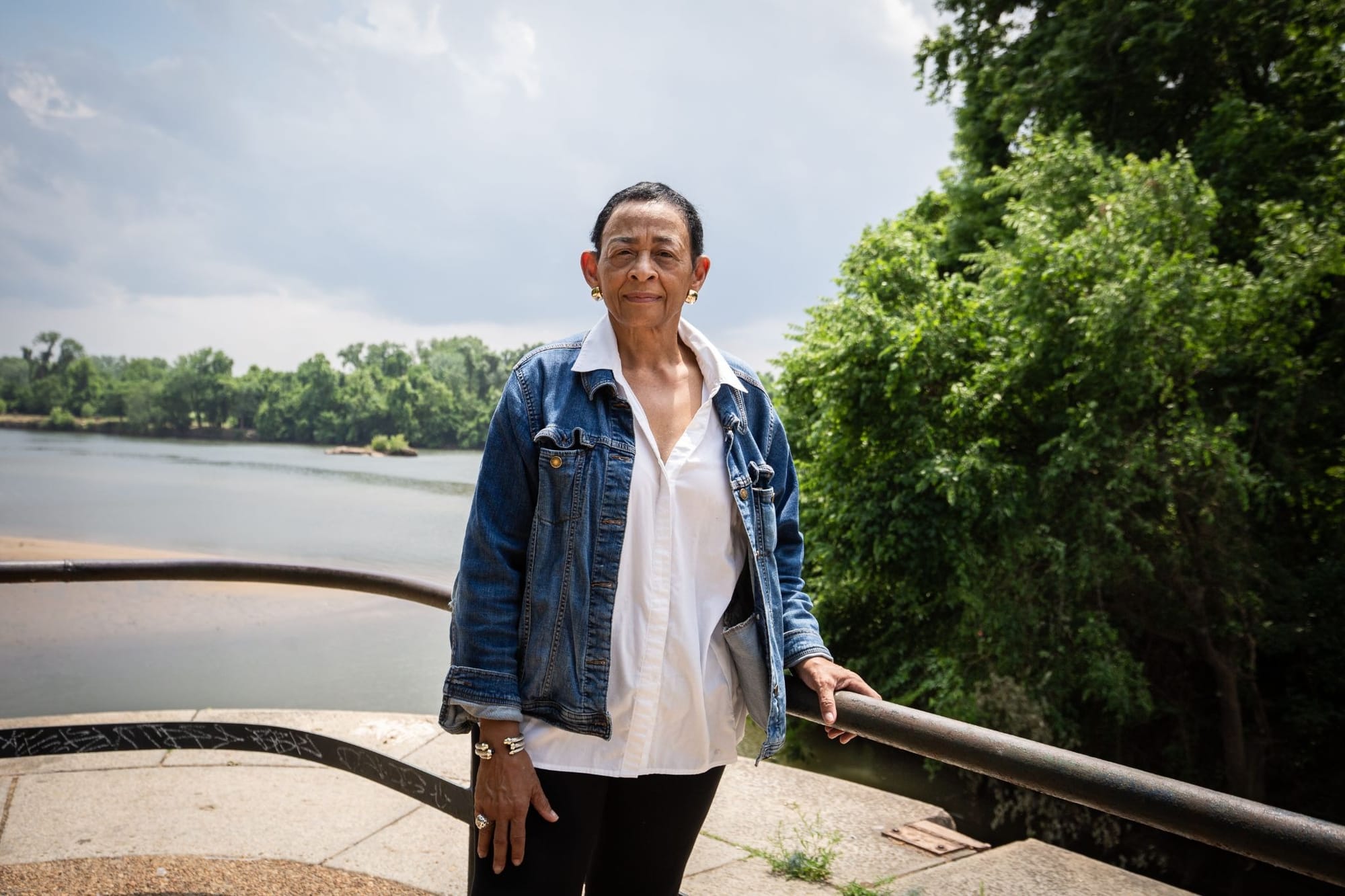
For the last six years, she has been researching and writing a book that chronicles over a century of history, with the working title: "Black Boatmen of the James River: Industrial Athletes, Architects of Freedom.”
Baskerville stumbled on the idea for her book while researching another project. She came across “...a list of free Negroes in Buckingham County whose occupations were listed…all Black men who indicated either they were carpenter, or boatman, or a laborer. And I kept seeing the category boatman over and over again.”
Her research has determined that in the time of the boatmen facilitating trade along the James River and later the canal system, up to 98% were people of color. Baskerville proposes that it is no accident that physically demanding batteau travel was uniquely suited to the enslaved and freedmen:
“…a lot of African Americans that came to this country, or that were enslaved and brought to this country…a lot came from countries where there were rivers...So this innate knowledge and syncopacity, with the river…I would submit that they came with the knowledge of how to read a river. How do you know when the current is shifting? How do you know where to put your pole? …You had an innate ability...to understand how to pole these boats downriver.”
Bruce G. Terrell states in his research report “The James River Bateau: Tobacco transport in the Upland Virginia, 1745-1840,” that the trip from Lynchburg to Richmond and back by batteau “in sufficient water, averaged about fifteen days. During periods of low water, the same trip could take up to four weeks.” These trips were largely unsupervised, with the boatmen traveling up to 30 miles downriver each day.
Baskerville found that this unsupervised travel, going up and down the river while stopping in different places, created a literal waterway to freedom, with lists of freedmen registered as boatmen found in contiguous counties along the James. These free boatmen who delivered goods made way for entire lineages of freedmen, passing the occupation on to their sons and nephews. For some enslaved boatmen, the occupation was a pathway to becoming emancipated and given land. For others, it was a way to escape the South via the Atlantic, or over the mountains if traveling upriver to Lynchburg.
“...enslaved people were meeting up with the boatmen, and the boatmen were helping them to freedom - coming down the James River, getting to Richmond. And then the freedom seekers would seek a path to get from the port in Richmond onto a boat and get to Norfolk. That would then take them up the Atlantic coast to freedom.”
Baskerville credits the boatmen as being architects of a regional network for freedom seekers, which utilized the main stem of the James as well as its tributaries like the Rivanna and the Appomattox. She has found that certain places along the river served as sanctuaries for enslaved people meeting up with the boatmen. In these places, freedom seekers could get lost in the crowd, exchange their clothes for outfits that made them appear to be freedmen, and adopt aliases. She established this through 'runaway ads' repeatedly placed in newspapers in those places by enslavers and companies that owned slaves who worked as boatmen. These ads describe fugitive slaves and where they may be found "...Whether they may be lurking around Richmond, or meeting up with the boatmen." Some of these places include Lynchburg, the Dover (coal) Pits in Goochland, and Richmond, where a duality existed:
"...the ships that brought people, enslaved people, to the Port of Richmond, were also ships that took freedom seekers away from Richmond and to Norfolk, and to ports that would send them back to freedom. So in a sense, the river and the water, for African-Americans, I think, in Richmond has been symbolic, both of freedom and mobility..."
Baskerville's research has surfaced figures that estimate that in the time of the batteaux’s use on the river for shipping from the late 1700’s through the early 1840’s there were up to one million trips undertaken by 8,000 batteaux. A letter to the editor of The Virginia Argus in 1810 states "It is probable there are a thousand boats that navigate the river above the falls..."
From river to canal
The arrival of goods aboard batteaux to their destination was never a guarantee. Batteaux could wreck on unseen rocks, floods could swamp or overturn boats, and low river levels could create protracted delays without enough water filling in shallow sections of the river.
In 1785 a bill was passed in Virginia establishing the James River and Potomac River Companies to facilitate the use of the rivers for commerce. George Washington was made president of both. Another bill facilitated altering the James’ riverbed for safe passage of batteaux, by methods such as excavating channels that the boats could travel through, though floods had a habit of destroying those improvements.
Washington had conceived of a canal system and overland route that would connect the Atlantic to the Mississippi beginning in Richmond. In the decade following the establishment of the James River Company, the beginning of Washington’s James River Canal System was completed: two canals and a series of locks which began six and half miles upstream of Richmond near what is now Bosher’s Dam, ending at Richmond’s ‘Great Turning Basin,’ a large pool which occupied a space bounded today by 8th and 11th Streets, and Canal and Cary Streets, where boats unloaded their cargo and turned around for the journey back to points west of the city. After its construction, the canal allowed batteaux travelling downriver to circumvent Richmond's falls.
Much of the canal system in Richmond, including the site of the Great Basin, has been covered by development or simply filled in with dirt. Even still, remnants of the system are visible at various points, such as an overgrown stretch sandwiched between the CSX Rail Line and Northbank Trail at Hollywood Cemetery, and ‘Washington’s Arch’ in Pump House Park, a point where George Washington visited aboard a batteau in 1791 while serving as the nation’s first president.
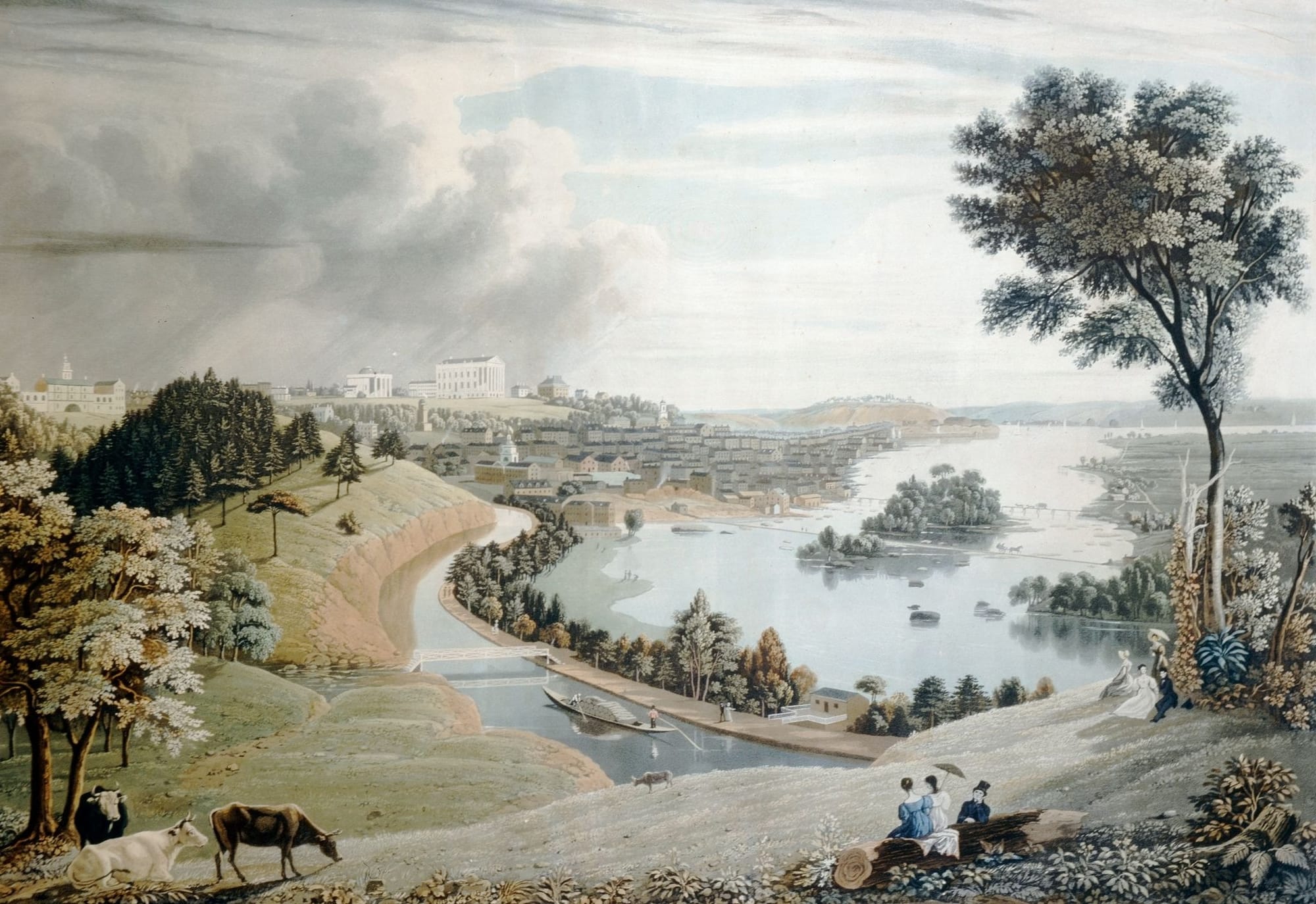
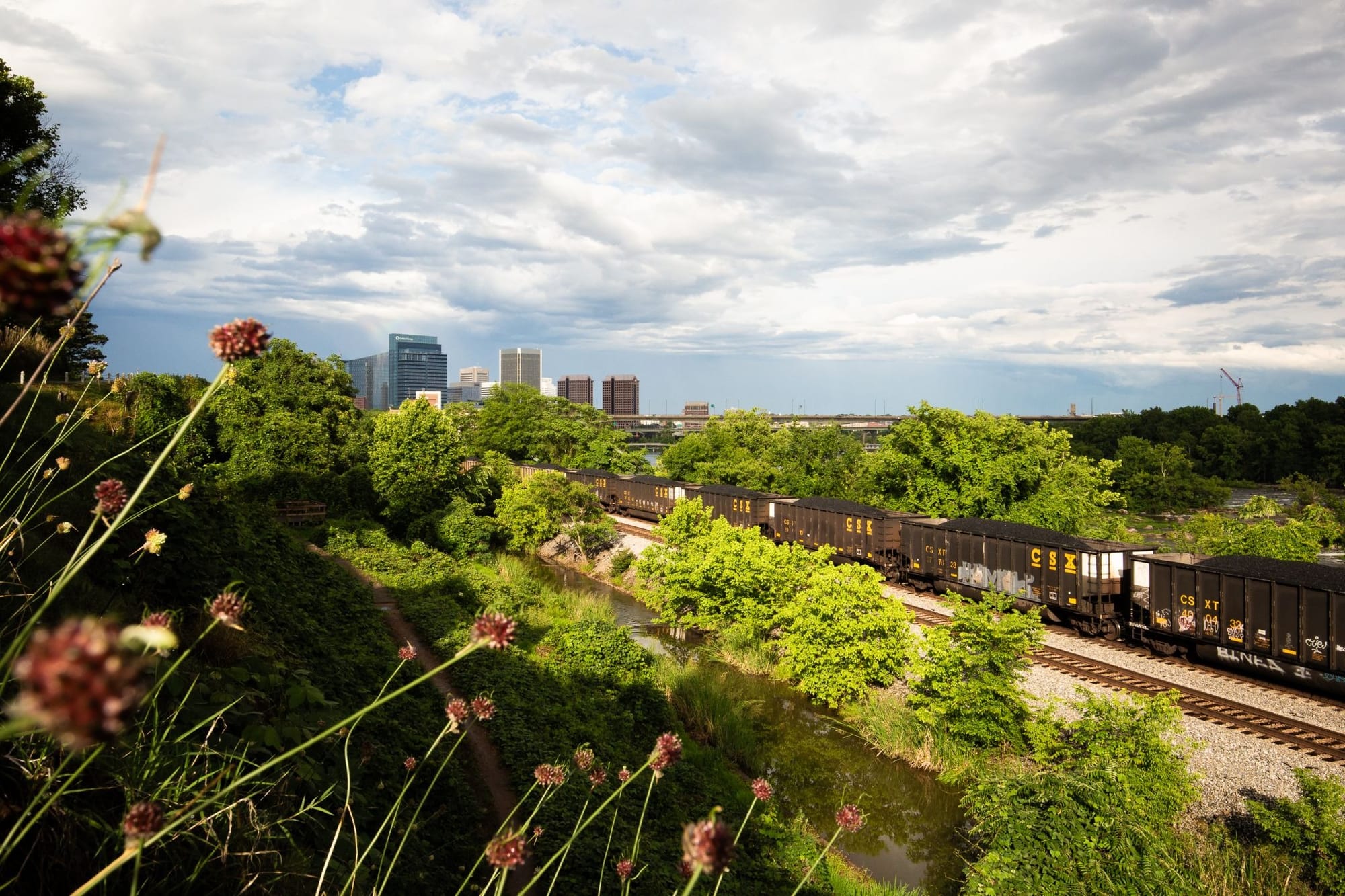
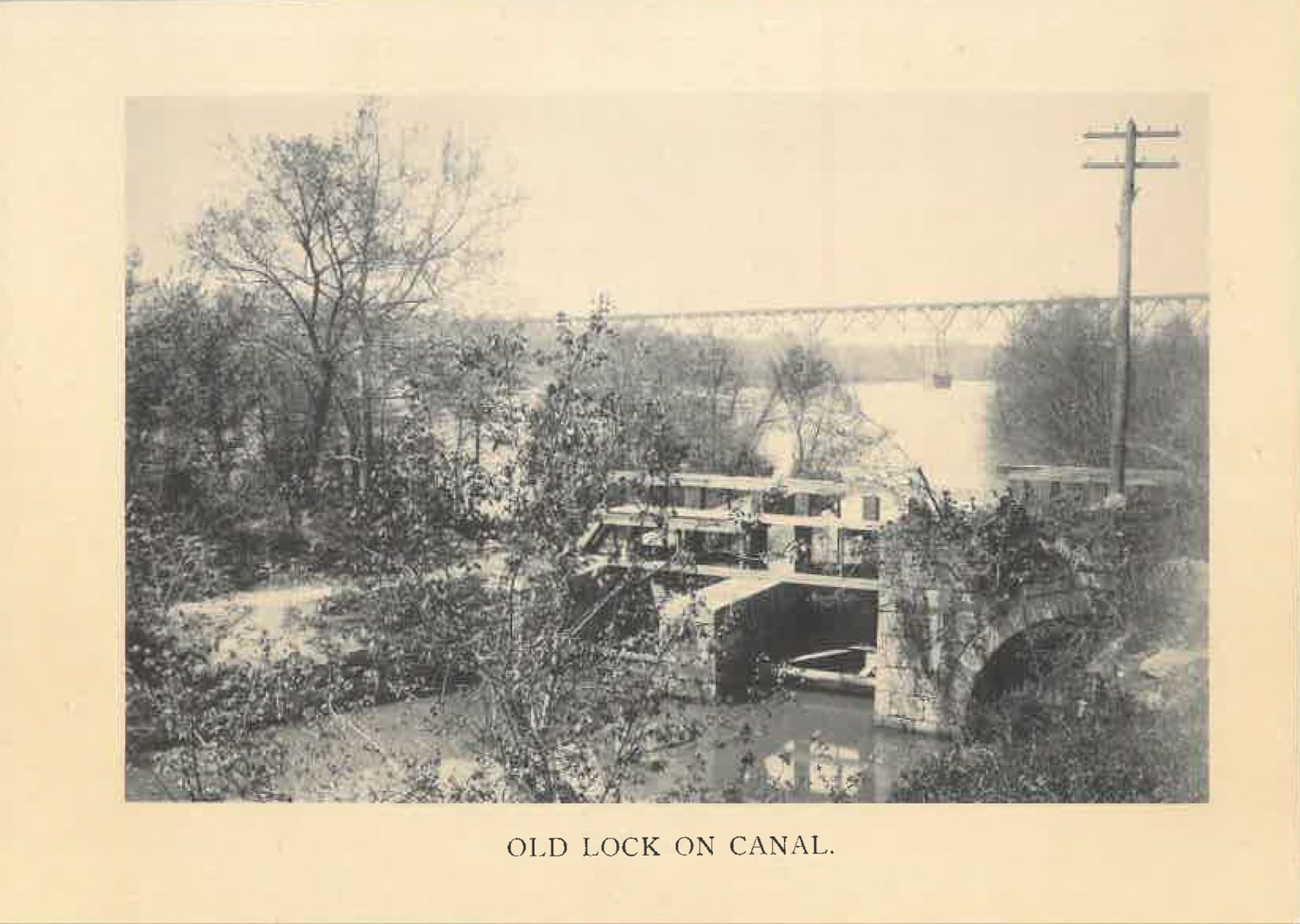
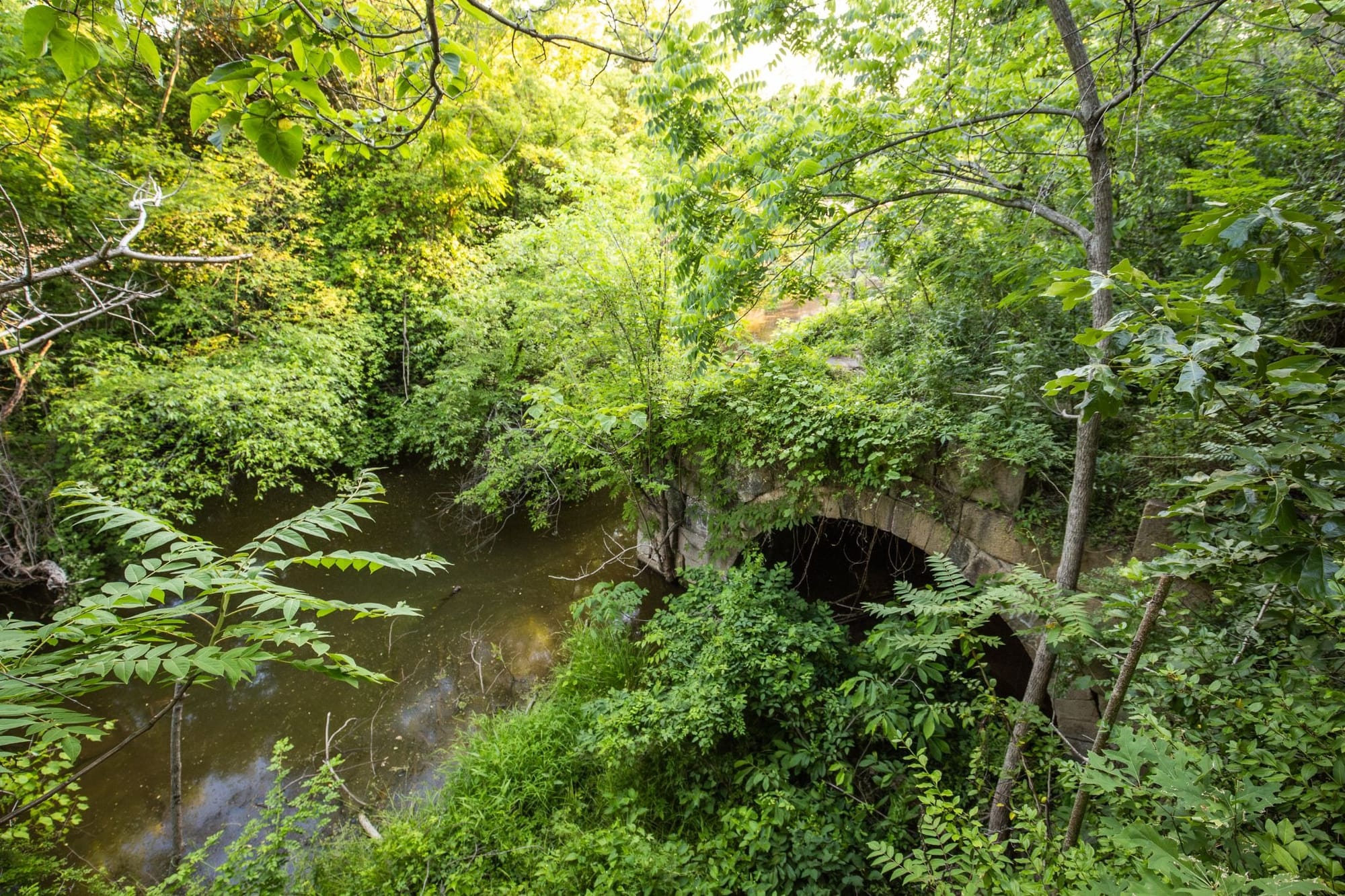
In 1840, The James River and Kanawha Canal System, a 197-mile-long canal which connected Richmond to Lynchburg, largely built by slave labor, was completed. The canal allowed boats to undertake travel free from the unpredictable nature of the James. The completion of the canal made river travel via batteaux obsolete. Even still, Black boatmen continued to ferry goods aboard succeeding boats such as canal and packet boats. Eventually, the rise of the railroads and their speed rendered the canals obsolete.
As the river has progressed from artery for commerce to one of recreation today, it’s important to Baskerville that we preserve the legacy of these boatmen and make them more than a silhouette of the past.
“These people were African Americans and they had names…And they were critical to the development of Richmond's industry and its growth,” she said.
She wonders, have you heard of:
“...The Banks Brothers, or the Hill brothers, or the Johnson family, or Peyton Mayo, The Mayo family. Or have you heard of Philip Hampton, or Richard ‘Dick’ Roane?”
Baskerville found Dick Roane in a newspaper article. He was a Black boatman who was murdered by Union soldiers in 1866 by being struck and thrown into the canal at 18th and Dock Streets.
In Part 3, on Sunday, learn about modern boatmen recreating the batteaux tradition.