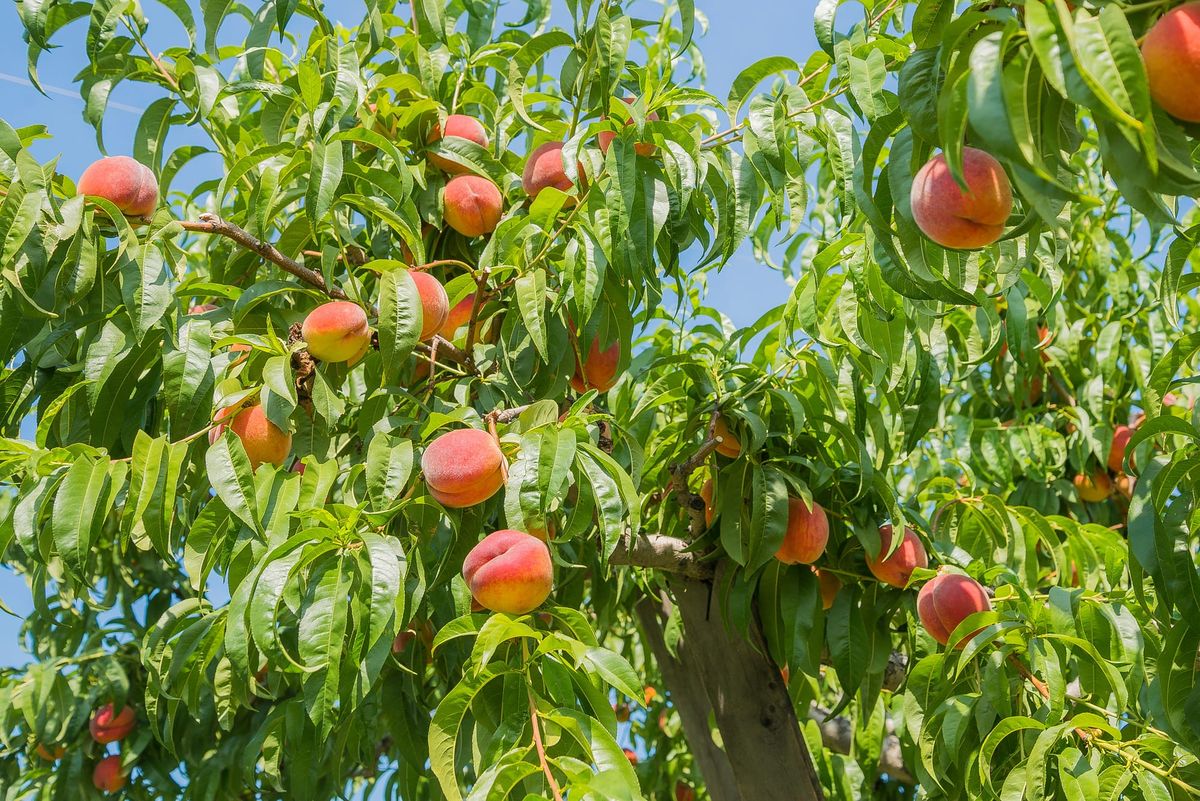
Richmond was a hotbed of peach innovation in the late 1800s, but many are now lost to history
Have you ever tasted a fragrant Millhiser peach, or a juicy Lyons? Unless you were alive over a century ago in Richmond, likely not. These peaches were once rising stars in the pomology world, and all originated here in the city.
Beginning around the mid-to-late 1800s, Richmond was in a peach frenzy of sorts. Peach growing (and pomology experiments in general) was becoming trendy and thought of as a great investment thanks to the increasing popularity of new fruit canning and drying technology. Local plant nurseries searched high and low for novel varieties that could become the wave of the future, either creating their own or finding Richmonders who possessed unusual options.
Despite basking in glory for a few decades, Richmond’s creations faded by the ‘30s, pushed aside by more resilient and higher-yielding varieties. However, some of their unique stories live on.
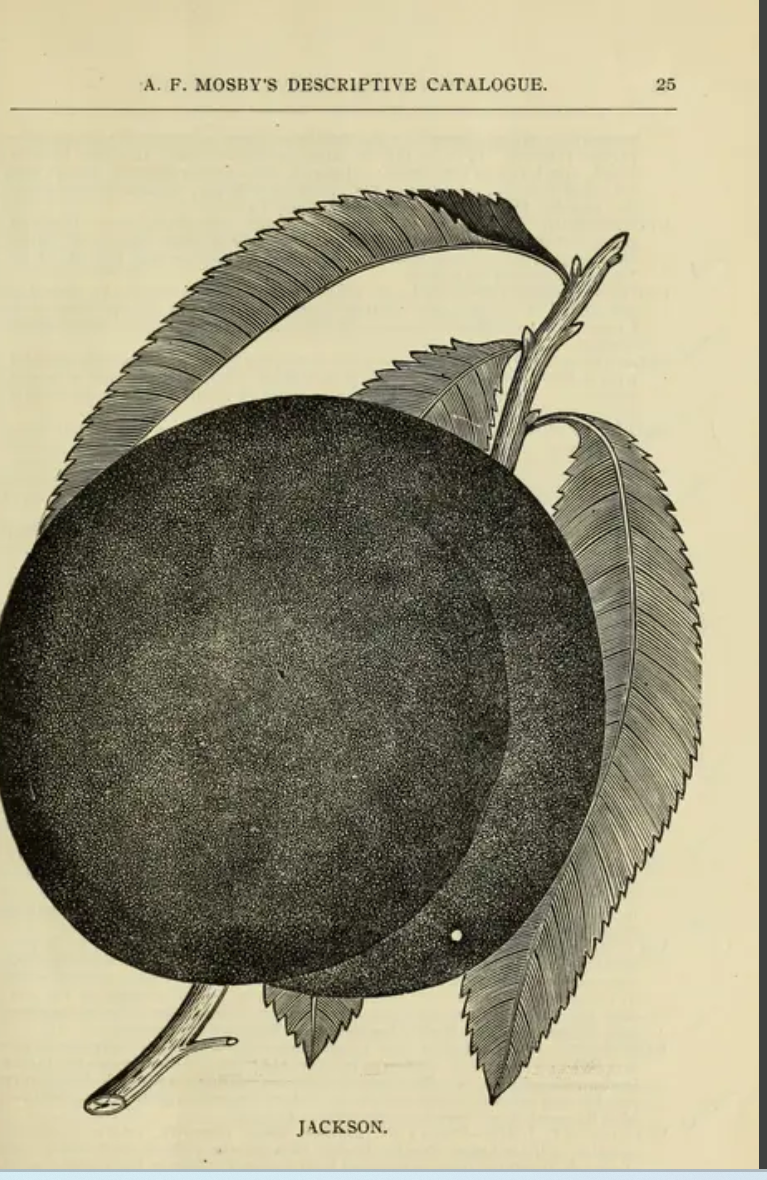
Jackson
This vivid red peach was discovered growing in the late 1880s on Jackson Street. Ripening in June, Jackson was marketed by sellers as “having never been known to rot”, making it ideal for markets.
Henrico-based fruit enthusiast Normand Smith was especially fascinated by this peach. Smith, once a member of the Virginia State Board of Agriculture, grew some at his former farm on Charles City Road (now the BFI Landfill), often selling the peaches to local dealers. In an 1897 Southern Planter snippet, the newspaper relayed how Smith brought them Jackson samples, and after examining and tasting, noted the variety seemed “an acquisition worth propagating.”
Pendleton
Pendleton was a large yellowish-red peach considered to be “unequaled in size, quality and flavor” in 1894. The fruit, which ripened around early October, was twice the size of Heath Cling (an enduring heirloom that can weigh up to half a pound) and was touted as ideal for canning.
Jennings
Jennings originated in the River City, and was offered by the Franklin Davis Nursery Company in the early 1900s. The vigorous, August-ripening variety produced thick-skinned fruit with a lemon-tinted top that dissolved into dark red. While succulent, Jennings tended to be stringy and greatly resembled Elberta – a popular heirloom peach still around today.
The nursery declared Jennings as “one of the finest, largest and handsomest yellow peaches we have seen.”
The Baltimore Sun even agreed. On August 20, 1903, a Jennings peach was displayed at its headquarters, which was quoted in the nursery catalog as saying: “A specimen of this peach was exhibited at our office, which weighed a pound and measured twelve inches in circumference each way, and was without a visible flaw or blemish.”
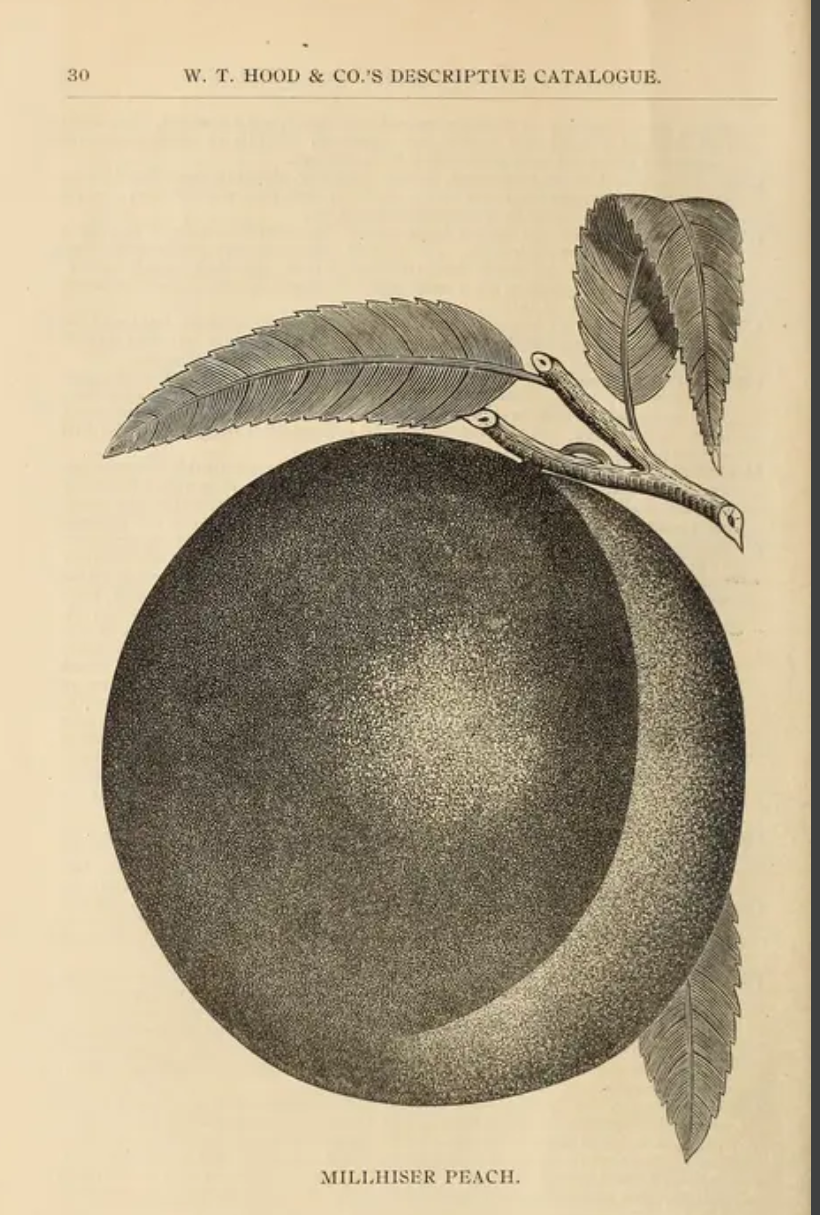
Millhiser
Created by Richmonder M. Millhiser in the late 1800s, this namesake was a large freestone (a stone fruit type where the flesh doesn’t cling to the pit) that could reach up to 12 inches in circumference. The aromatic peach, which ripened in early October, was pale green with hints of red and produced a flesh that melted in one’s mouth.
Millhiser was originally promoted as promising and superb with the fruit “being the admiration of all who have seen it.” The cultivar was even grown at the New York Agricultural Experimental Station in Geneva which explored the peach’s possibilities. By the 1910s, the tables turned and nurseries were almost begrudgingly offering Millhiser, now calling it “unsatisfactory.” The experimental station recorded in a 1916 report that it now considered Millhiser of “doubtful value” and that the tree was susceptible to leaf curl.
Starke
Starke was found growing in Ashton Starke’s yard at 915 West Franklin Street. Starke, an agricultural businessman, exhibited his homegrown fruit at the 1895 State Fair, winning first prize with seedlings from this award winner available to the public about a year later.
The peach featured a yellowish, bright red skin that, when cut, exposed a deep yellow interior that intensified to red near the pit. As with many Richmond-created peaches, Starke ripened in early autumn and was considered very similar to Elberta but much juicier.
Lyons
Another prize-winning peach, Lyons was first uncovered in Monroe Ward. The whitish-red freestone was exceptionally luscious and often compared to the sugary Stump the World, another lost heirloom that was popular in regional landscapes at the time.
J.B. Watkins & Bro. (which today operates as Watkins Nurseries) remarked in their fall 1897/spring 1898 Elmwood Nurseries catalog as “hoping to see [Lyons] as generally planted as they deserve.” At their Midlothian nursery, one three or four-foot-high tree went for $0.25 (around $10 today).
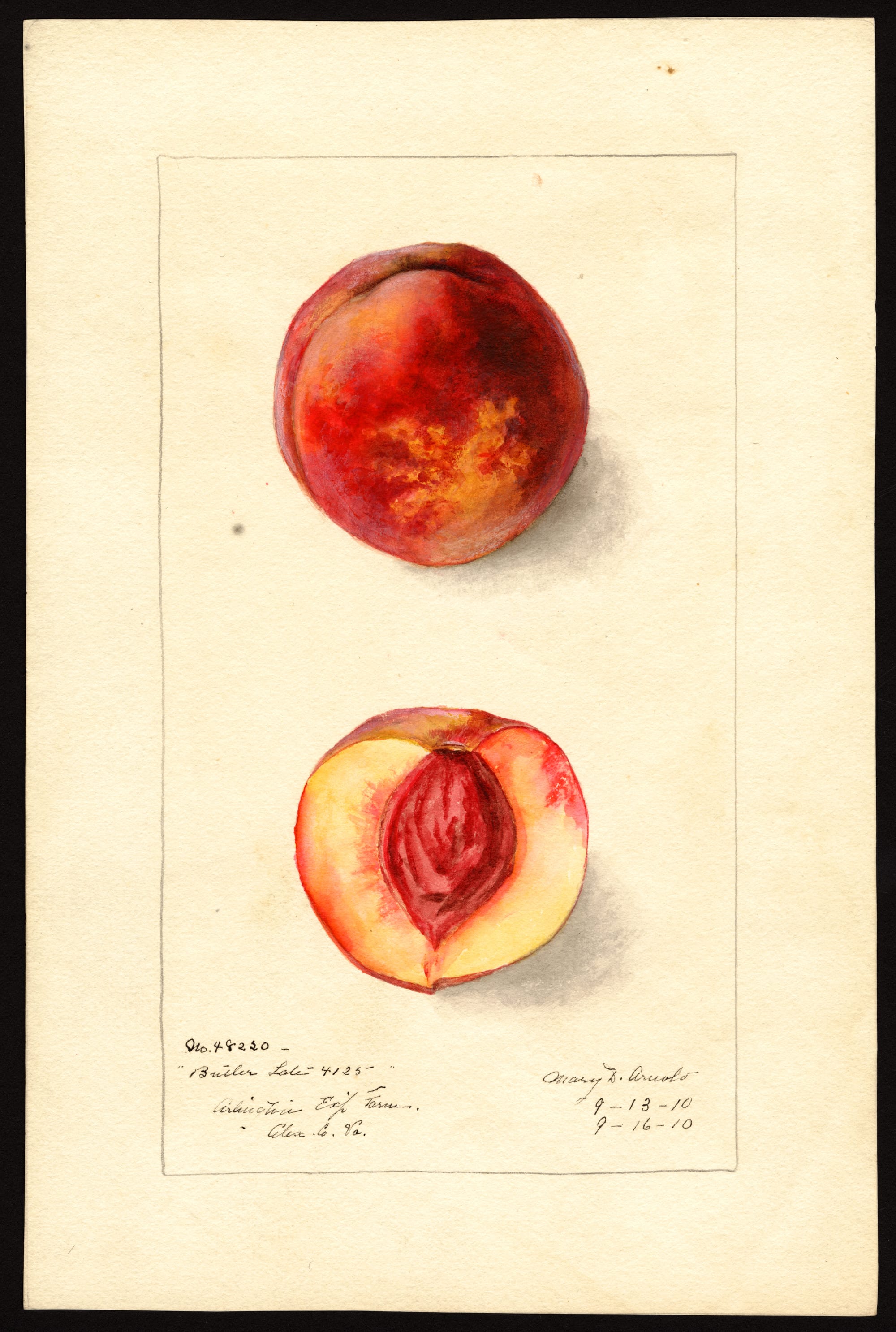
Butler Late
One of the last of the group to vanish, Butler (sometimes Butler’s) late was a large greenish-white red freestone. It was found in the garden of Richmonder J.T. Butler, hitting the market around the late 1880s ,with trade catalogs instantly proclaiming the peach as magnificent, valuable and a promising, profitable sort that could help extend the short peach season thanks to the fruit ripening in September and October.
Butler late was one of Richmond’s more widely available peaches, being sold in advertisements and nursery catalogs from Tennessee to Delaware. It was grown at both the Arlington Experimental Farm in northern Virginia and the New York Agricultural Experimental Station to determine its true potential, but the latter later noted in a 1916 report that the variety “lacked in size and flavor” on the station grounds, perhaps crushing Butler late’s hopes for the future.