For sale at Richmond marina: One of the last surviving WWI boats. Needs work.
“It’s a big project.”
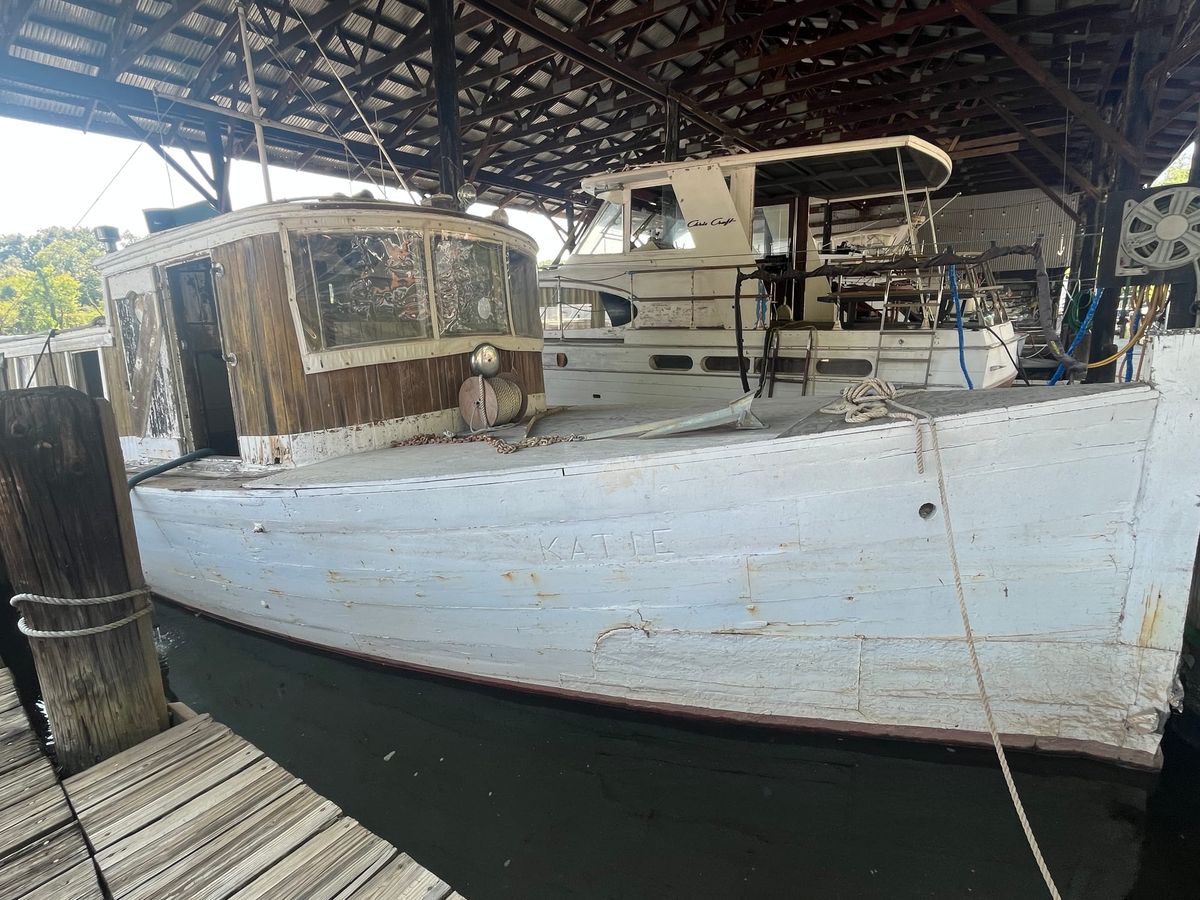
That’s how Matt Harris describes the USS Katie, a wooden boat docked at the Richmond Yacht Basin about 10 miles south of the city.
The Katie doesn’t look like much at first sight — relatively small, weatherbeaten, very obviously showing its age, which is roughly about 110 years. Yet the boat’s history is arguably among the more unique in the U.S.: It is reportedly among the scant few World War I-era U.S. Navy ships still afloat today.
A small handful of U.S. battleships from the global conflict are still technically on the water, notably the USS Texas, which is docked in Galveston, and the USS Olympia, moored in Philadelphia. Both of the steel watercraft serve as museum ships.
The Katie, in contrast, remains functionally a civilian vessel, though Harris told The Richmonder that anyone seeking to restore it to its former glory — or even just to operational strength — should have “money to burn.” He is presently selling the craft for $5,000.
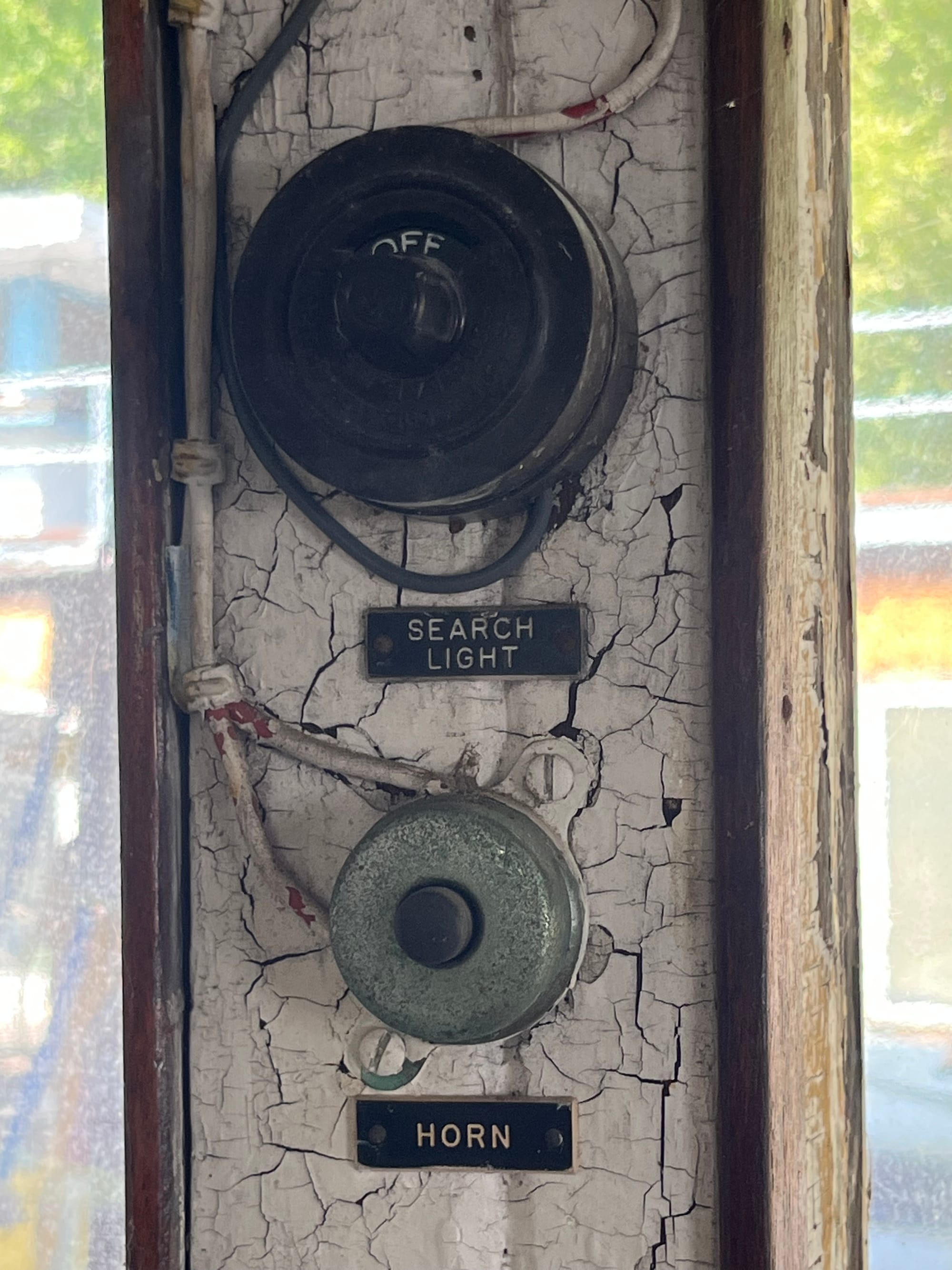
Harris is the latest in the ship’s long century-plus line of owners, and he admitted that he fell in love with the boat when learning of its rich history. The Katie was built in Crittenden, Virginia, near Suffolk, in 1915 or 1916, by local boat-builder Charles Bush; it was originally launched as a private yacht, though records indicate it was used by the Virginia Fish and Oyster Commission shortly after it was built.
The U.S. entered World War I in 1917, after which the U.S. Navy began commissioning vessels on both the East and West coasts to serve as patrol boats. The Naval History and Heritage Command says the Katie was commissioned on April 24, 1917, and used as “a shore and section patrol boat,” with patrols extending “from Norfolk and the James River to the lower reaches of the Potomac River and Chesapeake Bay.”
The craft served in the war for a little over a year before being decommissioned on Oct. 22, 1918, just a few weeks before the conflict ended. It ultimately ended up returning to the Virginia Fish and Oyster Commission.
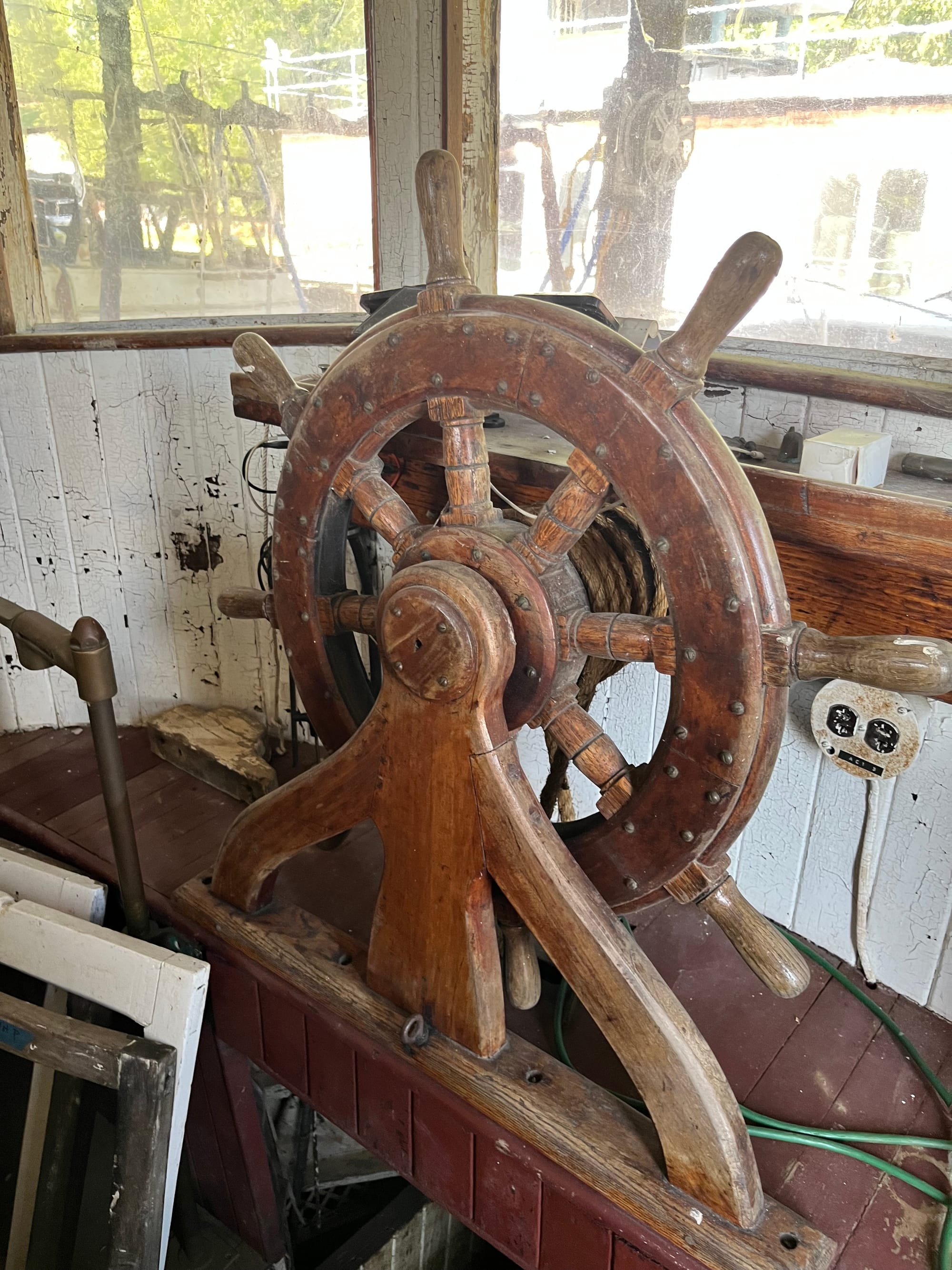
Records show the Katie then took part in a second, at-times armed conflict, serving as a patrol boat in the legendary “Oyster Wars” that raged between Maryland and Virginia oystermen for roughly a century from the end of the Civil War to about 1960.
That decades-long dispute played out largely in the Chesapeake Bay between oyster fishermen squabbling with the state governments and each other over oyster harvesting. Both Virginia and Maryland had oyster commissions to police the conflict; the government agencies were popularly known as “Oyster navies,” meaning the Katie could be seen as having served in two distinct naval forces in two different wars.
Katie’s service in that conflict was noteworthy. Harris said the boat played a pivotal role in a violent guns-drawn conflict at Mobjack Bay in 1928 where it was fired upon by Maryland fishermen. The National Guard was called out to restore order; the dispute was notable enough to make national news in the New York Times.
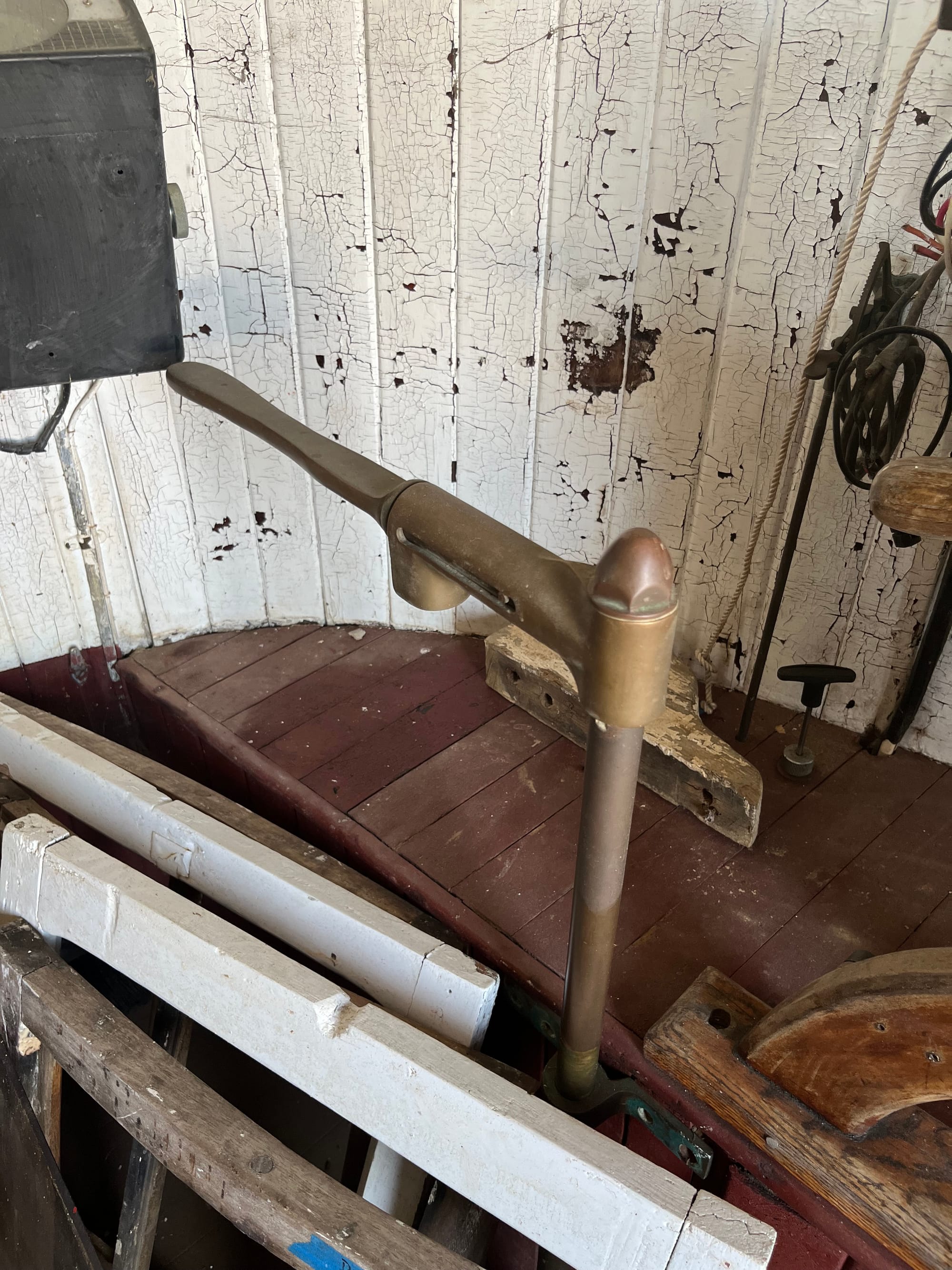
The boat ultimately returned to fully private ownership, though it would serve as a Coast Guard Auxiliary watercraft in the subsequent years. It changed ownership numerous times over the decades; several years ago a group of friends purchased it with the intent to restore the boat while documenting the process on Instagram.
Harris, whose father has served as president of the Richmond Navy League Council, purchased the watercraft also intending to restore her, but the extent of the project was more than he had expected.
“I understood what needed to be done, and I understood how to do it,” he said. “But it was really more of a project than I had the ability to take on.”
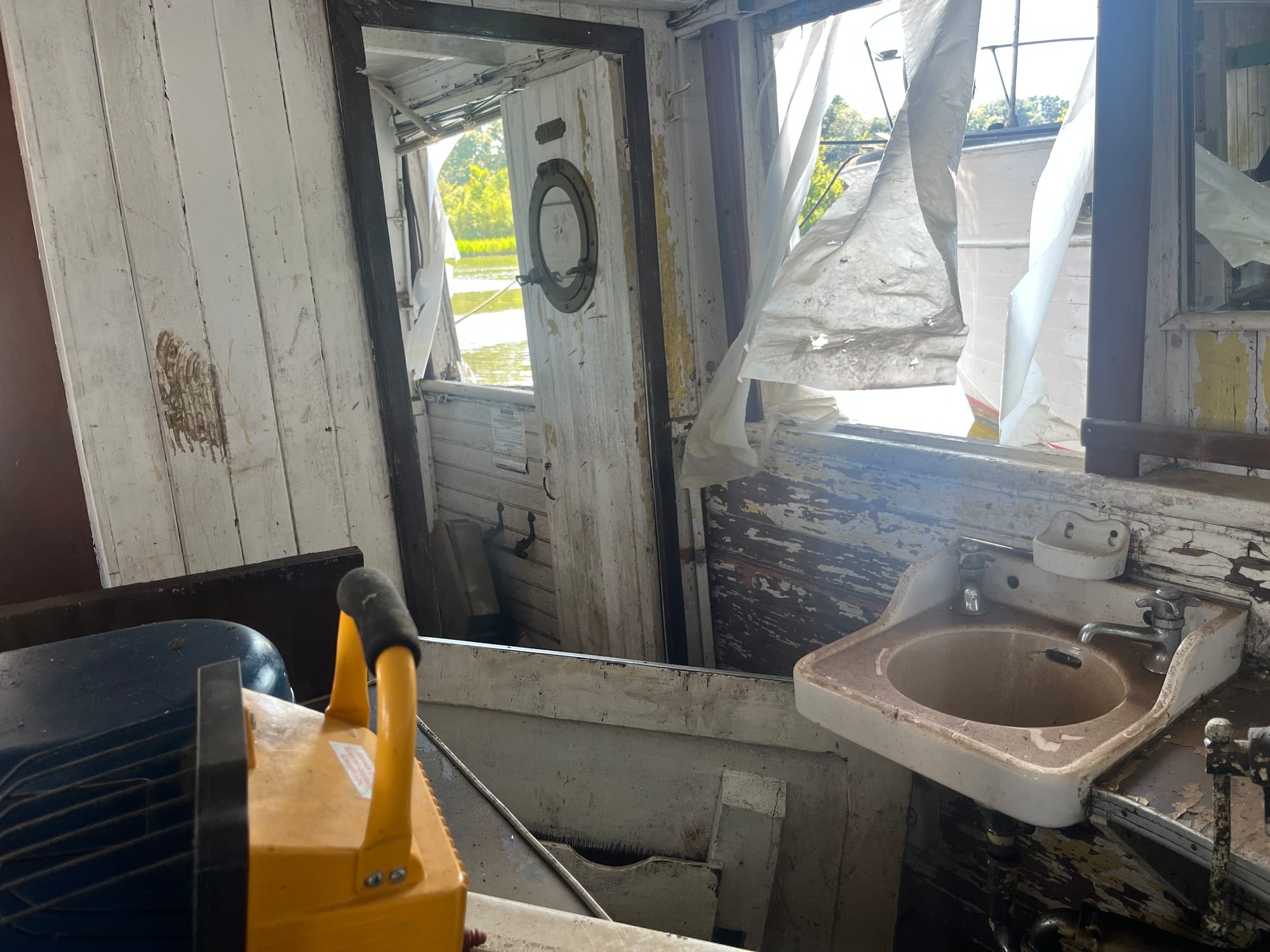
At the Richmond Yacht Basin, the boat requires 24/7 pumping to ensure it doesn’t take on water and sink.; Harris said he has to change the pumps regularly as they wear out. He said a restoration project would likely require a five-person crew and he estimated that basic repairs could hover around $20,000.
Harris said he hopes to find someone with both the resources and the drive to restore the boat so it is not lost to history. He said the craft could function as a museum or a teaching vessel of some kind, or even as an Airbnb option.
He said his father estimates that the Katie is “probably one of five World War I [Naval] boats of any kind that still exists.” One other example is the former USS See W. See, which is now privately owned and still floats on the Chesapeake as the Mar-Sue. Harris said that the Mar-Sue has been significantly altered since her war days, while the Katie remains mostly unchanged.
Reflecting on the boat’s long and colorful but sometimes-expensive history, Harris joked that “the best day in Katie ownership is the day that you don't have to be burdened with her anymore.” But he expressed hope that the boat would find a new home and be preserved for future generations.
“We want somebody to have the same love affair that everyone's had with this boat,” he said. “But we just want somebody that actually has the means to do it.”