Anna Julia Cooper School founder retires; school he started keeps growing
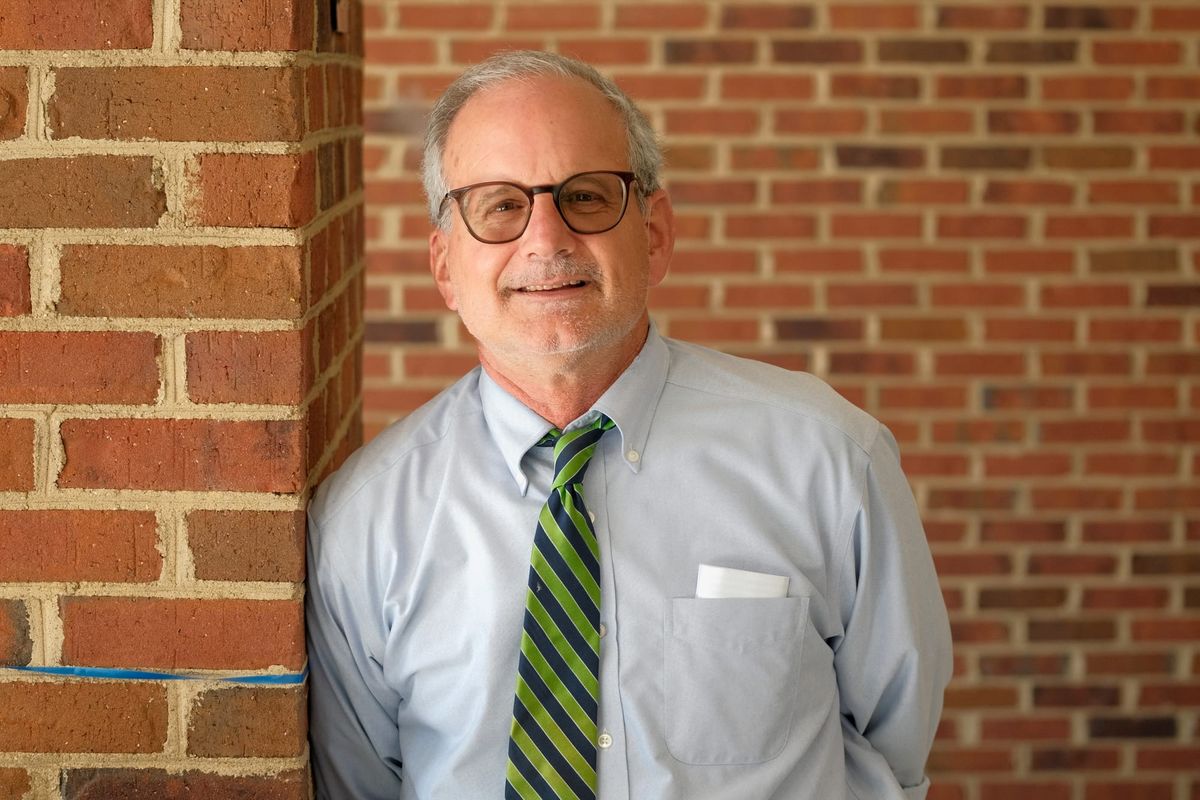
The Anna Julia Cooper School started in a two-story house in Richmond's East End with 25 students, two teachers and Mike Maruca as founding head of school.
On the first day of school, a local TV news crew showed up. Maruca doesn’t remember who invited them, but he does remember frantically waving them off. First, that kind of attention makes Maruca squirm. Second, he figured they were there for a good-news story in a rough part of the city, and he wasn’t at all confident the school would be around long enough to justify it.
“I don't even know if we're going to be here for a few weeks,” he told them. “Can you come back around Christmas time?”
That was 17 years ago. Today, the school has grown into a neighborhood institution, offering a tuition-free, faith-based, private-school experience to students living in some of Richmond’s most impoverished neighborhoods.
Maruca retired last month, stepping down from leading a school community still very much on the ascent. The school has more than 300 graduates now and enrolls over 200 students a year. This summer it cut the ribbon on a brand-new, $14 million building — the latest addition to a campus that has spread across three buildings.
West End church helps start East End school
The Anna Julia Cooper School began as a project of St. Stephen’s Episcopal Church, a West End congregation with a long history of volunteering and outreach projects in the East End.
In 2008, members were looking for ways to deepen that connection when they began exploring opening a new religious, private school. They wanted to address what they saw as a stark gap in educational opportunities between their community, home of selective private schools like St. Catherine’s and St. Christopher’s, and the East End, where parishioners were tutoring students and helping with after-school programs.
“There was just such an underserved population there,” said Betsy Fauntleroy, a church member who would become a founding board member of the school.
Maruca, a former Jesuit priest, was looking for something more, too.
The Catholic Church had brought him to Richmond, where he helped found and lead the Sacred Heart Center, a South Richmond community center. After leaving the Jesuits, he worked as a middle school principal at the Steward School, a well-regarded West End private school. But after 10 years in the position, he said he felt called to return to more service-oriented work.
A nonprofit consultant pointed him toward St. Stephen’s, and he found himself at lunch in a West End strip mall with David Anderson, then the assistant rector of St. Stephen’s, and Gordon Wallace, a parishioner who would become the chair of Anna Julia Cooper’s board.
“Somebody mentioned a middle school, and I said, I’m all in,” Maruca said.
It was their first meeting. Nine months later, they had a school.
Can you open a school in three months?
Maruca can be self-effacing and occasionally goofy. (In a video the school made marking his retirement, he spins and dances out the doors of the school to the Grateful Dead’s “Truckin.’”) But he also projects a kind of priestly wisdom that inspires confidence.
That could at least partially explain why, after he was formally hired in June 2009, the founding board signed off on his plan to open the school to students just three months later.
“It felt like there was no way we were going to open in three months, but we did,” said Fauntleroy.
By Maruca’s own account, it was a scramble. Their budget for the year was $300,000, and their staff of three was augmented by a steady stream of volunteers from St. Stephen’s and other local Episcopal congregations.
Maruca’s guiding document was a checklist he’d made during a conference on one of those hotel room notepads. He still has it.
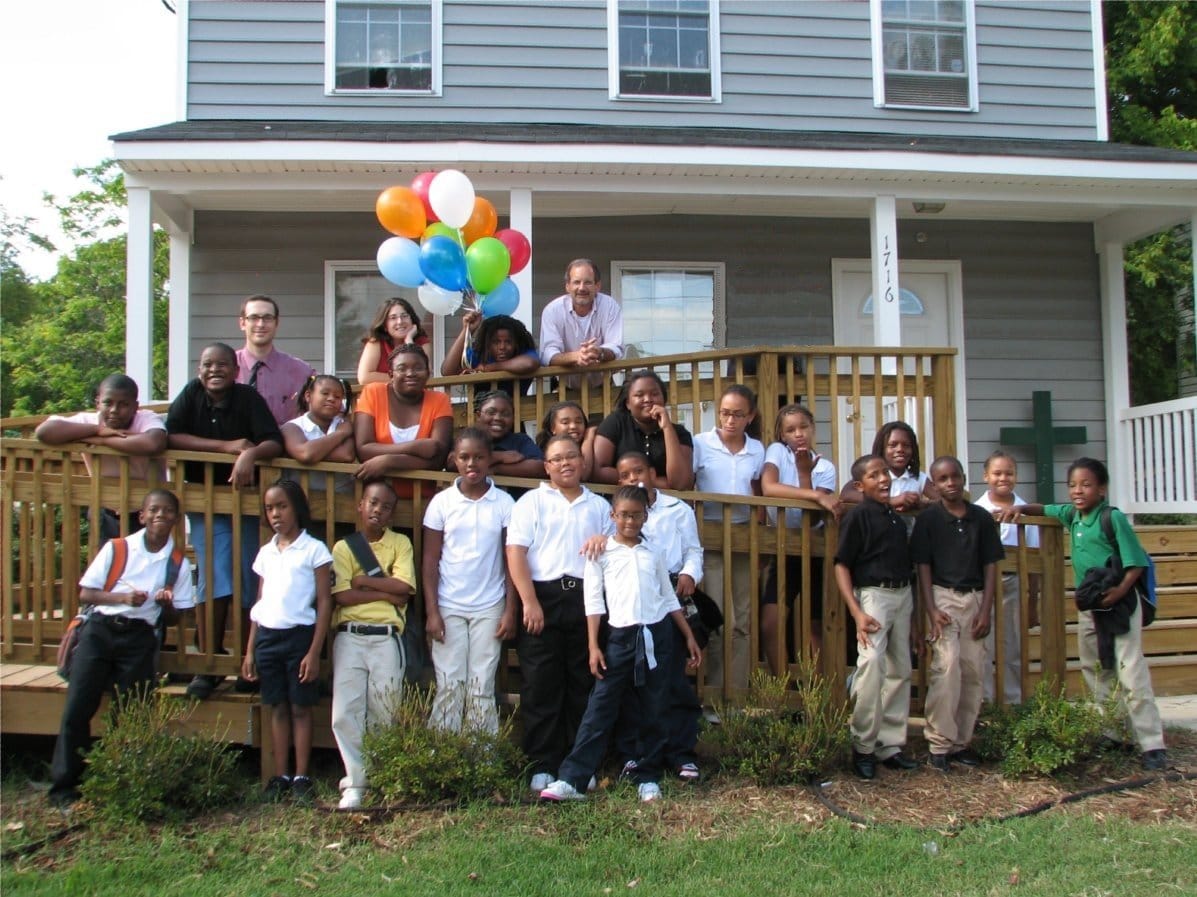
The first two items were “faith” and “will.” Third on the list was “building” — that beige two-story home, which the team renovated to accommodate one classroom on each floor. They decorated the front porch with a simple cross.
Fourth: Students. “Twenty-five people didn’t just come lining up at the door,” he said. “We had to track them down, convince people this was credible.”
To recruit that first class of fifth and sixth graders, Maruca went door to door in Fairfield Court looking for families with children who might be interested in enrolling. Other students came via word-of-mouth referrals from mentors and volunteers at local elementary schools.
Maruca said his pitch to parents hasn’t changed much: smaller class sizes, school days that last until 4 p.m. and a religious environment that includes weekly chapel.
Toward the bottom of Maruca’s list was "name." He and the board chose Anna Julia Cooper, a teacher and author born into slavery, who devoted her life to the education and liberation of Black Americans.
On the first day the school opened its doors to students, Maruca remembers worrying whether anyone would really show up. Every single seat was filled.
Making it up as you go
Yolanda Gilliam’s introduction to the school came via a Craigslist ad a friend sent her seeking a math teacher. It was the summer after Anna Julia Cooper’s first year, and the school was planning its first expansion, from two classrooms to four.
When she arrived for the interview, she did a double take. Was this house the right place?
“I didn’t realize I was walking into the beginning of a school,” she said.
Inside, she met Maruca. They chatted for a bit and Maruca offered her the job on the spot.
Maruca sold her on the school’s mission in one meeting, she said. “They were trying to do something new, to give kids a better education, a quality education, in a smaller setting,” she said. “You can’t get smaller than having history and English in the living room.”
Gilliam’s new classroom was in a church basement down the alley from the house. On the first day of class, she said the kids spread out on the ground with screwdrivers and assembled their own desks.
Gilliam, now the school principal, said they just kept on building things as they went. The teachers set school rules, built their curriculum, chose textbooks, established a uniform. The students were in charge of things like choosing school colors (green and navy), picking a mascot (the lion) and designing the logo.
“Mike’s message was: Figure it out, you got it,” she said.
From house to campus
When it comes to measuring student achievement, Maruca is wary of the tidy statistics schools use to sell themselves. He points to a local high school that touts a 100% college-acceptance rate. "I could get my dog accepted to a college," he said. The hard part, he argues, is everything after — enrolling, paying, and staying until you finish.
As for Anna Julia Cooper's own graduates, the school's most recent annual report tracks one cohort: of the Class of 2021, 92% finished high school on time and 77% went on to some form of higher education.
Parents appear to like what they see, and the school receives more applications than available slots each year.
The school is also backed by a strong base of primarily individual donors who have contributed $73 million over the last decade to fund operations, an endowment and the construction of two new school buildings, according to tax filings.
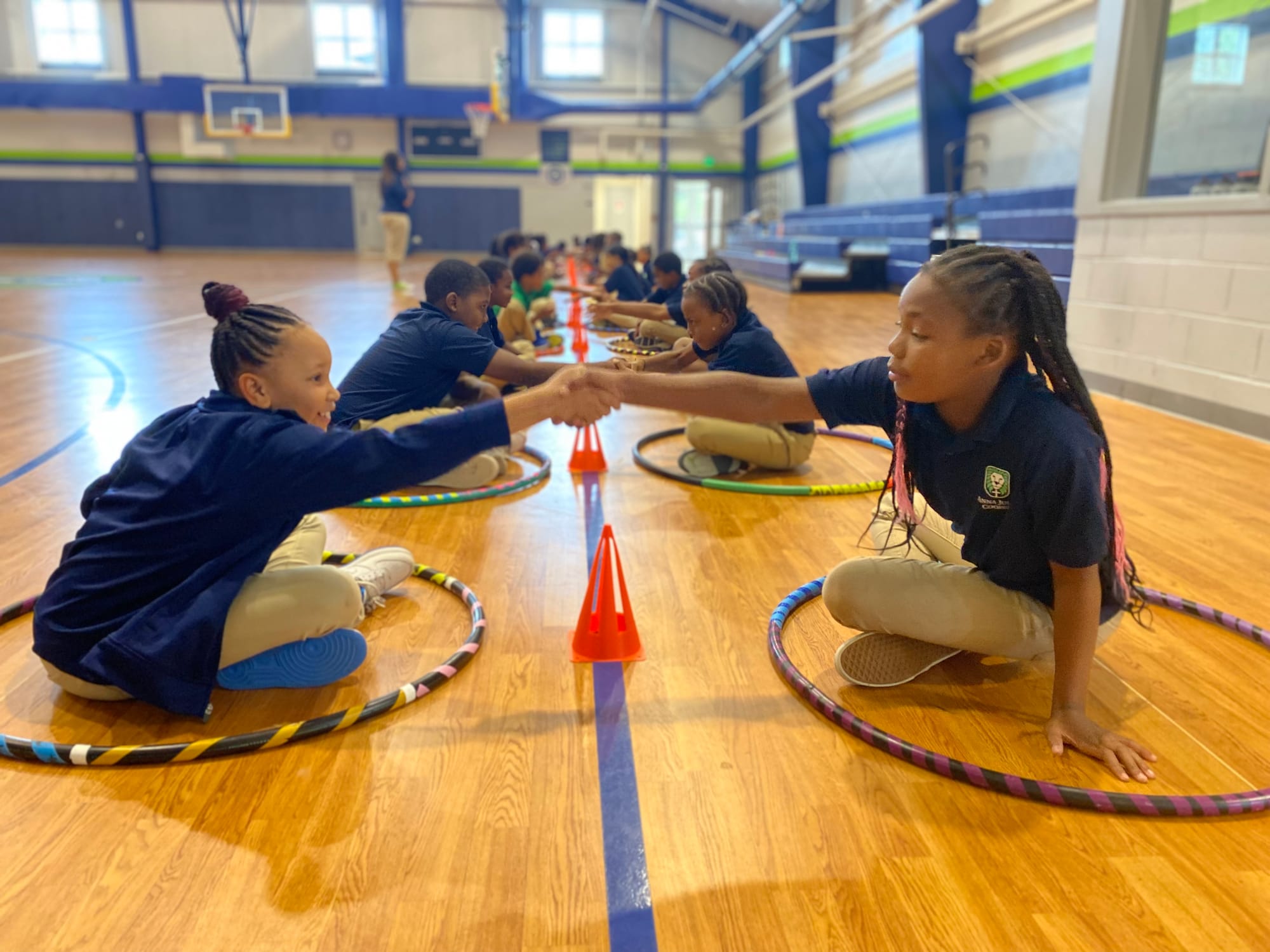
The new elementary school building is now open to students for summer school. The building has enough space for two classrooms for each grade level, allowing the school to double its current elementary enrollment and eventually grow its student body to 300 students.
Plans for the former elementary building are still in progress, but the school intends to revert it to its original use as a daycare and pre-K education facility. The school purchased the building from the city housing authority earlier this year after 15 years of renting it.
The sale price, $150,000, was significantly below its $1.5 million assessed value. Officials said the decision to sell at such a low price underscores the authority’s “bold commitment to expanding access to quality education.”
‘Love, educate and uplift’
Maruca is loath to take credit for Anna Julia Cooper’s success. But he has a few ideas about what made it work.
“The mission statement is to love, educate and uplift, and it’s very much in that order,” Maruca said. He said it’s what’s allowed the school to reach its students, some of whom come from precarious home lives and difficult circumstances.
And he believes that approach helped him and his first two teachers – all white – overcome any initial skepticism they faced coming into a predominantly Black neighborhood.
“We were very white. But I’m a big believer that love transcends that stuff,” he said.
Rashaundra Thomas, who was in one of the school’s first classes, said she saw it pretty much the same way. Race was never a factor for her at the school, she said. What stayed with her was the respect Maruca and the teachers showed her and her classmates.
"They were open to learning from us, also," she said. "As kids, in the community we were in, they didn't always know how to go about things, but we did."
The school's faculty and staff have grown considerably more diverse. Six of the school’s 10 administrators are Black, as are just under 40% of the teachers.
Over the years, the neighborhood has embraced the school, from local city councilor Cynthia Newbille, who called the school a neighborhood treasure at the ribbon cutting of the new elementary, to alumni who have started enrolling their own children.
Now Thomas’s son, Dekwon, is a rising third grader in the new building. “I was saying even before I had kids, I’d prefer for him to go to that school,” she said.
“They’re just good people,” she said. “They show up for you at times when you feel like you can’t even show up for yourself.”
What’s next
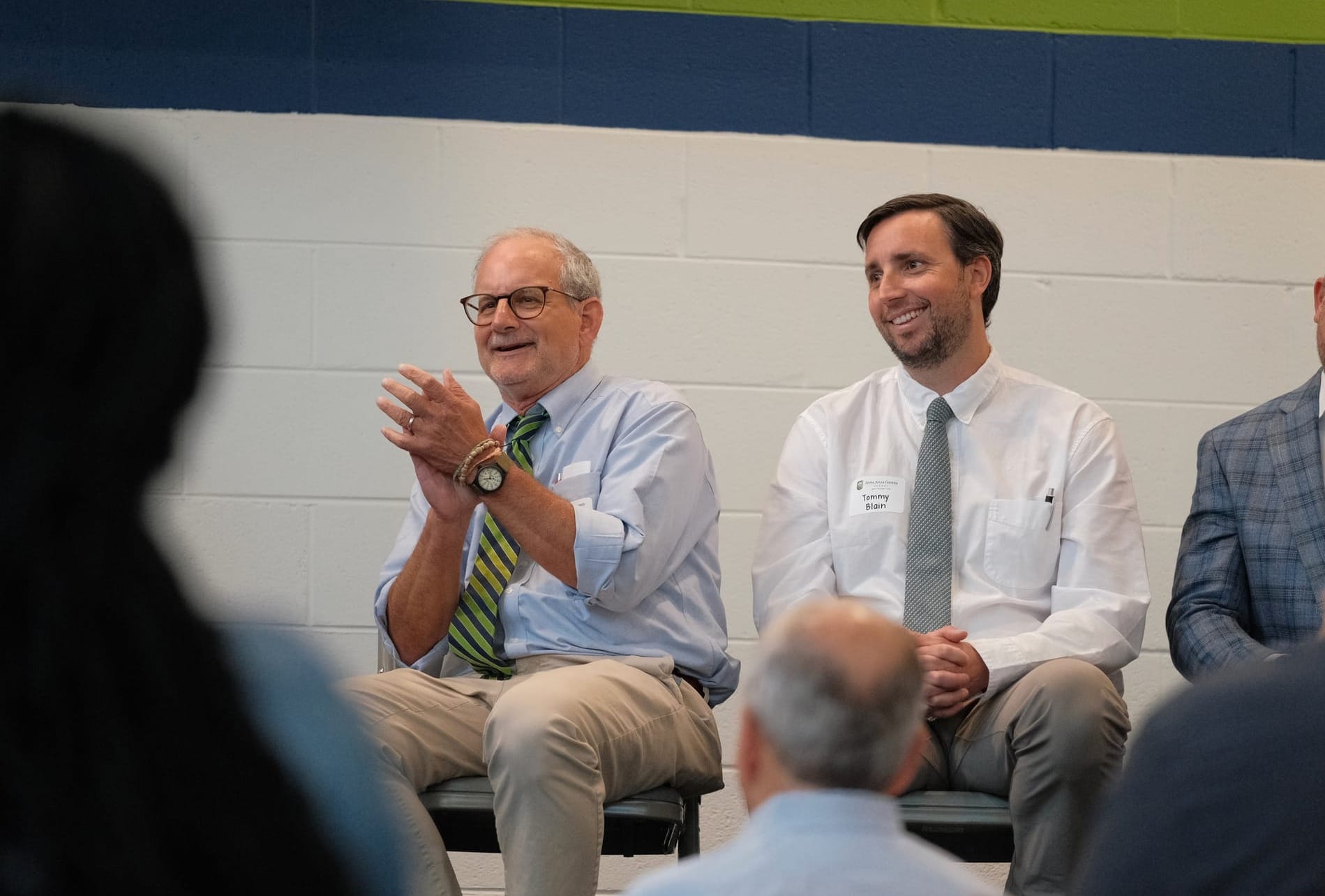
The Anna Julia Cooper School hired Tommy Blain to serve as new head of school. He previously led a tuition-free public charter school in Boston with a similar model — extended school days, mandatory summer school and an emphasis on character development.
Maruca, meanwhile, said decision fatigue finally caught up with him and he's happy to hand off the reins. He claims he doesn't want to think about anything more complicated than mowing his lawn for the next few months. But he also admits he's already talking to a group of graduates about a new project in the neighborhood related to workforce development and the trades.
On his last day as head of school, the community gathered to cut the ribbon on the new elementary building. Just inside the doorway, they unveiled a plaque designating the building’s main hallway as Michael Maruca Hall.
The board had initially announced it would name the entire school after him. Maruca, still waving off attention at every opportunity, said this is a compromise.
“So, thank God, is what I say,” he said. “Would you want a school named after you?”
Contact Reporter Ned Oliver at noliver@richmonder.org