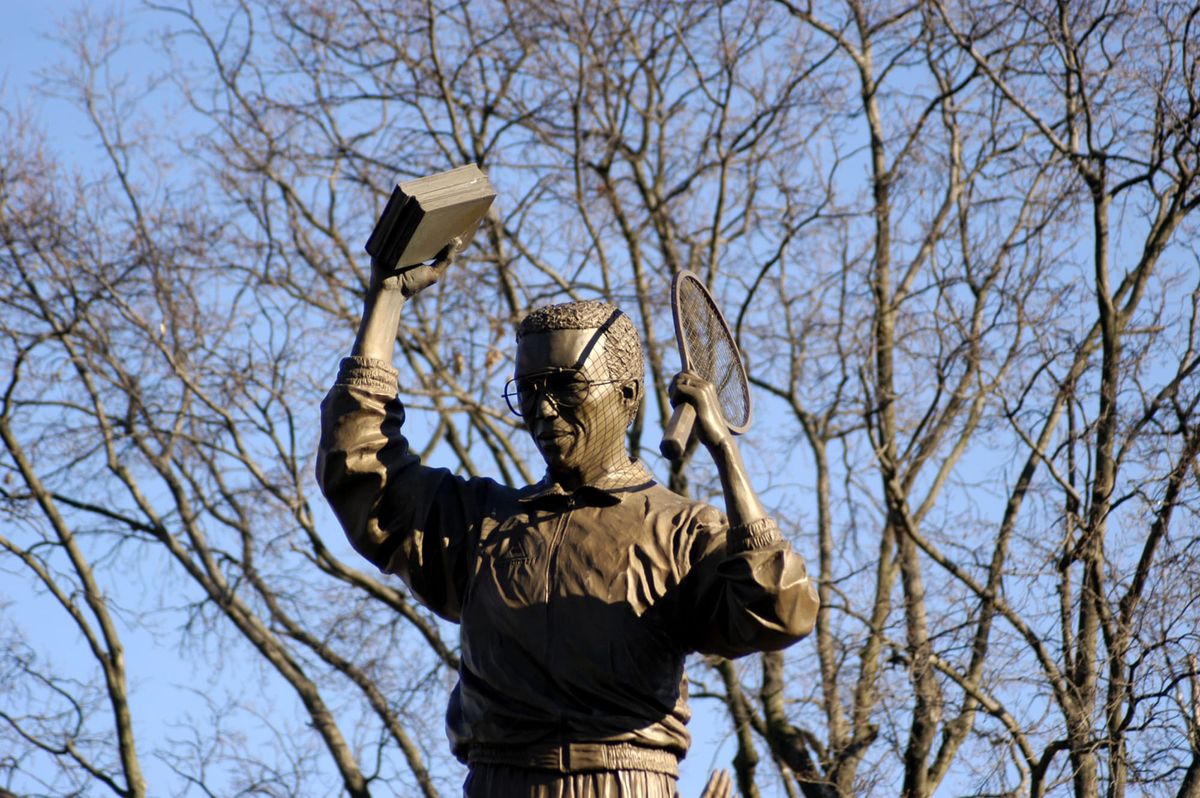
Arthur Ashe's statue turns 30 on Friday. It wasn't an easy road to Monument Avenue
Visit the intersection of Roseneath and Monument avenues and you will be greeted by a champion.
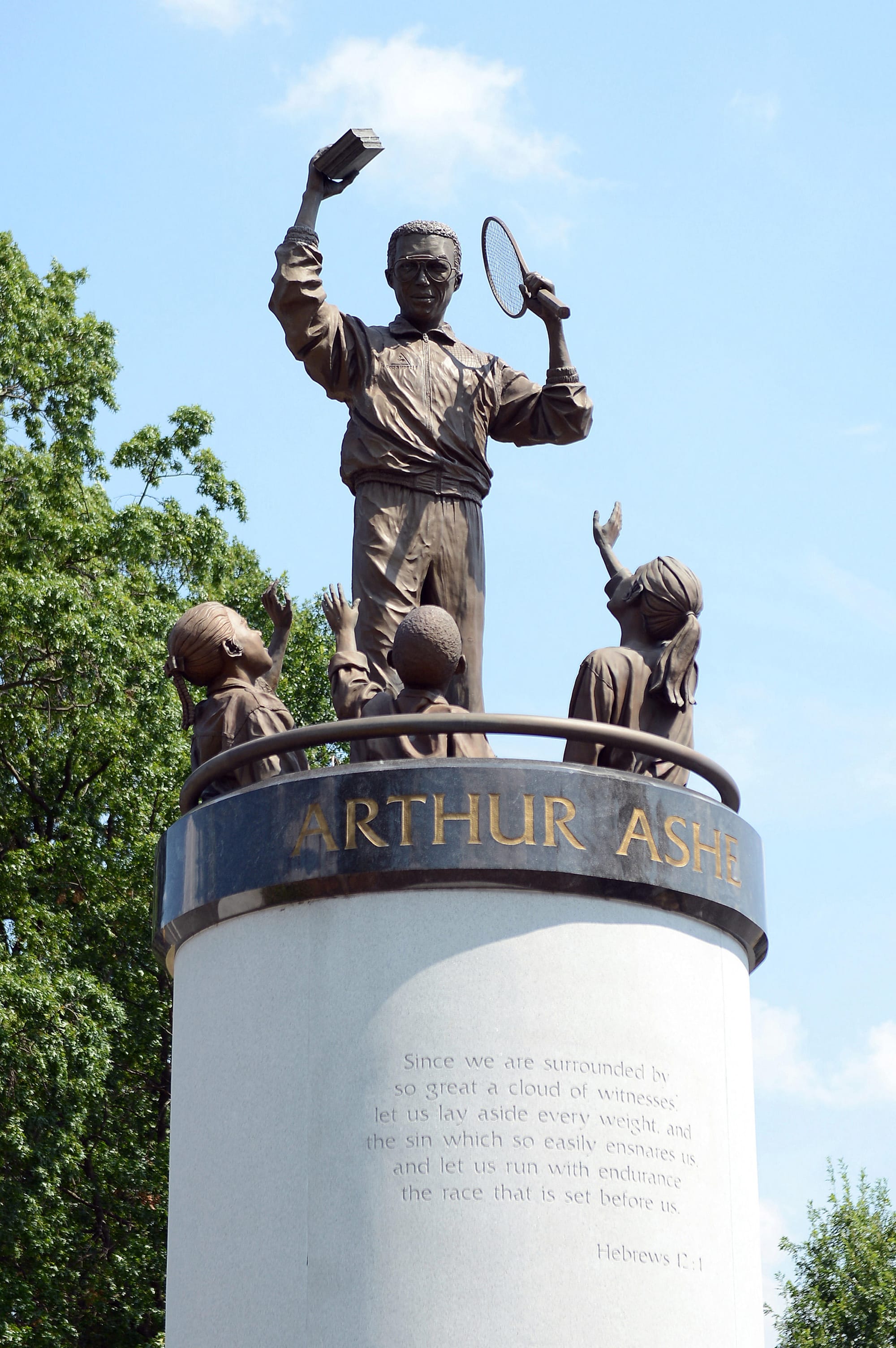
It’s here, near the northwest corner of the Museum District, that the Arthur Ashe Monument resides. Comprised of a 12-foot-tall bronze statue of Ashe atop a 16-foot granite pedestal, the monument celebrates the Richmond tennis great, humanitarian, activist and author.
Despite the barriers of race and class in his era, Ashe became the only Black man to win singles titles at Wimbledon, the U.S. Open and the Australian Open. After finishing his tennis career, Ashe became a TV commentator for HBO and ABC, and authored a three-volume, 1,600-page history of Black athletes in America titled “A Hard Road to Glory.” He was also an activist, involved in projects and protests opposing Jim Crow-era segregation, apartheid in South Africa, and poverty and injustice in Haiti.
“Arthur Ashe was such a pioneer, in terms of his tennis career and his grace under pressure,” said Tosha Grantham, a creative consultant for consulting firm Middle Path Creative who recently co-curated an exhibition about Ashe at the Black History Museum & Cultural Center of Virginia. “Ashe’s career as an advocate for humanitarian rights, and his discipline in tennis, made him such an exceptional human being.”
In April 1992, Ashe publicly announced that he had AIDS, believing that he contracted HIV from a blood transfusion in 1983. He died from AIDS-related pneumonia less than a year later his announcement.
But when a memorial for Ashe was proposed for Monument Avenue shortly thereafter, it was cause for controversy. Until that point, only white Confederates had been honored on the thoroughfare, and the idea of placing a monument to a Black man stirred up a heated debate.
Friday marks 30 years since the Arthur Ashe Monument was unveiled to the public. Three decades on, here’s a look back on how this monument came into existence.
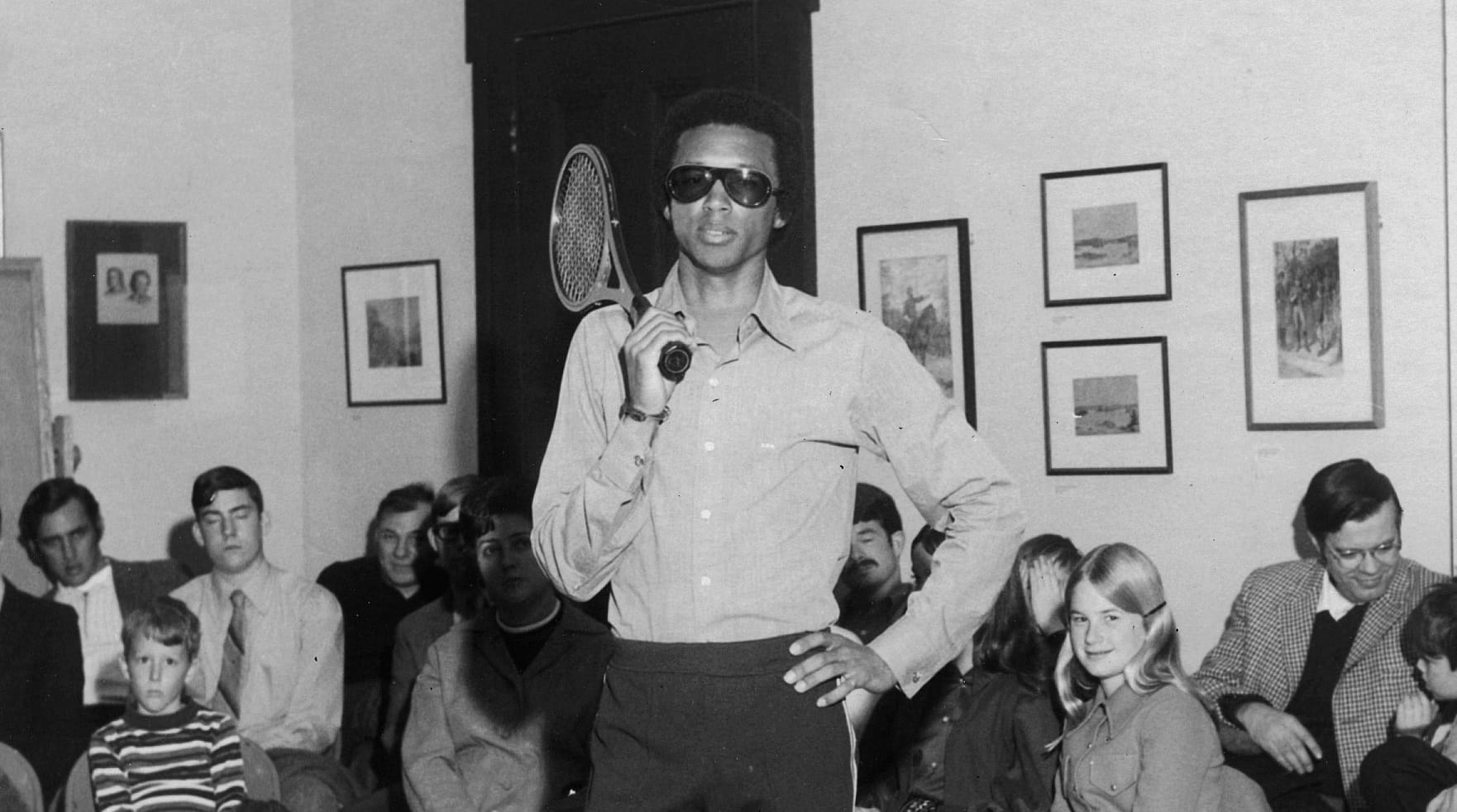
“Knowledge is power”
Local sculptor Paul DiPasquale’s journey to crafting the Arthur Ashe Monument begins with his daughter.
Back in the early ’90s, DiPasquale and his daughter practiced tennis at their local recreation center. At some point, Wyatt Kingston, the supervisor of the center, asked DiPasquale if he would take a van of kids to hear Ashe speak at Byrd Park.
DiPasquale agreed and was impressed by Ashe; he later wrote to him, requesting to create an authorized statue of the athlete. Three weeks later, Ashe called DiPasquale to discuss what he wanted it to look like.
“I want to show that knowledge is power, have books representing that,” Ashe said. “I’d like to be wearing my warmups.”
It was important to Ashe that a child or several children would be represented in the sculpture. Almost as an afterthought, Ashe said that perhaps there should be a tennis racket involved.
“That’s how it all began,” DiPasquale recalled. “He died almost a month after he had called me.”
Upon returning home from Ashe’s funeral, DiPasquale found a package waiting for him. The package was from Ashe; enclosed were family photos to be used as a reference for the statue and a note saying that Ashe wanted to talk about the project again soon.
A week later, DiPasquale reached out to Ashe’s widow Jeanne Moutoussamy-Ashe to let her know about the project and ask if she would like to have the photos returned. Moutoussamy-Ashe messaged back that DiPasquale should continue with the project.
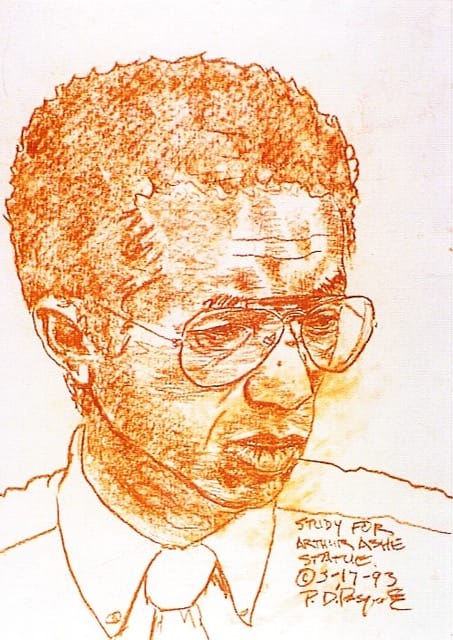
About 10 months later, with the approval of Ashe’s widow and his family, DiPasquale finished his design. Ashe’s brother Johnnie was especially impressed: “He said, ‘This is just so much closer to his likeness than I realized it could be,’” DiPasquale recalled.
But designing the statue was only one component of realizing the Arthur Ashe Monument. Getting it funded and deciding where it would be placed was another topic entirely.
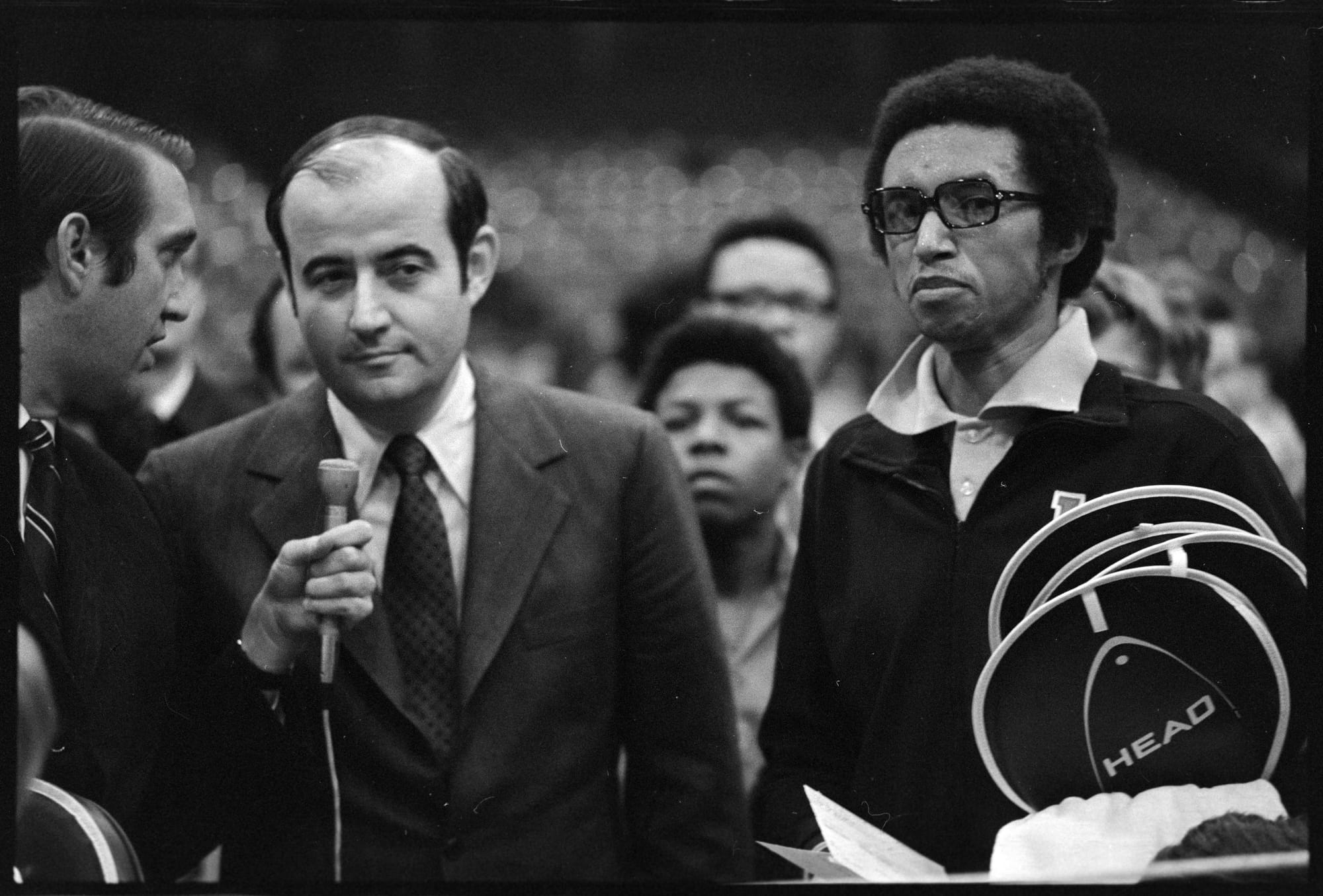
“Richmond’s Confederate-American population”
In Ashe and DiPasquale’s initial conversations about a statue, Monument Avenue wasn’t even a consideration.
Instead, the monument was initially envisioned as part of a proposed museum to Black athleticism. The Hard Road to Glory African American Sports Hall of Fame that Ashe envisioned was never realized, but Virginia Heroes, a mentorship program that he had founded, announced a $400,000 fundraising campaign for the monument.
At a press conference unveiling a plaster version of DiPasquale’s sculpture, former Virginia Gov. L. Douglas Wilder — who was chairman of Virginia Heroes — announced that the statue should be on Monument Avenue.
“And the controversy began, which lasted three years,” DiPasquale said. “Letters to the editor began right away.”
Pushback crossed the color barrier, with some white residents preferring to keep Monument Avenue for dead Confederates and some Black Richmonders opposing putting Ashe on “Losers Lane.” At one City Council meeting, the president of a pro-Confederate flag group referred to Monument Avenue as “hallowed ground” and said that placing Ashe on the street would be an afront to “the historic sensibilities of Richmond’s Confederate-American population.”
Byrd Park, where Ashe hadn’t been allowed to play tennis as a youngster because he was Black, was discussed as an alternate site. Then-Mayor Leonidas B. Young II and Moutoussamy-Ashe supported this location. Henry “Chuck” Richardson, a Black City Council member, and Richmond Times-Dispatch columnist Michael Paul Williams disagreed, saying that Monument Avenue, the city’s most prominent thoroughfare, shouldn’t be reserved for the Confederacy.
While numerous committees had to approve of the monument, tensions came to a head at a seven-hour public hearing on July 17, 1995, when City Council discussed the Monument Avenue site. Ultimately, City Council approved.
Hundreds of people showed up for the monument’s unveiling on July 10, 1996. While the majority supported the monument, there were also pro-Confederate protesters in attendance; one sign read: “Cultural Bigots Destroying Southern Heritage: Heritage Destruction is Cultural Genocide.” About three months after the monument was unveiled, the United Daughters of the Confederacy published a magazine article titled “Monument Avenue: America’s Most Beautiful Boulevard.” The Arthur Ashe Monument wasn’t mentioned.
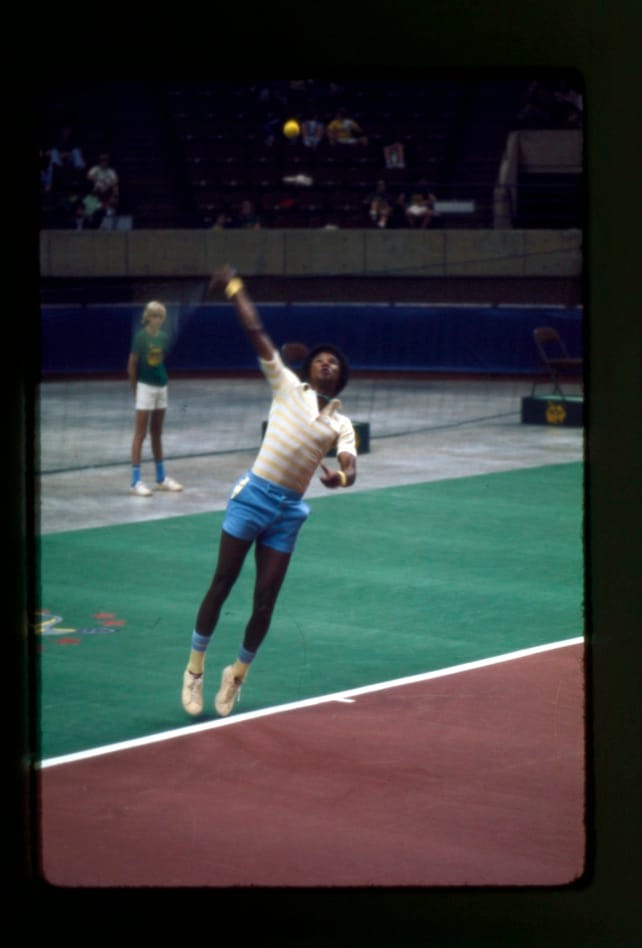
“A paragon of virtue”
In the aftermath of George Floyd’s murder in 2020, Black Lives Matter activists took to the streets of Richmond to protest police brutality and systemic racism. The removal of Richmond’s Confederate monuments was one of their goals.
On June 10, 2020, protesters pulled the statue of Jefferson Davis on Monument Avenue from its pedestal. In retaliation, the words “White Lives Matter” and the initials “WLM” were spray painted on the Ashe monument a week later. Arriving on the scene minutes after the incident, DiPasquale found a group of volunteers already working to scrub away the graffiti. The rest of Monument Avenue's Confederate monuments would be removed over the next year and a half; Ashe is now the last man standing on Monument Avenue.
Though Ashe’s place on Monument Avenue seems secure for now, Grantham said she would still be in favor of relocating his monument to Byrd Park.
“The site itself is more geographically prominent and it’s aligned with courts that he could not play on when he was a young man,” she said, acknowledging that the effort would involve many stakeholders.
Regardless of the monument’s placement, Grantham said it’s important to honor Ashe’s legacy.
“The number of people that he locked arms with across communities and across culture is so magnificent,” Grantham said. “Arthur Ashe is one of those figures that [we] will never be able to uncover enough about his greatness.”
Raymond Arsenault, author of the biography “Arthur Ashe: A Life,” said he tried to avoid hagiography in his book, but that Ashe really was “a paragon of virtue.”
“He was just the personification of elegance and integrity, and never seemed to lose his cool,” Arsenault said. “Very articulate, very smart, very well read, intellectually curious. There was no other person on the tour like him.”
Since the Arthur Ashe Monument went up, there have been other efforts to honor Ashe’s legacy. In 1997, Arthur Ashe Stadium, the main court of the U.S. Open and the world’s largest tennis arena, was named in his honor. In 2019, Richmond’s Boulevard was renamed for Ashe.
Arsenault said these tributes honor a man who was an inspiration to many.
“He was much more than a tennis player,” he said. “He was just a role model for so many people. When I lecture on Ashe, people will come up to me with tears in their eyes.”
This article has been updated with additional material gathered after its initial publication.