Entering its fifth year, Run Richmond 16.19 invites participants to reflect on the city’s slave-trading past
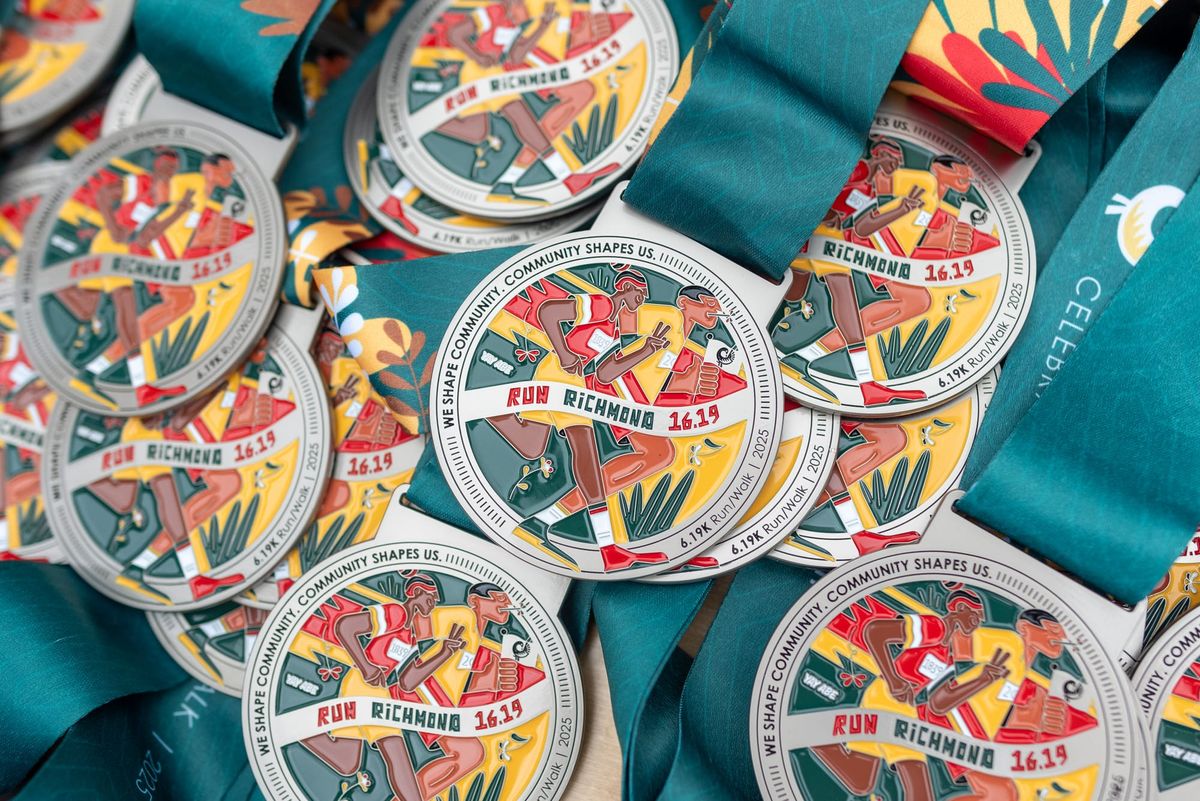
Runners will soon wind through Richmond’s streets, passing sites once central to the city’s role in the transatlantic slave trade as Run Richmond 16.19 asks participants to reckon with a painful past and begin a process of healing.
Run Richmond 16.19 began as the brainchild of Djimon Honsou, an actor and Oscar nominee. It’s a 16.19-kilometer (roughly 10 miles) run-or-walk event that trails through the heart of some of Richmond’s most historic sites.
The race itself is Saturday morning, Sept. 12, framing a weekend of events.
The region was chosen because of the prominent role it played as an American hub for the transatlantic slave trade. As for the distance, it reflects the year the first enslaved Africans arrived on the continent: 1619.
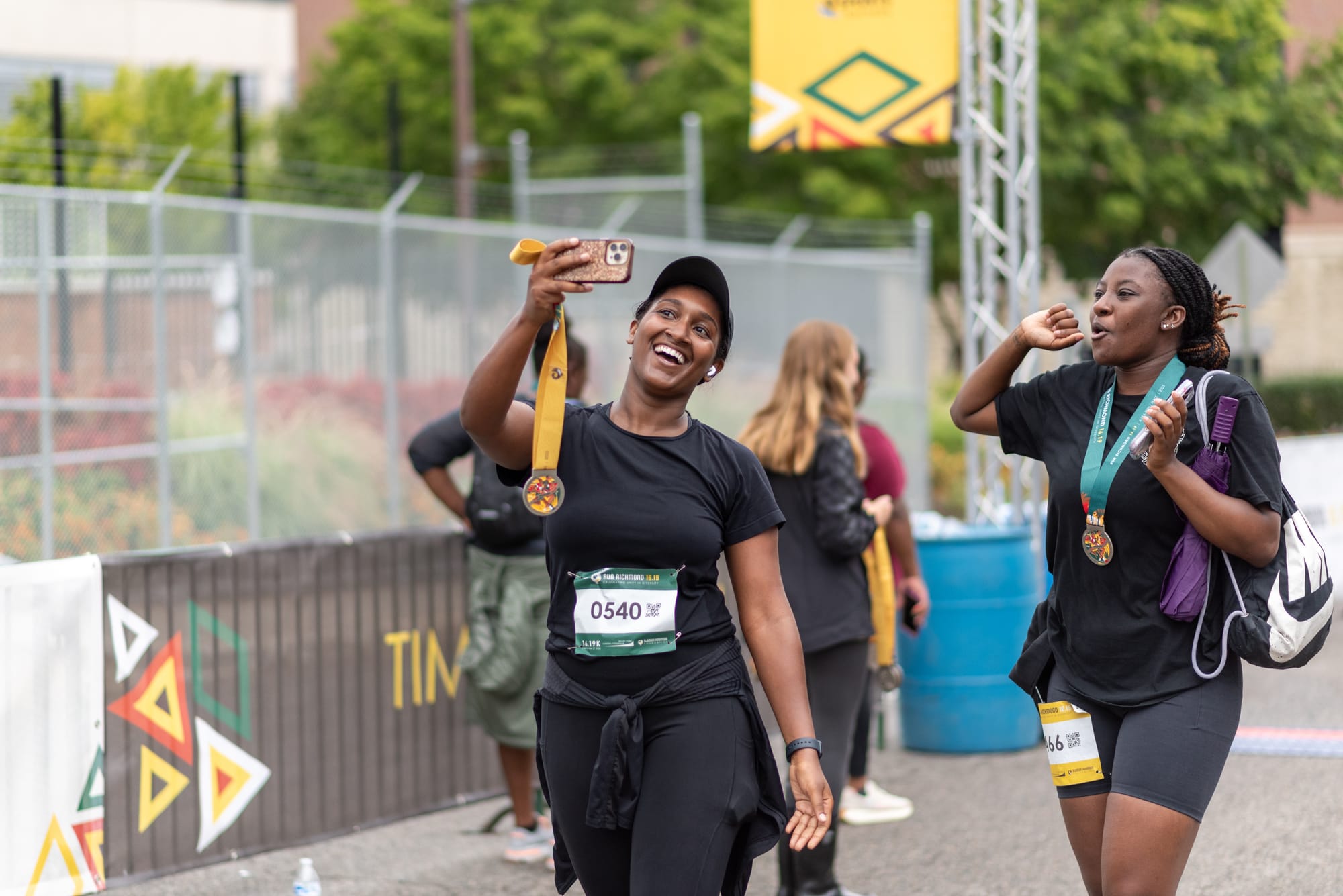
This is the first of three events that the Dijmon Honsou Foundation hopes to eventually bring to life.
“We developed a concept called Africa Reconnect,” said Max Plank, the foundation’s program and marketing director. “The idea was to create a cultural running and walking event series on the three continents that took part in the slave trade. So to go to America, to go to Europe, and to go to Africa.”
The other two events would take place in Liverpool, England, and Ouidah, Benin — both, like Richmond, cities that anchored the transatlantic slave trade. With this, the foundation is hoping to breathe hope into an otherwise troubled history.
 George Copeland Jr.
Everyone is welcome to sign up, with Plank encouraging Richmonders of all races to participate. The event doesn’t look to shame someone for their ancestors’ actions, he said. It simply looks to begin the healing process.
“We want this to be an event where diverse communities come together to reflect on the shared past in an honest way in a community setting. But also to celebrate together how far we have come and really strengthen community bonds,” Plank said.
“I think this can, you know, release some of that grief and start the process of healing. A two-day or a three-day event, like, we do can only do so much in that. We see it as a catalyst.”
The pain caused by the transatlantic slave trade is still relevant, Plank said, with intergenerational trauma still affecting descendants of enslaved individuals.
Plank recalled that one year, a participant said she “can still feel the dark energy this place holds” while running through Shockoe Bottom — where many auctions took place — and towards Lumpkin’s Jail — which held enslaved people before their sale.
“You can see this is trauma actually coming up,” Plank said. “When we think of trauma, no trauma has ever been healed by ignoring it.”
 Michael Phillips
The event traces through other historically relevant sites, such as this year’s starting and ending point: Abner Clay Park, which is across from Black History Museum in Jackson Ward. Plank called this focus on the former Black Wall Street “meaningful,” dubbing Jackson Ward “A very meaningful neighborhood.”
The route will include information on relevant historical sites, as well as educational events scattered throughout the weekend.
Alongside the walk-or-run itself, there will be many free offerings, including start and finish festivals open to the public. This year’s race is particularly significant for Run Richmond as it coincides with the United States’ 250th anniversary.
Plank said this history carries a weight that many people may not want to celebrate, and it’s important that the event doesn’t sugarcoat things.
“I feel there is a need and a void for events that are more commemorations,” Plank said. “We will always tell the history of how it happened, the bad and the good, because this is what moves us forward.”
As for what’s next for the Djimon Honsou Foundation, it’s planning Run Liverpool 18.33. It’ll be similar to Run Richmond in essence, while focusing on the European angle of the transatlantic slave trade. Plank said participants “will understand the deep connections between the city of Liverpool and Richmond in that whole history, and gain a full picture of that history.”
 Michael Phillips
The foundation will also set its sights on Ouidah, Benin, which is home to the “Door of No Return” — named for its role as one of the final places enslaved Africans stood before leaving the continent for good.
Here, that healing process central to Run Richmond 16.19 will continue. Plank said the hope is to transform what was once a reminder of displacement and destruction into a place for return.
But for now, Plank said the foundation is focused on seeing the Richmond-based event across the finish line.
“We all, of course, cannot undo the horrors of the past,” Plank said. “But what we can do is provide … connection to the roots, to the culture, to the motherland.”
Contact Eleanor Shaw at eshaw@richmonder.org. She is a Report for America corps member.