'Hire young people': At Shockoe Institute, panelists discuss ways to create economic mobility

Finding ways for Richmonders to create generational wealth must include bringing young people to the table sooner, panelists said at a Wednesday night event.
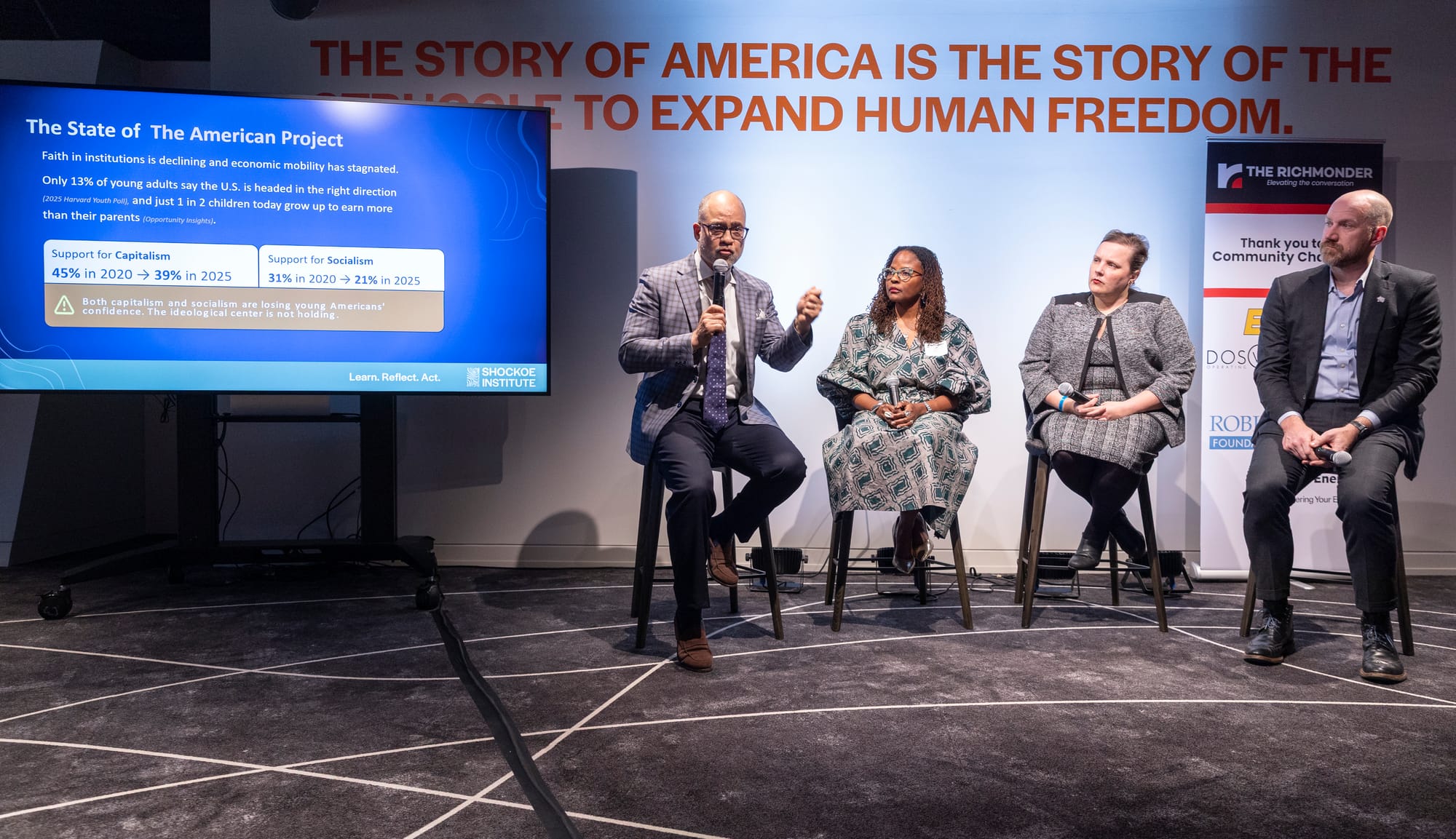
The discussion, hosted by the Shockoe Institute and The Richmonder, brought together three panelists who have worked to create economic mobility for people who historically haven't had access to those opportunities.
Kate Scott, president and CEO of the Virginia Council on Economic Education, said it is incumbent on local companies to bring younger workers into the fold.
"There’s a not in my backyard kind of mentality," she said. "It’s time to open up our borders and let kids in, because if they don’t experience it, they don’t know it’s possible. So they can’t even see the goal to go towards.
"It’s time to open our minds and open our doors. Hire that kid. Give that intern the chance."
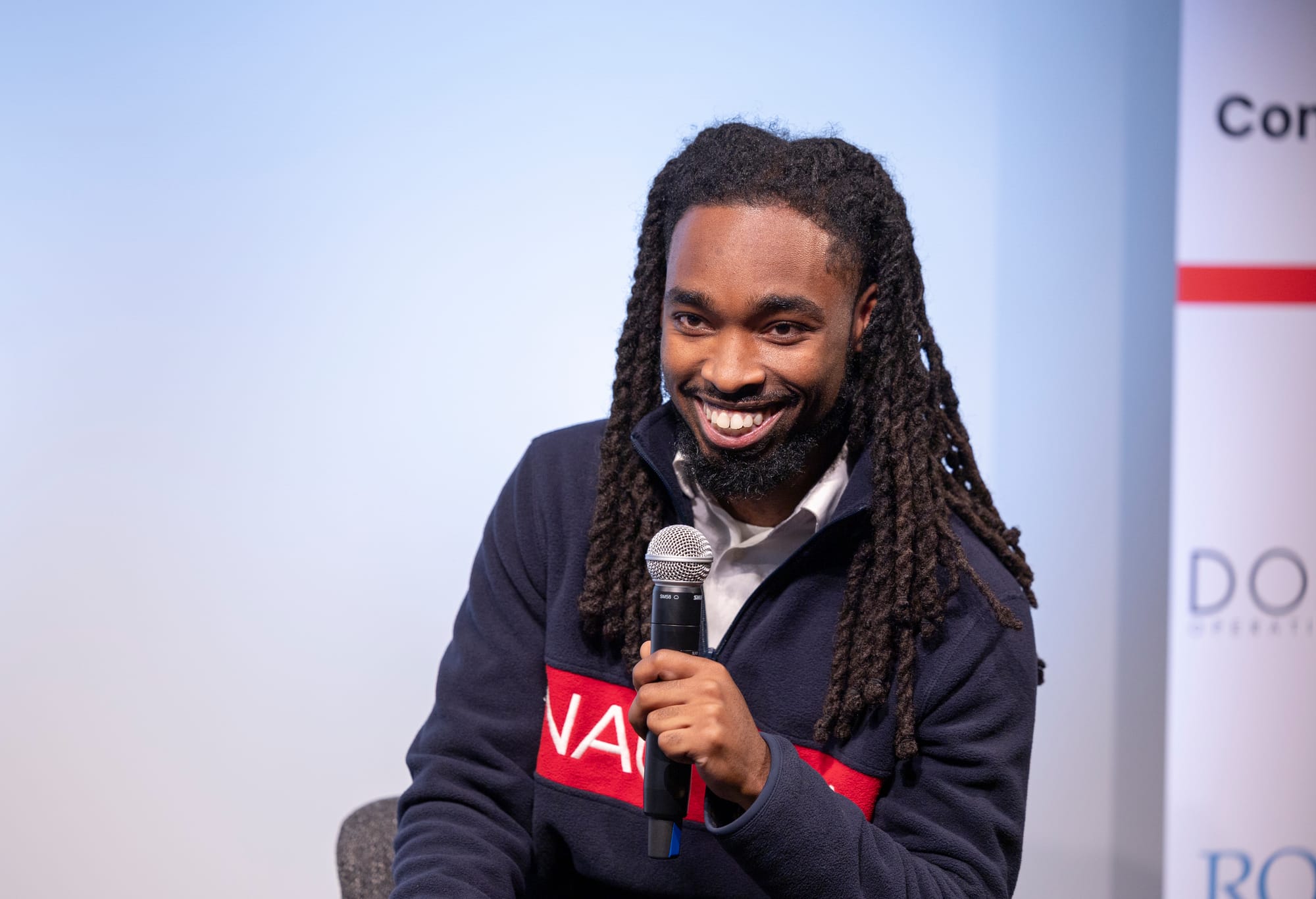
Before the panel, Ja'Meen Tucker, who grew up in Richmond's East End, shared his story.
Tucker dropped out of college after six weeks to care for his mother and grandmother, who were both diagnosed with cancer. He talked about how he was lifted up by mentors and neighborhood programs, including Capital One's workforce development program, Toby Desch and his group, UP RVA, and real-estate agent Terell Snead, who showed Tucker the value of buying his own home.
Now he's paying that experience forward as a workforce development specialist at Doswell Operating Group.
"Essentially, I help disenfranchised kids from my old neighborhood," he said, sharing that the program offers career training and placement, but also soft skills like interviewing and creating a résumé, along with opening a bank account.
"Those are the things I needed when I was their age that I had to learn on my own, and the things that if I had them then I would probably be a lot farther in life."
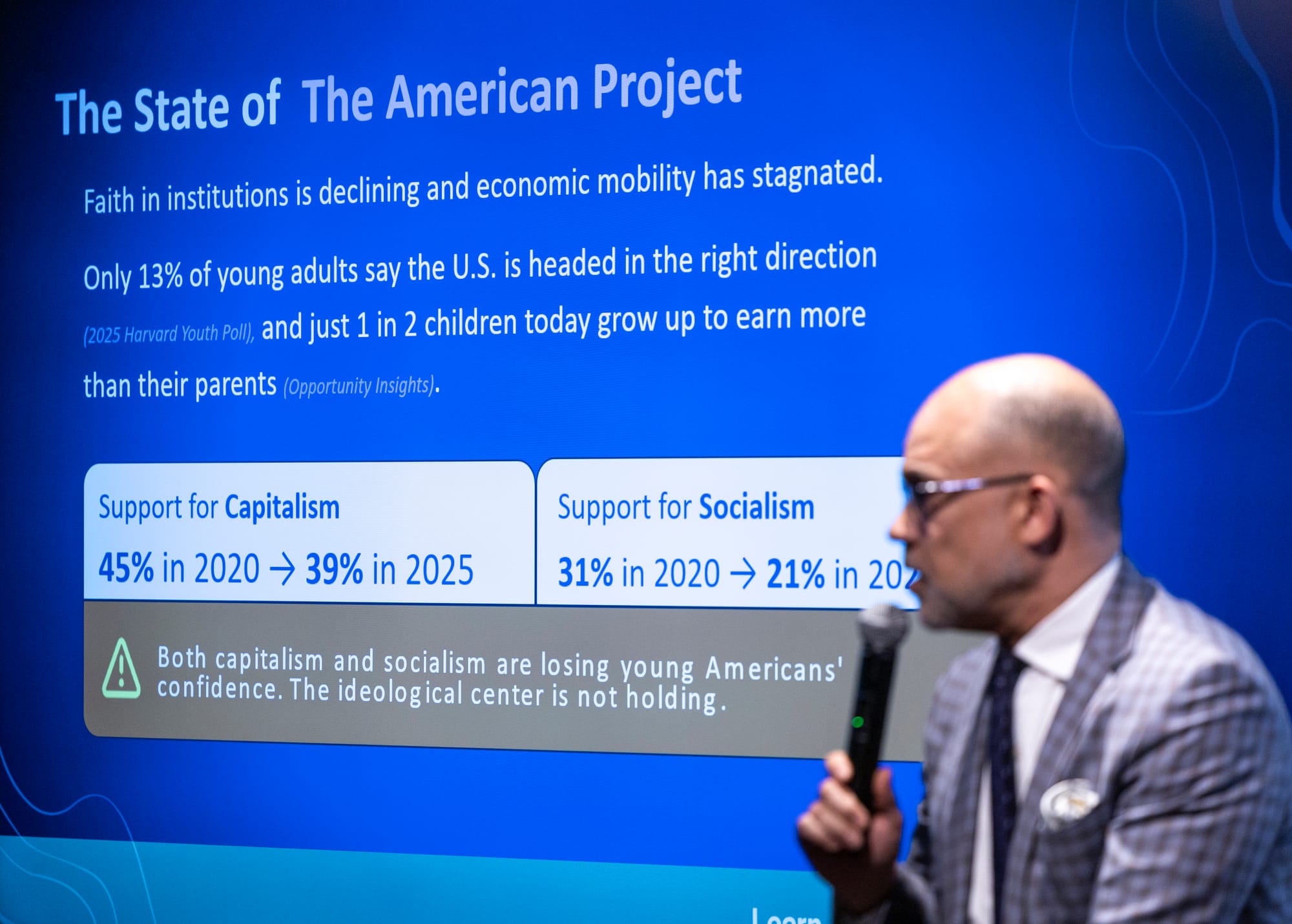
Matthew Slaats spoke about the city's People's Budget program, which allows residents to determine how some of their tax money is used.
"I came in believing that the public does not trust government," he said. "We’ve found that the public wants to trust government. They do believe that these systems can work for them. But we have to do a better job listening to them."
Listening to young people and building intergenerational relationships was a key theme of the evening.
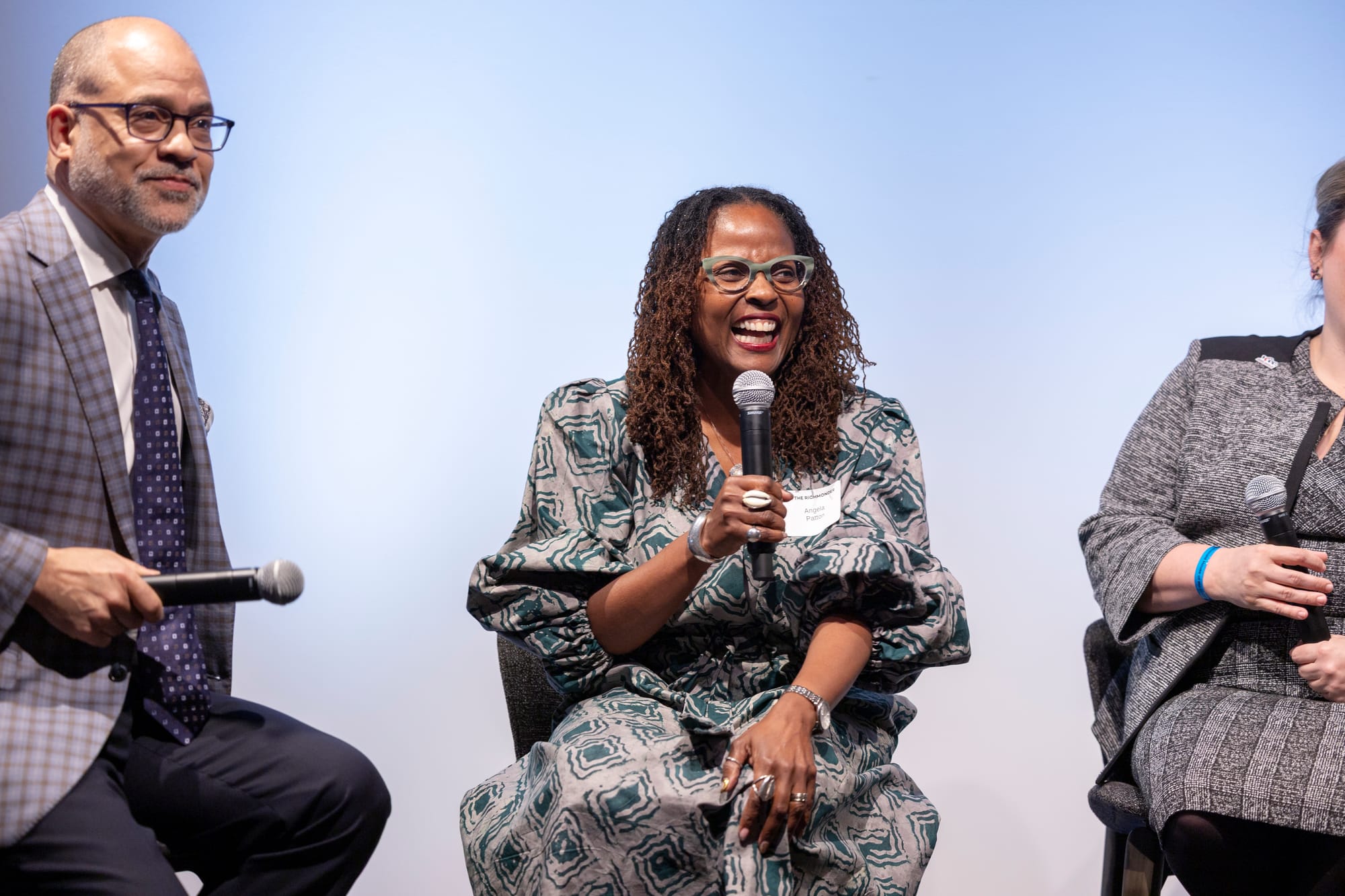
Angela Patton, CEO of Girls for a Change, said she runs all her programming in-person, instead of by Zoom, to facilitate more meaningful interactions.
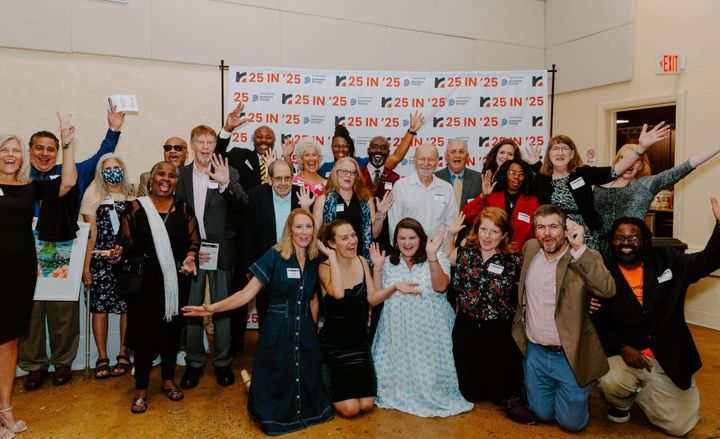
The Shockoe Institute recently invited 70 high-school students to its launch event, which featured dignitaries from across the area, which was cited as an example of putting people in the same room with decision makers.
"We definitely need to hire young people," Patton said, but added that listening to their needs, and how they are different from previous generations, is also essential.
"It doesn't look the same for them. Especially when they see their own siblings, who are a little bit older, back home living with their parents."
Scott added that listening to young people can help them feel empowered to join the conversation.
"They feel like they’re a part of a community where choices are made around them, choices are made to them, and they don’t have the agency to make that choice," she said.
Moderator Marland Buckner challenged the panel, and the audience, to get involved to create a "contribution to the health and vitality of the public square."
For Tucker, who has found a full-time job doing that, he said the work has been incredibly rewarding.
"When I wake up in the morning, I feel like I'm supposed to be here," he said. "I genuinely feel great giving back, reinvesting and pouring back into the community that gave me so much. It's a great feeling."
Contact Michael Phillips at mphillips@richmonder.org. Doswell Operating Group is a sponsor of The Richmonder but was not allowed to influence or review this article. For more on our policies, see here. For more on The Richmonder's event series, see here.