100 years ago, Langston Hughes made history at Virginia Union
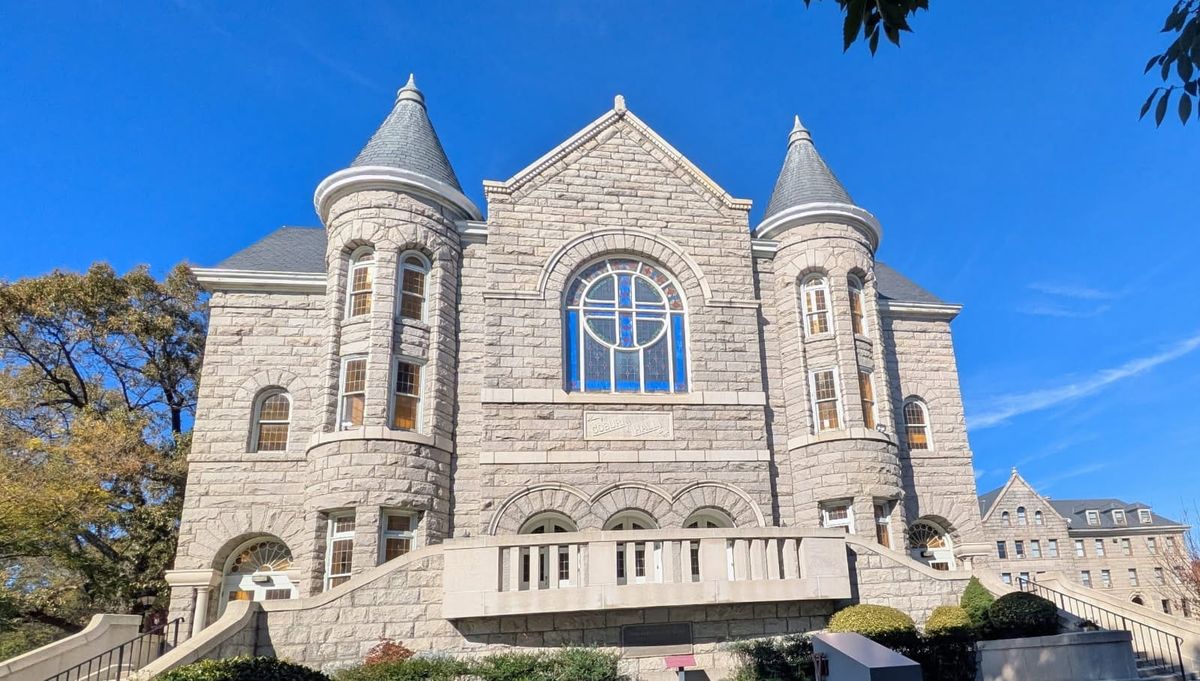
On Friday, November 19, in 1926, the renowned Harlem Renaissance poet Langston Hughes gave a reading at Virginia Union University’s Coburn Hall.
“This event was notable in that it was Hughes’ first poetry recitation in the South,” said Dr. Raymond Pierre Hylton, a Distinguished Professor of History at Virginia Union University.
Langston Hughes was only in his twenties at the time of the visit, but he had already traveled around the world, published his first poetry collection, The Weary Blues, and developed a national reputation. Some called him the “Poet Laureate of Harlem.”
Only months before coming to Richmond, Hughes had enrolled at Lincoln University in Pennsylvania, the first degree-granting HBCU in the United States. The Zeta Chapter of Hughes’ fraternity Lincoln University, Omega Psi Phi, invited Hughes to come to Richmond.
“It demonstrates that Richmond was certainly not a backwater regarding avant-garde culture and movements, contrary to the Baltimore journalist H. L. Hencken’s unkind remarks, which Hughes himself took issue with,” said Hylton.
Hencken’s comments had characterized the South as an “artistic desert.”
To Hylton, the importance of Hughes’ visit to Richmond at the time went beyond the fact that a famous artist was visiting the city. It was an event symbolic of Richmond’s evolving reputation as a hub for the arts.
“Richmond and Virginia Union could take pride in being at the forefront of new and vibrant trends and ideas,” Hylton said.
Now, 100 years later, Virginia Union University is inviting Richmonders to celebrate the anniversary of this pivotal event in Richmond’s arts history.
The day prior to Hughes’ reading, Hughes attended a gathering at the Park Avenue home of Richmond author Hunter Taylor Stagg.
Stagg, a literary editor for the Richmond Times-Dispatch and co-founder of the experimental literary journal The Reviewer, later claimed this gathering was, according to Hylton, “the first social occasion in Virginia at which a white man honored a Black man.”
“At this time,” Hylton said, “Virginia had just passed some of the most repressive segregation laws in its history.”
In 1927, in his column at the Richmond News Leader, Stagg described Hughes as “the authentic artistic expression of something in human nature, we are not quite prepared to say what, only that we are sure it is something very real.”
It is hard to overstate Hughes’ importance not only to the Harlem Renaissance but to 20th-century American literature in general.
In the 1996 book Black on White: A Critical Survey of Writing by American Negroes, critic David Littlejohn argued that Hughes would sometimes mold his verse to the shapes and sounds of jazz as one way of rendering his experiences—from the horrible to the humorous or absurd—as a Black man living in America.
According to Littlejohn, Hughes created and retained “his own keen honesty and directness,” an “ironic intelligence,” and a “newness distinctly his own.”
Why was Hughes’ work considered so revolutionary by so many?
In his introduction to Modern Black Poets: A Collection of Critical Essays, critic Donald B. Gibson argued that one reason Hughes’ work stood out is that while many American poets in the 1920s were writing increasingly opaque and personal poetry, Hughes ignored those trends and was defiantly himself.
“He differed from most of his predecessors among Black poets,” Gibson wrote. “He addressed his poetry to the people, specifically to Black people. During the twenties when most American poets were turning inward, writing obscure and esoteric poetry to an ever-decreasing audience of readers, Hughes was turning outward.”
After his visit to Richmond, Hughes’ reputation continued for decades to expand as a poet, fiction writer, and playwright.
The 100th Anniversary of Langston Hughes’ visit to Richmond will be celebrated on Friday Nov. 20, from 4 to 6 p.m. in room 226 at Coburn Hall on Virginia Union University’s campus—the same site as Langston Hughes’ reading 100 years ago.
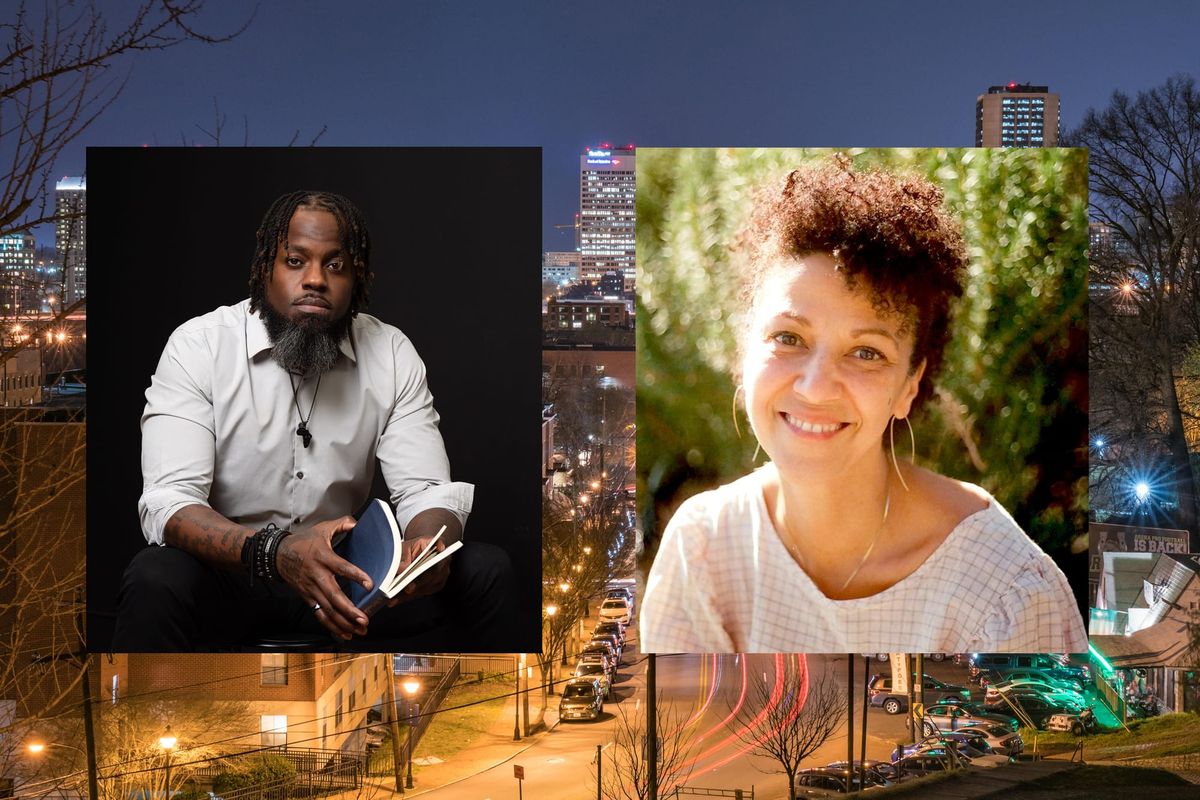
Mayor Danny Avula plans to attend the event and offer remarks. Richmond’s two poets laureate, Rosa Castellano and Maurice Brown, are also expected to speak and read.
 Brandon Haffner
The front gates of the university will be closed on the day of the event. Organizers suggest arriving early and entering campus through the Graham Street entrance off of Brook Road. Guests should inform the guard at the gate that they are attending the Langston Hughes event, and the guard will direct them to the Living and Learning Center lot, where parking is available.
The event is free and open to the public.
Dr. Tim Wenzell, a Professor of Language and Literature at Virginia Union University, believes events like this one accomplish much more than simply honoring the past; they insist on the relevance of art in an era when some would dismiss the arts as a luxury.
"While this event is celebrating the Langston Hughes visit here at VUU 100 years ago, it is also an event that celebrates the humanities and their importance to society, especially the literature of the great writers across time, place, and race,” said Wenzell, who is also a contributor to The Richmonder.
“Too many humanities programs are shrinking in colleges and universities across the country, and this event is a way to emphasize the importance of music, poetry, and the creative spirit, and to keep the fire of learning literature burning.”