Shared stanzas: Richmond's poets laureate are making double the impact
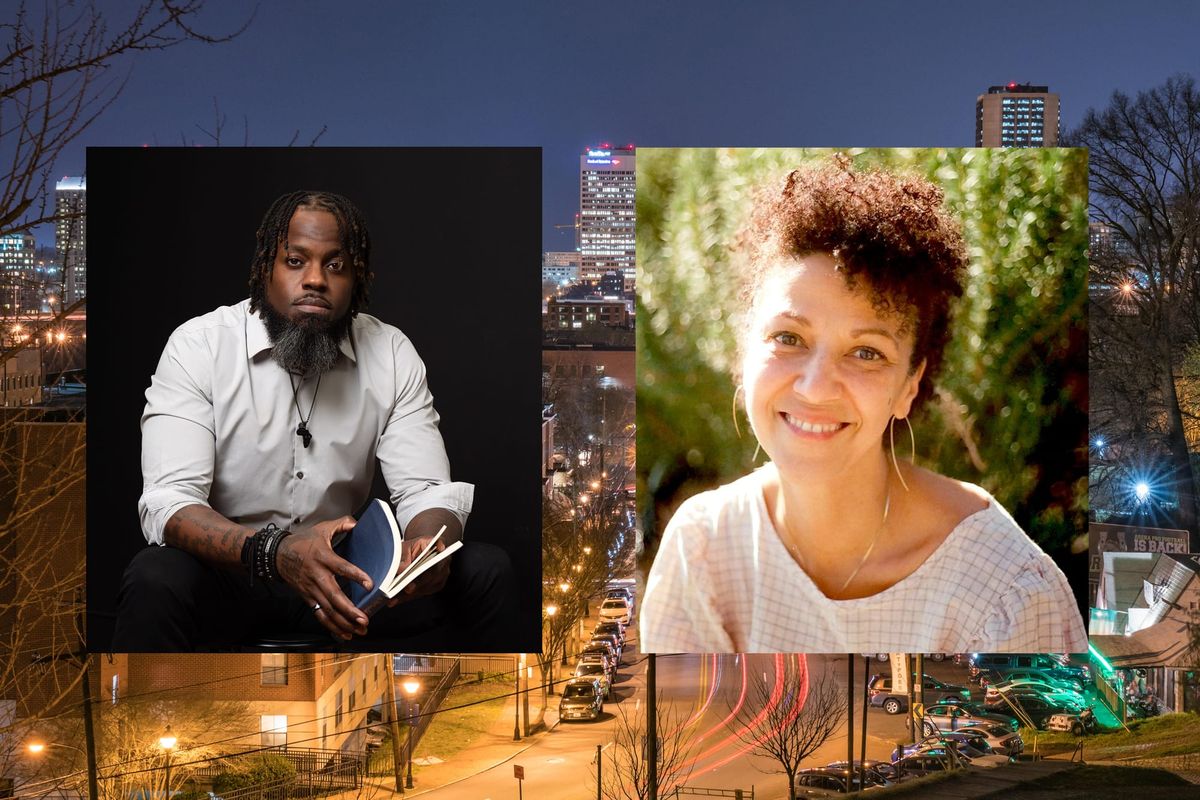
When Maurice “Moflowz” Brown and Rosa Castellano were announced as Richmond’s co-poets laureate this past April, neither of them knew there would be two poets appointed to the position. Typically, a poet laureateship is awarded only to one poet.
“We didn’t know what it was going to mean,” Castellano said. “I sometimes am under the impression that our city is broke. So I thought, Oh, we’re going to have to share the money. And then how are we going to get our projects funded?”
But to her pleasant surprise, the mayor’s office not only gave Brown and Castellano each their full $5,000 laureateship stipends and project funding, but extended the duration of their appointments from two years to three.
“They gave us an extra year to make sure we have enough time and support we need to reach our goals,” Castellano said. “Which is really fantastic.”
Now, six months into the job, Castellano and Brown have felt the benefits of working alongside another poet. While Castellano hails from more academic literary spaces (she has an MFA from VCU and is published widely in university-run publications), Brown came up in Richmond’s spoken-word and slam scene, making a name for himself in spaces like The Writer’s Den and Tuesday Verses. They’ve found their skills and backgrounds complement each other.
“It’s been great having somebody to bounce ideas off of. It’s been very organic. We meet for coffee and talk and jot down ideas,” Brown said. “I don’t know how it would be if it was just me. I’d much rather experience it like this.”
So what exactly does a Richmond poet laureate do? In Castellano’s case, her first six months have been spent organizing new poetry events with, of all places, Richmond’s city offices.
“It turns out the city has a bunch of offices that are really cool,” said Castellano.
For her first event as poet laureate, Castellano worked with Richmond Animal Care and Control to host a reading of animal poems.
Recently, she and the Office of Immigrant and Refugee Engagement hosted “Homage to Home,” a reading and workshop to provide storytelling tools to Richmonders affected by diaspora. And in the spring, she’s planning an event with the Office of Aging and Disability for Richmonders who identify as disabled poets.
At first glance it might seem like city offices and poetry have little to do with each other. But Castellano believes they are a perfect fit. For one, she believes Richmonders who depend on certain city offices are often facing tough challenges, and poetry is an essential outlet when life gets difficult.
“What do you do with all those feelings? Write a poem.” said Castellano. “So I’m keeping my ear to the ground and my eyes up for opportunities to be of service.”
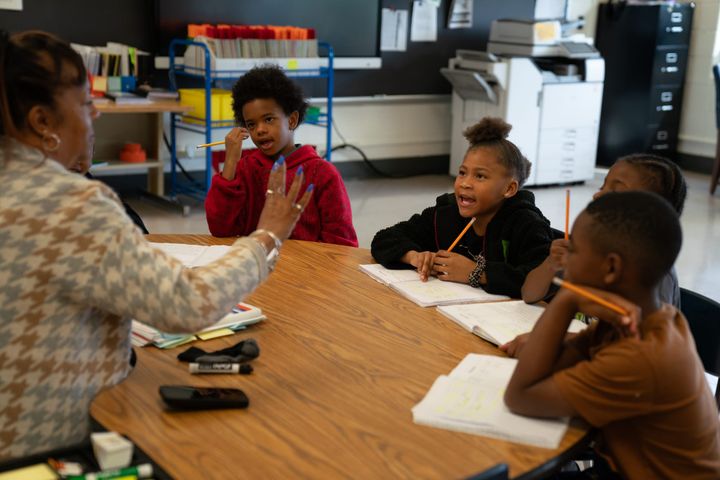
Brown’s main project is the Richmond Public Schools Poetry Tour. One of the first acts Brown took as poet laureate was to visit every single school in the Richmond Public School system to discuss his ideas with teachers and students.
Now he’s working closely with school teachers and administrators to develop a new poetry curriculum in RPS, which will provide poetry-related goals for students to reach every month. He also plans to refine the RPS Poetry Slam and to establish new spoken-word competitions in schools.
“Really getting into the schools is what I wanted to do,” Brown said. “This year we’re implementing the best we can with the goal of building it out every year as it goes on, which requires funding.”
Hear Maurice “Moflowz” Brown recite poetry.
Castellano and Brown are each given $2,000 annually to help pay for the costs of running these poetry events—including snacks, guest speaker fees, transportation costs, trophies to competition winners, etc.—and they’re finding the money can run out quickly.
“Which means you have to be very intentional,” Brown said. “You don’t just want to throw it all at one thing.”
To fund the full scale of their poetry projects, both Brown and Castellano have had to write grant proposals.
For instance, this year, Castellano is applying for the Academy of American Poets’ Laureates grant. It’s highly competitive, given only to 50 laureates across the country, but she has hope; Richmond’s first-ever poet laureate, Roscoe Burnems, won the same grant a few years ago.
Though their city-provided project funding is limited, both Brown and Castellano feel well supported by Richmond Mayor Danny Avula.
“There’s something to this current mayor really wanting to promote storytelling,” Castellano said. “It’s one of his pillars. So we have a lot of support. They check in with us, they want to know what we want to do, how are we interpreting our projects, and how can they support us. They’ve been meeting us as opposed to us asking to meet them.”
Avula believes in poetry’s power not only to connect Richmonders with each other but to show the world who Richmonders are.
“In every space our laureates enter, they empower others to use their voices to share necessary stories about who we are as a community,” Avula said. “Moe and Rosa are doing the important work of helping Richmonders find their own voices, share their experiences and, through that process, tell our City’s stories.”
To Avula, the decision to support and expand Richmond’s poets laureate program is one that reflects the city’s values.
“Creativity is foundational to Richmond,” Avula said. “We have so many stories to tell. We need our artists to help us imagine more broadly, to build unexpected bridges, to solve hard problems.”
Castellano agrees. When it comes to the arts, she feels “Richmond is rich.”
In her research for grants, she has counted over 25 ongoing literary arts programs in the city.
“That’s an open mic, that’s a regular reading series, that’s the MFA folks,” Castellano said. “It’s a lot, is the point.”
Brown and Castellano acknowledge that poetry is sometimes categorized as impractical, unproductive, or as little more than a hobby. But they contend that for many Richmonders, poetry is a necessity, not a luxury.
“For me personally, as an African American, I think it’s easy for me to make the connection to why poetry’s so important,” Brown said. “Almost all of our most influential civil rights activists and revolutionaries were poets. If you listen to MLK Jr., if you listen to Fred Hampton, if you listen to Huey P. Newton, Maya Angelou. They’re all poets at heart. Poetry gives you the space to say the thing that needs to be said.”
“Poetry can save us,” Castellano said. “It’s a community builder. It’s a form of expression. It’s a way to process.”
Castellano refers to the position as a “service role.”
“The blank page for some folks is the only safe space,” Castellano said. “So making opportunities where folks can encounter the possibility that poetry can posit in their lives? That’s super important to me.”
“Sometimes we do question what we’re doing, and our purpose. It’s not putting money in my pocket, so why am I doing this?” Brown said. “Because I’m an orator. I keep coming back to that. It’s my job to give voice to people that otherwise wouldn’t have one.”
Brown’s foray into poetry began when writing quotes to his daughter, which led to writing poems. Later, in the military, he returned to writing.
“I would write poems when I was in Afghanistan,” Brown said. “I would read them in the tent to my battle buddies, and they liked them.”
Years later, Brown made his way to Virginia, where he found Tuesday Verses. Held every Tuesday at Addis Ethiopian Restaurant, Tuesday Verses is one of the longest-running open-mic series on the East Coast.
“I started becoming more intentional about it and really wanting to learn,” Brown said. “The thing that led me to here, being poet laureate? I don’t think it’s about me having this expertise. It’s been about me wanting to learn and constantly grasping.”
Castellano was an avid reader from a young age and loved stories. For a brief period in college she was an art major focusing on photography and collage. But then she found poetry.
“Poetry was this avenue that was available to me that made sense,” Castellano said. “It wasn’t like, I don’t have the equipment. Or like writing a novel, where I don’t have the time.”
Castellano and Brown are both parents and both have jobs outside their poet laureate work. Brown is the Associate Director of the Writer’s Den RVA and teaches math classes in VCU’s School of Business. Castellano helps run the RVA Poetry Fest and teaches poetry classes and workshops around the city. And while managing the workload of the poet laureate job on top of their already busy lives is “not easy” according to Castellano, the work has also brought professional boons.
Brown has noticed increased attention on his work. Since his appointment in April, he’s been invited to speak at a TEDx Talk and perform at the 2nd Street Festival. He also says event attendance at the Writer’s Den, where he works as Associate Director, has noticeably risen this year.
To help manage their workload and to bring more Richmonders into the fold, the poets laureate are searching for volunteers to help run some of their upcoming poetry events. Anyone interested in volunteering to help organize, schedule, or work at an upcoming poetry event should email poetry@rva.gov.
Another poets-laureate organized event, “Slamily Fued,” will celebrate various folks in Richmond’s literary arts community in the style of the Family Feud game show. That event will be held on January 15, 2027 at Studio Two Three.
Brown and Castellano are hoping to leave the poets laureate program even stronger than they found it. They plan to install a Richmond Youth Poet Laureate program and build foundation of programming to which future Poets Laureate can add.
“Whoever is coming after us, I think they’re going to blow us away,” Castellano said.
“It’s one of those things where the reward comes seeing what happens after we leave the position,” said Brown.
“I do think there is an expectation that once you are the poet laureate, then you’re the poet laureate emeritus,” Castellano said. “And that means there is still some responsibility. Service, you know?”