Living in the past: Richmond's broken clocks are a public monument to old times
In the Devil’s Triangle, time has stopped at 3:03.
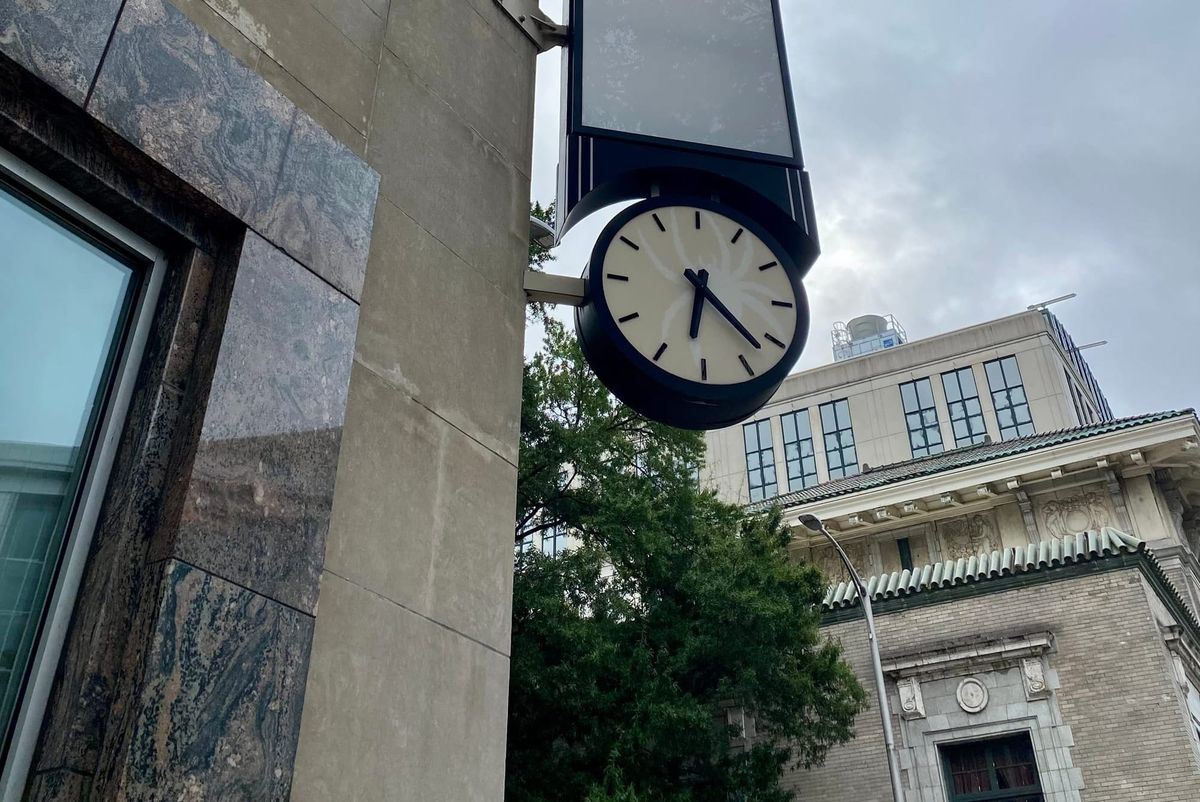
At the James Center, it’s permanently 9:37. At the corner of East Broad and North 7th streets, until recently, it was always 9. A few blocks away, outside of Peoples Bank in Jackson Ward, it is either 9:16, 9:20 or 9:25, depending which way you’re facing.
Why, you ask? Because of the city’s broken public clocks. In an age before smartphones and wristwatches were common, public timepieces were tools that helped the world keep apace. But time after time, many of Richmond’s beloved public clocks have failed us.
Here’s the story behind Richmond’s public clocks, and why so many of them have become frozen in time.
A Brief History of Time
It’s one of the most memorable scenes in movie history.
So that Marty McFly can get back to 1985, so that the flux capacitor on his souped-up DeLorean will have the 1.21 gigawatts of power it needs to function, Doc Brown must reconnect a power line before lightning strikes the Hill Valley Courthouse.
For the mad scientist of “Back to the Future” to accomplish this task, he must first climb onto the ledge of the courthouse’s public clock. When the ledge gives way, Doc ends up dangling from the clock’s hour hand, holding on for dear life.
Most of us rarely have such intimate relationships with timepieces. Thousands of years ago, when humans first became concerned with time, we measured it on three natural cycles: the solar day, the lunar month and the solar year. Sundials told time during the day; water clocks told time at night.
Because time was based on the sun, there was no unified time. High noon in Boston, for instance, occurs 53 minutes earlier than high noon in Atlanta, even though both cities are in the same modern-day time zone. Localities usually had their own time zones; Wisconsin once had 38.
“When trains come about, around 1840, 1850, this becomes a very big issue,” explained Tom Vaughn, a clockmaker and board member of the American Clock & Watch Museum in Bristol, Connecticut. “Before railroads, there’s no real standard time.”
To avoid train accidents and enforce an accurate timetable, everyone had to sync up. Astronomical observatories began distributing precise time to railroads via telegraph. In 1851, the Harvard College Observatory launched the first public time service.
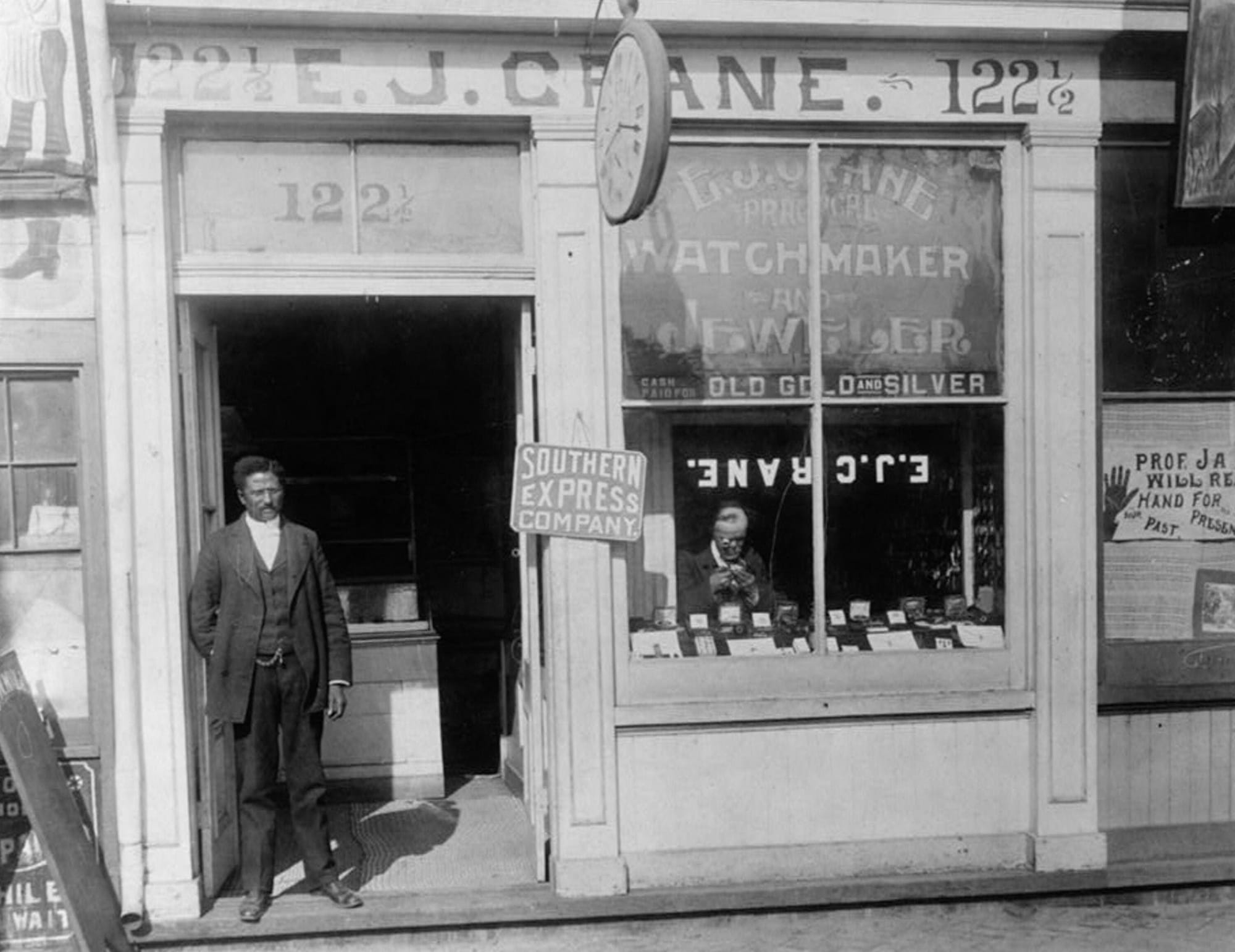
In cities and towns, a public clock — either located on a clock tower or fronting a business, church or municipal building — dictated the time to denizens below.
“Tower clocks and public clocks were very, very important,” Vaughn said. “They would have been a tool that everybody in the community would have used at the time that they were installed.”
These clocks meant that people having a business lunch knew when to meet; employees knew when they were late for work. People set their pocket watches and mantel clocks to this standardized time.
“It got everyone on the same page,” Vaughn said. “Whoever was charged with winding the clock would be charged with the responsibility of making sure the clock was telling the proper time.”
So, why are so many of these beautiful old clocks broken? Simply put, they’re expensive and difficult to maintain. Vaughn, who also works as a pipe organ conservator, has seen his fair share of tower clock mechanisms.
“They’re not always in operable condition,” he said. “These mechanisms are in a really dirty and extreme environment.”
Hot during the summer, cold during the winter, these machines are exposed to wind and dirt and ice. Bird and bat droppings, which collect in the oil of the mechanisms, turn into a heavy paste that stop clocks from running properly.
Repairing a public clock usually involves removing the entire mechanism from a tower or building. And because the mechanisms are so old, it often means manufacturing new parts to replace the damaged ones.
“You’re talking tens of thousands of dollars,” Vaughn said. “The places that own these clocks can’t always afford to restore them.”
Here are some of Richmond's historic clocks...
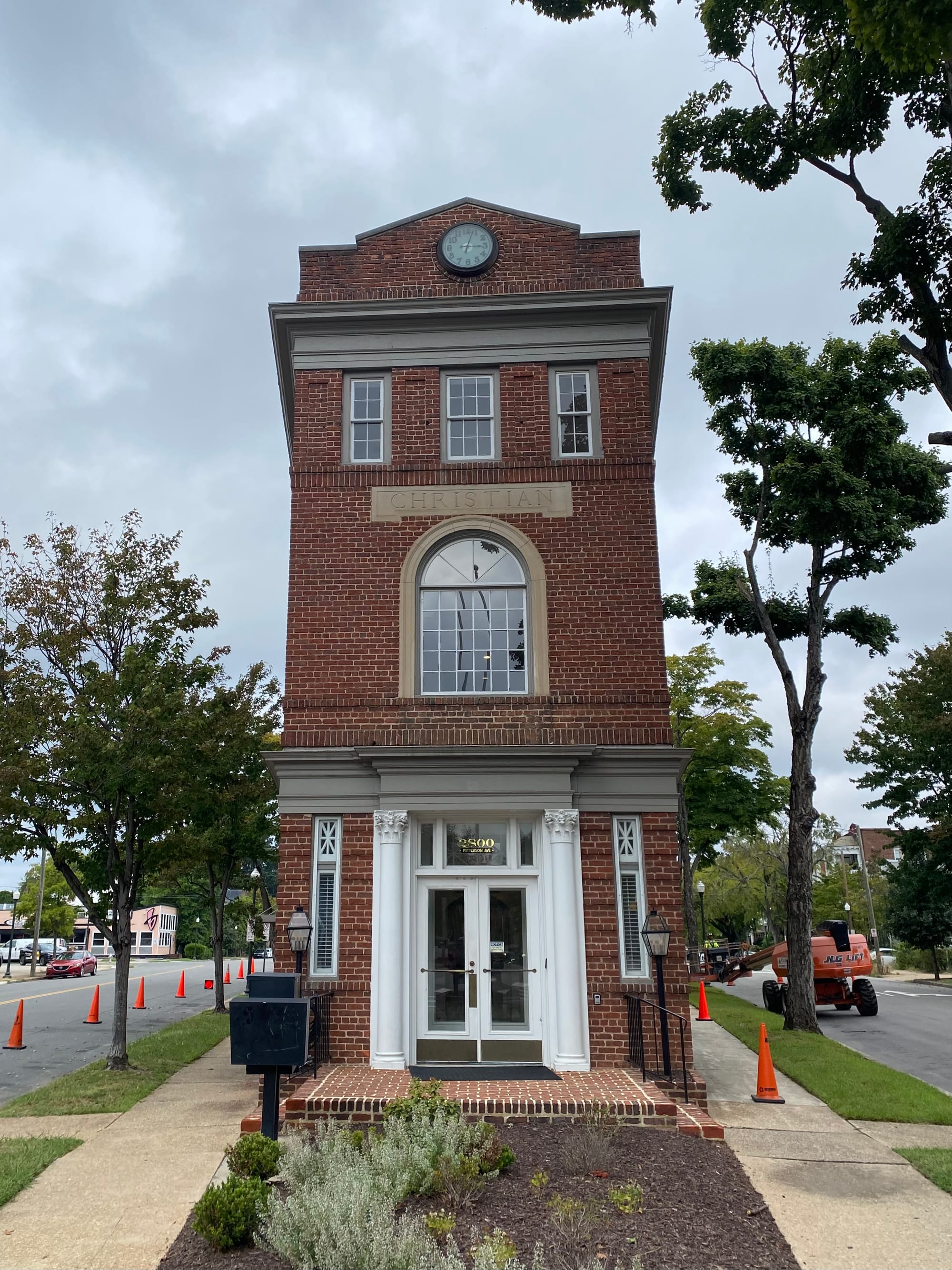
L. T. Christian Funeral Home Building, a.k.a. The Triangle Building, a.k.a. Richmond’s Flatiron Building (2800 Patterson Ave.)
As a kid, Rich Johnson often looked to the clock of the L. T. Christian Funeral Home Building at the tip of the Devil’s Triangle to see whether he and his family would be late for service at nearby St. Mark’s Episcopal Church.
In the 1980s, when Johnson purchased the former funeral home building, he made it his mission to repair the clock, which wasn’t working at the time.
“I’m a watch and clock man,” said Johnson, adding that his obsession with timepieces goes back to his grandfather’s pocket watches. “It was kind of a mission in my life to get that clock restored to order.”
The building, and, presumably, the clock, were constructed circa 1922, according to the Richmond Parcel Mapper. Because of the clock’s age, Johnson had to send it to Connecticut — the state once heralded as the “Clock Capital of the World” because it made so many timepieces — to be repaired.
“They had to take it apart and hand-make the parts to fix it,” said Johnson, president of real estate agency The Wilton Companies. “The face of the clock had a big crack in it. They etched the glass, put a new face on it.”
Johnson says the clock was expensive to fix, but he can’t remember exactly how much he paid.
These days, the building is owned by real estate agency One South Commercial, which has its offices there. Principal broker Tom Rosman says the clock wasn’t in working order when they purchased the building from real estate firm Rebkee in 2024. One South has fielded a couple of quotes in the hopes of repairing the clock in the future.
Liz McSorley, One South’s director of operations, says that the building still has an incinerator in the basement from its funeral home days, and that eerie occurrences are commonplace. There’s a TV that turns itself on after hours. There’s a microwave that changes time on its own. An employee once found that a heavy, fireproof door in the basement had locked itself from the inside.
“The building is 100% haunted,” McSorley said.
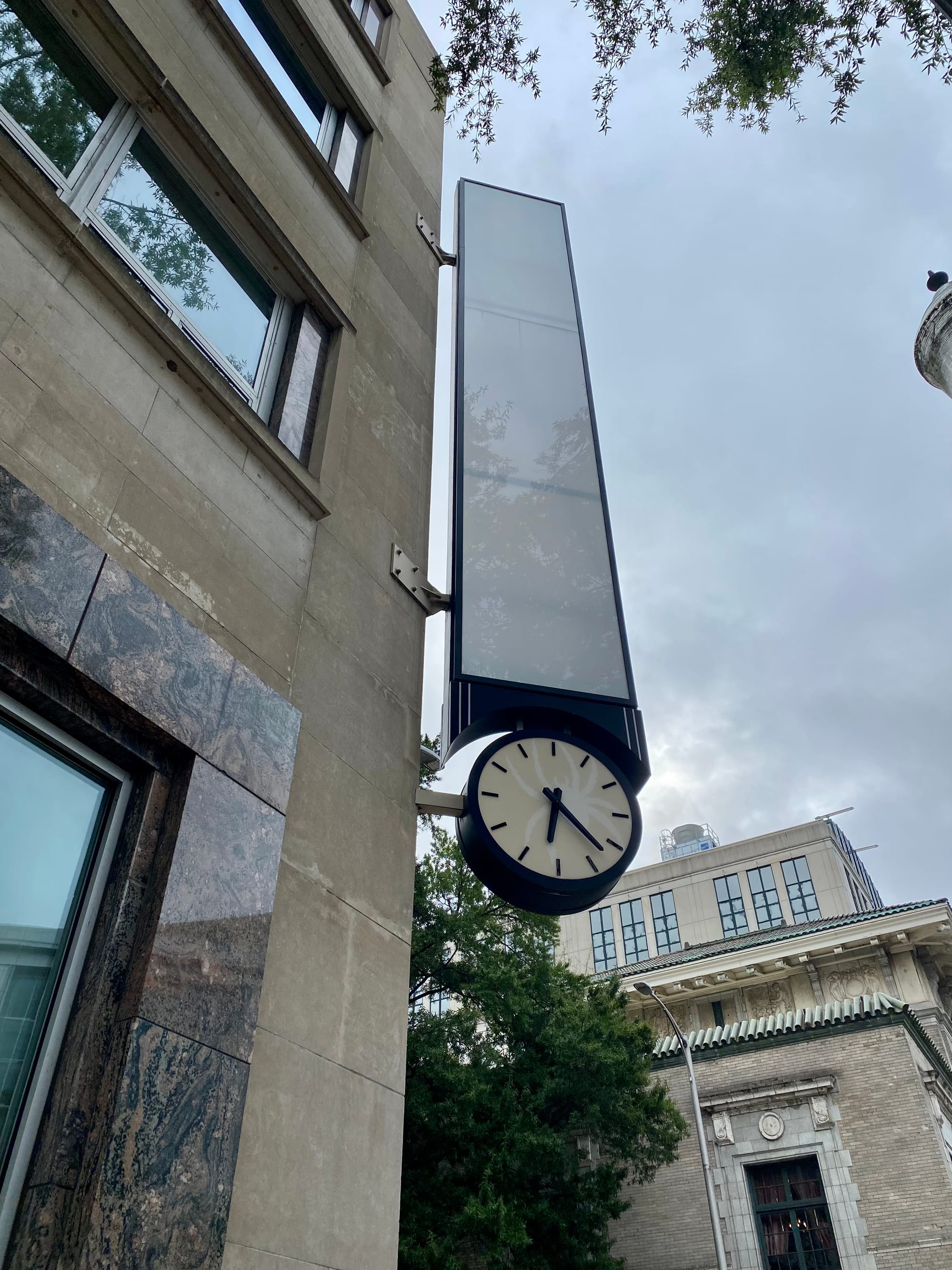
626 E. Broad Street
Located at 7th and Broad streets, 626 E. Broad Street began its life in 1954 as the location of Franklin Federal Savings and Loan Association.
In 1974, Franklin Federal did a modernization of the building, covering its beautiful sandstone exterior with a black and gold aluminum skin.
“If it was a felony to put bad architecture in place, they would have been convicted,” says Johnson, who purchased the building about a quarter decade ago. “It was trendy at the time.”
Utilizing historic tax credits, Johnson was able to restore the building back to its 1954 glory, including replacing some of the ruined or demolished sandstone with some from the same quarry as the original. In more recent history, the building previously served as the University of Richmond’s downtown campus.
On the building’s street-facing corner is blade sign with a two-sided clock that survived Franklin Federal’s modernization in the ’70s. Until recently, the minute hand on the eastern side clock was missing; the western side clock appeared to be running, but needed to be reset.
In an October interview with The Richmonder, Johnson said he hadn’t been aware that the clocks were broken; they have since been repaired.
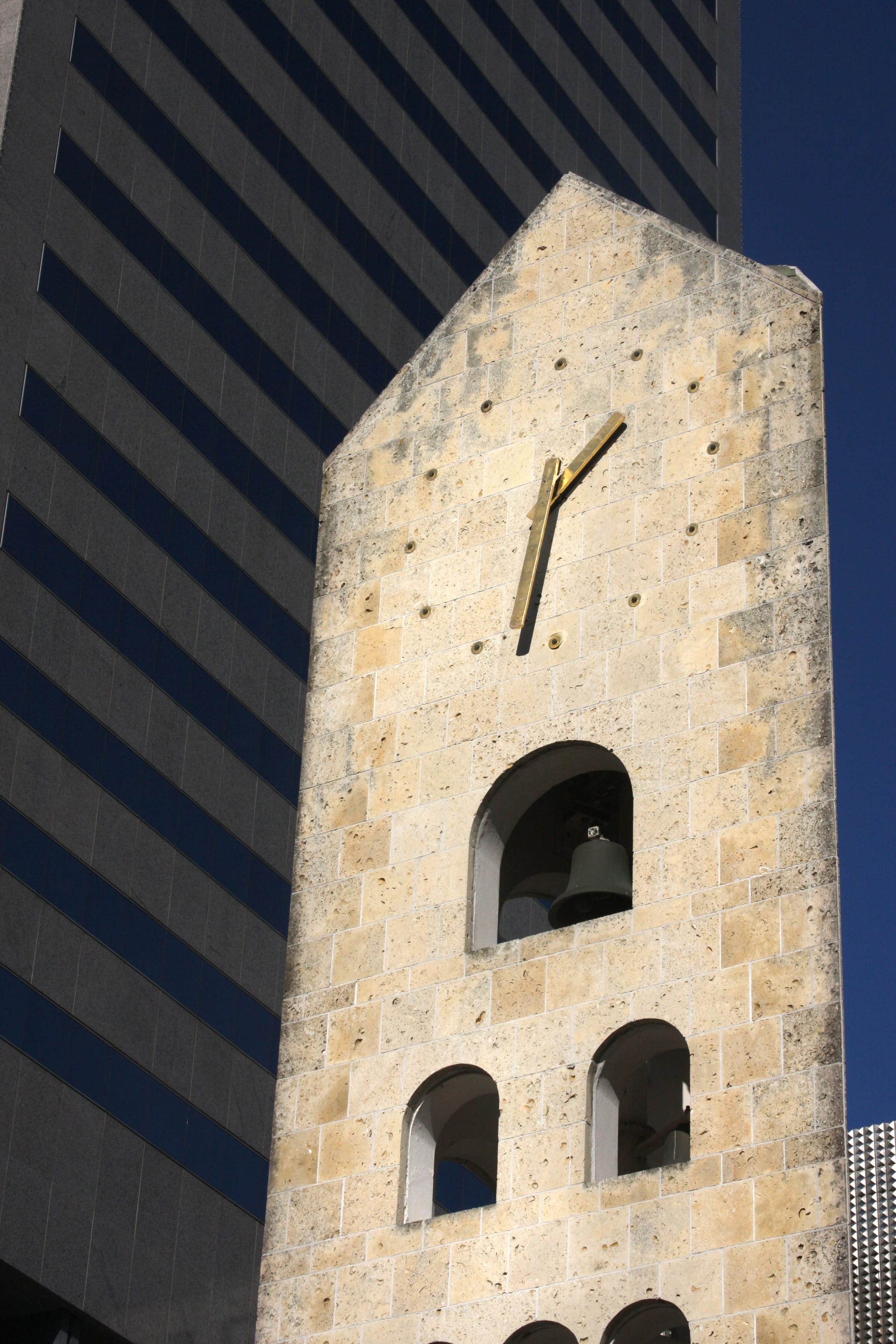
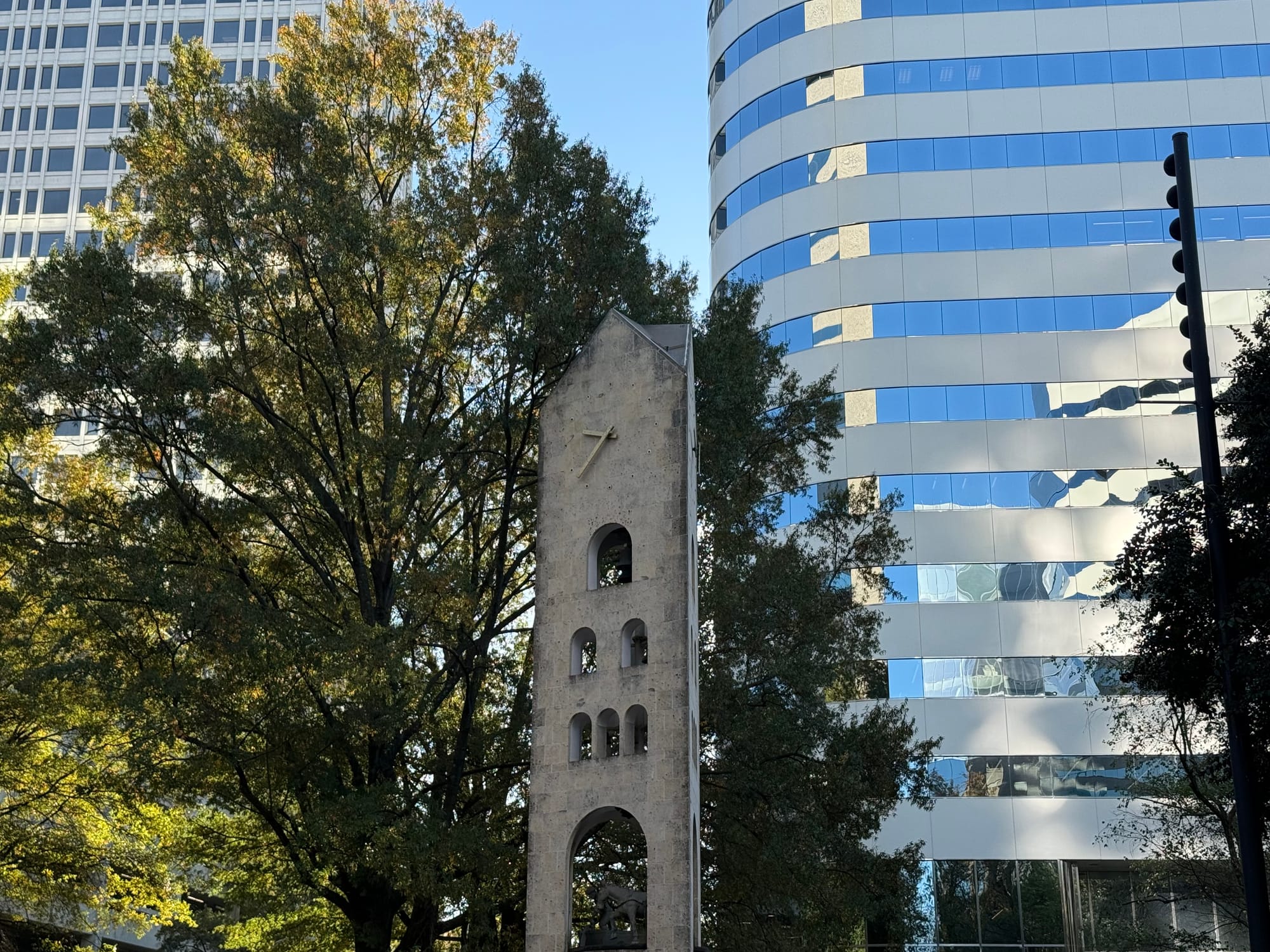
The James Center’s Boatman’s Tower (10th and Cary)
The 45-foot limestone pillar near the intersection of 10th and Cary streets is no mere clock tower: it’s a carillon.
Like the famous Rathaus-Glockenspiel found in Munich’s Marienplatz, this clock includes chiming bells and moving figurines that are designed to go off at the appropriate time. But this public clock, which is called the Boatman’s Tower, hasn’t worked in years.
The 25-bell carillon, which was fabricated by the Dutch company Royal Eijsbouts, was dedicated in 1987, the same year that the James Center was completed. Its figurines, which depict bargemen and mules, honor the fact that this area was once home to the Great Turning Basin for the James River and Kanawha Canal.
Bruce H. Boykin, senior asset manager for the James Center, says that the clock wasn’t working at the time that the James Center was purchased by Riverstone Properties in 2017.
Boykin says fixing the clock would be very expensive, and that Riverstone has been more concerned with undertaking major renovations on the property that have directly benefitted tenants.
“It’s got an obsolete computer,” he said of Boatman’s Tower. “From the clock tower to the building, underneath the plaza, there’s a conduit that’s from 1987. The conduit has rusted and failed, and the wires inside have also. In order to do any work to it, you’ve first got to dig up the plaza.”
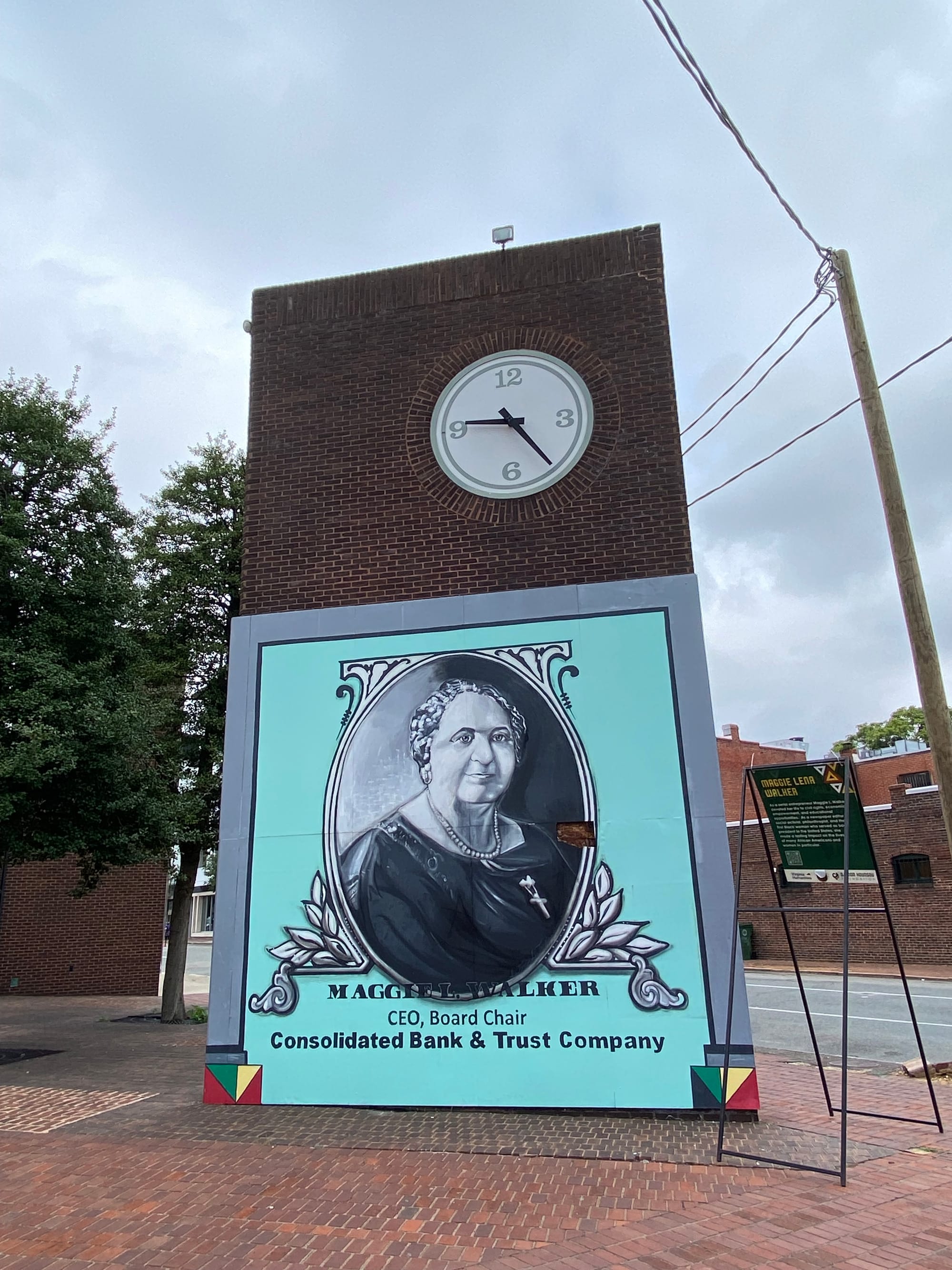
Peoples Bank (320 N. 1st St.)
At the intersection of West Marshall and North 1st streets sits Peoples Bank, a branch of an Ohio-based financial institution. The bank’s clock tower on the corner has three sides, with each showing a different time.
Built in 1972, the building and clock tower were originally part of the Consolidated Bank and Trust Co., an extension of the St. Luke Penny Savings Bank that Maggie L. Walker chartered in 1903. Consolidated merged with other banks to form Premier Bank in 2010; it was acquired by Peoples in 2021.
Referencing the location’s connection to the first African American woman to charter and serve as president of a bank, the clock tower is adorned with murals of Walker, and early Consolidated presidents Emmett Carroll Burke and Walter S. Banks.
Lisa Rodriguez, branch manager for the Peoples location in Jackson Ward, says the clocks haven’t operated in the time that she’s worked there, but that the bank had an assessment done a few months ago.
“I think it’s just missing electricity right now,” Rodriguez said. “We actually have a contractor scheduled to come up to start getting electricity to it soon.”
In Search of Lost Time
If you’ve ever talked about Richmond with someone who’s never visited, you may have heard a familiar response: “Oh, the clock tower city!”
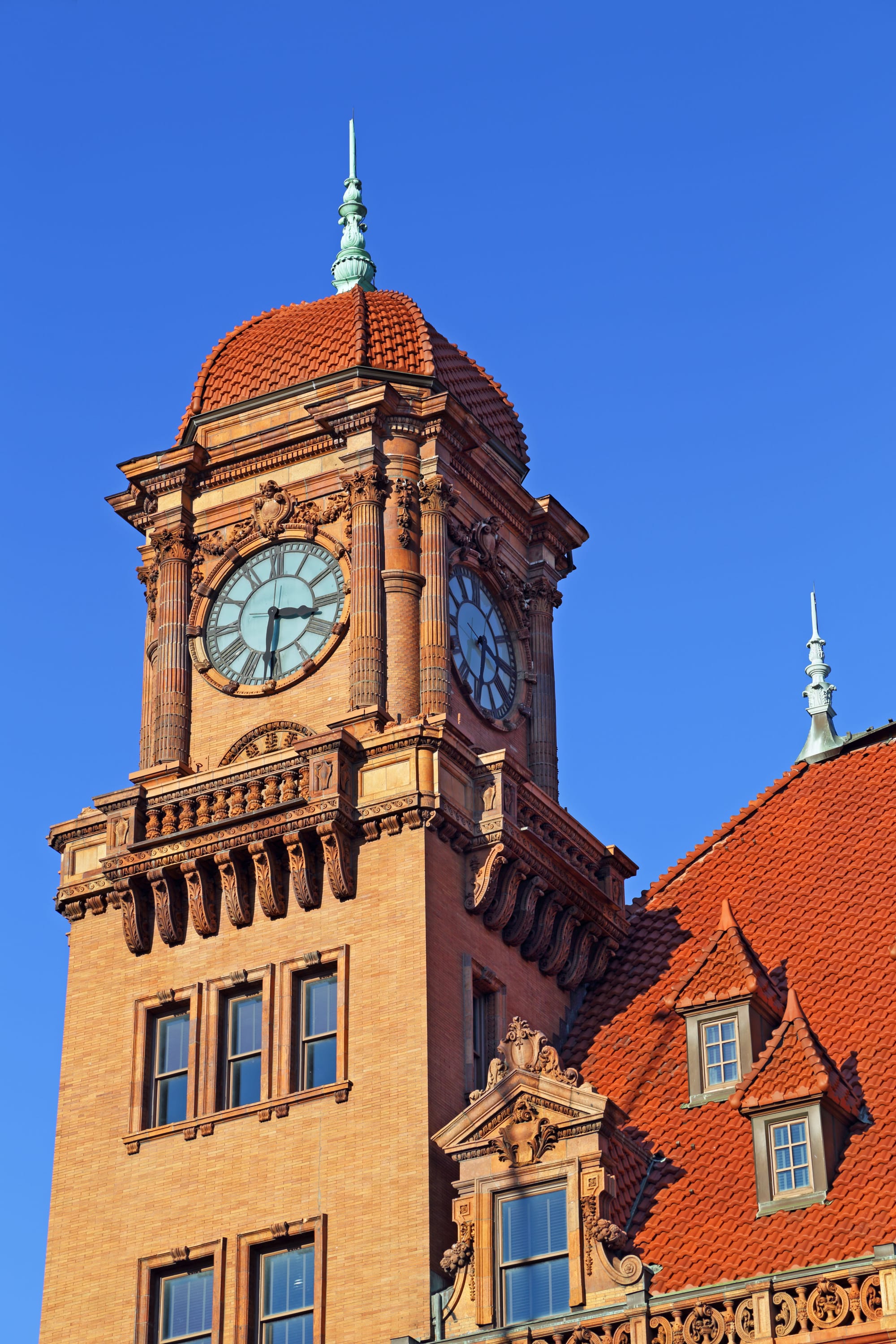
When Interstate 95 was constructed through the city circa 1958, the roadway was routed mere feet from Main Street Station, earning Richmond its unofficial nickname. Though the beautiful 1901 station has faced floods, fires and abandonment over the years, it thankfully reopened in 2003 after a massive renovation. These days, the station’s clocks appear to be relatively on time, if maybe a minute or two slow.
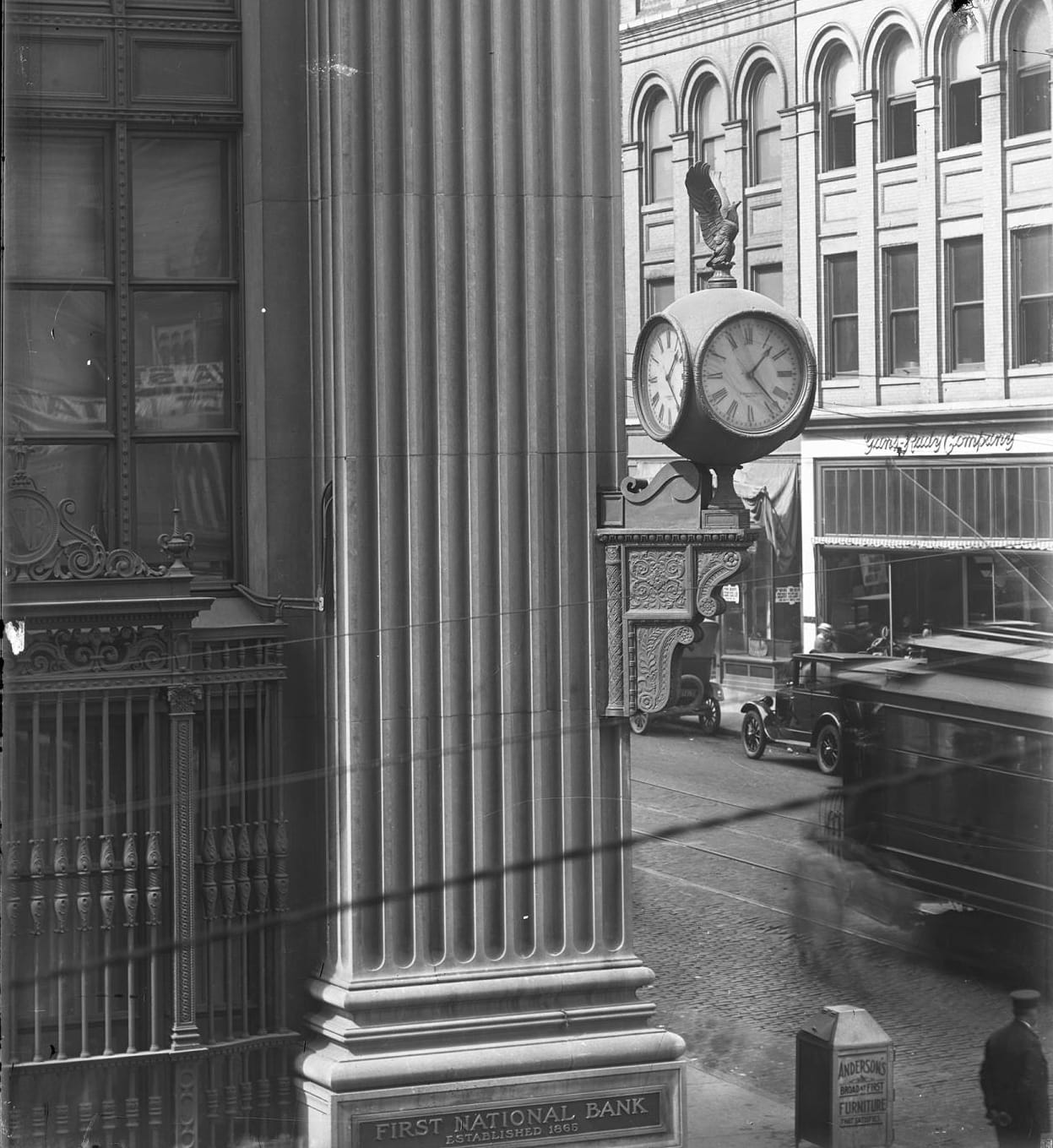
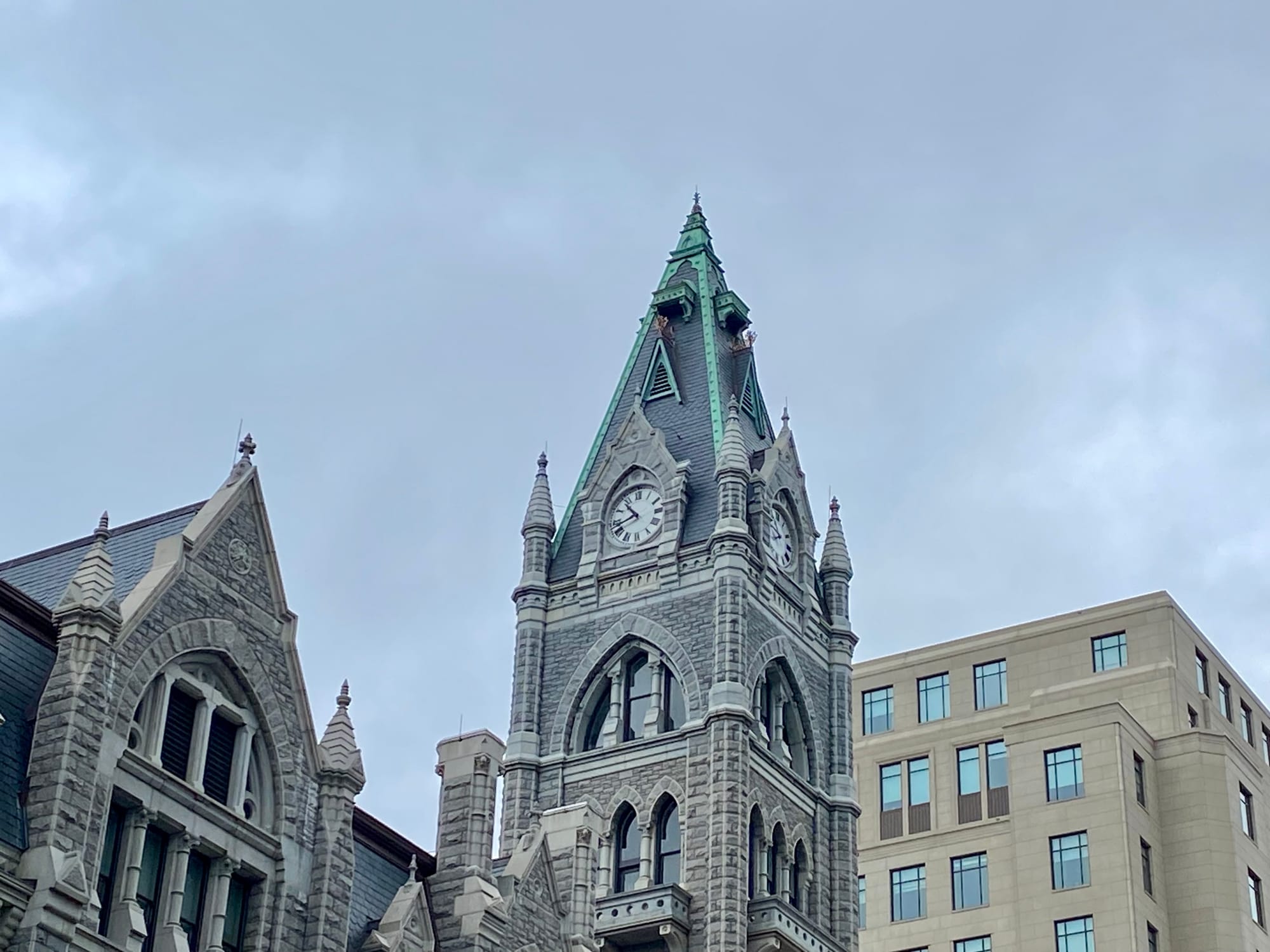
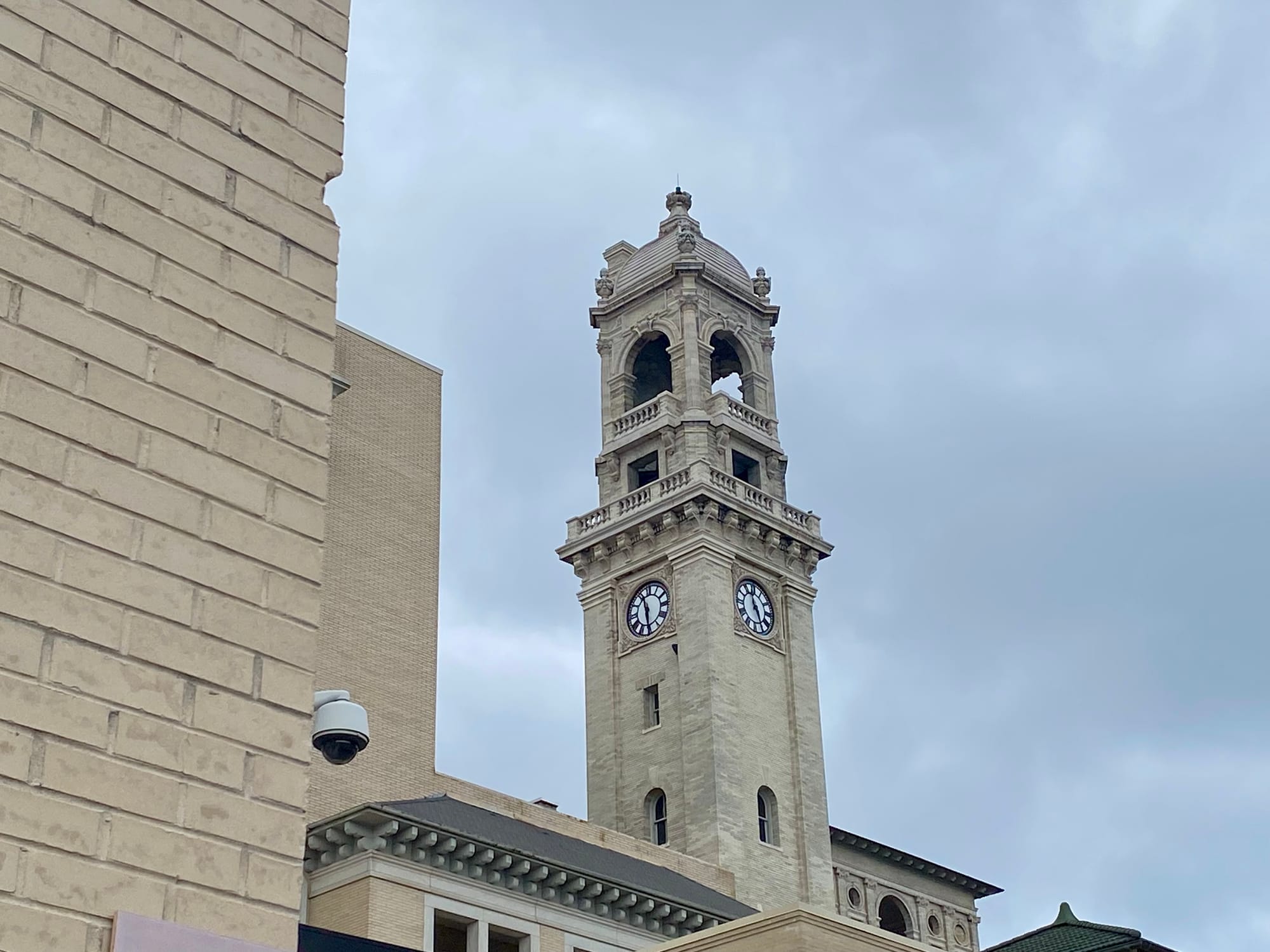
The beautiful multi-sided clock on the neoclassicist First National Bank Building at 827 E. Main St. looks to be in working order. At the Jefferson Hotel, the north- and south-facing clocks on the eastern tower might be a couple minutes fast, but the rest appear to be in time. The clocks adorning Old City Hall also seem to generally be on time, though its east-facing clock is about 5 minutes behind.
For generations of Richmonders, “Meet me under the clock” had one meaning: You planned to meet someone at the beautiful four-faced clock that lorded over the first floor information desk of Miller & Rhodes department store from 1924 until the department store closed in 1990. The clock now happily resides at The Valentine as part of its permanent collection.
Yes, in the era of smartphones, public clocks may be obsolete. But they’re also a point of civic pride, a marker of place, and a handsome addition to any public space. Hopefully, in time, all of Richmond’s public clocks will tick, tock and chime once again.