Council rejects proposals to create new layer of review for code refresh
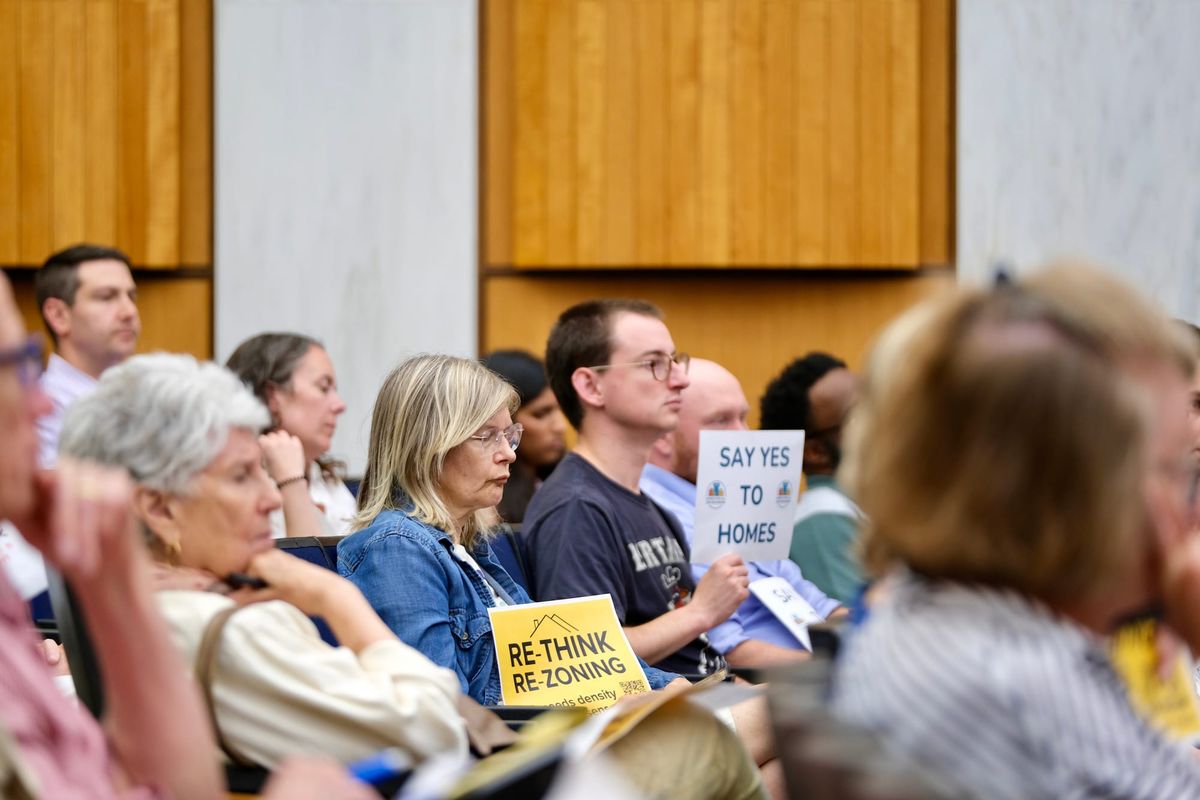
The Richmond City Council voted Monday to reject a pair of proposals that could have slowed down the city’s code refresh initiative by creating a new process for citizen review.
Several Council members said they felt the city could do a better job of engaging residents about the sweeping overhaul of the city’s zoning rules to both modernize an outdated system and make it easier to build more housing.
However, a majority of members said they saw little need to formally stand up a new commission given the extensive work done over the last two years. The city already has a Zoning Advisory Council that, according to the city website, is supposed to “be the voice of Richmonders in the room” as officials work on the zoning overhaul.
Councilor Nicole Jones (9th District) said residents still feeling unheard on code refresh is a sign of “lazy engagement” by city officials. But instead of creating another commission, Jones said, the city should do more with the considerable resources it already puts into communications and neighborhood outreach.
“All this does is highlight what we need to do as a city,” Jones said. “We need to get serious as it relates to engaging every citizen.”
Councilor Andrew Breton (1st District) agreed, saying it’s already the Council’s job to listen to public feedback and push to have it incorporated into the code refresh as officials prepare to release a third draft of the plan.
“I believe that it is our responsibility to be the watchdog of this process,” Breton said.
He added that Council members also have “the option and the responsibility to withhold our vote until we’ve heard enough.”
Councilors Reva Trammell (8th District) and Kenya Gibson (3rd District) had introduced competing proposals aimed at the same basic idea: giving residents a stronger say in what happens to their neighborhoods even if it might slow or complicate the code refresh process.
Supporters of the code refresh — which aims to rewrite a zoning ordinance that has not been comprehensively overhauled since the 1970s — say allowing denser housing in a city with limited amounts of buildable land will help ease Richmond’s housing affordability crisis and create more homes for people struggling to find a place to live. Critics argue the process has been too driven by developers whose plans often draw pushback from residents who want to preserve the look and feel of their neighborhoods.
 Sarah Vogelsong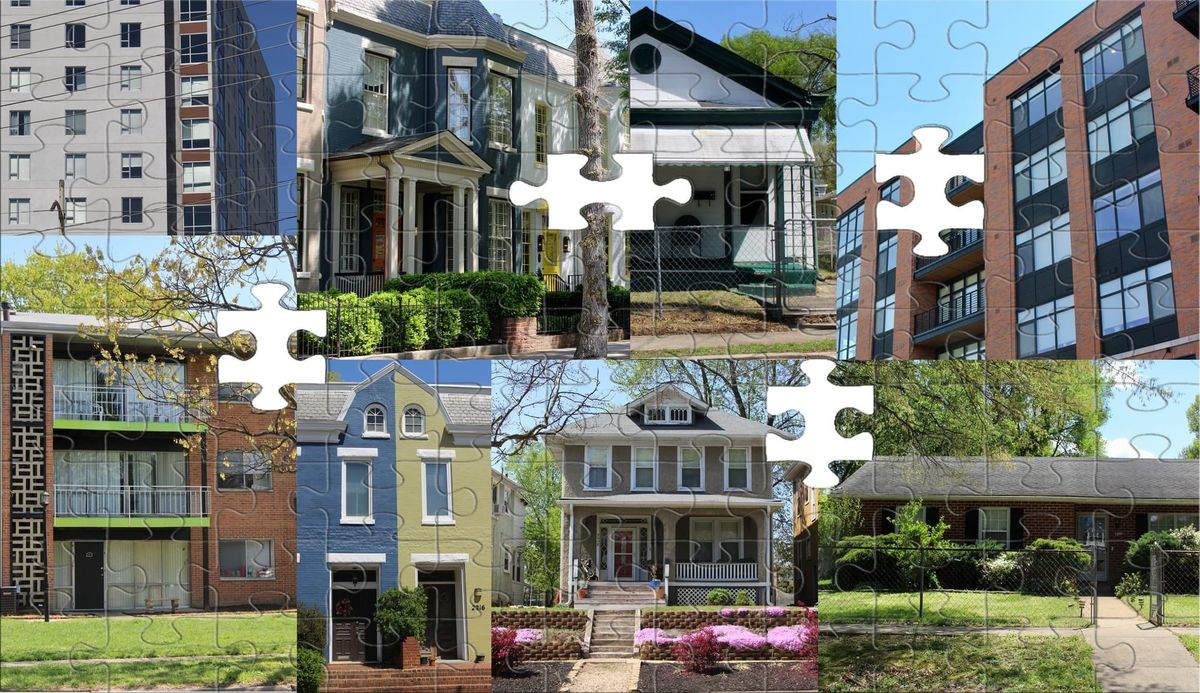
The debate involves complicated land-use questions like what types of housing can be built by right and what requires a special permit. One of the most contentious issues is debate over whether duplexes should be allowed on lots traditionally used for single-family homes.
Trammell called her proposal a “Code Refresh Review Commission.” Gibson labeled hers the “Resident Planning Review Commission.”
The two proposed commissions would have been advisory, meaning they could give input, recommendations and reports, without the authority to block or change the code refresh on their own. Both commissions would have had 18 members, with rules limiting participation by people with a financial interest in real estate development. Gibson’s commission would have set aside seats for renters in addition to homeowners.
Gibson said residents should take “center stage” in the code refresh discussion.
“When it comes to local politics, there’s no industry that has more influence than developers,” Gibson said. “They contribute to campaigns. They show up at Council meetings. So how can we offset that immense influence?”
If the Council ends up lacking information when the time comes to vote on the code refresh, Gibson said, “we have no one to blame but ourselves.”
Both proposals failed on 6-2 votes, with Gibson and Trammell opposing each other’s version. Councilor Sarah Abubaker (4th District) voted for both. Councilor Stephanie Lynch (5th District) was absent from the meeting and did not vote.
Trammell said she has heard resident pushback to the code refresh “loud and clear.” She also said she supports an emerging effort to try to give Richmonders a direct vote on the rezoning through a ballot referendum, just as the public was given the opportunity to say yes or no to a casino a few years ago.
“Why not give you all the opportunity to vote for this?” Trammell said to the crowd in the Council chamber. “Let’s do a referendum. Because that’s what I’m working on right now.”
Local activist Paul Goldman, who ran for Council in 2024 but lost to Breton, has said he’s exploring possible legal action related to the code refresh.
During a public comment period Monday night, support or opposition for the two proposals largely fell along the same dividing lines as the code refresh itself.
Maria Düster, a member of the Homes for All Our Neighbors coalition that supports the rezoning, said her group supported the intent of the commission proposals but felt they would not have the desired effect of solving “significant gaps and inequities in the community engagement process.”
“We are concerned that these commissions may reproduce many of the inequities that they seek to address,” Düster said. “This commission's work will be unpaid, privileging those who can afford to work for free.”
Supporters of the commission proposals said they would empower residents to give more input on the future of neighborhoods they know best.
“They invested in their properties, maintained their neighborhoods, and contributed to the city's tax base. Yet many remain unaware of these changes,” said Betsey Gardner, a resident of the West End’s Stonewall Court neighborhood. “This is an issue of fairness to them.”
Councilor Ellen Robertson (6th District), who serves on the Zoning Advisory Council, said the city has already taken several steps to respond to citizen input, including adding more members to the advisory council that already exists.
“I’ve heard every voice,” Robertson said.
According to a recent city report, almost 5,000 residents were directly engaged in the initial phases of the rezoning through “webinars,open houses, panel discussions, roundtables, pop-ups, office hours, neighborhood and civic association meetings, stakeholder interviews, and advisory council meetings.” The city planning department says it has attended 98 rezoning meetings, in addition to mailing a rezoning postcard to all households late last year.
Richmond’s population now stands at a little more than 237,000 residents, according to the latest U.S. Census Bureau estimates.
Robertson suggested the Council should first decide how many of the city’s residents need to be reached for officials to feel comfortable there’s been enough community engagement, then ask Mayor Danny Avula’s administration to come up with a plan to achieve that goal.
“Is it 50 percent? Is it 100 percent? Is it 25 percent?” Robertson asked. “I don’t know. But we need to be able to say that.”
Contact Reporter Graham Moomaw at gmoomaw@richmonder.org