Council OKs new tax deferral program letting homeowners delay impact of higher assessments
The Richmond City Council voted Monday to give some city homeowners the option of putting off property tax hikes until they sell the property or can better afford to pay.
The tax deferral program — passed by a unanimous vote — was pitched as a way to give people struggling to afford a Richmond home some relief from rising tax bills, without reducing the city’s real estate tax rate.
Participants in the new program would only be able to defer payment of a higher tax liability above 105% of what they paid the previous year. Under that formula, if a property owner who paid $1,000 in taxes last year got a new bill for $1,200, they could defer up to $150.
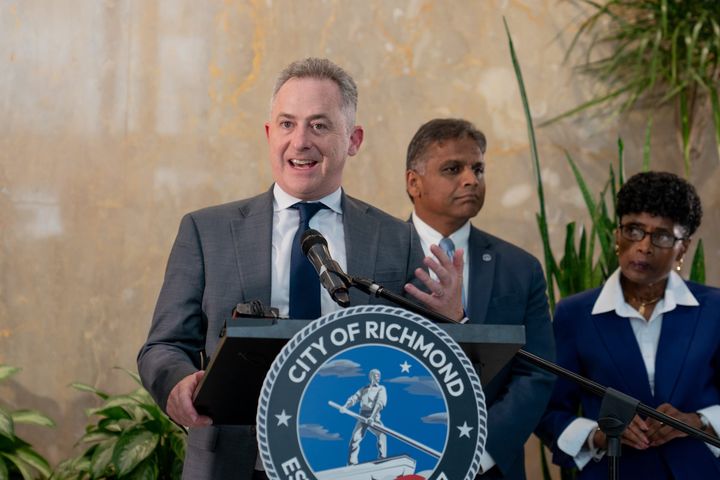
Councilor Sarah Abubaker (4th District), the lead sponsor of the proposal, said it would be a way to offer broad tax relief as she and others continue to work toward possibly lowering the tax rate to offset rising bills.
“Affordability is not just a challenge for low-income residents, it's increasingly a concern for middle-class families, seniors and long-term homeowners who want to remain in the neighborhoods they helped to build,” Abubaker said in a statement after the vote. “A thriving city depends on maintaining affordability across the spectrum.”
The tradeoff for homeowners is that the deferred taxes would create a lien on their property until the unpaid amount is paid off with interest of up to 2%. The plan includes several limits restricting the overall tax liability that can be deferred.
For many participants, the program would offer a way to keep their tax bills more consistent from year to year, then pay off the difference when their home is sold. The deferred amount must be paid by the owner after a sale or transfer of the property, or by the owner’s estate if the person dies before getting caught up.
Mayor Danny Avula’s administration previously had expressed opposition to the plan, warning it could create another burden for the already struggling Finance Department and potentially require a hiring spree to implement effectively.
The Avula administration’s stance appeared to soften as more and more Council members signed onto the tax relief proposal en route to a 9-0 vote.
In response to the administration’s concerns, Abubaker delayed the implementation of the tax deferral program until the 2028 tax year and added a provision giving the executive branch time to come up with an implementation plan by early 2027.
“I want to thank Council for pursuing our shared goal of supporting residents amidst rising costs of living," Avula said in a news release Monday night. "I especially want to acknowledge the implementation timeline because it is important that the administration have time to build a thoughtful and realistic plan. We look forward to working with Council during the implementation period to better understand the operational and fiscal requirements involved.”
 Graham Moomaw
It’s unclear how many Richmond homeowners might take advantage of the new program, but Abubaker characterized it as a useful option to have available.
“If this program helps even one Richmonder reduce financial stress by allowing them to direct a portion of their real estate tax obligation toward more immediate needs, then this effort will have been worthwhile,” Abubaker said.
In other action from Monday meeting, the Council voted to:
Restore Richmond Ambulance Authority control over medical 911 calls
Settling a lengthy dispute over who should have primary control over medical 911 calls, the Council voted to restore the Richmond Ambulance Authority’s power to directly communicate with callers on the front end.
In the summer of 2024, the city’s own Department of Emergency Communications had taken over as the main point of contact with callers.
 Sarah Vogelsong
The change was defended as a move toward speed and efficiency. However, RAA officials said it was causing confusion because details of some calls were getting lost in translation as the city relayed information to the ambulance authority.
The ordinance the Council approved Monday restored the previous protocol in which medical 911 calls were immediately routed to RAA.
The Council seemed willing to reverse the prior decision after receiving data indicating that even though speed had improved with the city handling calls itself, accuracy — responders understanding what kind of medical emergency they were responding to — had suffered.
“We would be negligent not to make a change,” said Councilor Stephanie Lynch (5th District).
Council President Cynthia Newbille (7th District) agreed, but added that as someone with firsthand experience in a 911 situation that ended in death, it was important for the city to get any change right.
“This is not something that’s perfunctory,” Newbille said.
Ahead of the final vote, there was late-breaking concern over whether the return to the old system could be accomplished within the 30-day timeline the ordinance required.
Similar to the tax deferral program, the Avula administration spent months resisting the 911 proposal only to see it approved in a 9-0 Council vote.
The administration and the Council agreed to continue working on a longer-term plan to have RAA and the city’s emergency dispatchers working out of the same location.
“I am fully committed to delivering the highest quality emergency services for all of our residents,” Avula said in his release. “I am excited and look forward to working with Council on a future ordinance to codify the implementation plan for a co-located model that will do just that.”
Clarify rules on clearing snow or ice from sidewalks
The Council approved a revised law laying out whose responsibility it is to clear sidewalks after winter weather.
The changes were inspired by January’s weather that left the city under thick sheets of ice for an extended period, with low temperatures preventing the ice from melting on its own.
 Graham Moomaw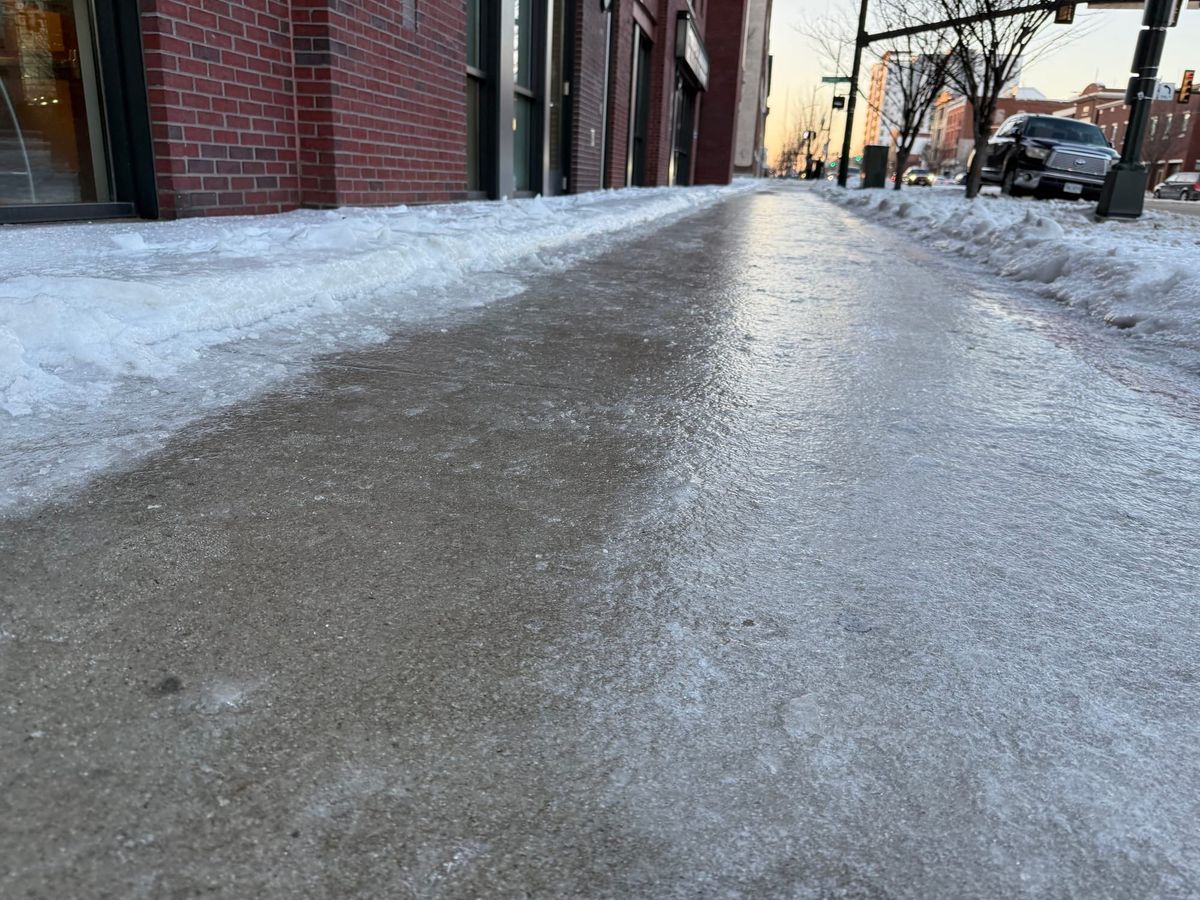
The new ordinance clarifies that adjacent property owners also have a responsibility to take care of ice in addition to snow, but gives a reprieve to renters in larger apartment buildings. For properties with three or more dwelling units, according to the new law, the sidewalk shoveling duties fall to the landlord.
The revisions also downgrade the penalty for non-compliance, changing it from a low-level misdemeanor offense to a civil penalty with a $100 fine. The new ordinance includes exceptions for property owners who are over 65 or disabled. It also allows the city to waive penalties when a state of emergency has been declared.
Approve having an expert panel look at the John Marshall courthouse
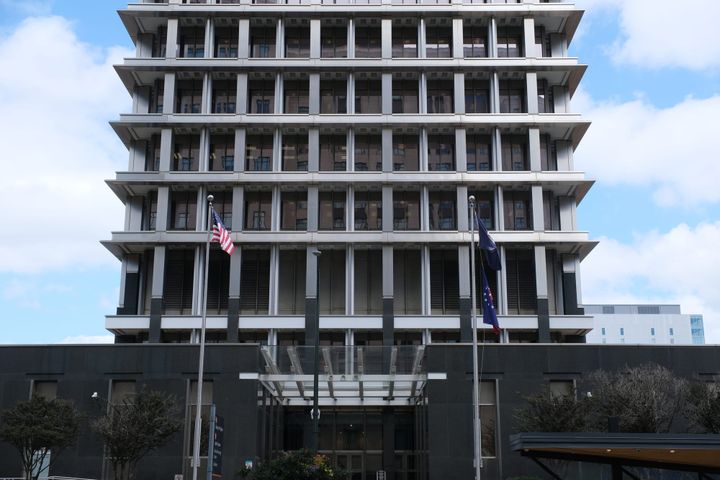
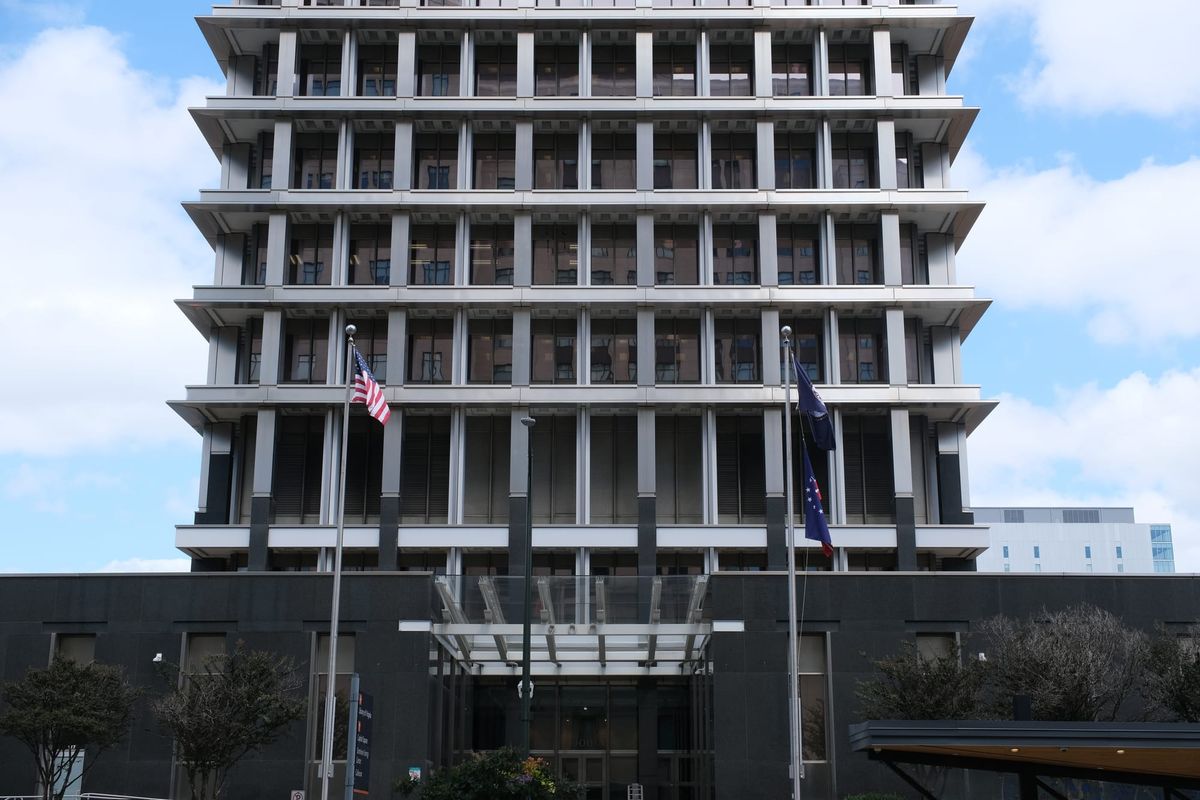
Under legal pressure from local judges to fix up the John Marshall Courts Building, the Council approved a resolution to create an expert panel to review conditions at the downtown facility.
The Council passed a resolution to work with the Avula administration to create a list of seven possible contenders for the five-person panel.
Virginia law that lays out a detailed process for how the state-run court system should handle building disputes with the local government. That law envisions panels like the one being created in Richmond, specifying that at least three of the panel’s members be professional architects or engineers.
 Graham Moomaw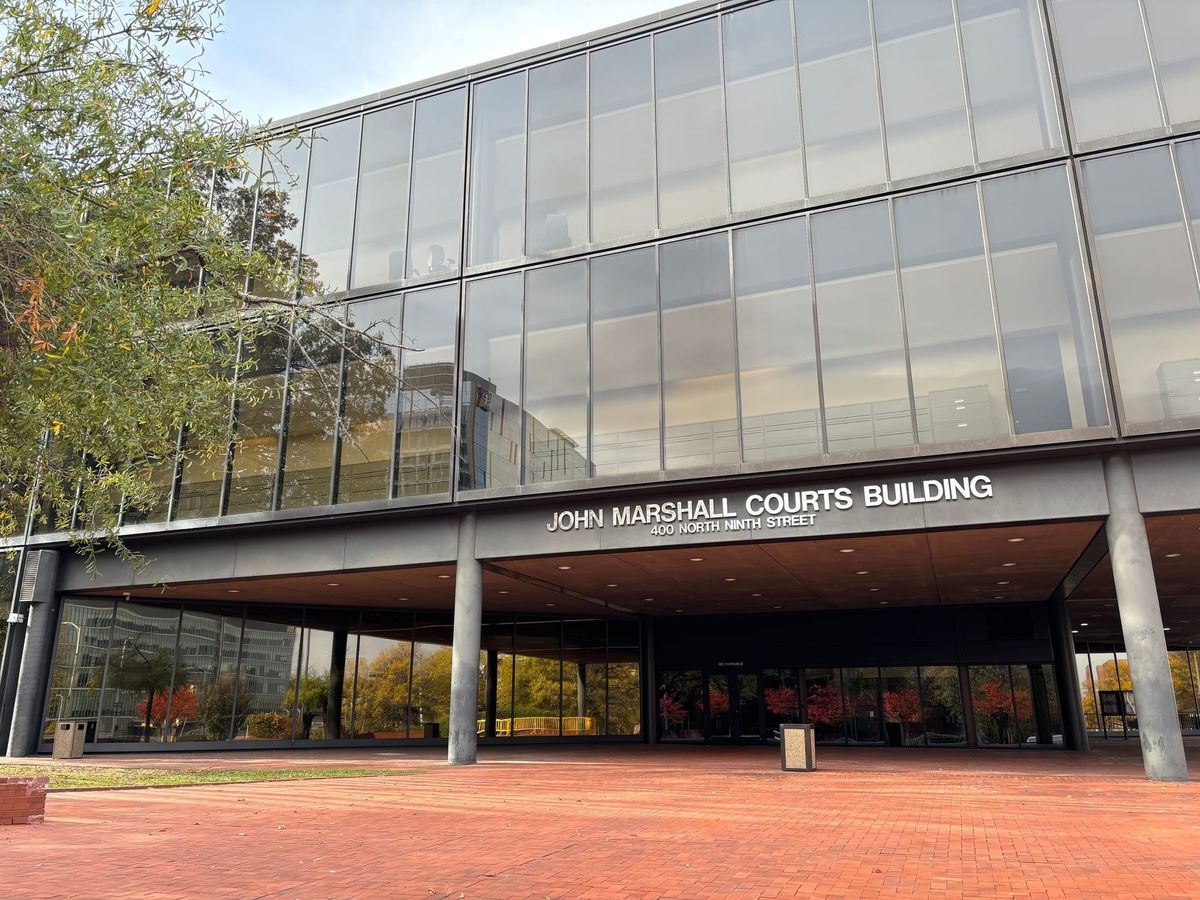
The panel’s recommendations will inform an ongoing legal dispute over whether the city should be forced to spend more money on the courthouse.
Advance a complex land deal on Southside’s Commerce Road
To clear the way for a major-mixed-use development off Commerce Road in Southside, the Council approved a package of legislation intended to free up nearly 13 acres of publicly owned property for the project’s developer, City Central LLC.
Roughly 8.2 acres of the property has belonged to the Richmond Public Schools, adding a layer of complexity to the transaction involving two public bodies instead of one. The school division has used the property primarily for office and storage space. The other city-owned property has been used by the Richmond Police Department for property and evidence storage.
Under the $7.4 million deal, the developer must help the city find alternative sites for RPS to relocate to and ensure the school division is kept whole in the transaction.
 Sarah Vogelsong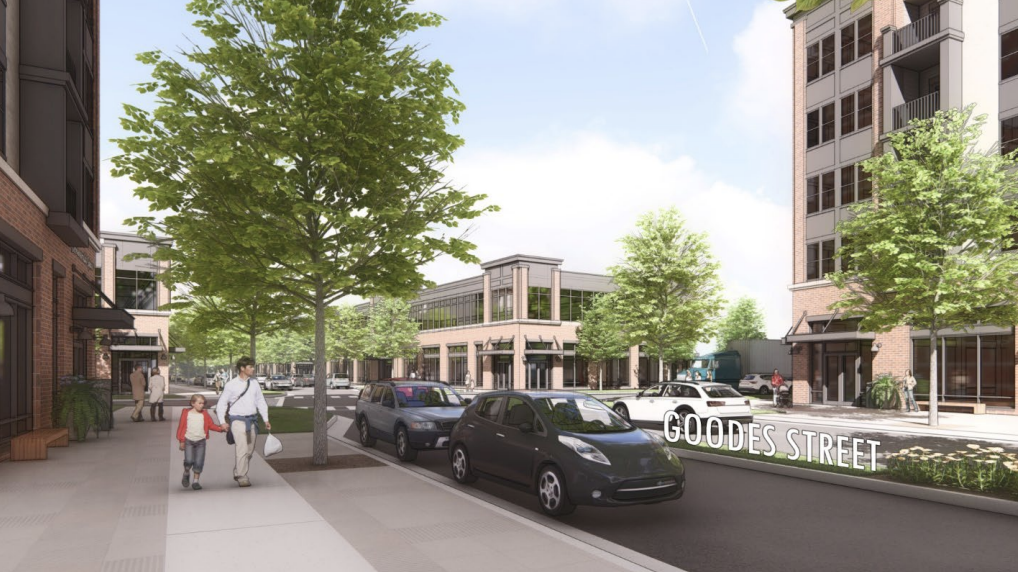
Councilor Kenya Gibson (3rd District) opposed the Commerce Road proposals, saying she wasn’t against the development per se but could not support the city’s habit of bending or breaking its own rules for how public property is sold.
Under the city code, public property is not supposed to be sold unless it has been declared surplus and gone through a competitive bidding process. The city routinely sidesteps that rule by waiving it in the legal text of land deals presented to the Council for approval.
Empower DPU to get tougher on stormwater violations
The city hasn’t been going after developers and industrial facilities for violations of stormwater, erosion and other water discharge rules meant to keep unwanted material out of the city’s sewers and waterways.
That could change under an ordinance approved Monday night that gives the Department of Public Utilities the power to levy and collect civil fines for those violations.
 Sarah Vogelsong
Previously, enforcement had to go through the city attorney’s office, according to the city, and officials concluded it wasn’t worth it to go through a potentially costly court process for low-dollar fines.
Officials have said they believe violations are occurring, but it’s unclear how many fines could be expected under the streamlined, DPU-led process.
Contact Reporter Graham Moomaw at gmoomaw@richmonder.org