Avula pitches meals, property tax cuts to win support for sales tax for Richmond schools
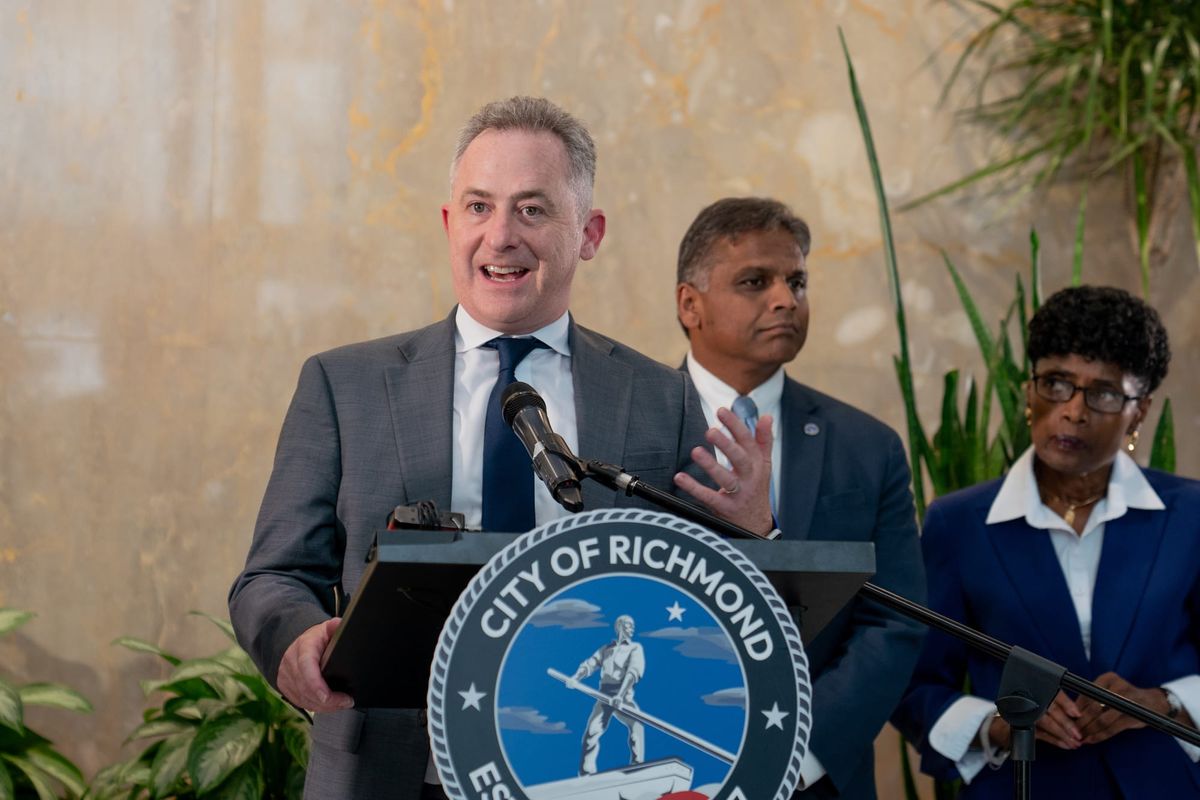
In what appeared to be the start of a campaign to convince voters to accept a 1% sales tax increase for school construction, Mayor Danny Avula told the public Thursday afternoon that he will decrease the meals tax by 1% and the real estate tax by one cent, “easing tax burdens on Richmond residents” if the referendum passes.
“If we're asking Richmonders to approve a new tax, then we should also look for every opportunity to pair that with a reduced tax somewhere else,” he said.
The sales tax in Richmond is currently 6% – it would go up to 7% if voters approve a ballot measure in November.
The meals tax alone, which is assessed on top of the sales tax, is currently at 7.5%. Avula proposed bringing it down to 6.5%, which would result in the cost of prepared foods remaining consistent.
Taxes on other goods would increase to 7%, but the increase in the sales tax would not apply to groceries, medicines and hygiene products.
Avula also proposed reducing the real estate tax by one cent, to $1.19 per $100 assessed value, a proposal previously floated by Chief Administrative Officer Odie Donald.
“I know that it’s only a small reduction, but it moves us in the right direction to show fiscal discipline, long-term planning and returning money to the taxpayer,” he said.
 Graham Moomaw
The General Assembly recently allowed localities to grant voters the decision to add the extra sales tax that would go towards school construction through its passage of the state budget.
The Richmond School Board soon after unanimously adopted a resolution requesting that City Council approve the referendum to go on the ballot this November, and it is expected that Council will oblige at its upcoming meeting on Monday.
“It’s about giving Richmond residents the opportunity to decide whether we should create a dedicated long-term source of funding to build and renovate our schools,” said Council President Cynthia Newbille (7th District).
The sales tax could generate nearly $47 million for Richmond Public Schools’ building needs every year, beginning in 2028. In many localities, officials sell bonds against those future revenues to allow for more immediate spending. Officials said the sales tax increase could bring $850 million in new spending to the division by 2034. That would be nearly double what the schools currently get for facility improvements – $450 million within the same timeframe.
Avula added that the tax would also save money from the city’s general fund to go towards other infrastructure needs, like public housing redevelopment. During this year’s budget cycle, RPS borrowed against future city payments to receive more money now.
 Victoria A. Ifatusin
City and school officials emphasized the substandard state that the old school buildings are in, with Superintendent Jason Kamras describing the division’s maintenance needs as “a billion-dollar challenge.” Avula referred to the recent flooding inside the old Richmond High School for the Arts caused by a faulty HVAC system that closed the building down for good just days before school was out for the summer.
“We have a rare and unique opportunity to rapidly accelerate the work of building better schools for more children,” Avula said.
While the meals tax is being lowered, it won’t result in a major hit to RPS. When the meals tax increase for schools was passed, City Council directed 20% of meals tax revenue to go to schools. That will remain the case at the lower 6.5% meals tax rate, rather than RPS’ portion of the meals tax being removed.
Chesterfield County recently approved putting the 1% sales tax increase on November’s ballot and presented a list of six projects that would be fully funded or accelerated by the new revenue. The county also proposed cutting their real estate tax by two cents to 87 cents.
 Eleanor Shaw
The press conference also highlighted other city processes that have resulted in financial burdens for Richmond residents, including the recent utility billing glitch impacting payment processing issues for 15,000 accounts and the previous miscalculated meals tax penalties handed to restaurant owners. When asked if voters should be concerned with that history, Avula said he believes that the city has “ironed out many” of the penalties restaurants have complained about and that the administration has rolled out a new platform for utility payments.
But there’s still work to do, he continued, especially in making sure that the public is educated on the cuts he is offering for a 1% sales tax.
“This is a democracy. It is up to the people,” he said.
Contact Reporter Victoria A. Ifatusin at vifatusin@richmonder.org