State didn't send enough funds for nullified redistricting vote, leaving Richmond $375K short
Richmond officials had to spend almost $375,000 in local tax dollars to run an unplanned election that didn’t count.
A pot of state money set aside to help local election offices fund the April 21 redistricting referendum fell short of covering Richmond’s actual costs, according to city documents.
City officials spent a little more than half a million dollars to run the redistricting vote, which ultimately didn’t matter because the Supreme Court of Virginia ruled the election invalid and overturned the result.
Out of $5 million the General Assembly allocated to help pay for the redistricting referendum, Richmond received $129,606, according to the Virginia Department of Elections.
That was significantly less than the $504,437 Richmond spent on staffing, equipment, ballots and other expenses tied to the unusually timed spring election. It left the city election office having to absorb a $374,831 cost.
Richmond isn’t alone. Cities and counties across Virginia had to run the election regardless of the unresolved legal challenges over whether the vote should count. Neighboring Henrico and Chesterfield counties have reported similar local expenses that weren’t fully reimbursed by the state.
But due to a tight budget in Richmond, the city’s elections office was put into a financial shortfall partially caused by Democrats’ failed push to gerrymander Virginia’s congressional map in their favor.
“The entire conversation about the April 21 referendum election was first broached months after the city’s budget was adopted,” said Richmond Electoral Board Chairman Bill Pantele. “It’s just one of those things that needs to get sorted out.”
The exact size of the shortfall and how the city resolved it — or plans to resolve it — aren’t clear. The Richmonder reached out to multiple officials over several weeks to ask how the city handled the election office being forced to spend more money than anticipated for the fiscal year that ended June 30. The city has not yet provided a full explanation with financial specifics.
Asked how he handled the unexpected expense, Registrar David Levine said his fiscal year 2026 budget was already likely to be in the red due to another unforeseen special election in January. That contest was to fill the Richmond-area state Senate seat that opened due to Lt. Gov. Ghazala Hashmi’s ascension to statewide office.
The April redistricting vote, he said, “added further unanticipated expenses to the budget.”
“We notified the city that additional funding would be needed to cover the FY2026 election-related expenses, and the city indicated that it would provide funding to cover those costs,” Levine said.
Democrats pushed for the special election to counter Republican-led redistricting in other states, which occurred at the request of President Donald Trump in an attempt to maximize the GOP’s chances of keeping control of the U.S. House of Representatives in November.
 Richmonder Staff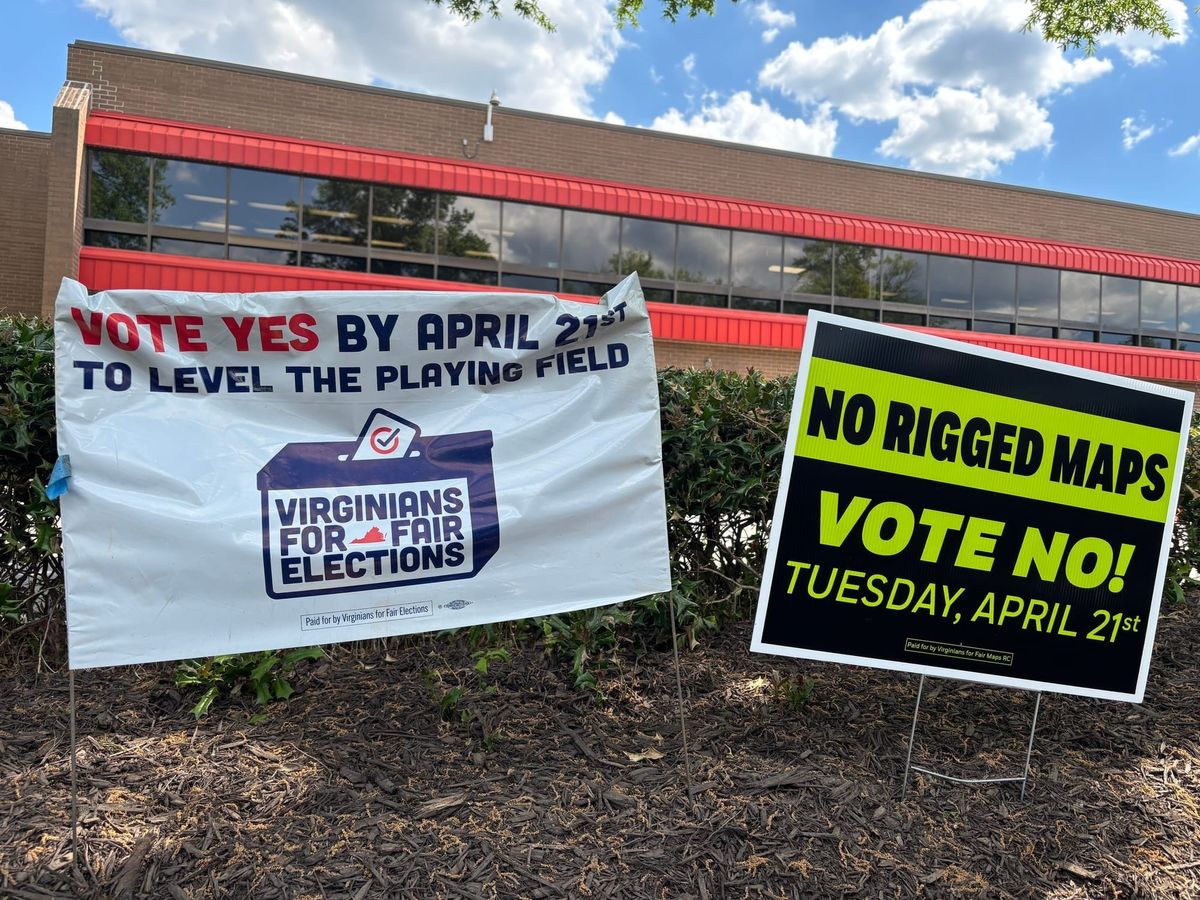
In 2020, voters approved a change to the Virginia Constitution that took away the General Assembly’s map-drawing powers and gave them to a bipartisan redistricting committee. Because of that, Democrats had to fast-track a public vote on a new constitutional amendment to temporarily restore the legislature’s ability to draw and pass new maps without the commission.
The redistricting plan won voter approval, but the victory didn’t last. In a 4-3 decision handed down in May, the Supreme Court essentially ruled that the Democratic-led legislature didn’t follow the proper, time-intensive process for putting constitutional amendments on the ballot. That made the result void and restored Virginia’s existing congressional map for this fall’s midterm elections.
The two parties have differing perspectives on who was at fault for public money being spent on a vote later deemed unlawful.
Democrats, who tried to compress a constitutional amendment process that normally takes two years down to six months, have pointed the finger at the Supreme Court. If there were serious concerns about the election’s legality, they’ve argued, the court could have addressed them before allowing the vote to proceed.
Republicans contend the majority party knowingly cut procedural corners and wasted taxpayer dollars on a losing gamble that the courts wouldn’t get in the way by overturning a popular vote after the fact.
With the legal battle unresolved heading into the April referendum, city and county voter registrars still had to do the administrative work of printing ballots, hiring and training election officers, mailing absentee ballots and opening polling places.
In Virginia, voter registrars are considered constitutional officers, which gives them some separation from their local government. Though Levine reports to the city’s court-appointed Electoral Board instead of City Hall, his office relies on local funding to operate.
For fiscal 2026, the budget cycle when the redistricting referendum occurred, the registrar’s office received about $4.7 million from the city’s general fund budget.
Staffing costs made up most of the special election expense. According to a tally from the Richmond election office, more than $330,000 was spent on the people needed to carry out the redistricting vote.
Levine, who was hired as Richmond’s registrar in the summer of 2025 in the aftermath of a controversy about alleged overspending in the election office, said his team “took a number of steps to manage our expenses and preserve flexibility in the budget.”
“For example, we limited conference travel, deferred some building maintenance projects, and spread the purchase of our ballot-on-demand printers across two fiscal years rather than one,” Levine said. “We also notified the city that the additional election would result in higher-than-anticipated election expenses for the fiscal year.”
The registrar’s office didn’t answer follow-up inquiries seeking clarity on how much additional funding was necessary to keep the election budget in balance.
Pantele, who previously served on the City Council before his appointment to the Electoral Board, said officials “don’t have a bottom-line resolution at this time” for working out the budget issue.
“We’re confident that we’re going to get the money we need in order to carry out the elections process we oversee,” Pantele said.
Contact Reporter Graham Moomaw at gmoomaw@richmonder.org