Richmond solar energy proposal fails to pass as Council meeting turns chaotic
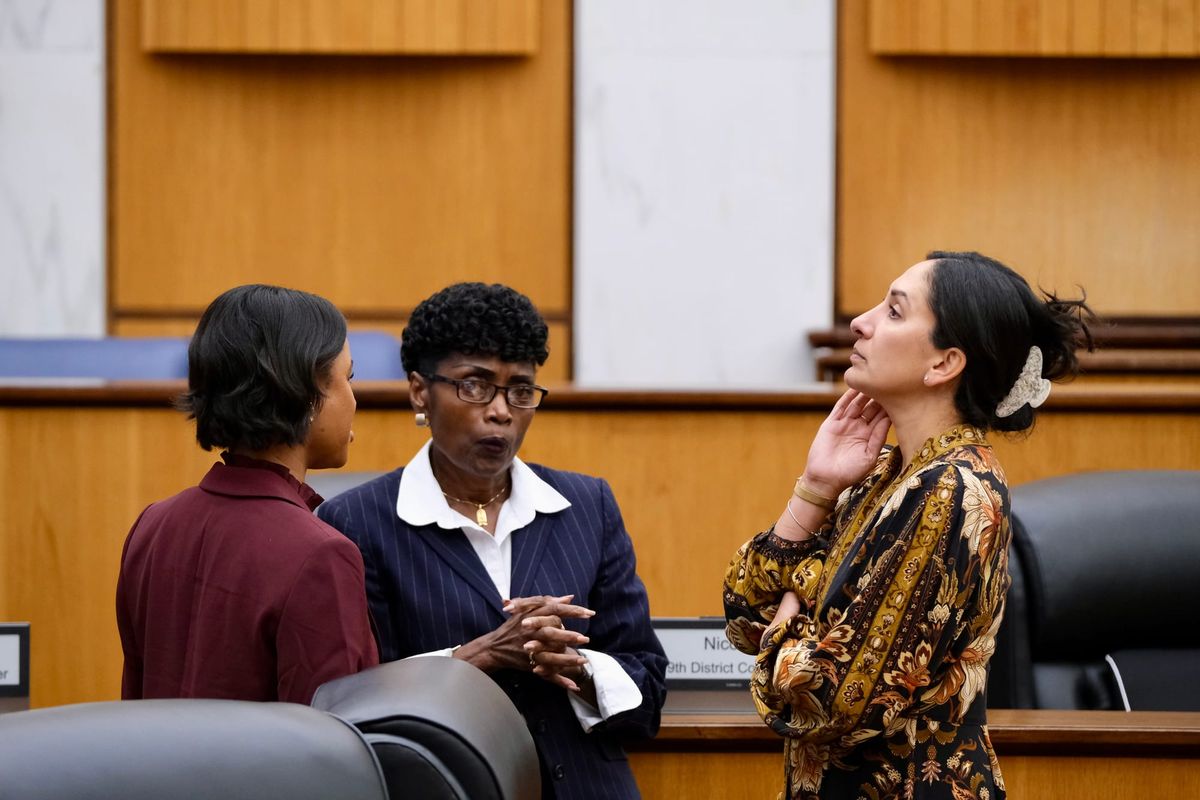
A proposed deal to put solar panels on dozens of Richmond’s city-owned rooftops might be dead. Or it might be brought back to life in a few days. At the end of a chaotic City Council meeting Monday night, no one seemed sure what had just happened.
What was clear was that a five-member majority majority of the Council was unwilling to pass the proposal in its existing form, throwing the project into serious doubt because of looming deadlines tied to expiring federal tax credits. The Council had been told the deal had to be approved by Wednesday.
Backers of the deal with Staunton-based developer Secure Solar Futures say it will save almost $20 million over 25 years by allowing the city to purchase rooftop solar power at lower rates than what Dominion Energy charges. The developer would install, maintain and own the solar panels at no upfront public cost, then sell the energy back to the city.
Mayor Danny Avula’s administration supported the solar power purchase agreement. After Monday’s vote, the mayor’s office issued a statement saying it’s “extremely unfortunate that the majority of Council was not able to find a way to saying yes to this opportunity.”
“Actions have consequences, and City Council’s action tonight will make it harder to achieve the City’s sustainability goals,” Avula said.
Council members who voted against the deal said they weren’t against solar energy, but were trying to do enough due diligence to get comfortable supporting a complex deal that involved 39 leases for city-owned rooftops.
Councilor Sarah Abubaker (4th District) drafted her own amendments to the contract and suggested taking them up at a future meeting. She and four other Council members were essentially told there was no time left to entertain changes, resulting in an up-or-down vote.
Richmond officials have had to move fast with their proposal because of changes to solar tax credits under President Donald Trump’s administration. To make the project financially viable, officials explained, the developer has to hit certain deadlines for ordering equipment.
“No one likes the timing. We are trying to achieve a goal,” said Laura Thomas, director of the Office of Sustainability, which was leading the solar project.
The prospect of installing privately owned solar equipment on dozens of government buildings brought complications over things like insurance, legal liability and termination fees the city could potentially have to pay if a future City Council wants to end the deal early. The solar panels would be added to the city’s insurance policy, but Secure Solar Futures would pay some of that cost.
The package of 39 ordinances was formally introduced to Council last Monday, leaving only one week for the body's public review. City staff had been working on the project for months, and Council members had received earlier briefings on some details.
At a committee hearing last week, several Council members asked tough questions, saying they didn’t want to commit to a deal that could potentially cost more than it saves if things go wrong.
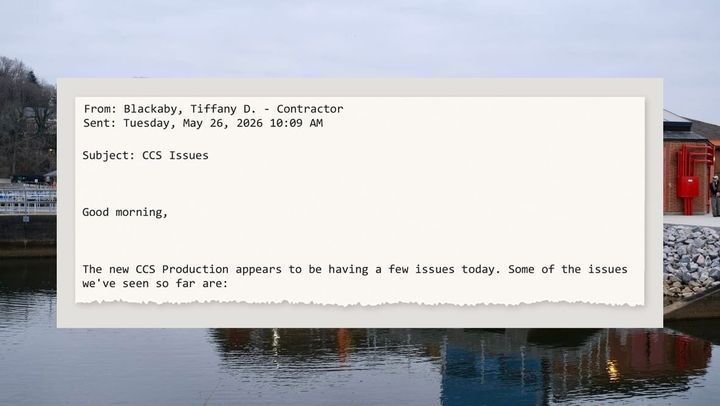
Before Monday’s meeting, several officials had raised concerns internally about whether the solar contract gave the city enough legal and financial protection. Those concerns were reiterated in an Aug. 11 email by Chief Administrative Officer Odie Donald II, a top Avula appointee. Donald said Monday his email was a “snapshot in time” and he was now comfortable supporting the deal.
In July, the city’s risk management bureau issued a report advising against the deal, saying it exposed Richmond to “significant financial loss” and should be re-drafted, possibly with another solar company willing to give better terms. The sustainability office strongly disagreed with that assessment, firing back a response that said “the simplest mitigation to risk will always be to say no and do nothing.”
Near the end of a meeting that stretched almost to 11 p.m., several Council members asked to go into a closed session to consult with City Attorney Laura Drewry, who they said had expressed her own reservations about the solar deal.
Council leadership, which favored the proposal, instead moved forward with a vote to approve. That vote failed 4-5, prompting a confused scramble to figure out what to do. Council members on both sides seemed surprised by the apparent finality of the outcome.
Staffers rushed to consult Council rules to see what procedural options might be available to continue the discussion. When a closed session was suggested again, the Council concluded that wasn’t possible because the deal had been voted down and there was nothing to discuss.
Councilor Reva Trammell (8th District) said anyone watching on TV would get the impression “something corrupt” was happening. As the night wore on, the Council clerk admonished the body to stop interrupting roll-call votes with new remarks, a comment seemingly directed at Council President Cynthia Newbille (7th District).
When the meeting was over, little was clear about what might happen next.
Backers of the solar proposal said the Council’s inaction could cause Richmond to miss a window of opportunity to act on a type of clean-energy deal numerous other governments and school divisions have done without major problems. Secure Solar Futures is a leading player in the industry.
“I just find it shocking that we are talking about pushing this off the agenda, stifling public comment and pretending like it’s all going to be OK and that this deal can still happen,” Council Vice President Katherine Jordan (2nd District) said as the coalition of deal skeptics moved early in the meeting to have it removed from the agenda entirely.
When it appeared that motion was likely to pass, Council leaders stopped the process mid-vote. Abubaker later agreed to rescind that motion to allow the body to debate the proposal after a public hearing.
Members who voted against the proposal said they felt they were being pressured to say yes without enough time to reconcile conflicting information from different corners of City Hall.
Secure Solar Futures had agreed to several “friendly amendments” to the contract prior to Monday’s meeting. The Council was told it should vote the deal through and trust those amendments would happen later.
“If we were closing our eyes and this were any other private company, would we say ‘OK let’s sign the contract — that is legally binding, that puts the city on the hook for a quarter-century — and we’ll work out the details later?’” asked Abubaker.
Before the vote, Councilor Ellen Robertson (6th District) held up a copy of the city’s risk analysis, saying it contained a clear recommendation to “close the risk.”
“The city is encouraged to re-draft Solar Power Purchase Agreement and incorporate a transfer of risk strategy, as a transfer of risk shifts the financial and legal responsibility from the city to the vendor,” the risk analysis said. “The city should also consider pursuing other solar panel vendors that may be inclined to enter into an agreement that is more favorable to the city.”
Without hearing why those conclusions no longer apply, Robertson said, she was unswayed.
“We do not have our risk management standing before us to retract what is in this report,” Robertson said. “To push us to vote on this would force me to vote against something that I do not want to vote against. I cannot ignore what’s written right here on paper.”
The Council then proceeded to vote. Robertson voted against, as did Abubaker and Trammell. With Councilors Nicole Jones (9th District) and Kenya Gibson (3rd District) also voting no, the measure failed.
Newbille and Jordan voted yes, along with Councilors Andrew Breton (1st District) and Stephanie Lynch (5th District).
Departmental disagreement
The city’s risk management bureau is part of the Department of Finance. Its stated mission is “to protect the employees and assets of the City of Richmond from loss and damage.”
The sustainability office describes its mission as improving Richmonders’ quality of life by focusing on “climate action, resilience, and equity.”
With the proposed solar deal, those missions apparently came into conflict.
Gibson said she has to rely on city departments to weigh in on their area of expertise, including trusting “the risk department to know about risk.”
“It appears in this instance that various departments were not in sync,” Gibson said.
The tension continued after the vote as Newbille tried to work out a new plan on the fly. The Council was initially advised there was no way to revive the proposal at the same meeting, but was later told someone who voted against it could move to bring it back up.
Newbille settled on that as a backup plan, without having any volunteers from the no side to go along with it.
“The request to raise it back up… we’re not going to do it,” Abubaker said.
“You’re not willing to do it,” Newbille replied. “I’ve not heard that from everyone.”
The effort to reverse the vote prompted Trammell to say she’d never experienced anything similar in all her time on the Council.
“It looks like corruption right here in this Council chamber. I can feel it tonight,” Trammell said.
Newbille said she disagreed.
With the meeting going late into the night, Gibson suggested putting off several remaining agenda items and adjourning the meeting. As the Council took a few final votes to do that, Clerk Candice Reid tried to cut through the procedural confusion by telling Newbille further debate was no longer allowed once a vote had begun. She asked the Council president to simply state her vote.
Several Council members said statements made by the sustainability office were at odds with what they were hearing.
At one point, Thomas, the sustainability director, noted a master contract with Secure Solar Futures had already been signed, including by the city attorney’s office that “represents this body.”
The implication the city attorney was on board drew an interruption from Robertson, who spoke up despite Newbille instructing her to let Thomas finish.
“I cannot, madam chair,” Robertson said. “I’ve had conversations with the city attorney as well. And I’m not being told the same.”
Overwhelming support during public comment
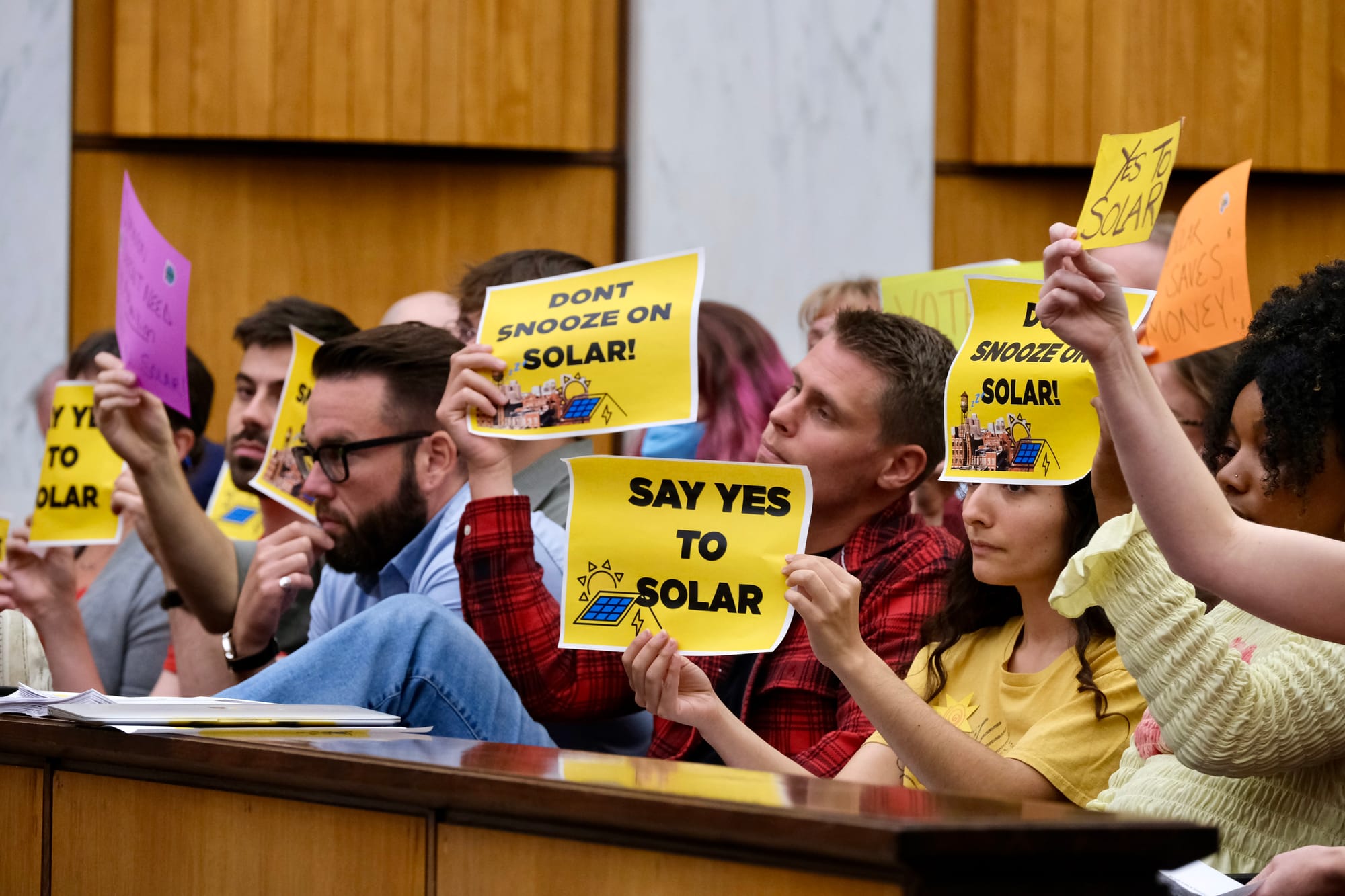
During a public comment period, dozens of speakers, including many representing environmental groups, urged the Council to back the project.
“Don’t delay. No amendments. Vote yes today,” said Jacqui Bauer with the nonprofit Community Climate Collaborative.
Alex Mejias, a former candidate for the Virginia House of Delegates, said it was “shocking” that Abubaker and other Council members initially tried to take the issue off the agenda before hearing public comment.
“It’s not just the administration that’s asking for your trust. It’s the entire environmental community,” Mejias said.
Some supporters argued there was a broader pattern of resistance to worthy projects in the upper levels of the city bureaucracy. Others said the solar deal causing such angst in Richmond was fairly normal by industry standards.
Speaking for the Falls of the James Group within the Virginia Sierra Club chapter, Tavarris Spinks told the Council “a lot of the stuff you heard tonight is because of Trump.”
“Don’t let him win,” Spinks said.
Virginia Chief Energy Officer Josephus Allmond, who holds a new cabinet position created by Gov. Abigail Spanberger, sent a letter to Richmond leaders this month urging support for the solar deal.
“The project’s scale makes it significant not only for Richmond, but also as a model for other public bodies across the Commonwealth,” Allmond wrote in the Sept. 21 letter.
Gibson said it would be “very easy” to vote the way advocates wanted. But, she argued, the Council had to look at the bigger, long-term picture.
“For my colleagues that are expressing concerns tonight, this is a courageous thing to do,” Gibson said.
Similarly, Abubaker said the Council’s job is to “think holistically.” While doing her own research, Abubaker said, she learned the inspector general’s office has opened an inquiry into “allegations of ethics violations” related to the solar proposal. She didn’t elaborate.
“We are entering into something with a rushed deadline that is not ours, with questions that we are going to be asking long after Sept. 30,” Abubaker said.
What next?
In a letter sent to city officials after last week’s committee hearing, Secure Solar Futures offered three “friendly amendments” to the deal in line with what Council members wanted.
Two of the amendments would clarify that if any roof or building is later deemed unsuitable for solar panel installation, the city could remove them from the project without any financial penalty.
In perhaps the most significant amendment, the developer agreed to change the termination fees, which added up to about $28 million across 39 buildings in the seemingly unlikely event the deal were to fall through completely in the first year of the contract.
Under the proposed change, the termination fees would only apply to the first five years of the contract to help the developer cover any tax credit-related penalties the company would suffer from having the panels taken offline. If the city wants to remove some solar panels after five years, the termination fee would no longer apply. Instead, the city would owe a smaller “obstruction charge.”
The contract envisions obstruction charges if the city does anything to cast shadows over a solar array, which would reduce the energy output and, by extension, the developer’s ability to collect fees.
In an eleventh-hour addition to the amendments made just Monday, Secure Solar Futures agreed to deposit $230,000 per year in the final five years of the contract into an escrow account meant to fund removal of the solar panels once the deal has run its course. That amendment seemed aimed at alleviating Council concern about the lack of a decommissioning bond, a type of financial guarantee that the developer would cover equipment removal costs.
If the Council insisted on formalizing those amendments before approval, a smaller-scale version of the deal involving just 17 rooftops and up to $15 million in savings could still be doable by Oct. 13, Secure Solar Futures indicated in a memo sent Monday.
If the Council went beyond the “friendly” changes and wanted to add a decommissioning bond and require the solar vendor to provide its own insurance, the company said, the financing would no longer work.
The Council discussed the possibility of having a special meeting Wednesday to reconsider the solar deal. Monday’s meeting ended with no decision on whether that would happen or not.
Contact Reporter Graham Moomaw at gmoomaw@richmonder.org. Dominion Energy is a sponsor of The Richmonder but was not allowed to influence or review this story. Read our editorial policy here, learn about The Richmonder's funding here or learn more about The Richmonder and our mission here.