City will resume tax auctions on delinquent properties, part of an overall ramping up of collection efforts
Calling it “enforcement with compassion,” Richmond officials announced they will resume auctioning tax-delinquent properties next year, a program that was paused during the COVID-19 pandemic.
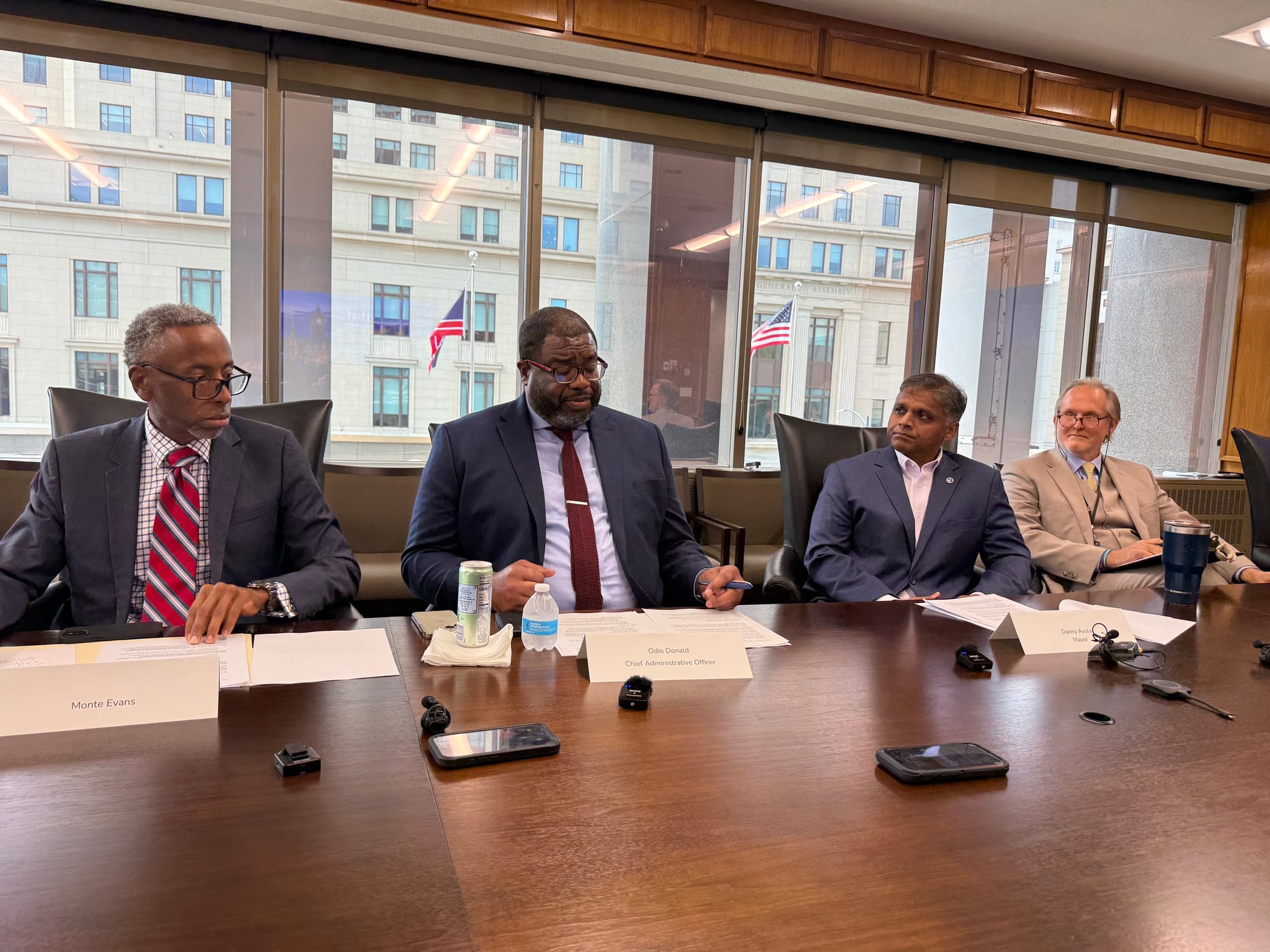
At a news conference Monday, Chief Administrative Officer Odie Donald II said the city has identified 85 properties that will be notified in November they must pay back taxes or risk having their properties auctioned. He said the first notices will prioritize blighted and vacant lots, as well as properties owned by LLCs.
Mayor Danny Avula joined Donald and other officials for the announcement, and said the program’s reinstatement is also a message more broadly that the city will use its authority to collect unpaid taxes.
“We’re not talking about tax sales being the lone solution, but enforcement is,” Avula said. “The simple act of enforcement, we have seen historically, moves a lot more people into payment plans and generates a lot more paid tax revenue.”
 Michael Phillips
The auctions won’t happen immediately, because there is a lengthy legal process that must take place under state law. Donald said they’re hopeful the first properties will either settle up their debts or go to auction by next summer.
Adding the program was one of the priorities in a 100-day report that Donald issued after his first weeks on the job, but he said there was much work to do getting different city departments to coordinate, and making sure there was communication and outreach around the initiative.
 Graham Moomaw
In a memo on Monday, he said having a clear process for these properties is crucial.
“Good governance in relation to municipal taxation means applying the City's tax laws consistently, transparently, and fairly to every property owner,” he wrote. “It also means Council and the public should be able to trust that enforcement will take place, when it becomes necessary, following a clear and well-documented process.”
The 85 properties being reviewed initially are a subset of 7,626 delinquent accounts that the city has identified for review because they meet the tax sale criteria.
Donald and Avula said that the system will grow over time as the city builds its capacity.
Between fiscal years 2014 and 2023, there were 981 delinquent properties sold at auction, according to data provided by the city.
The officials emphasized that they will work with homeowners who are just behind on their taxes.
“Our focus is compliance, not displacement,” Donald said. “Those are two very different things.”
For Avula, he said the resumption of the auctions is a step towards fulfilling his campaign promises.
“So much of what I heard on the campaign trail was, ‘We’ve just got to get back to basics,’” the mayor said. “That does take a lot of work, and it’s taken a lot of rebuilding … We haven’t finished the rebuilding of some of these basic functions, but I do think this is evidence of building the capacity in our Finance Department and bringing back the expertise to be able to handle some of these really basic functions of local government well.”
Contact Michael Phillips at mphillips@richmonder.org.