Richmond schools highlighted nationally for reading recovery, literacy gains
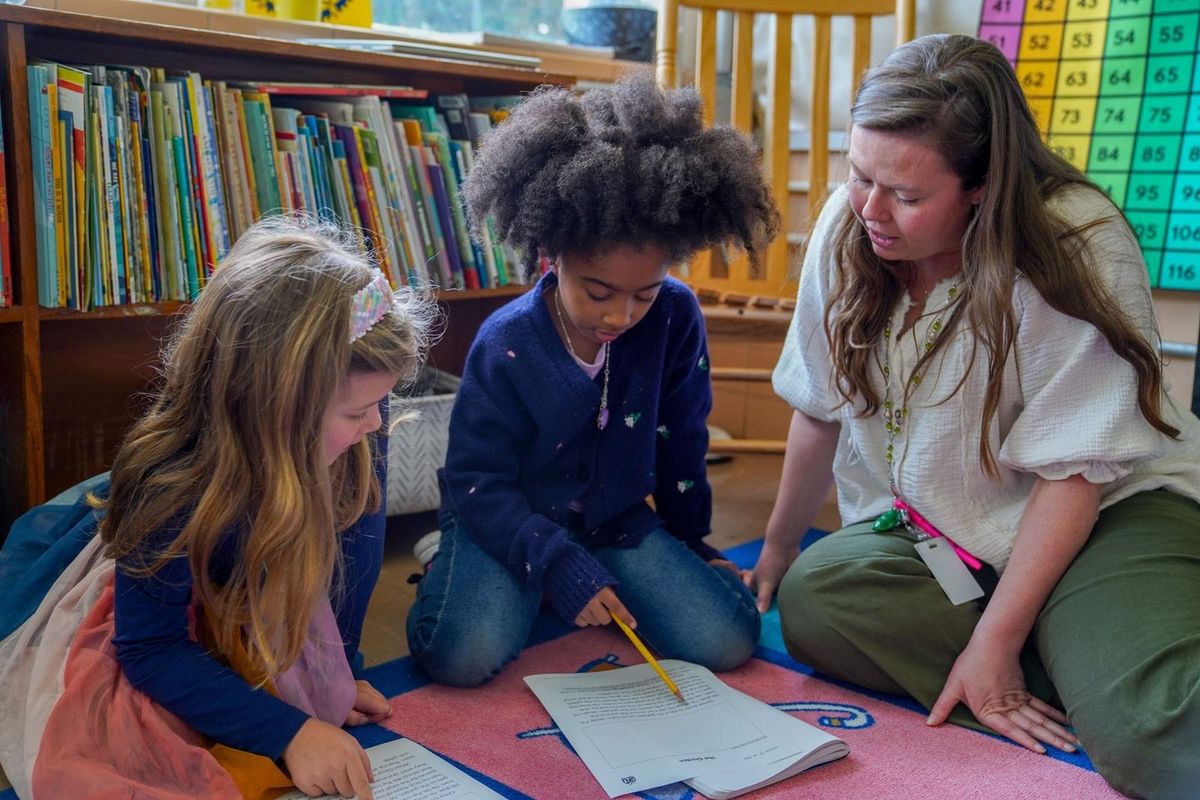
You’ve probably heard that Richmond Public Schools is on the rise from school officials, particularly Superintendent Jason Kamras. But as of recently, national researchers are saying the same thing too.
Richmond schools were recently highlighted for their implementation of high quality, research-backed literacy curriculums for elementary students, which has led to exciting gains according to a report conducted by researchers at Columbia University’s Center for Public Research and Leadership. The hub is focused on rapid learning and improvement in public education, and the report looked at other school divisions in states like Texas, New York and North Carolina.
Researchers found that “adopting and supplying educators with high instructional resources” made Richmond and other studied divisions stand out, said Executive Director Elizabeth Chu.
Like many school divisions across the country, RPS had witnessed significant student achievement losses coming out of the COVID-19 pandemic. In the spring of 2021, only 41% of K-2 students in the division were reading at grade level, researchers noted.
The reading curriculums used in the division among elementary schools previously varied from teacher to teacher, leading to “a deeply disjointed learning experience.”
A trifecta of the proficiency rates, separate curriculums and swelling conversations around the science of reading led to the division adopting the UFLI Foundations program and EL Education shortly after the pandemic. The syllabi are both rooted in the science of reading and were authorized in Richmond schools before the state passed the Virginia Literacy Act.
 Victoria A. Ifatusin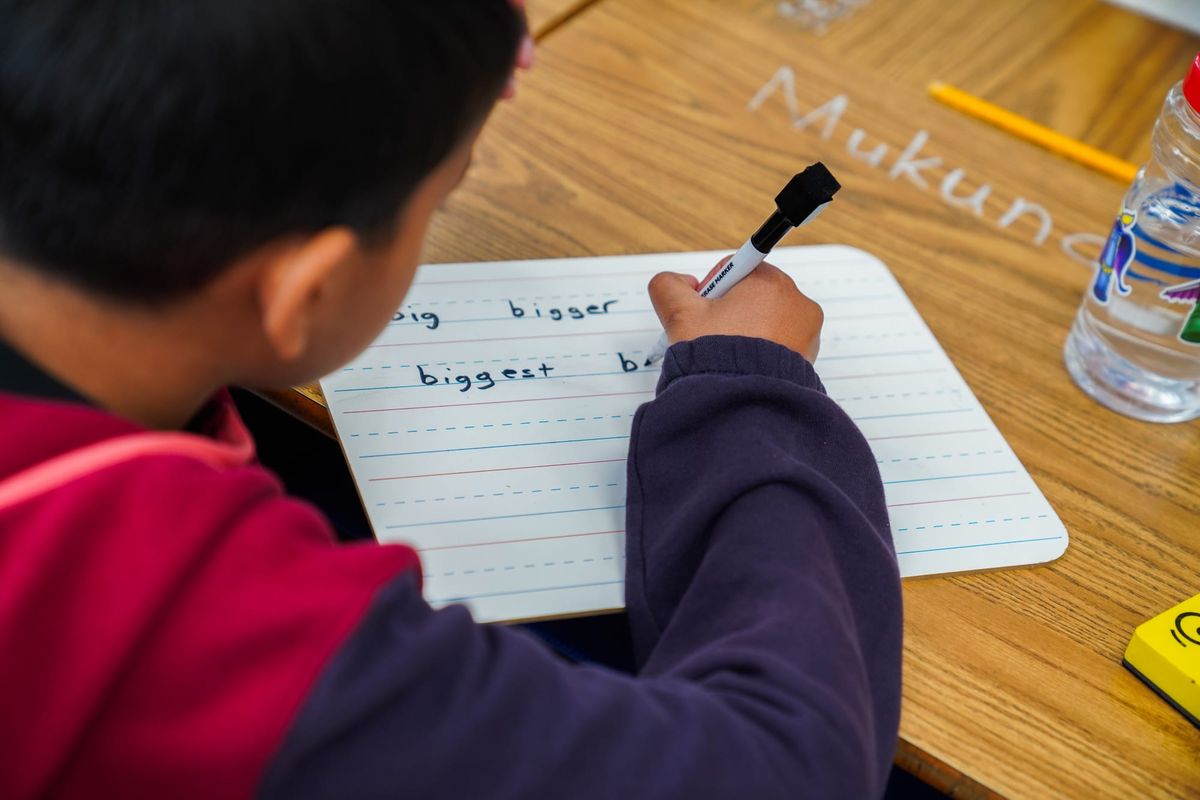
“We had some folks in our district that were trying the UFLI program [for foundational skills] and were seeing success with it. They really wanted it to impact not only the students in their building, but across the district,” Amy Weber, the literacy coach at G.H. Reid Elementary, said in the report.
Chu also noted that the division followed the data and allowed that to guide reading instruction.
By 2024, Richmond saw a 24 percentage point increase in K-2 students reading at grade level from 2021, the report said. The gains had outpaced the rest of the state and much of the country.
“Proficiency rates went up,” researchers wrote.
Victoria A. Ifatusin
Kamras also announced his goal of getting 100% of Richmond students reading proficiently by the 3rd grade in 2024, also known as “Passion4Reading,” which is part of the division’s Dreams4RPS five-year strategic plan.
From 2022 to 2025, reading proficiency rates among third graders went up by 7 percentage points. For multilingual and Black 3rd graders, it went up by 8 and 5 percentage points respectively. It went up further for 3rd graders with disabilities – 14 percentage points.
Some schools, like Fairfield Court Elementary, particularly saw notable gains, researchers mentioned. The East End school experienced a 31 percentage point increase of K-2 students reading on grade level in one year – 51% in 2023 to 82% in 2024. It is one of the schools in the division operating on a 200-day school calendar, an initiative to help fill educational gaps created by the pandemic.
“It was the biggest growth that we’ve ever seen, and we saw growth in every one of our subgroups— from students with disabilities to multilingual learners,” said Laurie Gingrich, division manager of K-5 literacy, speaking to researchers.
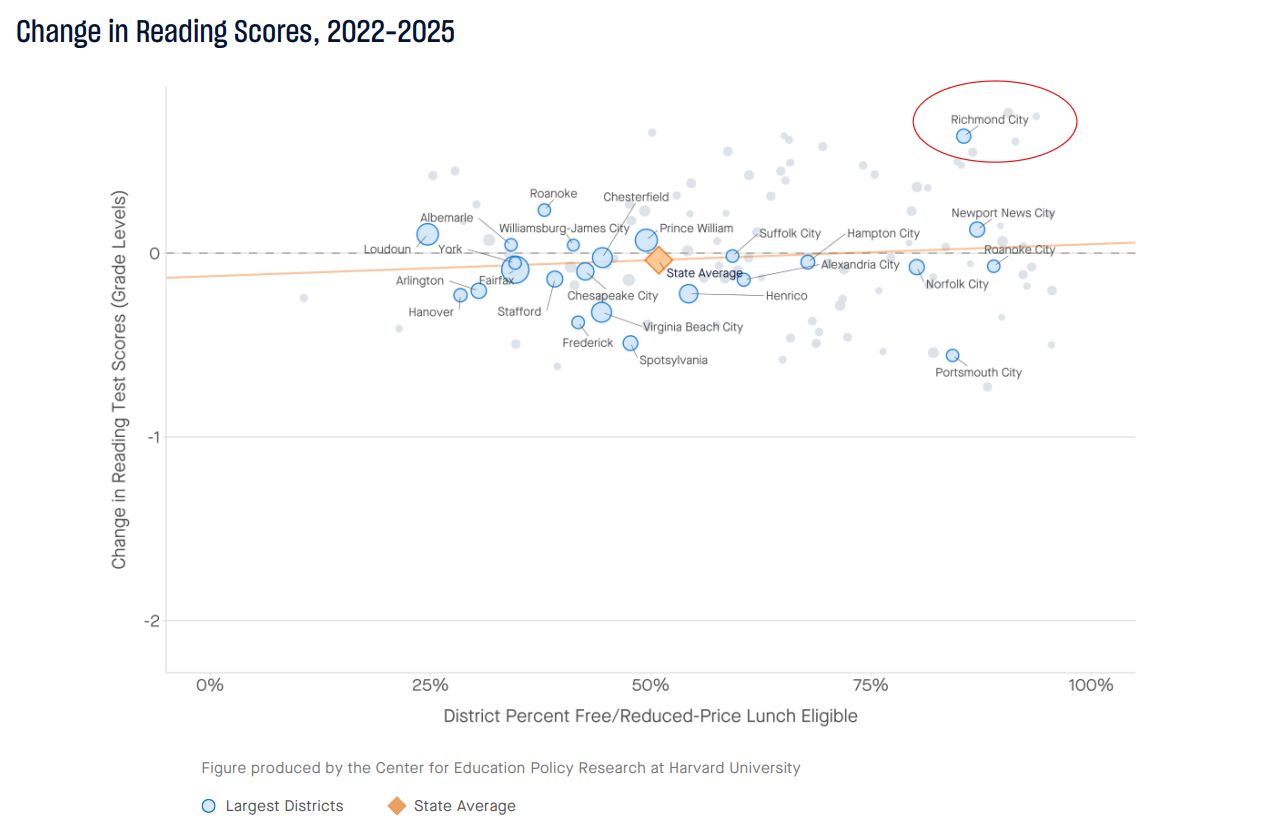
The division was also recognized in the new Education Scorecard, a project by researchers at Harvard, Stanford and Dartmouth that reviews test scores and learning rates across school divisions in the country.
The report ranked Virginia as 10th in reading recovery among states, and highlighted Richmond among five state jurisdictions “leading the way in reading recovery relative to their peers.” The same report four years ago had found that Richmond’s fourth through eighth graders had lost two full years of math and nearly a year and a half in reading following the pandemic.
Researchers for the project identified Richmond as having faster overall learning rates than the U.S. average among all subgroups, and that test scores are improving faster over time – faster than neighboring counties like Chesterfield and Henrico.
But there’s still more work to do, Kamras admits, as the division’s test scores are still lower than the national average. The division, like many in the country, has also been experiencing a “generational-long decline” in average test scores, which have been decreasing since 2009.
Chu said that the gains of Richmond students noted in the Education Scorecard can be attributed to the division’s use of the shared curriculum and its efforts to effectively helping kids learn and teachers teach.
“We do feel a good sense of optimism for the road ahead because there's a commitment to constant improvement,” she said.
Contact Reporter Victoria A. Ifatusin at vifatusin@richmonder.org