After governor’s veto, Avula says Richmond is ‘better off’ with collective bargaining
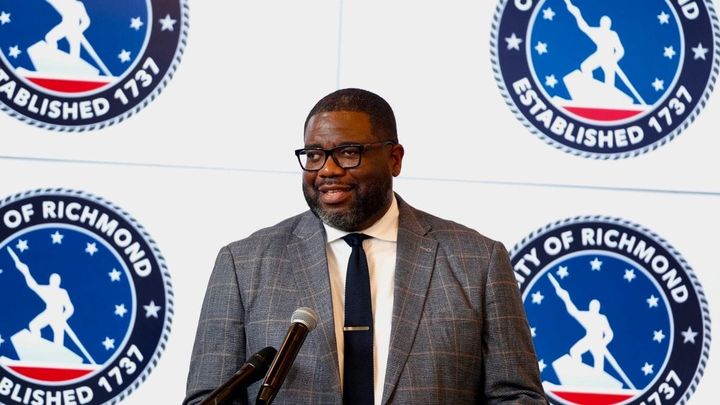
The recent veto of a bill to expand public-sector unions in Virginia won’t change much for Richmond, Mayor Danny Avula said recently, because the city already has collective bargaining and nothing happening at the state level changes that.
Asked last month what he thinks of Gov. Abigail Spanberger’s veto of a Democratic proposal to expand collective bargaining for public employees, Avula said “for Richmond, I don’t think it matters.”
“We actually really believe collective bargaining is good and Richmond is better off because of that,” Avula said. “We are very willing to work with legislators and to work with other localities that have done this to help make sure we can get the details of it right.”
Avula upset some labor supporters this year by taking issue with a state bill that would have changed unionization rules for local government employees and allowed collective bargaining in places where local leaders don’t want it. Henrico, Chesterfield and Hanover counties have not adopted collective bargaining, meaning the bill could have had a bigger impact on the Richmond area’s counties than the city itself.
Spanberger vetoed the legislation, saying she was for it in principle but disagreed with the General Assembly on the specifics.
In a letter to Spanberger, Avula didn’t express outright opposition to the bill. But he warned it could create new complications for localities like Richmond that already have collective bargaining.
The mayor said the legislation could increase costs for Richmond in a variety of ways, including the possible addition of constitutional offices like sheriffs and prosecutors to the collective bargaining framework, as well as binding arbitration procedures to resolve management-labor disputes that could put “meaningful and escalating upward pressure on long‑term budgets.”
Richmond adopted collective bargaining for government and school employees in 2022. Local leaders remain outwardly supportive of having a unionized workforce, arguing it will pay off in better services and a higher standard of living for city workers and teachers. However, collective bargaining is also frequently invoked in budget discussions as a cost driver that gives city and school officials less flexibility to keep spending somewhat level.
 Michael Phillips
For the newly approved budget that takes effect July 1, the city expects to spend an additional $22 million to honor labor deals with its five collective bargaining units, taking up more than half of $42.5 million in year-over-year revenue growth.
When the City Council was considering lowering the city’s real estate tax rate last year, the mayor’s team enlisted union allies to help make the case that rejecting across-the-board tax relief for property owners protects living wages and “good union jobs.”
Richmond passed collective bargaining under a 2020 law that allowed local governments to opt in to union labor, without making it mandatory. The just-vetoed bill would have given all local public employees the right to unionize with or without the permission of a local governing body or school board, as well as the state workforce.
Spanberger proposed several amendments to scale back and delay the collective bargaining proposal. After the General Assembly rejected her suggestions, the governor vetoed the bill.
 Victoria A. Ifatusin
That decision has drawn outrage from union organizers who saw it was a betrayal of Spanberger’s professed support for labor. Many local governments had opposed the bill and praised the governor for what they saw as a move to preserve local autonomy over how government functions.
Addressing the backlash in a recent interview with social media personality Tevin Davis, Spanberger pointed to the local government feedback as a factor in her veto decision. Without specifically naming Richmond or Avula, she mentioned input she had received from localities “that already have collective bargaining.”
“This bill, based on some of the provisions, would have superseded and kind of changed the nature of the agreement that they were proud of that fit their community and the work that they had long done to try and get to a really good collective bargaining agreement,” Spanberger said.
 Sarah Vogelsong
State Sen. Mike Jones, a Democrat who represents both Richmond and Chesterfield, said he hopes local governments can be part of the discussion about what kind of collective bargaining bill could pass in the General Assembly’s 2027 session, when Democrats will still have full control of the statehouse.
“In my opinion, this is an area for Richmond to lead in. Here’s how much it costs us. Here’s how we did it. Here’s why we did it,” said Jones, who served on the City Council when Richmond adopted collective bargaining. “It’s going to be tough to get something like this passed if every locality is going to continue to say we can’t do it because of the costs.”
Collective bargaining isn’t about turning public employees into millionaires, Jones said, it ensures government workers can make enough to afford to live in the localities they serve.
“I am so pro-union it’s not even funny,” Jones said. “But politically, how do we move through it?”
City Council considers changes to bargaining process
As the collective bargaining push remains stalled at the state level, a new debate over union rights is emerging in Richmond.
The City Council is currently considering an ordinance to change the city’s collective bargaining structure, potentially giving unions greater power to negotiate over the general rules for promotions, transfers and filling job vacancies. The proposal would also have the city shift from advisory arbitration to binding arbitration if there’s a deadlock on non-economic workplace conditions that don’t involve wages or benefits.
The pending ordinance has at least three patrons: Councilors Reva Trammell (8th District), Kenya Gibson (3rd District) and Sarah Abubaker (4th District).
Supporters of the proposal say it will bring needed clarity to collective bargaining rules and address issues that arose during the first round of negotiations a few years ago.
Brendon Leavy, president of the Richmond Coalition of Police, said there’s “favoritism” in the policy department that could potentially be addressed if unions had more input into how promotions work.
“It’s no power grab. It doesn’t give the union any unilateral authority to be in a room when someone is promoted,” Leavy told a Council committee last month. “But we want to be able to discuss procedures and how they come to those types of decisions.”
The proposal has led to some friction over whether it should only apply to public safety unions involving police and firefighters or cover all bargaining units.
At a Council meeting last week, several union members said the city shouldn’t have different policies for different unions it negotiates with.
Avula’s administration has struck a cautious tone on the pending proposal. As drafted, the Council paperwork said the change isn’t expected to have a major fiscal impact on the city. Chief Administrative Officer Odie Donald II told the Council he wasn’t so sure about that.
“We do believe that there is some fiscal impact,” Donald said, asking the Council for more time to evaluate what the proposed changes would mean.
Several Council members said they felt a sense of urgency to act soon, because a new round of negotiations are set to start by July 1.
Councilor Stephanie Lynch (5th District) suggested making a final round of edits to the proposal at the body’s June 8 meeting so that it could be put to vote on June 22.
“If we don’t do that then we might as well just throw this ordinance in the trash,” Lynch said. “It’s just not going to be meaningful if we don’t pass it before then.”
According to the Council’s agenda for Monday, the collective bargaining proposal is set to be amended and continued to June 22. The upcoming amendments to the plan were not publicly available as of Thursday.
Contact Reporter Graham Moomaw at gmoomaw@richmonder.org