7 takeaways from Richmond’s FY27 budget process
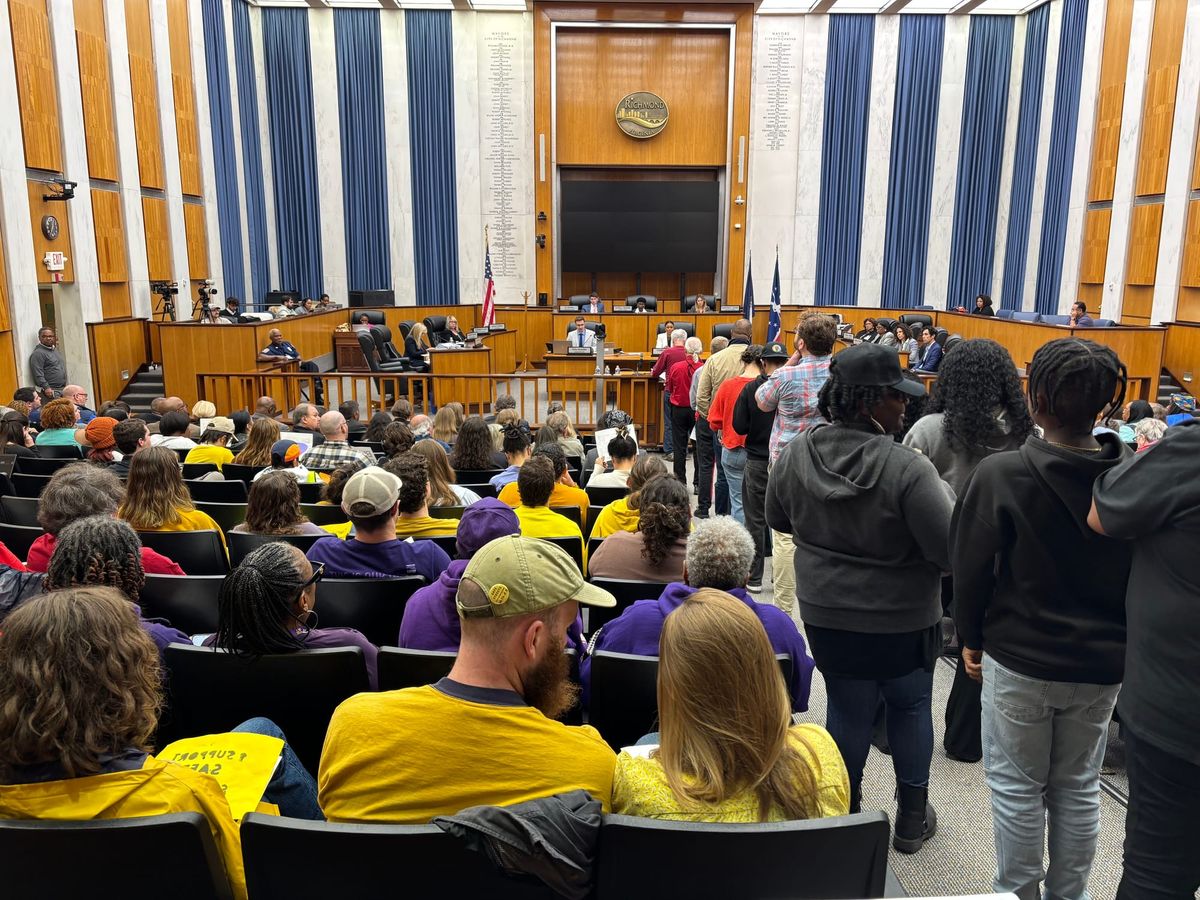
It was a full house Monday night in the Richmond City Council chamber for the final public hearing on the city’s $1.1 billion general fund budget plan.
Dozens of speakers voiced support for continuing to invest in affordable housing and the Richmond Virtual Academy online school. Others continued to press their opposition to the city’s use of Flock license plate readers as a law enforcement tool.
With the budget pretty much finalized heading into Monday's meeting, the Council voted 7-0 to pass it without any additional changes.
“Many of our priorities have been addressed,” said Council President Cynthia Newbille (7th District). “But clearly not all of them. We will continue to work.”
The new budget — which avoids layoffs and major service cuts but has few major new initiatives or programs — will take effect July 1.
After participating in numerous budget meetings over the last two months Councilors Stephanie Lynch (5th District) and Sarah Abubaker (4th District) missed the final vote due to work obligations.
Mayor Danny Avula and his aides sat in the audience for the duration of Monday’s budget discussion. In a statement after the vote, Avula said he was “grateful to all who leaned in throughout this process.”
“Together, we made historic investments in affordable housing, funded Richmond Public Schools at record levels, supported our workforce, and focused our resources on building a thriving Richmond,” the mayor said.
As officials highlighted what they saw as budget wins and a more structured process, they acknowledged they weren’t doing everything the crowd wanted.
Anti-Flock advocates were not able to convince the Council to join other Virginia cities in prohibiting public money from being spent on the surveillance technology. The city also did not put up more money for Richmond Public Schools to prevent the impending closure of the virtual academy.
Tax rates are staying the same
The budget doesn’t make any changes to tax rates. The all-important real estate tax rate will stay at $1.20 per $100 of assessed property value, the same rate the city has had since 2008.
That’s a higher rate than neighboring counties, but city officials are quick to point out the city has different funding needs and a limited tax base due to the tax-exempt status of VCU and state government buildings.
Homeowners keeping their properties as is shouldn’t see their bills rise this year, because the city is taking a year off from sending out new assessments. The next reassessment will happen in the spring of 2027.
With the city expecting to see more revenue growth in the next round of assessments, the Avula administration has signaled a small reduction in the real estate tax rate could be possible next year.
 Graham Moomaw
Utility rates are going up
The average utility bill for city residents is expected to go up by almost $14 per month under a series of increases to utility rates to help cover the city’s water, gas and sewer infrastructure costs.
The breakdown of the average monthly increases is as follows:
- Wastewater charges will increase by $5.61
- Gas charges will increase by $3.97
- Water charges will increase by $3.04
- Stormwater charges will increase by $1.22
Richmond officials have requested hundreds of millions of dollars in state funding for the city’s water and combined sewer overflow systems. Those requests are still up in the air, because the General Assembly has not yet finalized the overdue state budget.
Graham Moomaw
Public employees are getting raises
The budget includes an additional $22.1 million in extra money to fund the city’s collective bargaining deals with public workers.
Sworn fire and police personnel are set to receive an average raise of 6.73%. Other city employees will receive 3.25% raises.
Avula had proposed saving around $1 million by giving slightly smaller, delayed raises for most non-union city employees.
The Council went with a more uniform approach, choosing to add $1 million to cover 3.25% raises for all employees when the budget takes effect July 1.
Council blocked a severance policy change
One of the few points of disagreement between Avula and the Council was how generous the city’s severance pay policy should be when high-ranking employees leave City Hall.
Under Avula’s proposed budget, the city’s severance policy would have been expanded to allow senior officials to get a full year’s salary when they leave their job, regardless of how long they’ve worked for the city. That would have meant bigger payouts than what’s allowed under existing policy, which ties severance to years of service but caps the amount at 36 weeks of salary.
Some Council members raised concerns about the possibility of high severance payouts being granted to an entire leadership team during a future mayoral transition. The Council stripped Avula’s severance proposal from the budget, leaving the existing policy in place.
Graham Moomaw
RPS isn’t getting everything it requested
Nearly a quarter of the general fund budget would go to the city’s public school system, but the city was unable to provide the full funding amount school officials requested.
The $257 million in city funding for the schools includes an additional $8.2 million, short of the $12 million in new funding the Richmond School Board wanted.
The Council allocated some new funding related to schools. The body added $483,000 to cover transportation and security costs for after-school programs, an expense RPS Superintendent Jason Kamras had cut from his budget.
The possible closure of the Richmond Virtual Academy is arguably the biggest consequence of the final budget, but some Council members have said they still hope school leaders can find a way to fund it with the record funding RPS is set to receive.
“We looked through the budget and found the money to save that program,” said Councilor Kenya Gibson (3rd District), referencing her time on the city School Board. “It can happen again.”
Victoria A. Ifatusin
The city is giving up on a housing aid program
To find new money to fund the Council’s amendments, city officials agreed to end the deeply flawed Gap Grant program, a one-time initiative the city approved in late 2024 that offered lower-income Richmonders grants of up to $1,200 to help with rent or mortgage costs.
The city received thousands of applications for the assistance, but did not implement an effective system for processing the paperwork and getting the money out to people who could use it.
Of the $3.9 million originally allocated to the program in 2024, almost $3.2 million was sitting unused.
Instead of coming up with a plan to try to fix and relaunch the Gap Grant initiative, the city directed that money into other aid programs. In turn, that freed up almost $3.2 million in general fund dollars for the Council to use.
The courthouse is getting some upgrades
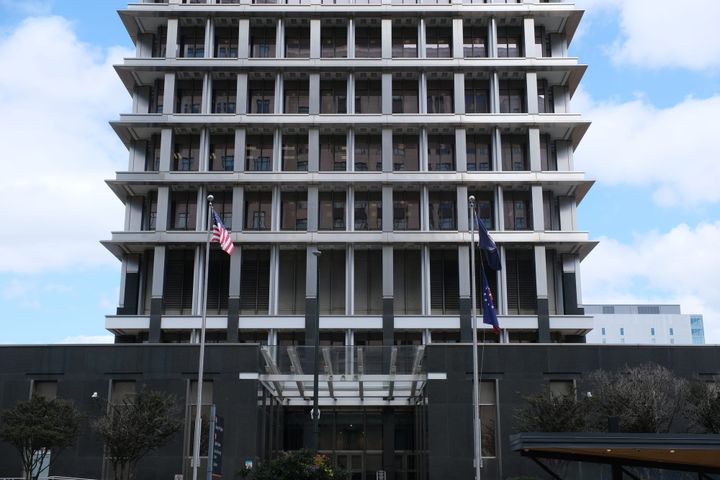
Court officials have said the aging John Marshall Courthouse is badly in need of replacement.
The city does not yet have a plan to fund a new courthouse building, but the budget includes $15.6 million for a variety of upgrades to the building.
That money is expected to cover roof repairs, elevator upgrades, HVAC work and new security measures.
Contact Reporter Graham Moomaw at gmoomaw@richmonder.org