Richmond officials agree to scrap flawed housing relief program to free up money for other uses
After using only a small amount of the $3.9 million set aside in late 2024 to help lower-income Richmonders pay their rent or mortgage bill, city officials have agreed to scrap the flawed Gap Grant Program and put the remaining money toward other things.
Eliminating the Gap Grant program will free up a little less than $3.2 million in unused money to allow the City Council to fund changes to the $1.1 billion general fund budget plan Mayor Danny Avula presented last month.
The Gap Grant program, approved in late 2024 at the end of former Mayor Levar Stoney’s administration, offered one-time grants of up to $1,200 to help Richmonders pay housing bills. It was presented as a more targeted alternative to across-the-board property tax relief. The city failed to effectively implement the program in 2025, leading to a sizable backlog in applications and only a small portion of the funds actually getting out into the community to help with housing affordability.
Only 610 applications for the housing aid were approved, even though the city had set aside enough money to be able to help more than 3,200 applicants.
Though Avula’s administration had recommended salvaging the program by outsourcing the application review and approval process to a third party, Council staffers recommended dropping it and putting the money to more effective use elsewhere.
On Monday, officials announced the administration was on board with that idea. The roughly $3.2 million freed up was the basis for a Council budget work session Monday afternoon as officials decided how to reallocate the money.
Though the Council did not take formal votes on its budget amendments, the body reached informal consensus on how to use almost all of the money saved from ending the Gap Grant program.
The Council agreed to allocate nearly $1 million to fully fund 3.25% raises for all city employees starting July 1. The Avula administration had proposed a less expensive approach by doing a smaller 3% raise for most of the city’s non-union employees and delaying that raise until January of 2027.
Another $716,400 would fund a 1% one-time bonus payment for Richmond Retirement System retirees. The one-time payment would be an alternative to structural cost-of-living adjustment that would give a recurring boost to retiree benefits.
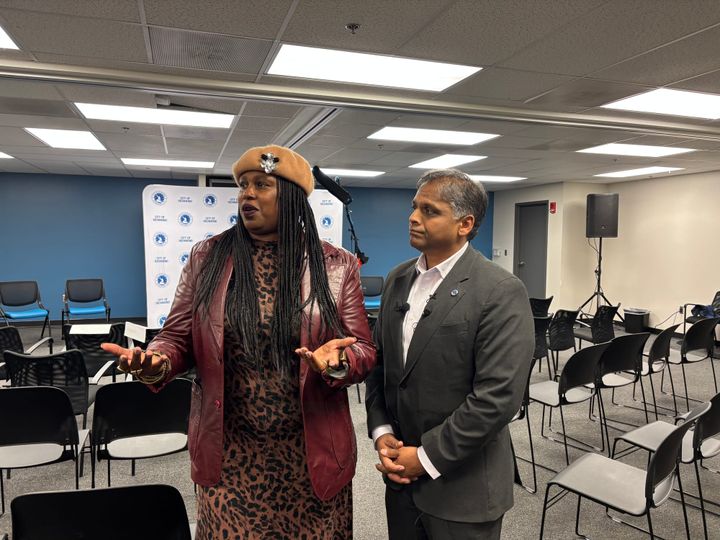
“I think we need to start putting our retirees first,” said Councilor Reva Trammell (8th District). “They gave their lives to the city.”
 Graham Moomaw
The Council agreed to allocate $500,000 toward redesigning the external layout of Westover Hills Elementary School — specifically the bus loop, parking lot and pickup/dropoff area — to align the school with other nearby infrastructure upgrades to Westover Park and Jahnke Road.
The city has not found a way to fully fund the budget requested by Richmond Public Schools, but the Council agreed to use $483,000 to cover transportation and security costs related to after-school activities at public schools. The school system previously covered that expense, but the line item was cut in the budget proposal approved by school officials.
Rounding out the Council amendments were $300,000 for youth and senior programs at Southside Community Center and another $100,000 for the Family Crisis Fund, which offers financial assistance to residents facing emergencies.
Though the elimination of the Gap Grant program created an opportunity for the Council to fund some initiatives without having to cut Avula’s budget proposal, the Council’s total amendments so far are relatively minor in the context of a billion-dollar budget.
In addition to the Gap Grant money, the Council also had about $1.2 million in fiscal year 2025 surplus dollars to spend, bringing the total amount available for amendments to a little under $4.4 million. The Council used most of the surplus money on an $800,000 funding boost for the Richmond Ambulance Authority.
Having an amount far smaller than needed to cover Council member’s proposals caused some frustration for members, even though many Council members had suggested ways to increase spending without offsetting budget reductions.
Pointing to the lack of pools for South Richmond children in her 9th District, Councilor Nicole Jones had put in an amendment for $1.5 million to fund a splash pad at the Broad Rock Sports Complex. When it became clear the math did not work for that project to get funded, Jones questioned whether the city was living up to its professed commitments to equity.
“I’ve put this amendment in for almost two years now,’ Jones said. “And yep, I’m very upset.”
Sarah Vogelsong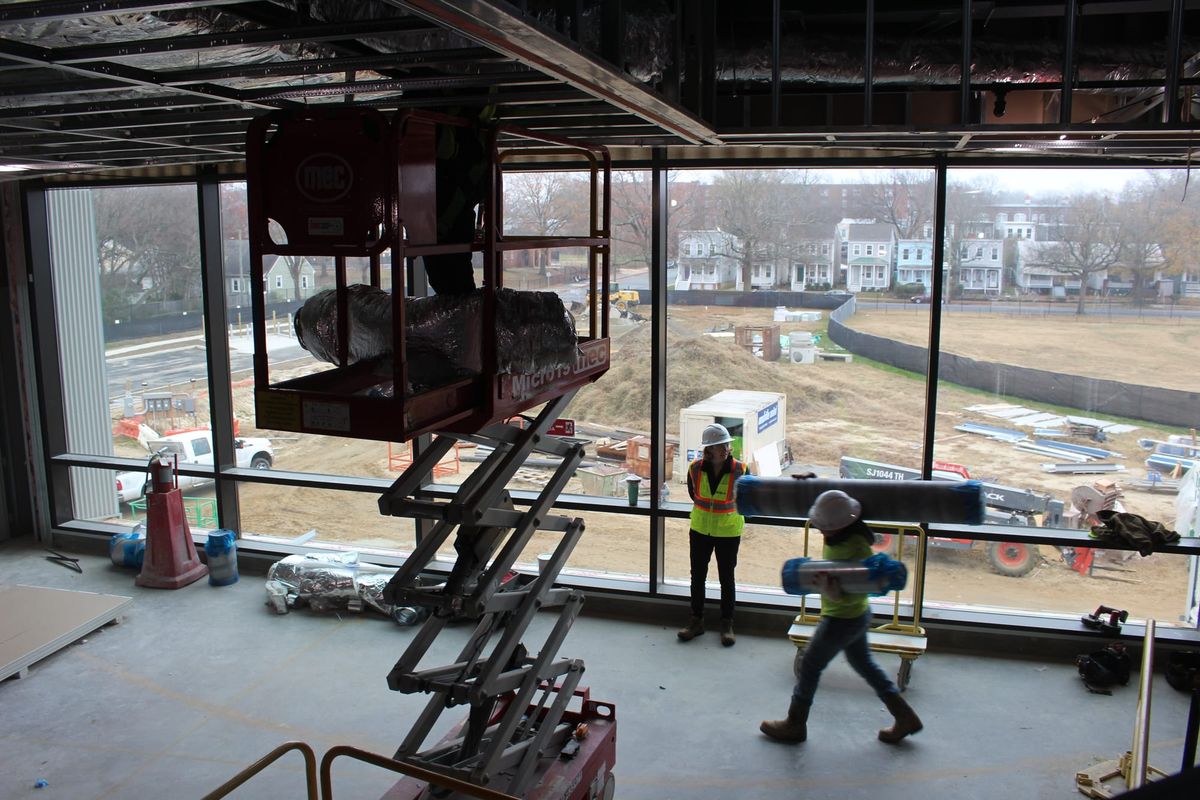
The Council is expected to wrap up its budget work sessions on Wednesday, but the body appears unlikely to insist on any budget cuts beyond what’s proposed for the Gap Grant funding.
The Gap Grant initiative — funded with extra real estate tax revenue from the 2025 budget year — was envisioned as a one-time pilot program that would end when the money was used up.
Some Councilors expressed reservations Monday about appearing to balance the budget with one-time money, but the way the maneuver is structured means that’s not technically what the Council is doing.
The unused Gap Grant money will be directly transferred to other housing-related initiatives such as the Family Crisis Fund, the city’s eviction diversion and right to counsel programs and a real estate tax freeze program meant to shield senior citizens and people with disabilities from rising tax bills. Using the Gap Grant money for those initiatives frees up general fund dollars the city would have put into them in Avula’s proposal, while also helping officials avoid the appearance of taking money away from housing relief to prop up the city budget elsewhere.
However, the move could create more budget pressure next year, when the city will be expected to fund the housing initiatives in addition to the other priorities the Council identified Monday, without having the Gap Grant money that can only be spent once.
“We might want to think of these as one-time funds even though technically we’re using recurring funds,” said Councilor Andrew Breton (1st District).
Victoria A. Ifatusin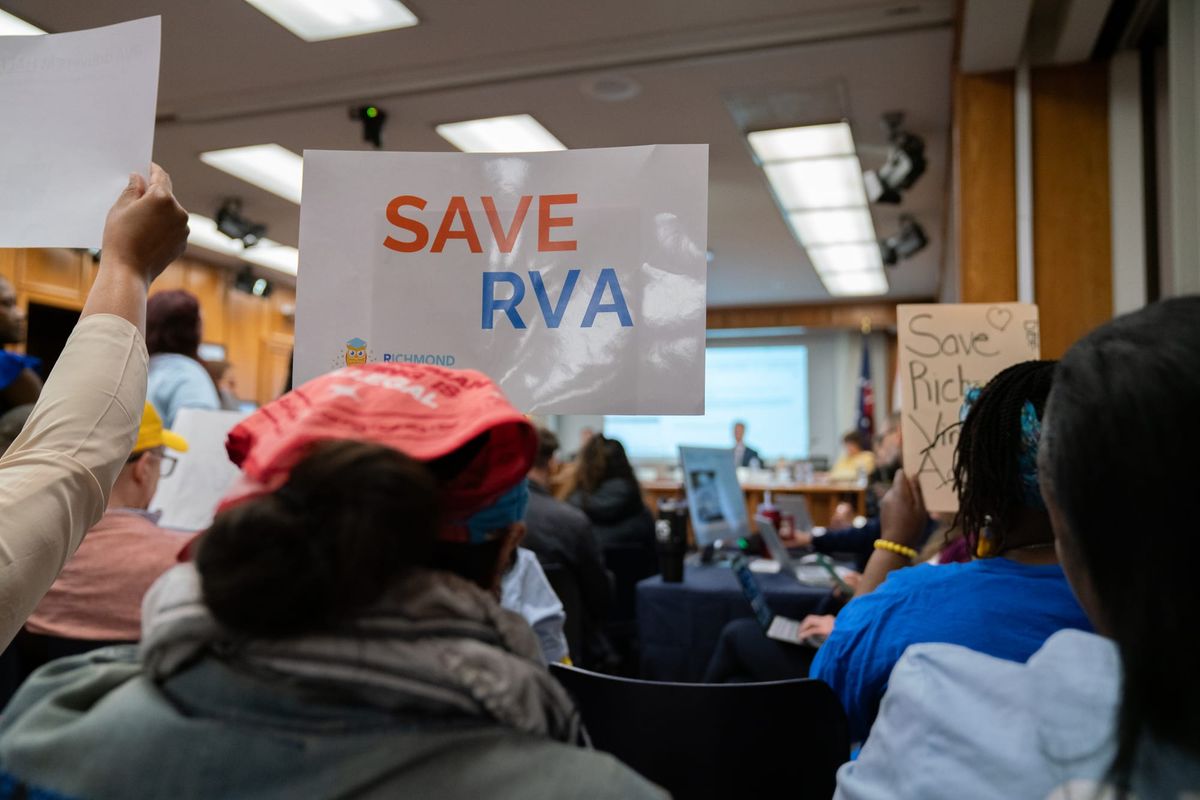
Virtual academy still in limbo
The Council spent a lot of time Monday discussing the possibility of saving the Richmond Virtual Academy, a $3.2 million online school option that RPS Superintendent Jason Kamras has proposed cutting to balance the schools budget.
Monday’s meeting began with the Council discussing proposed amendments that had the most support. By the time members got to major funding boosts for RPS, most of the freed up Gap Grant money was already gone.
But because Councilor Kenya Gibson (3rd District) had proposed other reductions to Avula’s proposal in an attempt to find money for the virtual academy, the Council debated whether to go along with what Gibson had suggested.
Gibson said she was struggling to come up with a good explanation for residents about why an existing program that serves many special-needs students had to be cut when tax bills and budgets are going up.
“There are students that are benefitting greatly from the program,” Gibson said.
She proposed finding money for the virtual academy by cutting several seemingly vacant positions and reducing funding for a variety of economic development initiatives, such as $650,000 for business attraction and $250,000 for building facade improvements. At Monday’s meeting, the Avula administration said many of the vacancies identified as a funding source were not actually vacant or were in the process of being filled.
“The administration is not in support of these potential cuts,” said Avula Chief of Staff Lawson Wijesooriya.
The Council didn’t agree to Gibson’s proposed cuts, but also wasn’t willing to give up on the idea of saving the virtual academy.
That meant Monday’s meeting ended on a note of uncertainty. The Council had only around $220,000 left to use on budget amendments, but asked its staff to try to identify at least $1 million (or possibly the full $3.2 million) that could be put toward keeping the virtual academy around in some form.
Even if the Council were to boost funding for RPS with the intention of it being used for the virtual academy, the Council has little power to dictate how the schools superintendent and the Richmond School Board use the money they get from the city. That caused some angst at Monday’s meeting, with some Council members questioning why they should make cuts to the city budget to fund something school officials have put on the chopping block.
“I think it would be a pretty bad look if we provided the additional funding for the schools and they opted to use it elsewhere,” Gibson said in response to those concerns. “And I think we would remember that as a body.”
Though RPS has not participated in the Council’s public budget meetings, Councilor Stephanie Lynch (5th District) suggested Kamras, the schools superintendent, should also be involved in discussions about how the virtual academy could be preserved.
Contact Reporter Graham Moomaw at gmoomaw@richmonder.org
Correction: This article was updated after publication to accurately describe the source of money used to fund the Gap Grant program.