Survey says: Richmond’s got problems, but residents are loyal
The results of an official, city-sponsored survey of Richmond residents depict a loyal but frustrated citizenry.
First, the good: 80% of city residents surveyed said they’d recommend living in the city and themselves plan to remain here for the next five years, the survey, conducted by mail earlier this year, found.
That’s the same percentage as when the same question was asked in 2021, when the periodic survey, mandated by city code, was last conducted.
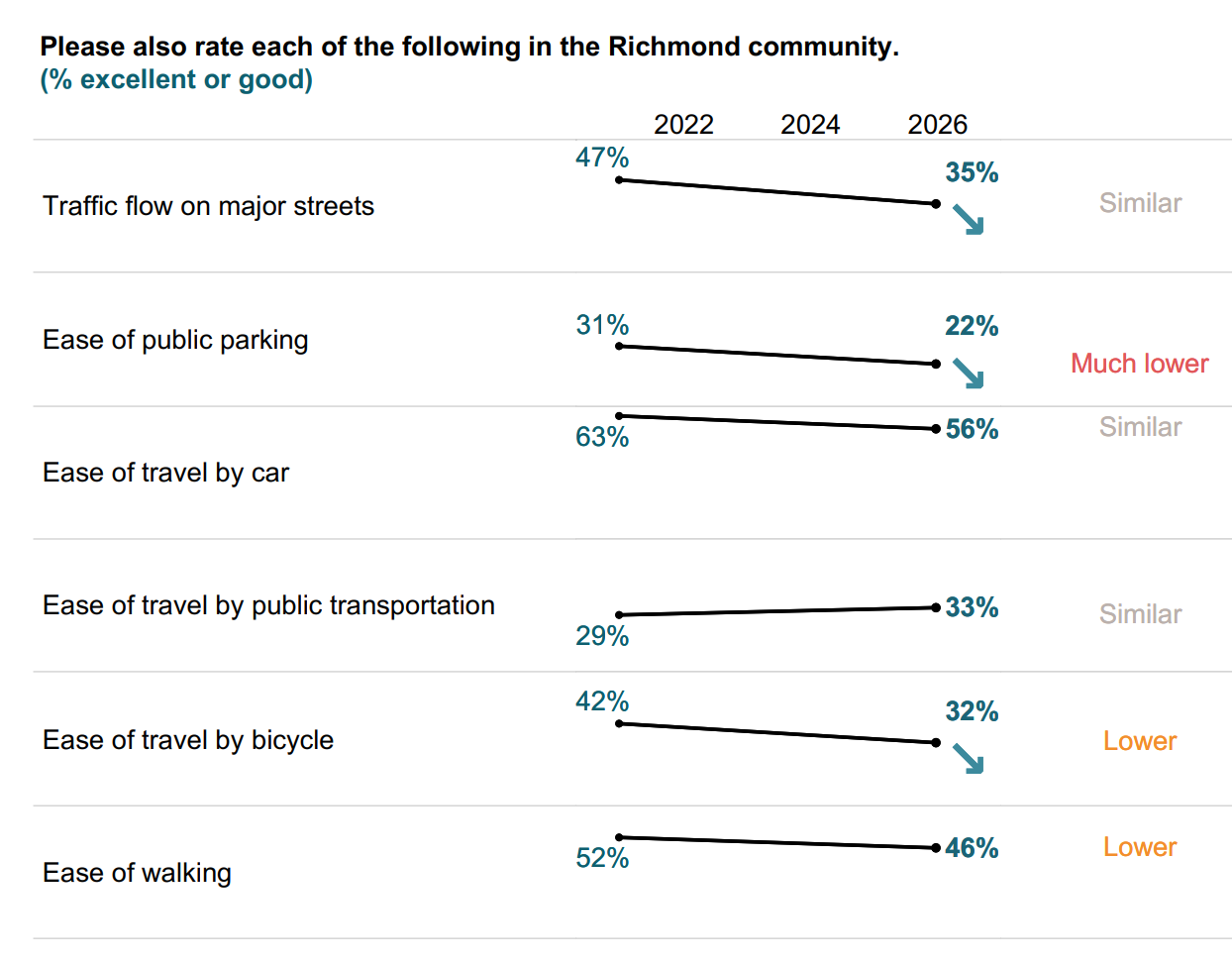
The bad: Satisfaction with city services and quality of life fell in 33 other areas. And ratings of city governance fell below national benchmarks in every question.
The survey, called the National Community Survey, was administered by the data analytics firm Polco, which has conducted similar assessments in communities around the country. The firm mailed 4,000 surveys to randomly selected households in February. They reported receiving 268 responses, giving the survey a plus or minus 6 percentage point margin of error.
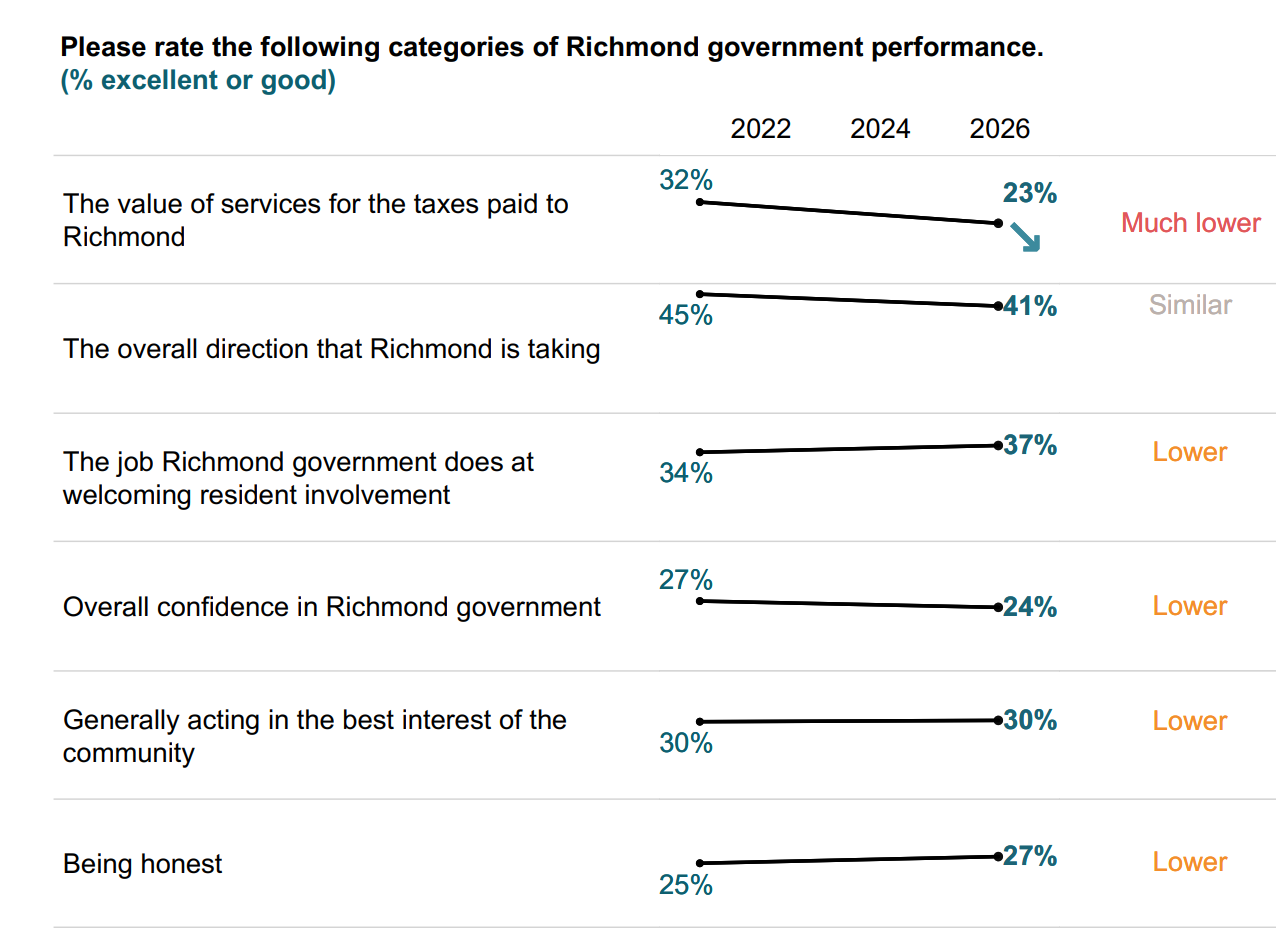
Overall confidence in city government dropped from 27% to 24%, and the value of services for the taxes paid dropped from 32% to 23%. Polco marked those ratings as lower and much lower, respectively, compared to national benchmarks.
The biggest decreases in citizen perceptions were in employment opportunities (-20%), availability of quality food (-19%), land use, planning and zoning (-19%) and overall economic health of the city (-17%).
Utility services came in as the lowest ranked facet of the city’s quality of life, a result unlikely to surprise anyone living in the city during the six-day water crisis in January 2025.
 Graham Moomaw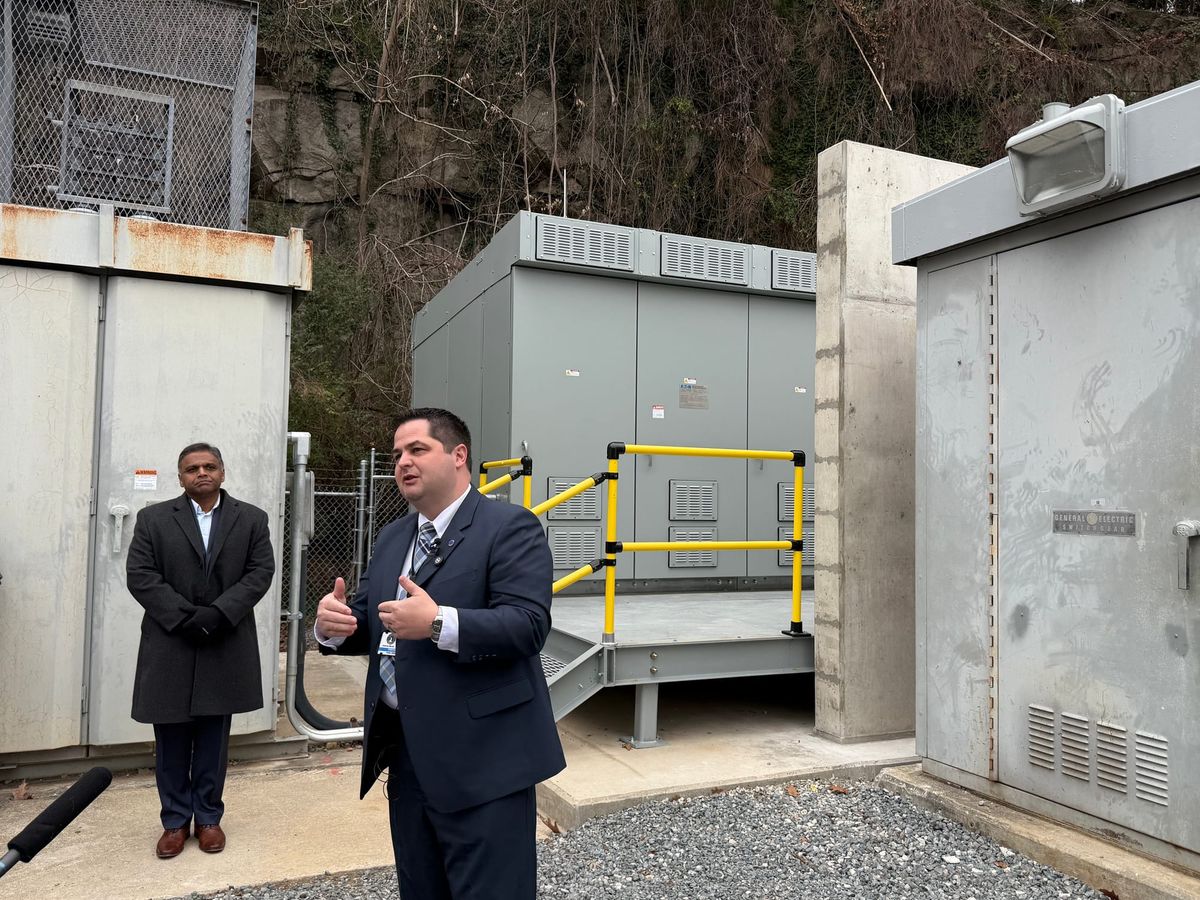
There were a number of bright spots in the survey, with the city performing especially well in questions about the arts, culture and entertainment. Ratings preservation of historical and cultural heritage increased from 54% to 64%. Opportunities to attend cultural activities rose from 69% to 77%, attracting people from diverse backgrounds increased from 55% to 70%, ratings for fitness opportunities increased from 65% to 76%.
Sonya Wytinck, the executive vice president of data and insights at Polco, told City Council members this week that it had generally seen ratings go down in municipalities compared to surveys administered during the COVID crisis, when she said many governments were receiving praise for their responses to the crisis. She described it as a post-COVID halo wearing off.
Mayor Danny Avula wrote in response to the survey results that “we all understand that we have significant work ahead to improve the performance of city government and to deliver better outcomes for city residents.”
Contact Reporter Ned Oliver at noliver@richmonder.org