Virginia hams are famous. So why is North Carolina out-hamming us at the state fair?
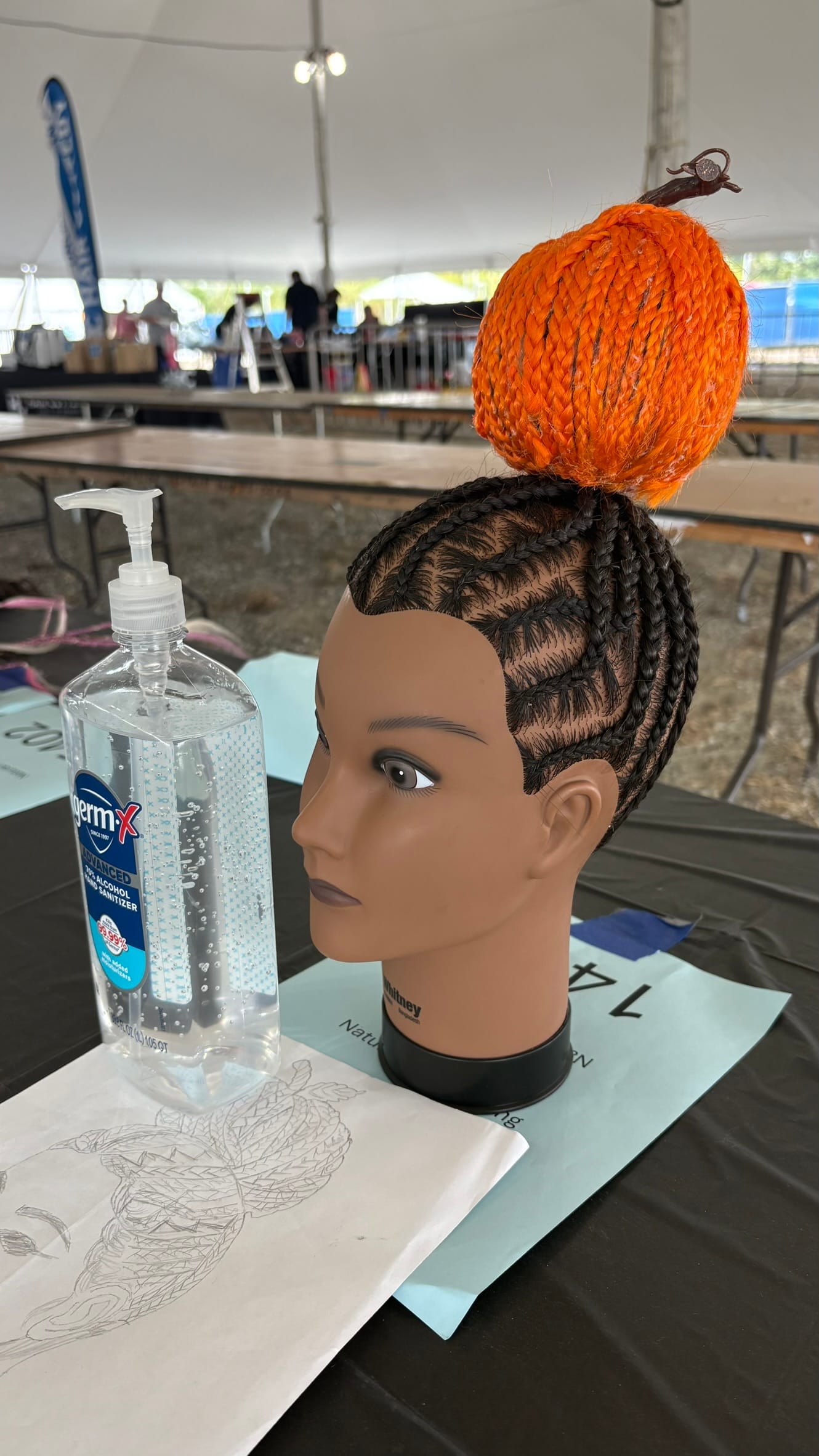
There’s no shortage of curiosities at the annual State Fair of Virginia. At this year’s edition, which concluded its run at The Meadow Event Park in October, ticketholders could take in hair-braiding competitions featuring training heads topped with pumpkins, a comedian juggling rubber chickens, and “Xtreme Strong” men hurling truck tires.
Honestly, the whole experience verged on disorienting, in part because there’s very little about the State Fair of Virginia that’s identifiably Virginian. Despite the director’s public statement this season that “State fairs embody the story of agriculture, and that is truly what’s at the heart of our mission,” there were no contests or displays devoted to the state’s signature food products.
Namely, there was zero recognition of country ham.
In keeping with director Marlene Jolliffe’s message, the 2026 State Fair staged an equestrian roundup, erected a pigeon-and-dove tent, exhibited historical tractors and planted a demonstration garden, which according to a press release included both peanuts and tobacco. Besides those crop specimens, not much of the agricultural programming seemed designed to impart a sense of Virginia, let alone stoke Old Dominion dignity.
By contrast, as the Virginia Tourism Corporation explains to prospective visitors, “Ask anyone, and you’ll find out that Virginia is known across the country for having some of the best ham anywhere…an iconic part of the Commonwealth’s culinary heritage, Virginia ham is an enduring source of pride.”
Apparently, that pride only endured at the fair until 1997, the last year that Virginia media outlets listed the winners of a Cured Ham and Bacon contest. Fair spokeswoman Kathy Dixon confirmed, “Since Virginia Farm Bureau got involved with the fair in 2012, there has not been any ham programming. If there was previously, I’m not privy to that information.”
While Virginia annually produces hundreds of thousands of country hams, it’s not the only country ham state. There are also vibrant country ham customs in Kentucky, Tennessee, and, most notably, North Carolina. As an editorial writer for The Clinch Valley News and Richlands Press wrote in 1975, “North Carolina to Virginia jointly might be to the ham world what Paris is to the world of fashion.”
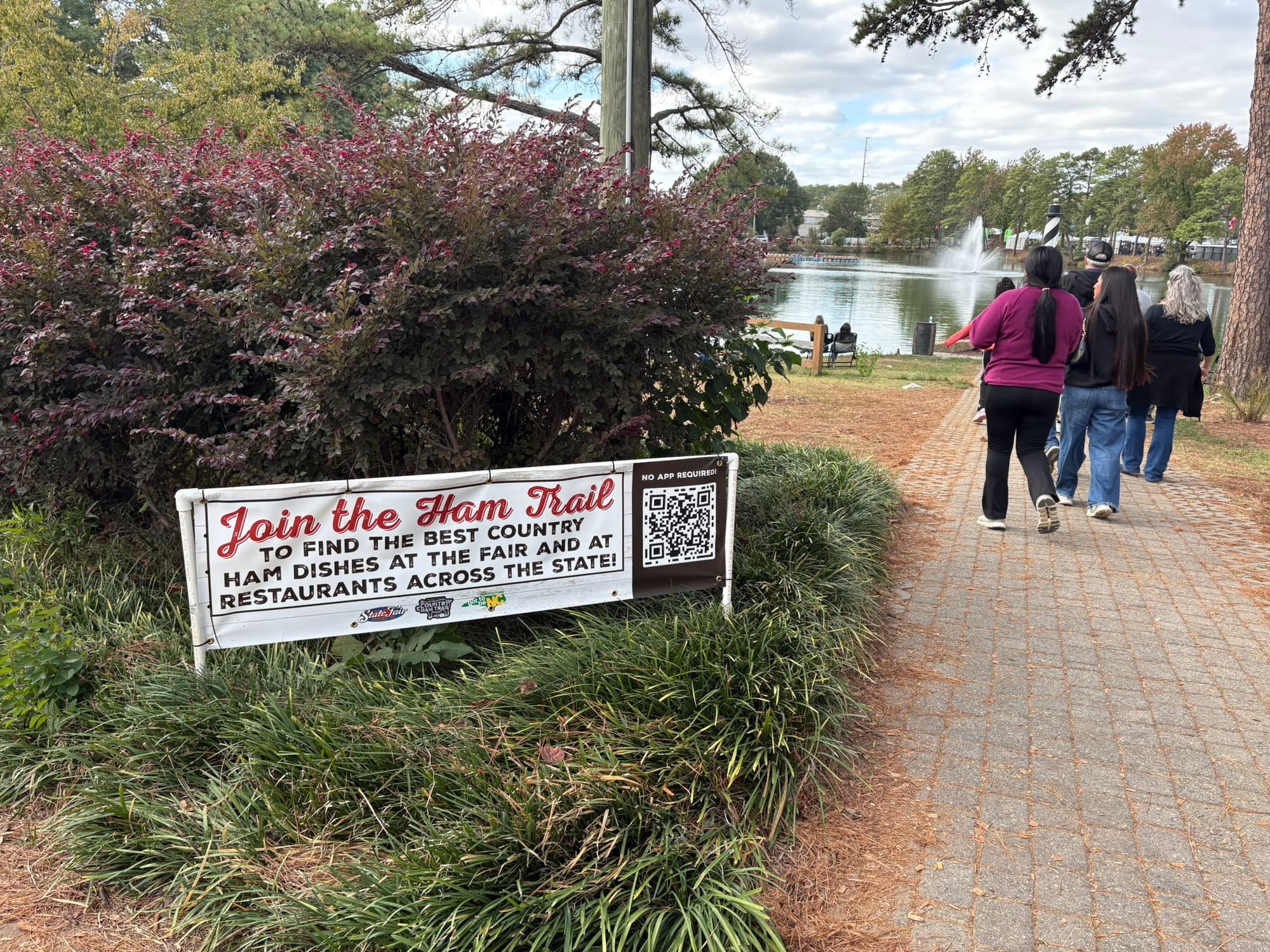
In the eyes of pork enthusiasts, the two states could be equal. Yet what makes North Carolina distinctive is its state fair this year renewed its commitment to country ham.
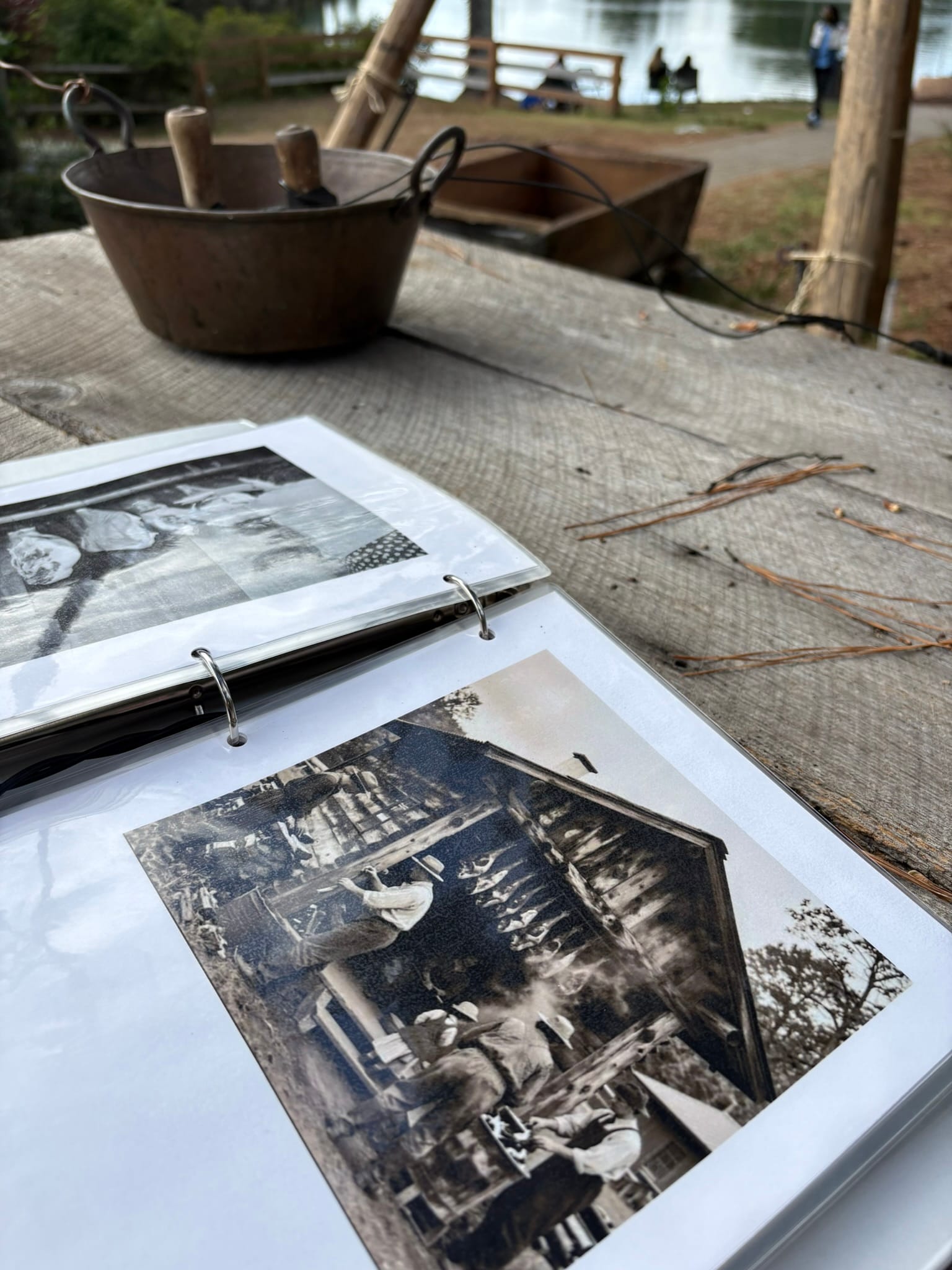
Preserving history
The boundaries of country ham territory don’t conform precisely to modern maps because country ham predates the United States.
British colonists who brought pigs to the Tidewater region also carried with them preservation know-how: They had the generational wisdom to recognize that hot summers created the ideal conditions for curing a fattened, butchered, and salted hind quarter.
Traditionally, country ham was baked or boiled, but nowadays, it’s most frequently sliced, fried, and seated on a fast-food biscuit. Still, as the late food historian John Egerton wrote, “In whatever form it is prepared, country ham is as old as the South itself.”
Egerton was riveted by country ham’s complexities, which arise from smoke and time. Even 40 years ago, though, he worried that the region’s taste for country ham would fade because artificial flavor enhancers and sped-up processing were besmirching the product’s reputation.
“The younger generation will say it’s too salty because they’re not educated,” Tony Snow of Goodnight Brothers, an 80-year-old dry-cured ham company in Boone, North Carolina, said in a phone interview with The Richmonder. “If they knew about it, they’d consume it right up.”
Compounding the challenge of keeping country ham in the favorite food canon is the relative scarcity of independent producers who shun shortcuts. Neither of the Virginia country ham producers quoted last year in a Virginia Farm Bureau newsletter returned messages after learning this story concerned the State Fair, but Robert Felts Jr. of R.M. Felts Packing Co. in Southampton County told the agency publication, “With a country ham, your money is tied up for six months.”
As such, Snow said, “It’s very hard to get into the business; it takes a lot of upfront capital. Therefore, you see more people getting out of it than getting into it. It’s such a shame because it’s such a traditional and versatile product.”
Understandably, the prospect of losing a marketable flavor and a land-based industry troubled North Carolina Agriculture Commissioner Steve Troxler — particularly because as an antique cookstove collector, he’s fond of what goes with biscuits.
“One day, riding down the road, he told me, ‘I want to have a country ham contest,’” Troxler’s chief of staff, Zane Hedgecock, recalled. “We hear out and about that younger people don’t understand their heritage, and country ham is a great example of that.”
Hedgecock vaguely remembered hearing there used to be a country ham contest at the North Carolina State Fair. He told his boss that he’d find out what it would take to revive it.
Hamming it up
It’s been 27 years since the North Carolina State Fair sponsored a country ham competition, which means the contest was called off one year before Snow got his first job in the country ham sector. He never associated country hams with fairs until he was invited to judge a competition at the 2016 Kentucky State Fair.
“I was blown away,” Snow said. “I was like, ‘This is something we have to do.’”
Snow contacted a food scientist at N.C. State University who liked the idea but was too busy with other projects to put together a new contest. Then, word came that Troxler wanted to bring country ham back to the fair. “We had the support; we had the freedom to really just use our imaginations,” Snow said.
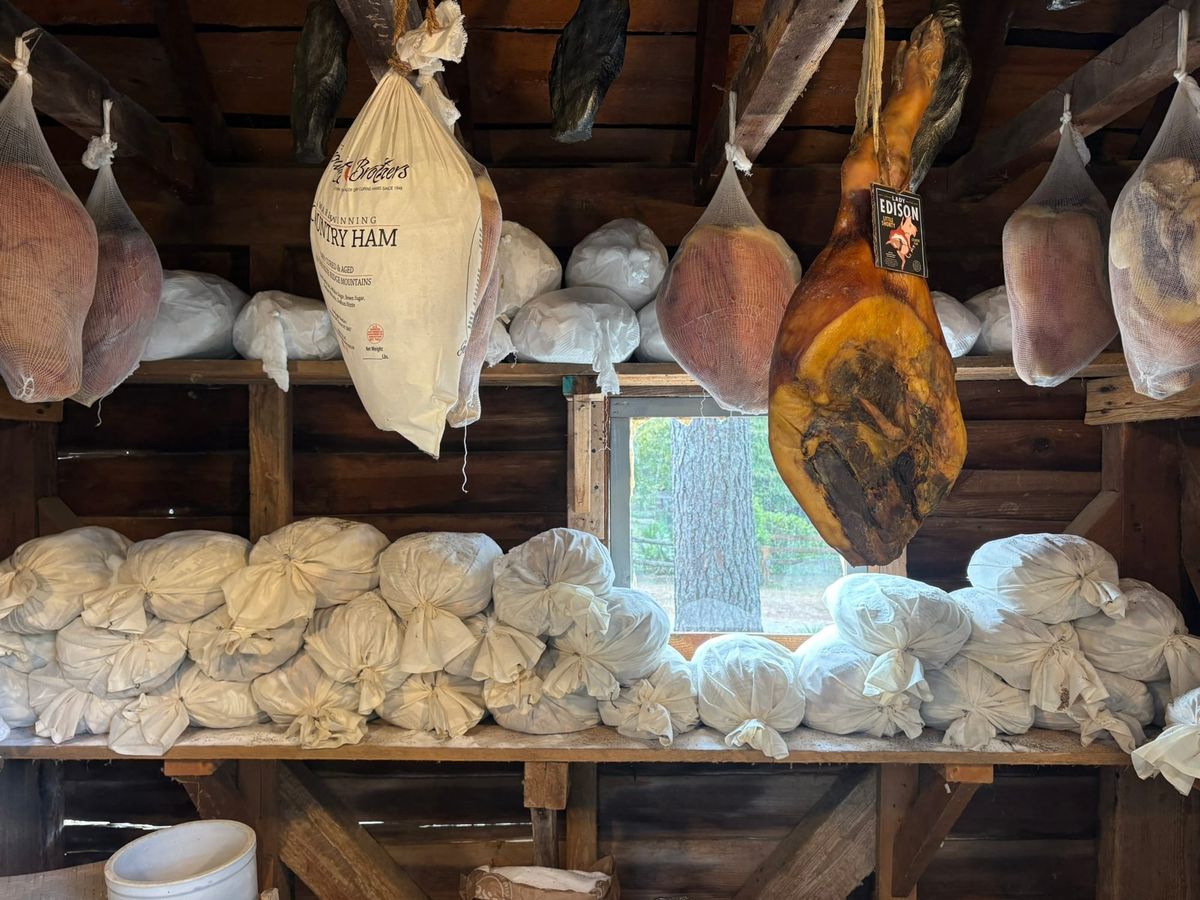
The country ham contest on October 15 was just one component of what Snow and Sam Suchoff, the force behind Lady Edison Extra-Fancy Country Ham and president of the National Country Ham Association, dreamed up. Given a vacant smokehouse on the fairgrounds, they made the outbuilding the centerpiece of programming that included curing demonstrations, ham phase displays, and open-hearth cooking sessions.
“We opened it up, put the light in there, and told the story,” Hedgecock said of the newly christened Ham House. “They had a Q&A, and they filled the tent up.”
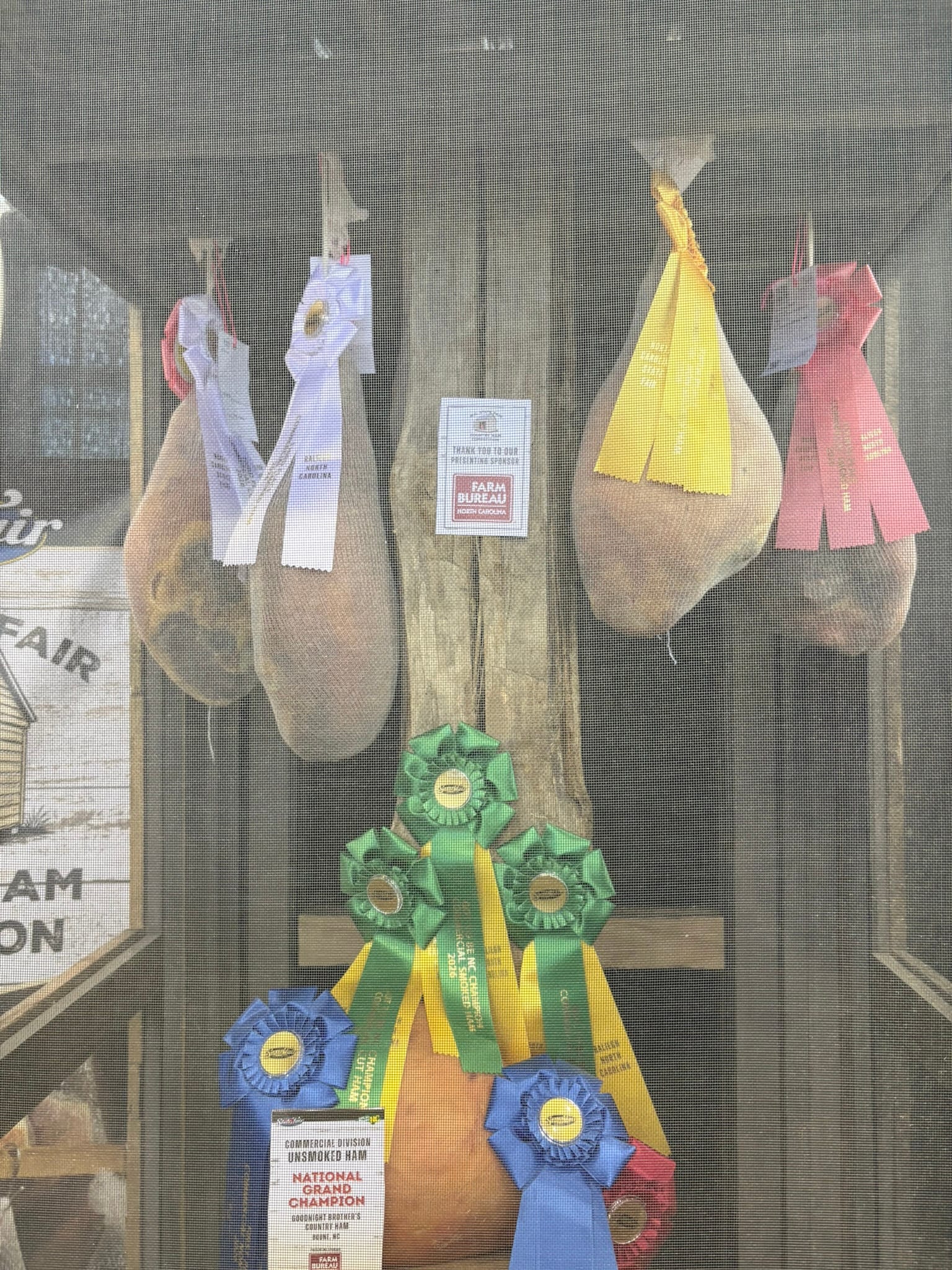
About the only grumbling the organizers heard came from amateur ham makers who said they didn’t realize they could enter a contest this year.
Unlike in past years, there wasn’t a category for “looks.” But if cured pork pageantry is passe, establishing superiority is not: Hedgecock hoped the commercial division—open to producers from anywhere in the country—would attract a dozen entries. Seventeen companies submitted hams. (Confidential to the conspiratorially minded: Snow won. This time, he wasn’t among the judges.)
Both Hedgecock and Snow dismissed suggestions that a state fair strategy sounds quaint in the age of vertical video. They’re sure that involving 4-H clubs across the state will help make country ham as standard at breakfast as link sausage and bacon, and suspect that Gen Z fairgoers who’ve toured the Ham House might be more inclined to ask for country ham on their charcuterie boards.
“You have prosciutto in Italy, Serrano in Spain, Westphalia in Germany, and country ham in the States,” Snow said.
Some states, at least. Coming off the high of the fair and the buzz it generated, Snow said sincerely, “I wish the best for Virginia.”
Hanna Raskin is founder of The Food Section. Follow her on Instagram, LinkedIn, or BlueSky.