The world gathers each week in Richmond – to play table tennis at an absurdly high level
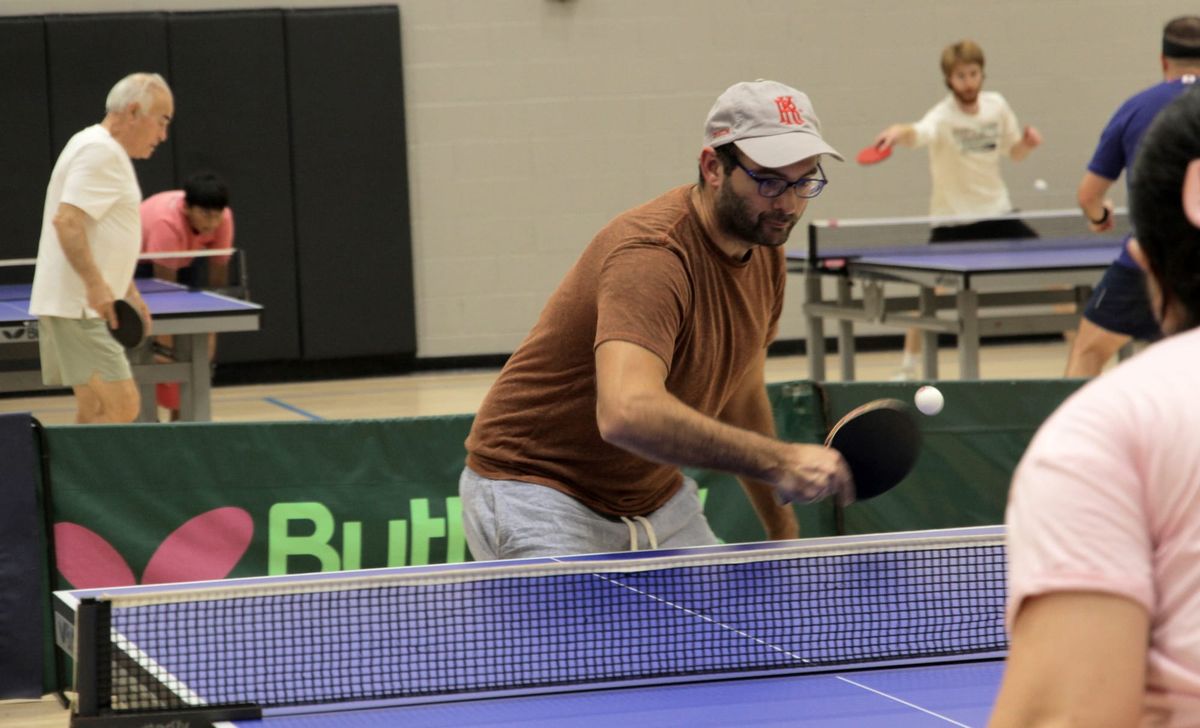
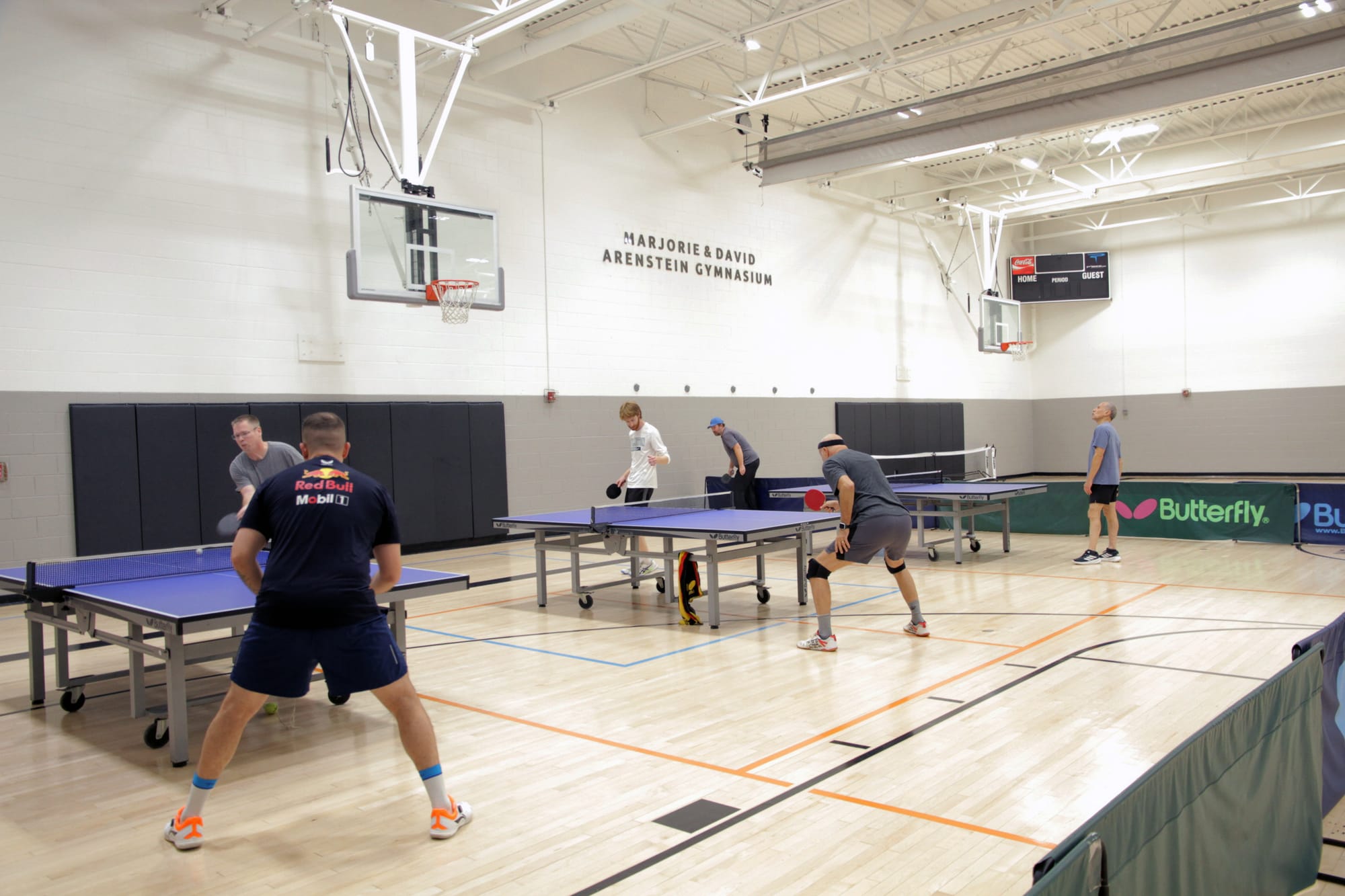
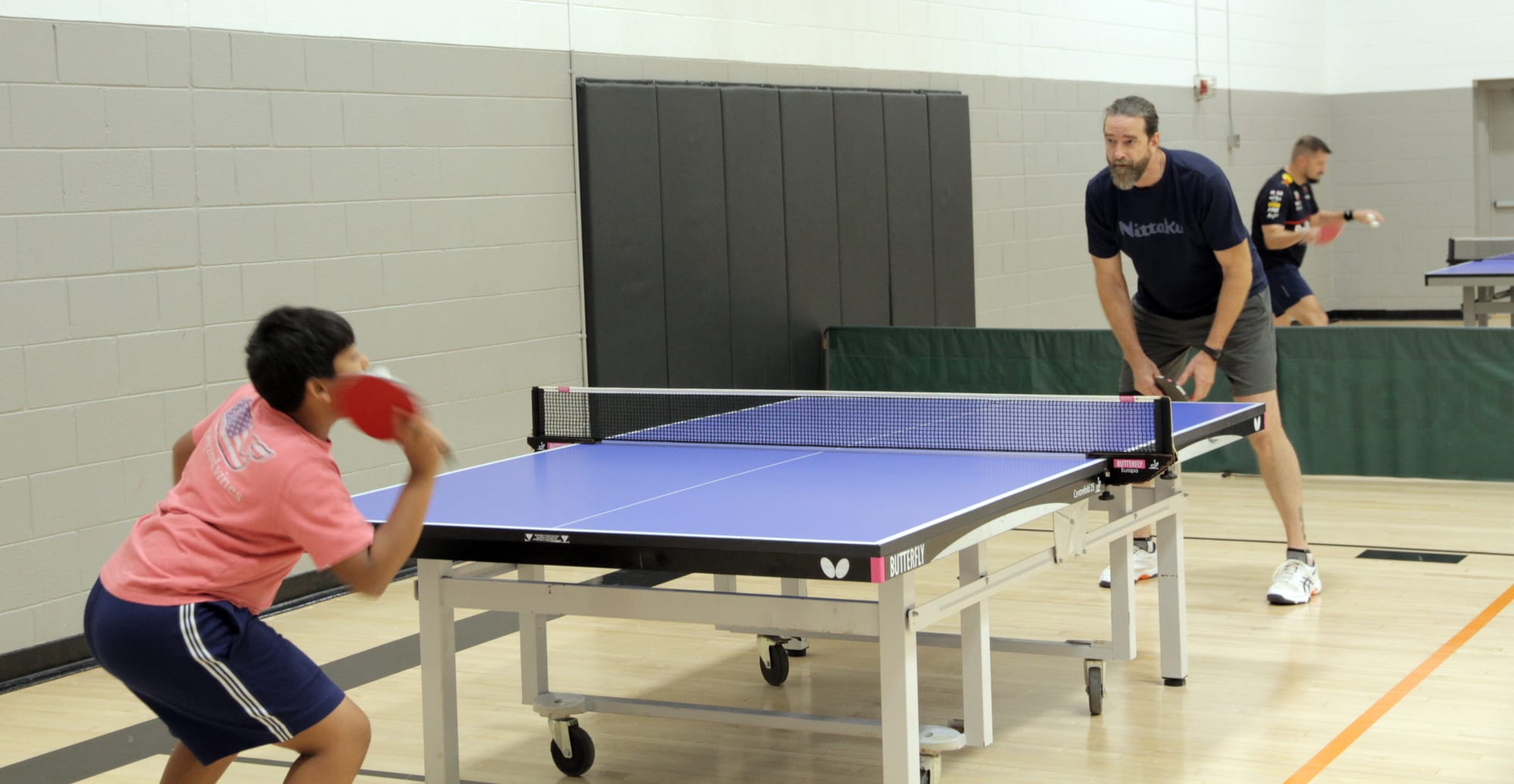
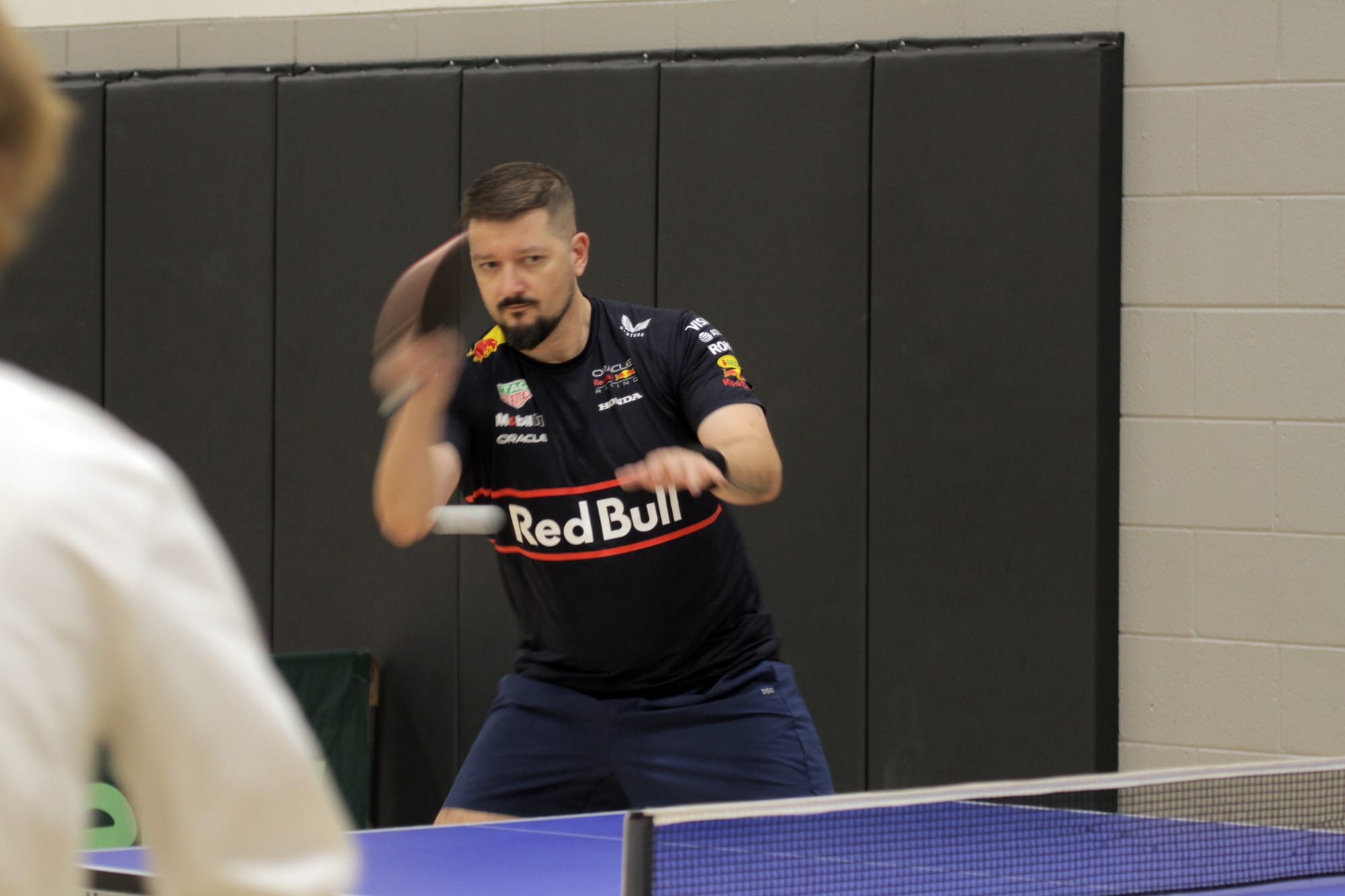
If you step into the gym at the Weinstein Jewish Community Center on a Saturday afternoon, you’ll be greeted by the sounds of smacking table tennis balls, shouts of victory and frustration in several languages, shoes squeaking on the gym floor.
This is the Richmond Table Tennis Club, where Richmond’s best-of-the-best table tennis talent comes together twice per week to play and train. The club meets at the JCC every Wednesday from 6:30-9:30 p.m. and Saturdays from 1:30-4:30 p.m.
Today, the club is as large as it’s ever been. Newly appointed club president Zane Gibbs wants to maintain and expand the club’s diverse, welcoming community.
“What’s interesting about table tennis as a sport is that it’s played by a lot of people globally. So across the world you find kids, young adults, middle-aged people, and seniors all playing table tennis,” Gibbs said. “One of the great things about our club is that we mirror the global diversity of the sport. You’ll find folks from China who will come in. You’ll find folks from India, Pakistan, Israel. We’ve got people from everywhere.”
The club has seen high-level talent over the years. In the early 2000s, Olympic table tennis player Sean O’Neill played regularly at the club. A few years later, Tao Li, at one point one of the highest ranked women in the U.S., also played there.
RTTC’s current club coach, Estefania Ramirios, played professionally for two decades, including for the El Salvadorian national team.
“If you’re a first-timer or a beginner, it might feel a little bit intimidating,” Gibbs acknowledged. “We are not a place where the average person shows up and wants to play beer pong. We are more of a sport-focused club.”
Gibbs believes the club is ideal for Richmonders who are already serious about table tennis but want to expand their game.
“A lot of people can hit hard. But very few are used to the amount of spin that comes when you start to play much better players,” Gibbs said. “If you think about the basement warrior, they’ve honed that one serve because they know they can get their dad, brother, or friend with the one serve.
“When you come to the club and do that serve against a higher rated player who has no problem returning it? All of a sudden your whole game starts to fall apart.”
Gibbs said that one nice thing about the club is that better players will offer tutoring and assistance, to help raise everybody’s game.
A welcoming home
Gibbs first fell in love with table tennis as a physics major at VCU in the 1980s after a classmate asked if he wanted go to the gym to play Ping-Pong.
“I’d never really played the sport. We just started hitting,” Gibbs said. “It became our way to take a break and release from studying.”
He played all through undergrad and graduate school as he pursued a doctorate in chemical physics. Afterward, he built a career and drifted from the sport. But decades later, during the height of the COVID-19 pandemic, he remembered those days playing table tennis at VCU.
“It was the 2020 Summer Olympics,” Gibbs said. “I was watching, just flipping channels, and I saw table tennis. And I said to myself, Man, I really enjoyed that in college. I miss playing. Wonder if there’s any place in Richmond where I could play? And I did what everybody does: I Googled: ‘table tennis Richmond’.”
That’s how he found the Richmond Table Tennis Club. The JCC was only a few minutes from his house.
“I didn’t have a paddle,” Gibbs said. “I had never played it competitively. I’d never even been to see any competitions. I just walked in, looked around.”
Nathaniel Blakely, the events and rentals manager at the JCC, believes the JCC and the table tennis club fit together perfectly. But he knows some folks might find the two organizations an odd pairing.
“I think people see the WJCC and think, oh, it’s just this one demographic,” said Blakely. “But it’s not. It’s a really diverse group of Richmonders. It’s very inclusive. So seeing an international sport like table tennis come in, it’s no wonder it flourishes.”
Brad Finkel, the CEO of the JCC, believes the international makeup of the table tennis club is a crucial component of what the JCC offers the city.
“It’s nice that the Richmond Table Tennis Club is able to bring diversity to the center because it fits who we are and what our values are,” Finkel said. “What gives me pride is that we’re able to live those values daily, then. It’s not just a statement on a website. It’s a practice. This is what we actually do.”
Sometimes, Finkel walks down to the gym to watch the players in action.
“You can hear however many languages,” said Finkel about the different languages spoken at the club. “Different people and cultures. There’s a sense of warmth and welcoming.”
Gibbs plans to keep the club at the JCC for as long as the JCC will have them.
“I’ve been around to a bunch of different table tennis clubs,” Gibbs said. “You can find ones where you don’t have a bathroom, or the lighting isn’t great, or where it’s 40 degrees in the winter. Here, we get access to really high-quality facilities that allow us to play the sport at a competitive level.”
The club’s history
The Richmond Table Tennis Club has been playing at the JCC since 1998, but the club existed well before then. When exactly the club was founded, however, is anyone’s guess.
“I've been told it goes back as far as 1976,” said Gibbs. “But the date is more folklore than fact. It started with some guys getting together in a garage, but no one really knows when they became a club.”
Before Zane Gibbs became president this past October, players David Sterling and Scott Kasson ran the club for decades.
Kasson first joined in 1981, back when the RTTC would meet at the VCU gym. Those early days of the club were sometimes volatile.
In the mid 80s, the club had to move from the VCU gym to the Westminster Presbyterian Church in Malvern Gardens. And in 1996, the church started using the club’s usual space for other events, so the club once again had to leave.
“We didn’t have any place to play,” Kasson said. “I’m looking at YMCAs, I’m looking all over the place.”
Kasson spent two years searching for another home for the club. In the meantime, he invited club members into his own basement.
Not in it for the money
Even in recent years, Kasson found it difficult to cover the club’s costs.
When a net snaps or tears, a replacement net costs nearly $200. Each of the club’s six tables cost over $2,000. And the barriers—which keep errant balls from blazing into the stands—cost over $200 a piece. That’s not to mention the cost of high-quality balls, paddle racks, insurance, and rent.
Renting the space at the JCC costs the club $800 per month.
To pay for everything, the club charges $5 entry fees. Regulars can pay a flat $35 fee monthly, if they prefer. And because the club has grown so much in 2026, the RTTC is making more than enough to cover its costs.
“I was having a hard time paying rent, but for the last year, we’re making $900 or more per month. We’re having a great turnout,” said Kasson, who hasn’t taken any compensation for his work as RTTC president. “It has become way more popular.”
Open to all
Going forward, Gibbs hopes to make the club even more hospitable to all levels of play.
“All of us started as beginners,” Gibbs said. “That’s one of the things we preach to every one of the folks who comes to play. Whether you’re a great player or a beginning player, everyone started out as a beginner.”
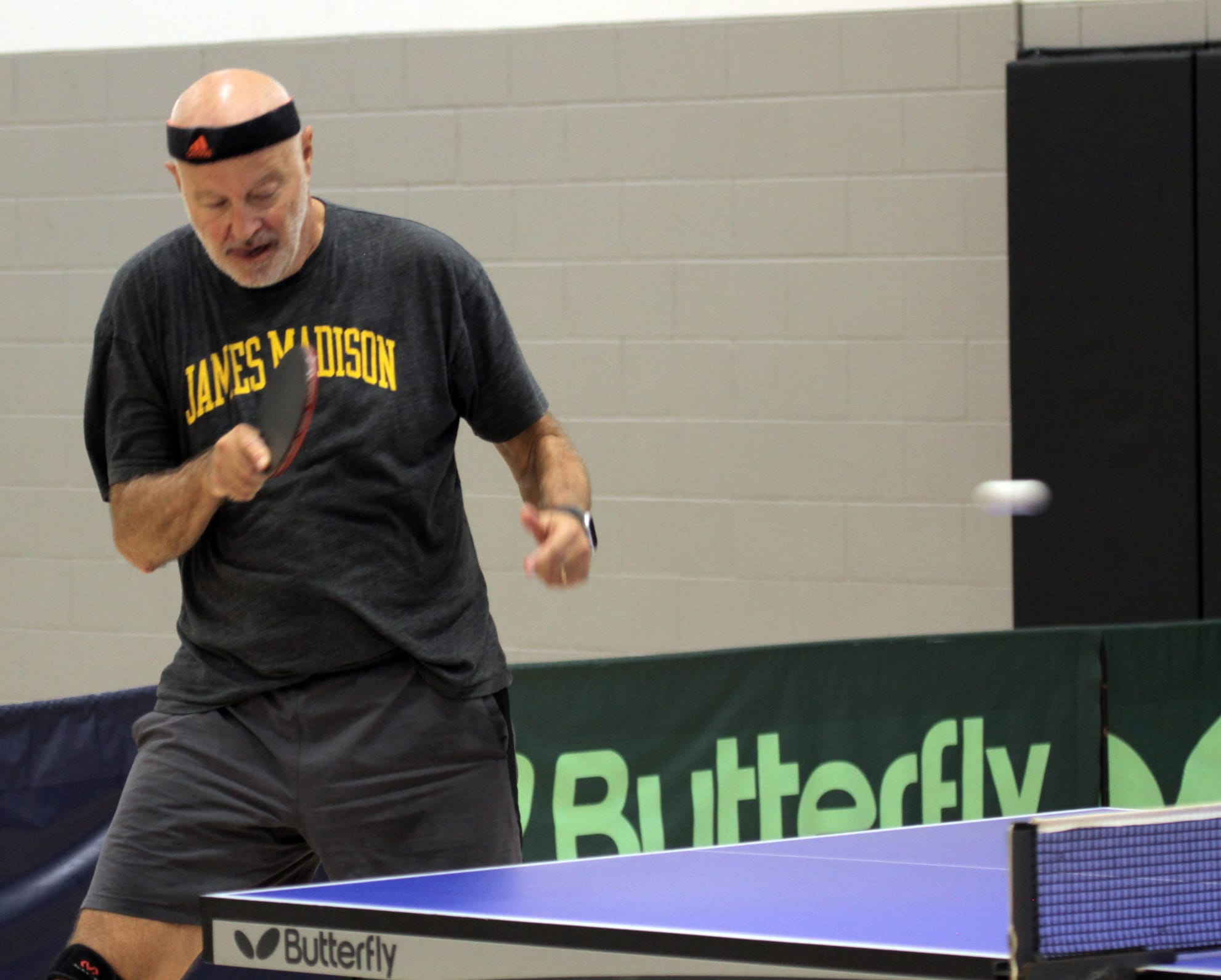
Gibbs says many folks stop by the club simply because it’s a great workout. Players arrive with full gym bags, knee braces, headbands, towels, water bottles, and changes of clothes. Gibbs says it’s his “primary form of working out.”
“It’s a great sport because you can be young, you can be old,” Gibbs said. “For me, pickleball is just a little too much running on my joints. Table tennis is my workout regimen.”
Table tennis is one of the fastest ball sports in the world. Some studies suggest that regularly playing the game may improve thinking and reactivity. Gibbs believes this is another reason club members keep coming back — the game improves not only physical well-being, but mental.
“There’s a lot of evidence now coming out about table tennis helping with neuromuscular sorts of things, helping with reaction times,” Gibbs said. “I’ve certainly noticed my reflexes and mental processing have gotten a lot better.”
Gibbs has many hopes and dreams for the future of the club, but he’s planning to implement those changes slowly.
“We’re in this weird capacity situation,” said Gibbs. “If we create too much demand, then we don’t have the space or the tables. And then we end up ruining the experience for our folks who do want to play. So we’re trying to find what the right dance is there.”
One of Gibbs’s visions is to create inter-club tournament with other local area clubs. He’s also thinking about ways to designate timeslots or tables for beginners. He’s also building a new RTTC website, but in the meantime, folks who want to learn more about the club can visit its Facebook group.
Kasson continues to come to the club to exercise and socialize after stepping down from his leadership role. He trusts the club is in good hands.
“He’s got bigger ideas than I had,” Kasson said of Gibbs’ leadership. “More power to him.”
Even in retirement, the RTTC is Kasson’s home away from home. “Fifty percent of my friends are from table tennis,” he said.
For him, the RTTC is where his people are.
“Almost everybody that plays table tennis is quirky,” Kasson said with a smile. “You get people together for table tennis, and there’s a lot of quirkiness.”