RPD discloses sergeant violated Flock camera policy by sharing info with federal agent
A routine audit of how Richmond Police Department personnel use Flock cameras found one policy violation in which data from the city’s license-plate readers was improperly shared with the Federal Bureau of Investigation, police announced Thursday.
An FBI special agent contacted Richmond police asking for an image of a vehicle believed to be connected to a homicide investigation in Washington, D.C. Despite local police department rules limiting how Flock images are used, an RPD sergeant complied with the FBI’s request.
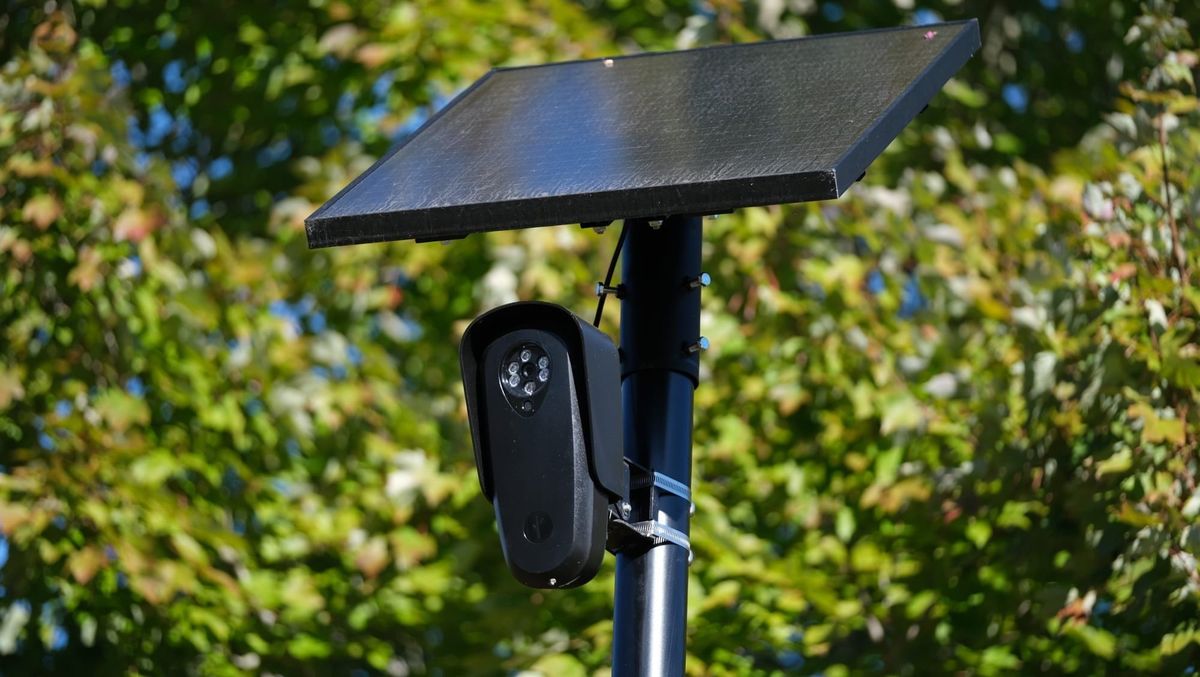
The disclosure of the policy violation comes as activists continue to pressure city officials to end the use of Flock technology, which involves automated license plate readers (ALPRs) that collect photos of all passing vehicles regardless of any connection to a specific crime.
“While I appreciate the sergeant’s willingness to assist in a homicide investigation, sharing ALPR data – even of a single vehicle – with federal partners or agencies outside the Commonwealth of Virginia is prohibited,” Richmond Police Chief Rick Edwards said in RPD’s news release.
For months, anti-Flock activists have warned that safeguards aren’t strong enough to prevent the camera network from being misused. Widespread surveillance technology, Flock critics have said, is particularly dangerous at a time when President Donald Trump’s administration is cracking down on undocumented immigrants and left-wing political activity.
“Agencies and individuals outside Richmond have and will be able to access the city’s systems," anti-Flock speaker Daniel Tobias said at a City Council meeting this week as he argued the camera network isn’t secure enough to protect against improper uses. “Claims from Mayor (Danny) Avula or Police Chief Edwards that these systems are only accessible by Richmond law enforcement cannot be true while these vulnerabilities exist.”
Richmond police said the recent policy violation, discovered during an audit of Flock usage for the first quarter of 2026, was not related to immigration enforcement.
Despite anti-Flock activists becoming a regular presence at Richmond City Council meetings, city officials have largely defended the cameras, calling them a valuable public safety tool. Officials have started to highlight cases where Flock cameras have helped solve crimes, such as the downtown hit-and-run that killed magazine editor Hope Cartwright in February.
“The audit process is an important safeguard to ensure this technology is used properly,” Edwards said in the RPD release, which stressed that the audit found only one violation. “ALPR technology has proven valuable in violent crime investigations, but these checks are necessary to maintain the proper balance between individual privacy, public safety, and compliance with Virginia law.”
Virginia’s law on ALPR technology generally prohibits the sharing of data with law enforcement agencies doing out-of-state criminal investigations, with exceptions for human trafficking and cases involving missing or endangered people. “Willfully and intentionally” sharing information in violation of that rule can be punished as a misdemeanor offense.
Richmond police said the matter was brought to the attention of Commonwealth’s Attorney Colette McEachin, but she declined to prosecute the sergeant after looking at “the facts of the case.”
After an internal RPD investigation, the unnamed sergeant’s access to Flock data was deactivated.
“Should there be any compliance issues in the future, RPD will disseminate that information at our regularly scheduled quarterly crime briefings to ensure transparency with our community,” the RPD release said.
Contact Reporter Graham Moomaw at gmoomaw@richmonder.org