'Momma Beth' Marschak is remembered as one of Richmond's original activists
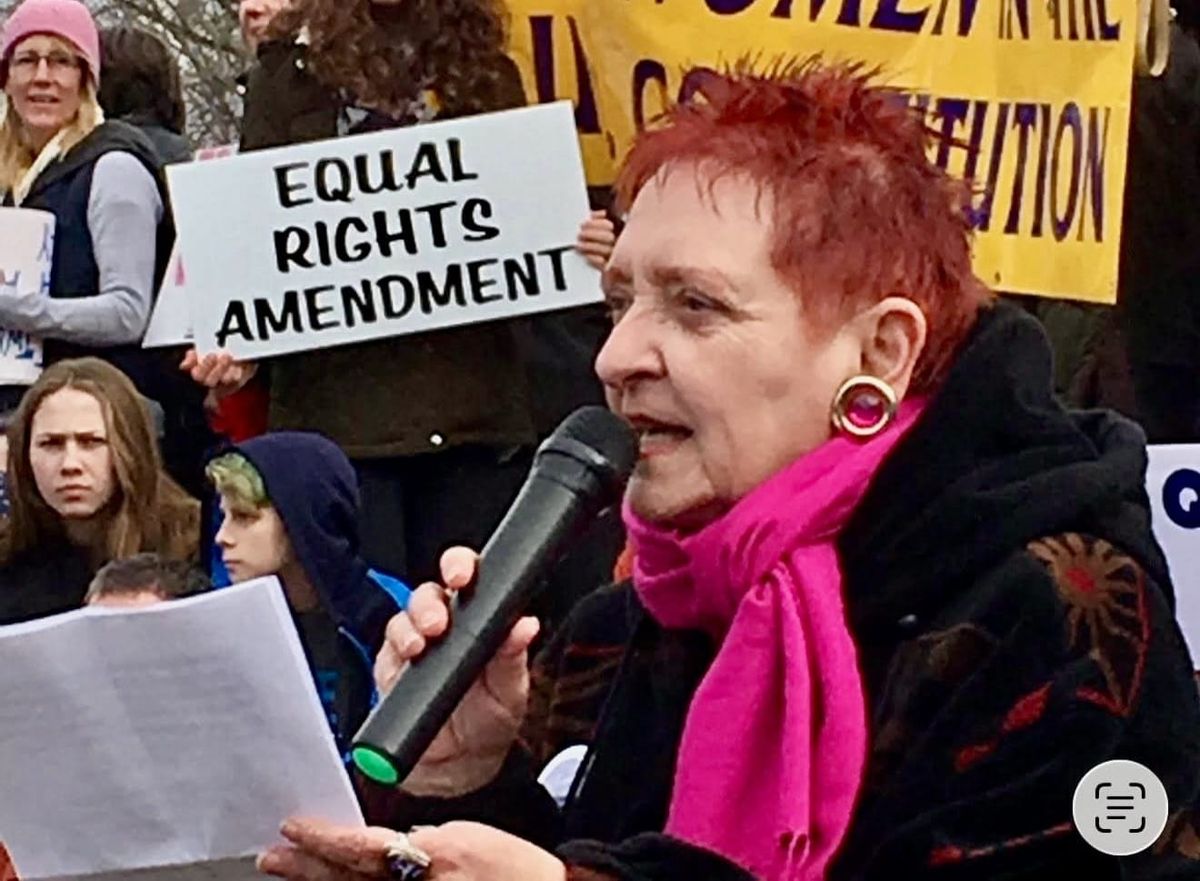
Richmond has lost another pioneering icon in the LGBTQ+ community.
Romayne “Beth” Marschak, whose decades of civil rights engagement and book "Lesbian and Gay Richmond" brought the history of the Queer community to the forefront, passed away last week at the age of 75.
“Her house caught on fire and she died from smoke inhalation,” said her younger sister, Cheryl Marschak. “It was in the middle of the night, so I like to think that she died in her sleep.”
The news of Marschak’s passing was shared by the Virginia Department of Health.
“Beth worked with VDH and the Division of Disease Prevention (DDP) for over two decades. She joined VDH as a Hotline Counselor and then transitioned to a Contract Administrator several years later,” officials wrote on their website. “She had also been extremely involved in community, civil rights, and human rights activism in Richmond throughout much of her life. She was a pillar in the LGBTQ+ community, making connections through her activism work.”
Her deep-seated roots in community activism began as far back as middle school, said Cheryl.
“She was always very independent and wanted to do things herself, even things that were in those days considered guy things,” she said. “When she was in middle school, she wanted to take shop, which was not available, and they didn't let her.”
Going against the grain of what was considered appropriate at the time was a family affair, said her sister.
“To be honest, we both got political together,” said the younger Marschak. “It was my senior year of high school and (her) first year of college, when the Democrats controlled the state, but they were conservative. It was the Byrd machine. We jumped parties and joined the Republican Party for the state elections and were active in the Young Republicans and got (Linwood) Holton elected. That's the first activism I remember either of us being involved in.”
Cheryl said from then on, her sister continued being politically active, in both the anti-Vietnam and Civil Rights movements. Both sisters also attended Westhampton College at the University of Richmond in the mid 1970s, which was strictly for women.
“One thing I remember her mentioning all the time was that she did apply to the University of Virginia back in the day,” said her nephew Charlie Gilmer, “and was actually just plain out rejected because she was a woman, and they were not accepting women at the time. So then she ended up going to Westhampton.”
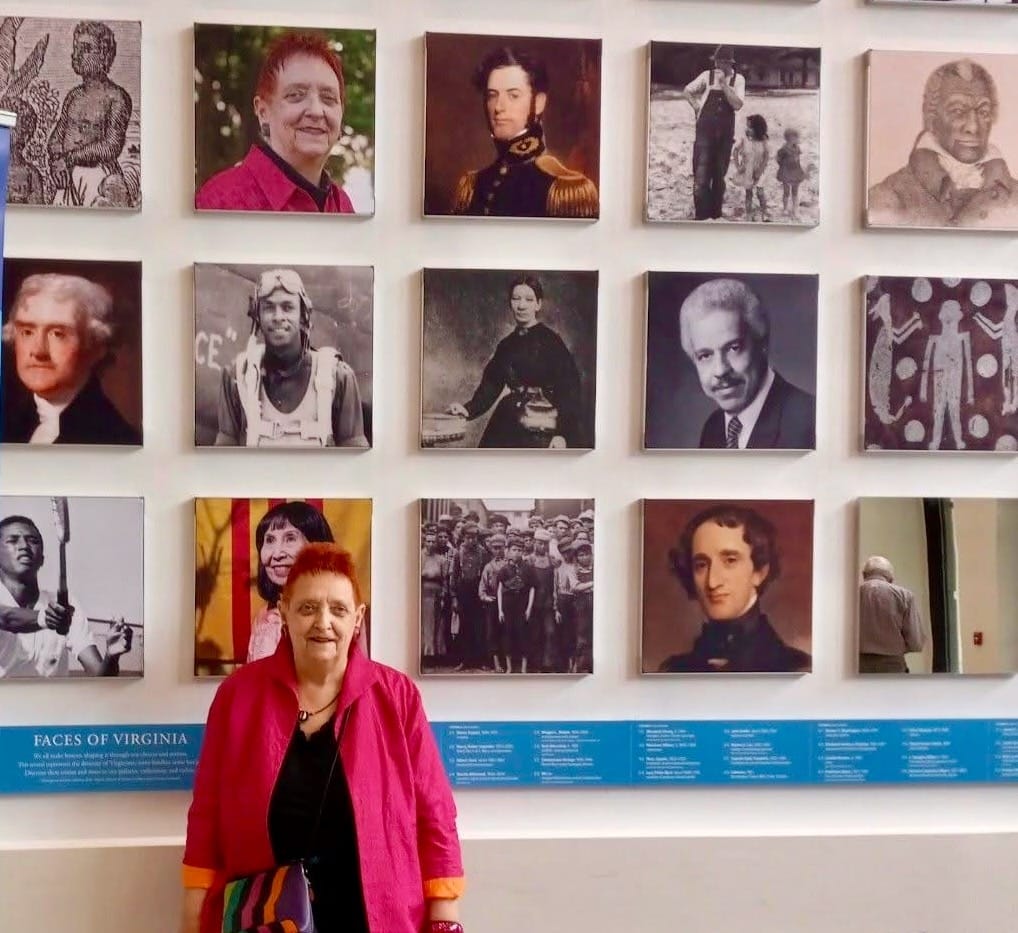
Being out in the 1970s
In her forays into activism, Beth Marschak began to find a community of like-minded people, such as founding the Women’s Center after graduating Westhampton. The group met at the YMCA.
“We had a hotline for women, we both were part of that,” said Cheryl. “And that's where she started getting more involved with a lot of women and connecting up with more lesbian women.”
Being out as a lesbian was risky at the time, said her long-time friend Barbara “Bobbi” Weinstock.
“Most people were closeted because you had no job security. You had no protections whatsoever,” said Weinstock. “And so Beth and I and a couple of other folks were the only ‘out’ lesbians around.”
Weinstock met Marschak at feminist women's rally in the summer of 1975 but became closer the following year.
“I had just recently been elected to the board of the National Lesbian and Gay Task Force. So I was involved in a lot of national lesbian, gay activities. And Beth and I just kind of totally linked up,” Weinstock said.
Because of Marschak’s involvement in both Richmond and national groups, like the Women’s Political Caucus, both she and Weinstock started attending conferences together, including Richmond’s Human Rights Commission in 1978.
“We were working on getting a human rights ordinance that included sexual orientation,” said Weinstock. “I think that's probably the first real big thing that she and I worked on together.”
During this time, Marschak also cofounded the group Richmond Lesbian-Feminists. The group gave closeted lesbians a safe space to meet.
“There were a fair number of people, but it was a very closeted group. People were really fearful,” said Weinstock, but the group became a magnet “because they wanted (to be) part of a community, but they needed to be invisible.”
Mary Dean Carter was an original member of the group.
“We worked together in the organization and several others, including Richmond Womensbooks,” said Dean Carter. “She was funny, clever, wise and stubborn. But most of all she was kind, compassionate and loyal. She always showed up for me. Always. She was a powerhouse in a quiet understated way — a trailblazer and a hellraiser. She cared deeply about the human rights for all people.”
James Milner, Virginia Pride Director at Diversity Richmond, agrees that Marschak was a trailblazer.
“Beth is certainly well known in the LGBTQ community as a storyteller of our history and a preserver of it,” he said. “But Beth also fought for justice for all marginalized communities, whether [it was for] Black communities, immigrant communities. She was a fierce and proud lesbian feminist and fought fiercely for women's rights. She brought all of that with her into every space that she entered.”
Embracing all communities
As an example of Marschak’s outreach efforts, in the mid-2000s, while working for the Valentine Richmond History Center (which included creating and leading bus tours highlighting the history of the LGBTQ+ community), Marschak met the artist Free Bangura in the basement of the museum.
“There was a talk being given. It was concerning the slave trail, as they were calling it at the time,” said Bangura, who now lives in Sierra Leone. “And as I was sitting there listening to the dialogue, I remember shooting my hand up in the air almost involuntarily, and saying emphatically to everyone in the room, ‘stop calling my ancestors slaves. Their condition was to be enslaved.’”
Bangura said everyone, including city officials, were calling the proposed route the "slave trail,"
“Some people tried to push back, but I remember Beth shaking her head like, no, stop interrupting her,” Bangura said. “I remember Beth also walking up to me and saying that she was very proud of the way that I represented that.”
They soon became friends, and that encounter led Bangura to create her own history project called Untold RVA.
“Every time I turned around, she was always at things that I was announcing for Untold. She would make it a point to be there, even if she didn't tell me she was coming,” said Bangura. “If she wasn't there, she would call me and give me a pep talk beforehand and just encourage me to be bold and courageous. She always said, ‘don't back down from the bullies.’ She was just the type of person where she would just show up at the intersections of justice movements and historical reclamation efforts.”
In the early nineties, Marschak continued being a mentor for younger women, like Lora Beldon, who came out while attending VCU.
“I joined the Richmond Lesbian-Feminists because I wasn't really a bar-type person back then,” Beldon said. “Beth was one of the first people to really sit down and talk to me because here I was, this absolute baby, and everybody else was at least like 10, 20, 30 years older.”
Beldon said she wanted to do more in the community.
“I'm a helper just like she is. She's just this huge helper,” she said. “And everyone she meets is helped along the way. One of her nicknames is ‘Mama Beth.’ And that's always how everyone kind of saw her, at least of my generation.”
For now, the family said they are planning to honor Beth with a big event sometime in mid-July.
Virginians pay tribute
In the week since her passing, tributes have been pouring in on social media.
Lisa Cumbey, designer and creative director at the William A. Harrison Foundation, wrote the following: “When I first met Beth Marschak, she was already an icon in the LGBTQ community. She had a quiet, quirky way, and would tell stories from personal experience about things the rest of us just read about in books or underground papers. She was a lifelong advocate not just for our community, but justice and equality everywhere it didn't exist. She's one of those people that you just kind of assume will always be here, with that knowing glint in her eye. It's a shock to learn of her sudden passing.”
The Library of Virginia via Facebook: "The Library is saddened to hear about the passing of Beth Marschak. Beth was an activist for equal rights, a historian of Richmond’s LGBTQ+ community and a strong supporter of the Library over the years. She attended many of the Library's events and always asked insightful questions, most recently showing her support for the opening of JXN Haus. She's pictured here at a First Fridays event and at a book talk in October of last year, both at the Library."
Diversity Richmond via Facebook: "It is with deep sadness and profound gratitude that we mourn the passing of Beth Marschak, a beloved leader, historian, advocate, and friend whose impact on Richmond’s LGBTQ+ community will be felt for generations."
Mayor Danny Avula - via Facebook "I am so sorry to hear about the passing of Beth Marshak, a lifelong Richmonder and steadfast social justice advocate. Beth dedicated her life to advancing LGBTQ rights, and championing the equality, justice, and dignity of all people. As we mark Pride Month, a time to celebrate visibility, resilience, and the ongoing pursuit of equality, her passing feels especially heartbreaking for so many in Richmond.
"Our city has lost a faithful champion whose voice and vision helped make Richmond more just, more humane, and more inclusive. May Beth’s legacy continue to guide and inspire us in the work ahead."
Equality Virginia (via Facebook) "is deeply saddened to learn of the passing of Beth Marschak, a pioneering lesbian activist and community leader whose impact on the city of Richmond and LGBTQ+ Virginians across the Commonwealth cannot be overstated.
"In 1975, Beth helped found the Richmond Lesbian Feminists, creating spaces for belonging and advocacy when LGBTQ+ people faced overwhelming discrimination, isolation, and fear. Through decades of organizing and community care, she helped shape a more visible and more resilient LGBTQ+ movement in Virginia.
"We are grateful for her leadership, her vision, and her unwavering commitment to justice. Our thoughts are with her loved ones, friends, and the many people whose lives she touched as we honor her memory."
This article has been updated to reflect the correct spelling of Lisa Cumbey's name.