Hispanic Chamber touts small-business success amid population boom in Richmond
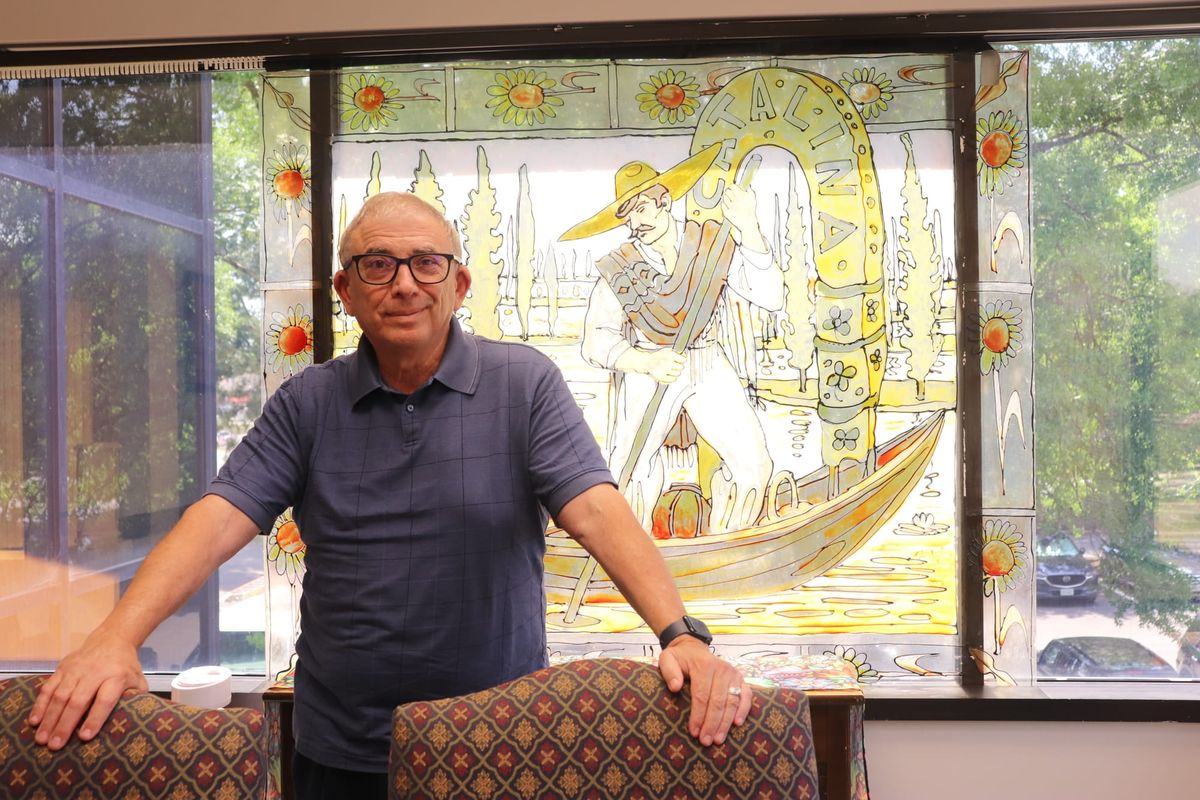
When Michel Zajur’s parents settled in Virginia in the 1960s, you could count the Spanish-speaking families in Richmond “on two hands,” as he put it.
That's not the case anymore.
The size and economic success of the Richmond area’s Hispanic population have exploded since the turn of the century — a change supported by Zajur, CEO of the state’s Hispanic Chamber of Commerce, who attributes the progress to small-business growth that far exceeds the national average.
Between 2017 and 2022, the number of Hispanic-owned businesses with at least one employee in the metro area grew by 104%, according to the Greater Richmond Partnership. There are now 1,051 such businesses.
That far outweighs the national increase of 44% during that same timeframe as measured by Brookings.
Local rideshare driver Alexander Mejia has seen the Spanish-speaking and immigrant population’s growth. He followed his children to the area after COVID, describing it as a good place for his family to settle and grow.
He pins the recent business growth in Richmond on immigration to the area — something he hears many people comment on as he drives.
“Many workers, a lot of development, many things [have come] now,” Mejia said in Spanish. “And you can see it in the construction sites there are in Richmond, when we came here there was not as much construction and now, there is construction everywhere.”
That business success has seen some interruption recently as immigration enforcement has driven down foot traffic nationally and statewide, while local ICE raids have impacted in particular the Southwood apartments, where many Hispanic and Latino residents live.
“There are people who go about in fear, that has been seen,” Mejia said in Spanish. “One hears the news, on TV and all over the place, and that… people are terrified about their papers.”
Zajur has made a career of considering challenges to market participation in the state.
“A lot of people are fearful,” he said. “I think a lot of people, if they don’t have their proper immigration status — they just want to provide for their family — they work and, and they probably don’t go out much. They’re here to help make their family successful.”
Promoting Hispanic businesses
To Zajur, tackling these and other challenges Hispanic residents face in the pursuit of financial success and social mobility form part of a personal philosophy.
“For the community to succeed, you have to have successful Hispanic businesses,” he said. “I think that’s really important because we don’t want to just be workers, we want to be business owners. We want to raise it so everyone has a chance to start a business, to grow a business.”
His family’s La Siesta restaurant, now closed, paved the way for Zajur and others to begin a membership organization for Hispanic businesses to support marketing, outreach and finances.
 Juliana Vandermark
“A lot of these [people] have unique challenges because of their immigration status, their language proficiency or not understanding the business culture in the United States, so there is a lot of obstacles,” Zajur said. “This is the case that I saw with my father: someone that helped my father, that guided him so he started his own business, and that’s really why I started the chamber.”
Hispanic identity encompasses many countries of origin, and people born both in and out of the U.S., with ties to the Spanish language or from Spain itself. It overlaps often, but not entirely, with Latin America and with the cultural identifier of “Latino.”
The Richmond area is home to many people of Mexican origin, as with much of the country, but also many from Central America, including Guatemala and El Salvador, and elsewhere in Latin America.
Many Hispanic-owned businesses in the Richmond area are “Latino markets” (several bear that very name), selling international goods and often doubling as restaurants and community centers for remittances and other services. Some claim a specific origin, like “El Salvadoreño” and “Oaxaca Latin Market,” while others do not.
Zajur said these businesses are both important and easier for many Spanish-speaking residents to operate and network through as they lessen language barriers. He also believes Hispanic business owners of all stripes should branch out where they can to the rest of the city and region.
“Many want to dedicate themselves to the Latino community,” Zajur said. “But as I say to many, you have to open up your business, because if you only dedicate yourself to 8 to 10% of the population you have the opportunity to open up to the other 90% with other products or so on.”
The shift by the numbers
Zajur said the growth of Hispanic-owned businesses is particularly notable in Richmond, where there were fewer well-established families and enterprises at the turn of the century than in Northern Virginia.
Raw population numbers are a key factor in this change. In 2000, there were a little over 5,000 Hispanic residents in Richmond city proper, or about 2%. They now number over 23,000 and make up about 11% of the city proper, 13% of Chesterfield and 7% of Henrico, per census data — more than 100,000 residents in total in the metro area.
Employment at the region’s Hispanic-owned businesses more than doubled from 2017 to 2023, from 4,539 to 9,480 workers, according to the Greater Richmond Partnership.
The increasing entrepreneurship rate among Hispanics nationally since 2000, the booming number of businesses owners in the Richmond area since 2017 and the outsized growth of that population in the region amounts to a dramatic local transformation.
Nationally, Hispanic residents continue to be disproportionately workers as opposed to owners compared to other people groups, according to the Small Business Administration.
According to the Greater Richmond Partnership, revenue generated yearly by Hispanic-owned businesses in RVA more than tripled to $1.7 billion from 2017 to 2023, while yearly payroll more than doubled to $419 million.
Employee pay at Hispanic-owned businesses in the area lagged revenue growth, going from 32% to 24% of revenue over those six years.
Creating wealth
Zajur sees the pivot to business ownership as a main driver of prosperity for Hispanic Richmonders they may not achieve as workers. He gave an example of someone who goes to work in construction and learns roofing, then starts a roofing or construction company.
“They’re hard workers and so if you can help them to start, they’re not getting paid $15- $20 an hour,” Zajur said. “They’re business owners and they can make a lot more money for their family.”
Asked about Virginia’s minimum wage increases and political winds over its labor policies, Zajur emphasized his desire for Virginia to be competitive with states like North Carolina, Tennessee and Georgia — all states with minimum wages at or below the federal $7.25 an hour.
“You’ve got to make sure to keep the employees happy and successful, to provide for their family is very important,” Zajur said. “I think we need to keep competitive so we’re able to grow.”
VHCC says it represents “over 30,000 Hispanic-owned Virginia businesses.” Meanwhile, its public member directory lists 283 entities, from restaurants to legal offices to large corporate sponsors like Dominion and Wells Fargo.
Its 2025 annual report notes serving 82 businesses with its continuing “Impacto” and “Avanzar” small business growth programs, and celebrates being named “National Large Chamber of the Year” by its national counterpart. The group says it has distributed $220,000 in no-interest loans to Central Virginia businesses.
Continuing the work
The organization celebrated its 25th year of operations last December at a luncheon with state business and academic leaders, and held the 25th “Que Pasa?” cultural festival at CarMax Park in Richmond on May 30.
Zajur noted VHCC has advocated at the General Assembly for issues concerning Hispanic residents broadly, including supporting Spanish-language driver’s license exams and aid for students in the state with DACA (Deferred Action for Childhood Arrivals) immigration status.
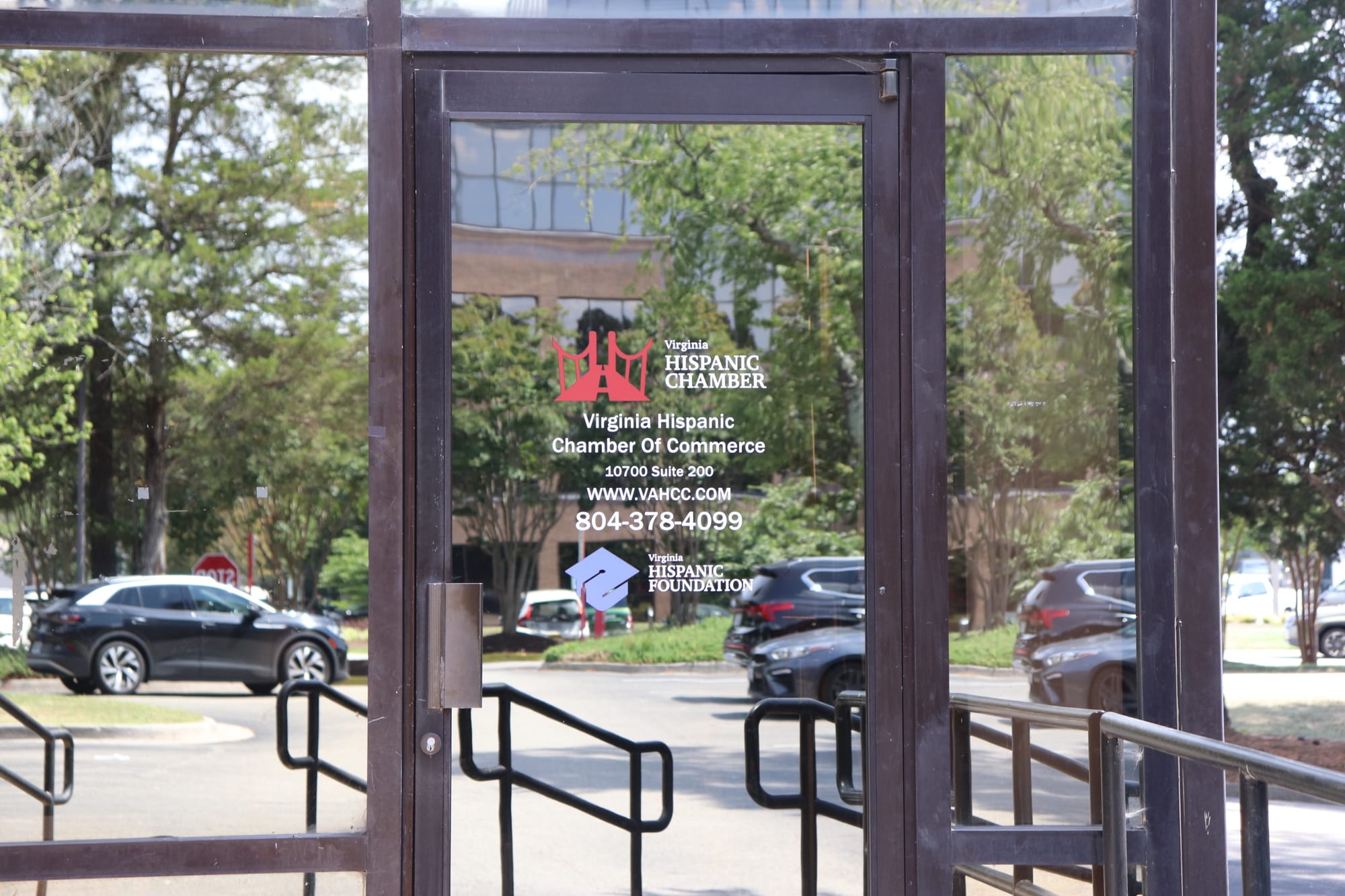
While VHCC focuses on business ownership, its sister organization, the Virginia Hispanic Foundation, promotes social and legal services. It functions as a link to resources and promises its own such as education programs and legal clinics, including for immigration.
Zajur tied the conception of the foundation in 2003 to the particular needs of Richmond’s Hispanic population at the time, which was new compared to that of Northern Virginia. Both entities, to Zajur, are part of the wider goal of community success.
“What do they say? ‘If you’re not at the table, you’re on the menu.’ And it’s important to be at the table if it’s to take ownership of this country, to be part of it — the beauty,” Zajur said. “To build your American dream.”
This article has been updated to reflect the correct spelling of Michel Zajur's name. Contact The Richmonder at news@richmonder.org.