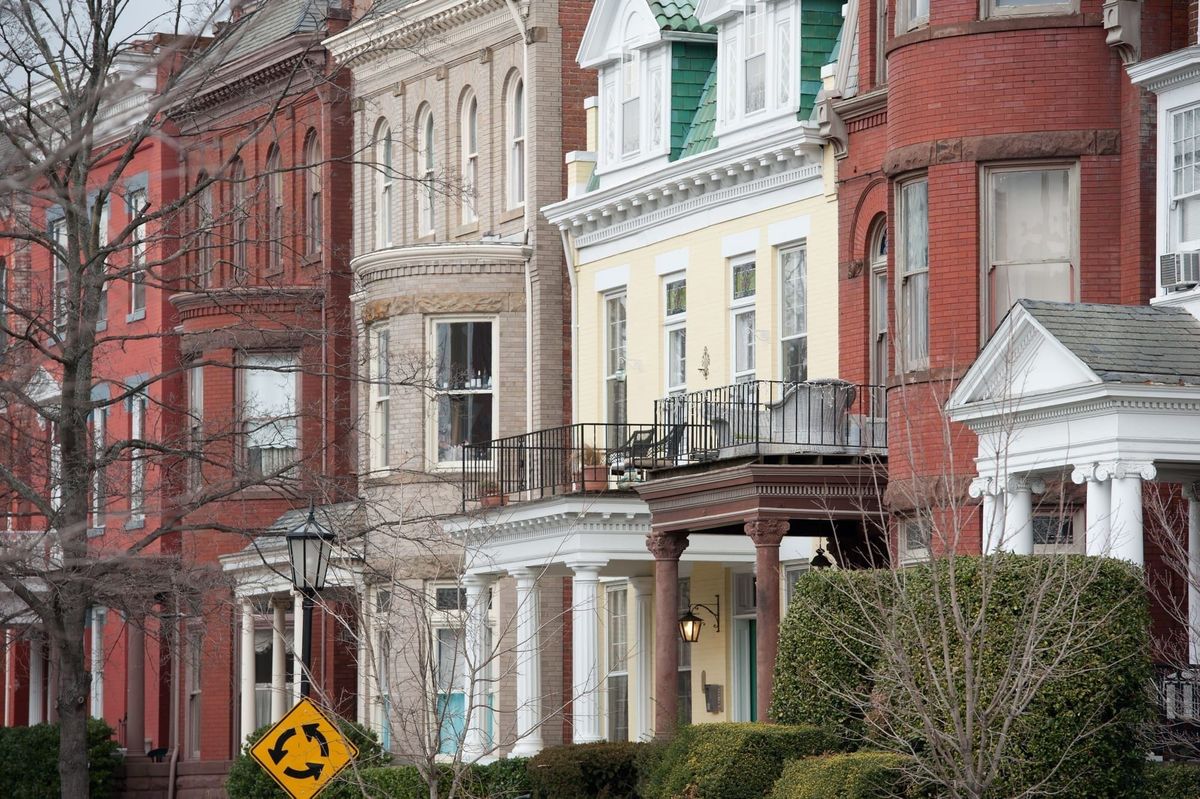
Demolition ban being considered for historic Fan District
Demolitions could soon be verboten in much of the Fan.
Richmond officials are moving forward with a design overlay district for the historic neighborhood of early 20th century rowhouses and small businesses that would prohibit demolition of historically significant buildings.
“The city’s growing. There are more people wanting to move to Richmond,” Andrea Quilici, chair of the Fan District Association’s Historic Preservation Committee, told the city’s Urban Design Committee earlier this fall. “But that might in our understanding create more pressure on the possibility that some of the historic houses that are in the Fan district might be demolished to build some more density.”
A special zoning tool, design overlay districts are an additional layer of rules and regulations that city code allows neighborhoods to adopt “to protect developed areas of the City characterized by uniqueness of established neighborhood character, architectural coherence and harmony, or vulnerability to deterioration.”
Many Fan residents say the neighborhood falls squarely within that definition.
“There is a remarkable cohesiveness to the Fan, attributable to good urban design,” Kimberly Vullo, a member of the FDA’s preservation committee, said at a Planning Commission meeting about the designation Tuesday. “The Fan is an asset to the city, and it is worth protecting.”
Like Old and Historic Districts, overlay districts exist in addition to the underlying zoning and cannot be more restrictive than it. If the zoning permits duplexes, for example, an overlay district cannot prohibit them.
What overlays can do is put guardrails on the external appearance of buildings or limit when they can be torn down. Exactly what the rules are is up to the neighborhood, which has to request the overlay and get support from a majority of property owners, as well as the endorsement of the Planning Commission and City Council.
While 16 neighborhoods have embraced the more tightly regulated Old and Historic District designation, to date only one — the Museum District — has opted for a design overlay district, known as the West of the Boulevard district.
“We thought that a design overlay district was the simpler [option] and the one that would be approved by all of the neighbors,” Quilici told the Urban Design Committee.
The rules backed by the Fan District Association and 861 of 912 property owners who voted on the proposal are straightforward: Demolition of any primary structure that is listed on the National Register of Historic Places would be prohibited, as would the demolition of any carriage house or garage that is two or more stories, is listed on the register and fronts on a street or alleyway.
Demolition would be defined as the complete removal of a structure or the “significant partial removal of a contributing structure including front or side facing walls, roofs, and/or major architectural features such as a porch.”
“Windows, doors, chimneys — all of that is allowed to be demolished,” said Ray Roakes, the Urban Design Committee’s secretary. “A large chunk of the house is not.”
The priority, according to Quilici, “is to save what we have.”
“That doesn’t preclude us in the future to look at expanding the [design overlay district] or applying for an Old and Historic District,” he said. “But for us, it was important to find immediately something that would protect them.”
The district would not encompass the entire Fan. Instead, it would run from the western side of Mulberry Street to the eastern side of Harrison Street, and from the northern side of Park Avenue to the southern side of West Main Street.
Not included would be VCU’s Monroe Park campus or other adjoining areas that are already included in an Old and Historic District.
Ongoing review
Work on the overlay district has been underway since 2025 and has gotten a boost from concerns among a number of residents that the proposed citywide rezoning underway will fuel a wave of demolitions by developers seeking to maximize the number of units they can build on a parcel.
While large swaths of the Fan would be zoned for residential attached homes in the third draft of the code refresh, the neighborhood is also interspersed with properties that would be zoned for mixed use or to allow multiple residential units, particularly west of North Robinson Street and along West Main Street.
“Upzoning these properties creates an economic incentive to demolish the existing structure to build a taller building that covers substantially more of the lot,” the Fan District Association wrote in a formal statement of its position on the code refresh this summer. “We oppose any version of Code Refresh that does not embed adequate protections against demolition for not only OHDs, but also ‘contributing structures’ in National Register Districts and significant cultural assets as defined in the [Cultural Heritage Stewardship Plan].”
 Sarah Vogelsong
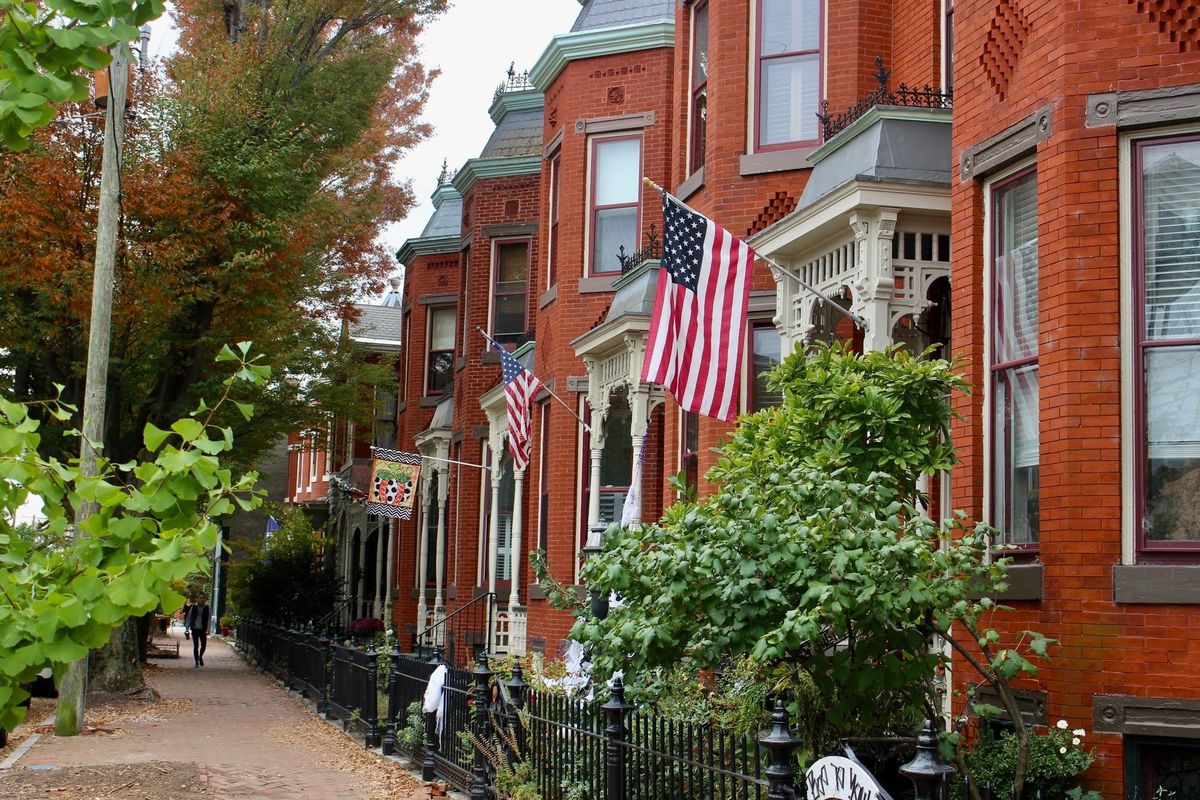
In developing the overlay district proposal, “the fear of demolition really was the primary driver,” Councilor Katherine Jordan, whose 2nd District includes the Fan and who supports the designation, told the Urban Design Committee earlier this fall.
The proposal still has a ways to go before it can be adopted, although it has gotten a warm reception from both the Urban Design Committee, which over two meetings hammered out many of its details with the FDA, and the Planning Commission.
The latter body is expected to pass a resolution at its Dec. 1 meeting that would kick off the process of drafting a formal ordinance outlining the district boundaries, the new rules and the procedure any appeals of demolition decisions would follow.
From there, the ordinance will be reviewed by the Urban Design Committee, Planning Commission and City Council, which will make the final decision on whether to approve it.
Contact Reporter Sarah Vogelsong at svogelsong@richmonder.org