City Hall is making its own news, and paying the RTD to distribute it
Since taking office in early 2025, Mayor Danny Avula has touted his administration’s work to overhaul how the city communicates.
That’s included a beefed-up presence on Instagram and other social media platforms, a new email newsletter titled “Hey, Richmond” and an untraditional State of the City event where the mayor sounded more like an upbeat talk-show host than a politician giving a speech.
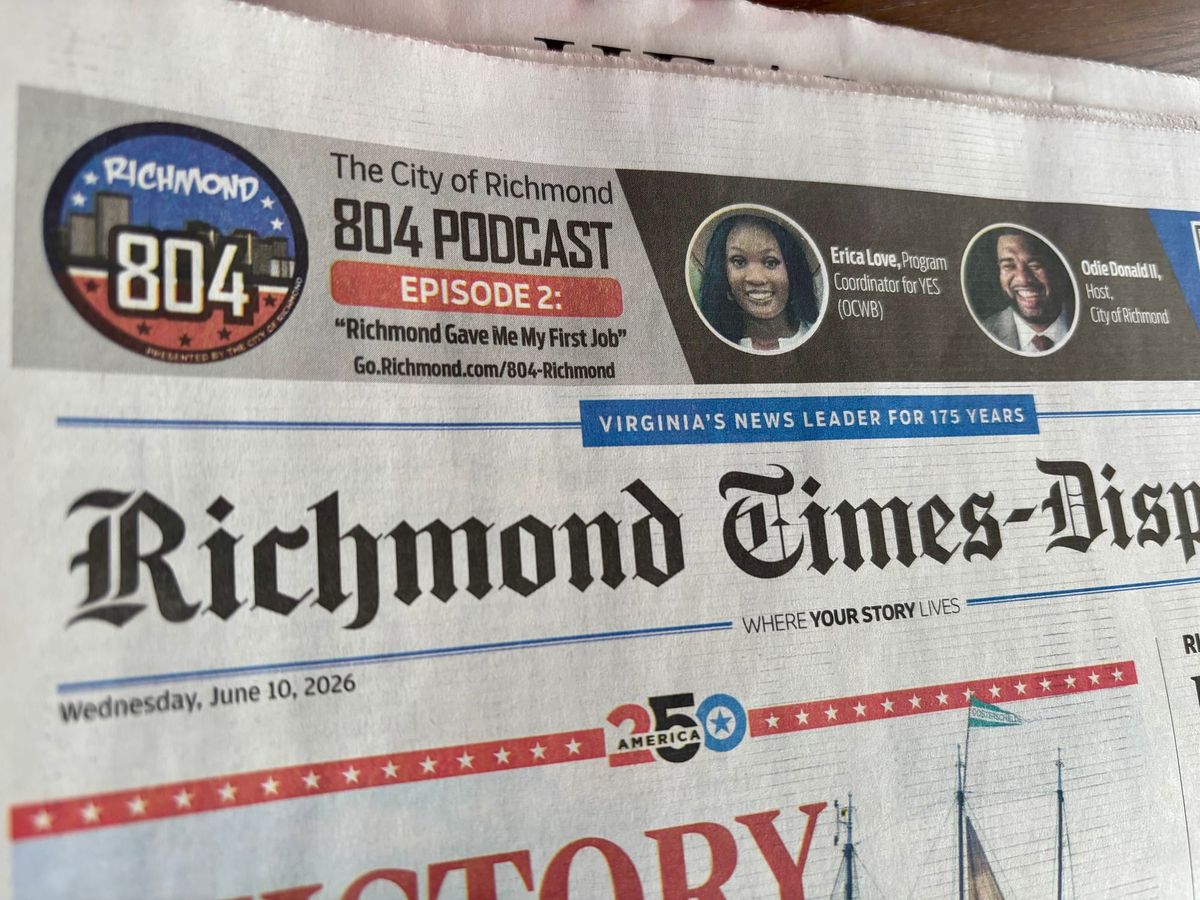
Now, as part of a paid content deal with the Richmond Times-Dispatch, the city has its own podcast hosted by Chief Administrative Officer Odie Donald II.
The podcast is part of a broader sponsored content package in which the city pays the RTD for the opportunity to reach the paper’s audience directly, without being filtered through news reporters.
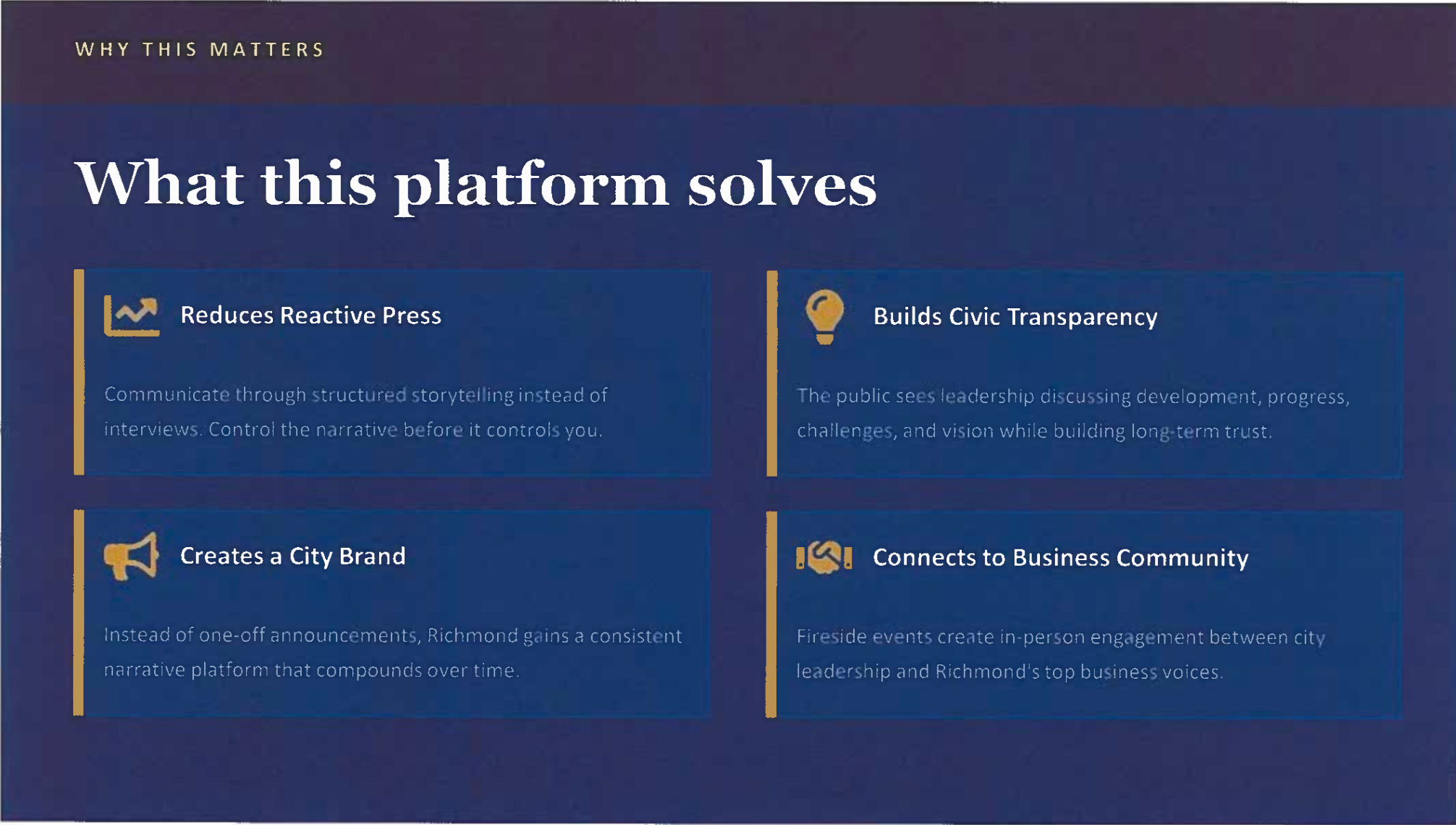
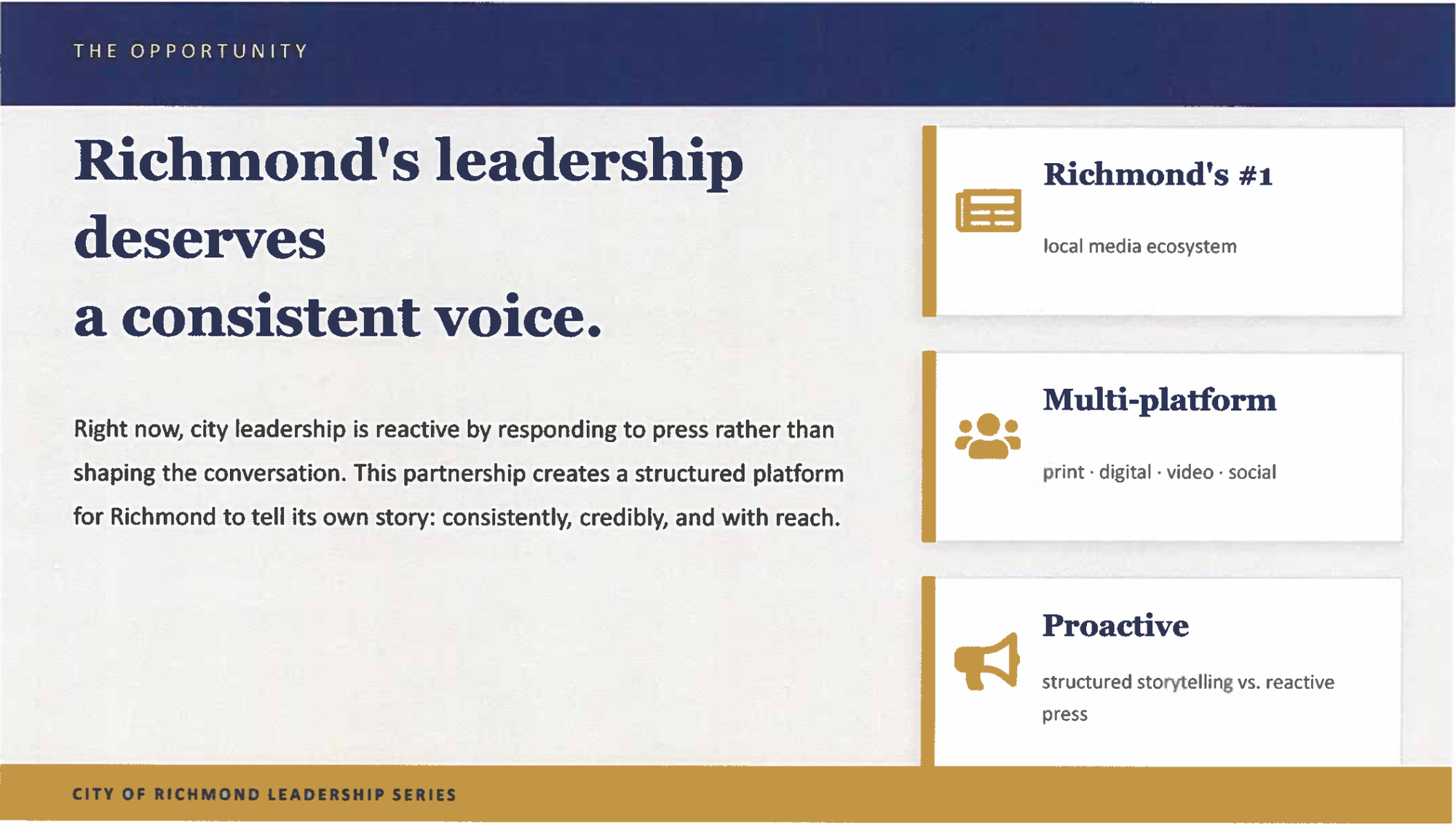
In its sales pitch on how a paid content deal could help the city, RTD representatives said it “reduces reactive press.”
“Communicate through structured storytelling instead of interviews,” the RTD pitch said. “Control the narrative before it controls you.”
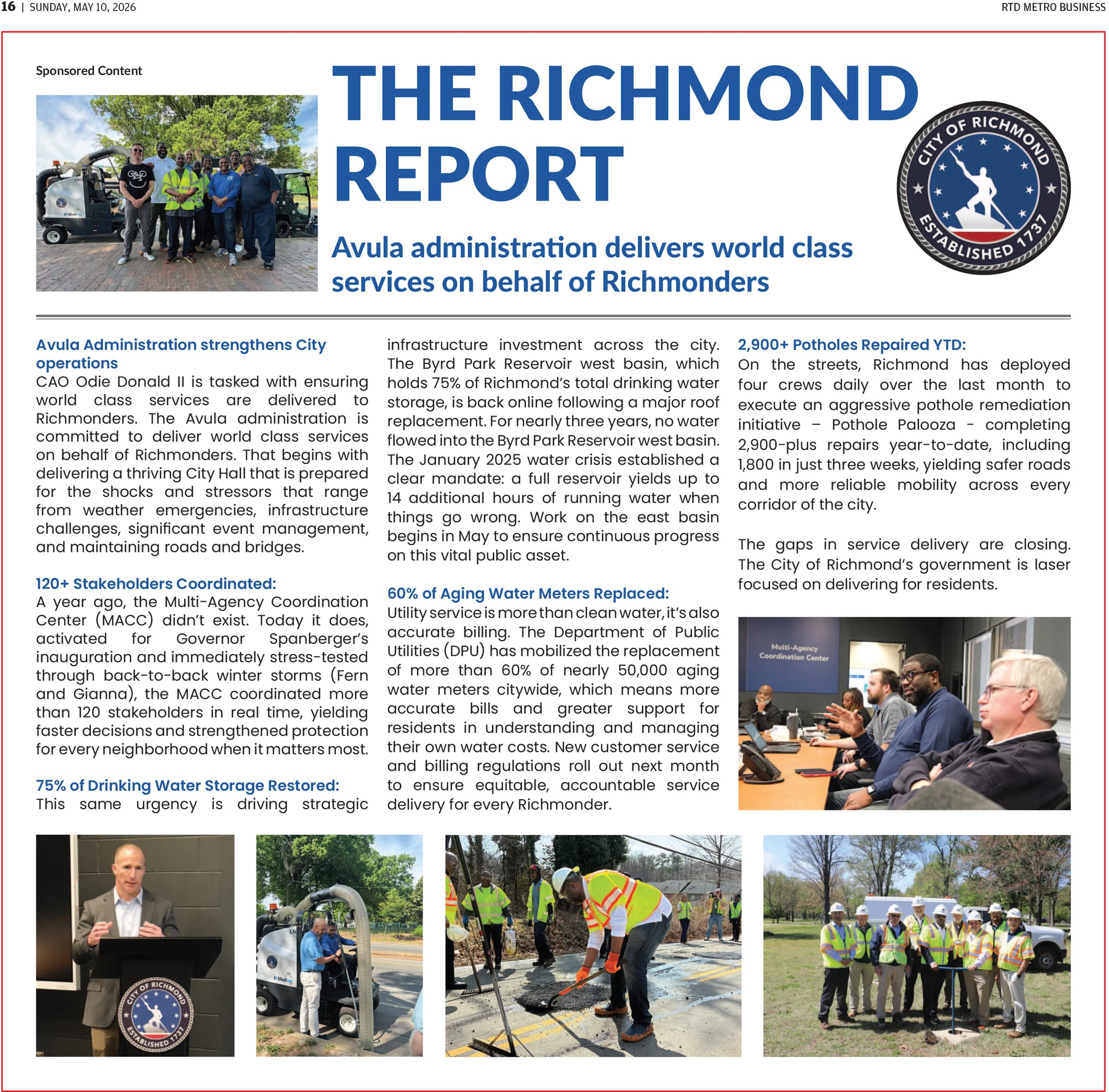
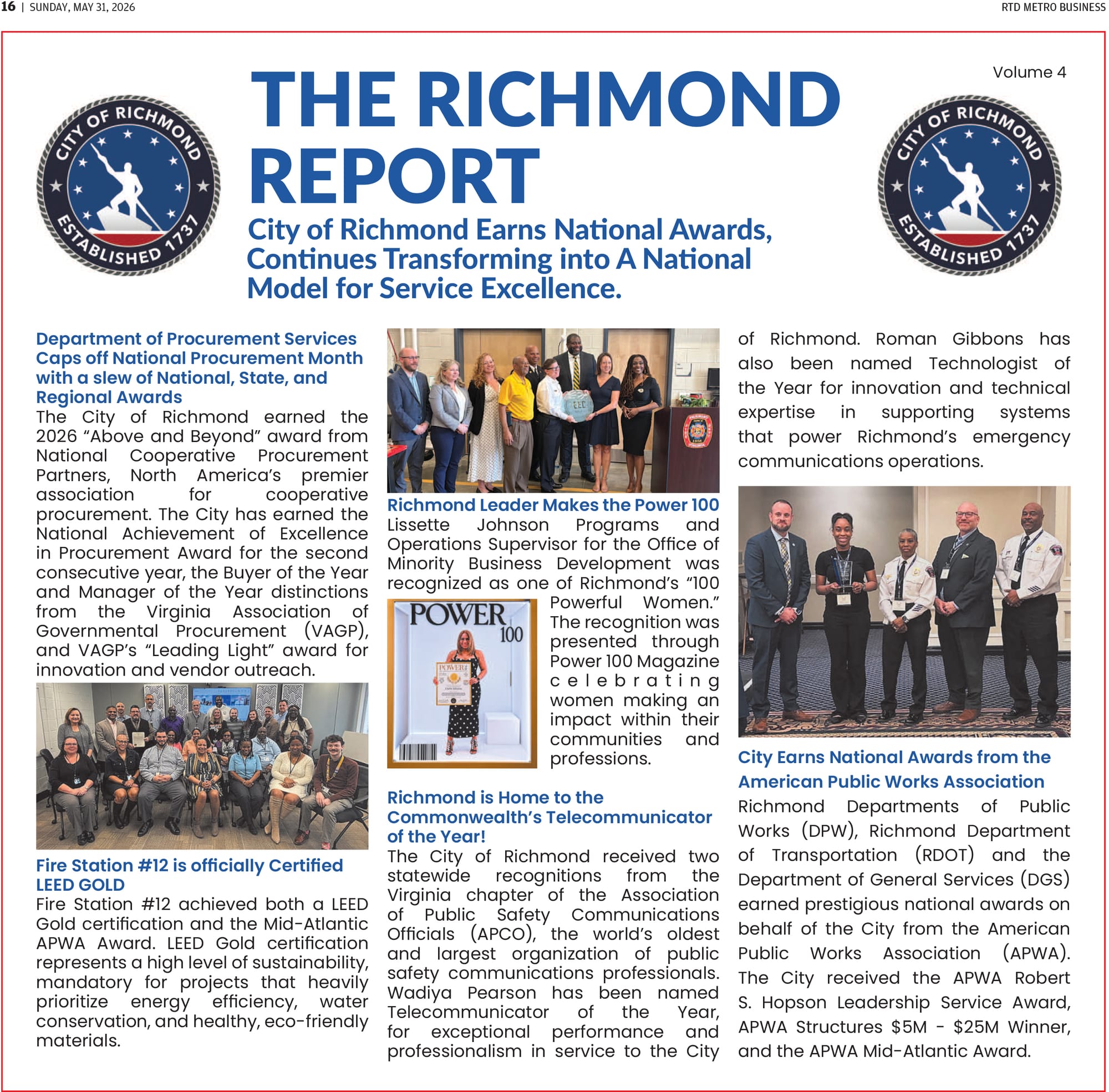
In addition to the “Richmond 804” podcast, the partnership also involves printed newsletter-style content in Sunday newspapers and a live “Executive Conversation” event. The print “Richmond Report” content has been running in the paper’s Metro Business section for several weeks.
The total cost to the city is $22,000 for a deal that envisions 12 newsletters, six podcast episodes and one event.
Donald’s office is overseeing the initiative and has described it as a limited trial run in response to the RTD’s proposal. The cost might not reach $22,000, the CAO’s office said, but won’t exceed that amount.
The sponsored content deal goes beyond routine advertising for government programs or events.
“This gives the CAO a consistent platform to communicate progress, vision and transparency directly with residents and the business community,” the newspaper’s business team wrote in a summary of its proposal.
The printed component — which looks more like an article than an ad but has a sponsored content disclaimer — included a May 10 headline that read “Avula administration delivers world class services on behalf of Richmonders.”
The Richmonder obtained documents outlining the deal by filing a Freedom of Information Act request with the city. The RTD’s pitch to Donald was marked “CONFIDENTIAL PROPOSAL.” It was released as a public document because it involves the use of public funds.
After The Richmonder filed the June 1 FOIA request for documents showing the deal’s cost, the city and the RTD seemed to formalize a lower price than originally planned.
An RTD representative emailed Donald’s office with the “final approved pricing” on June 5, saying the $22,000 quote reflected a lower rate negotiated by the CAO. An earlier quote said $27,000.
A city invoice with an original date of April 17 was revised on June 9, the records show.
Monica Manney, a newly hired spokesperson for the CAO’s office, said the effort is “aligned with Richmond’s seventh pillar, a city that tells its stories.” She was referring to the seven pillars of Avula’s mayoral action plan. The storytelling pillar focuses on telling the truth about Richmond’s history of racism and slavery, but officials also invoke it to mean more general efforts to communicate with the public.
“I’m excited to move forward with a partnership with the Richmond Times-Dispatch, the number one storytelling entity for the city of Richmond and the surrounding region, to ensure that we correctly tell the story of our operations and activities and that our residents know what we’re doing on their behalf,” Donald said in an introduction for the first podcast episode.
The launch podcast episode focused on public-private partnerships. The featured guests were leaders from Venture Richmond, the Metropolitan Business League and ChamberRVA.
Late last year, the RTD’s news side published an article noting that Donald was declining interview requests from the paper’s City Hall reporter, Samuel Parker.
The rationale given by city officials was that the newly hired CAO wanted to focus on the work of improving city government and preferred not be in the media spotlight. The mayor’s office gave a similar explanation to The Richmonder last summer when it turned down requests to interview Donald shortly after he was announced as Avula’s pick for CAO.
The RTD’s proposal to Donald said the paid content in the paper could be “A monthly storytelling series showing how the city is improving operations and shaping Richmond’s future — replacing the need for constant interviews or reactive press.”
Donald’s photo recently appeared in a front-page RTD banner ad promoting the second episode of the new podcast, a conversation with a city employee titled “Richmond Gave Me My First Job.”
Henrico and Chesterfield counties also have their own podcasts to communicate with residents. The counties create their podcasts in-house. For the upcoming fiscal year, Richmond’s Office of Strategic Communications has a $3.7 million budget, enough for about 25 full-time staff positions.
In a statement, RTD President and Publisher Kelly Till said the paper “regularly works with a wide range of advertisers and organizations on sponsored content and marketing initiatives.”
“As a matter of practice, our advertising and sponsored content operations are separate from our newsroom, which maintains full editorial independence,” Till said.
Sponsored content deals are increasingly common as media companies search for new ways to make money in a challenging industry. But the collaboration between Richmond’s daily paper and City Hall marks a shift in a relationship that’s historically been somewhat fraught.
Long before Avula was elected mayor, city officials have griped about what they see as relentlessly negative media coverage that often puts Richmond under more intense scrutiny than neighboring counties. At a city leadership retreat a few months after he took office, Avula said the local media environment is “brutal on our staff.”
Journalists covering City Hall often have a different perspective, viewing much of their work as shedding light on dysfunction that impacts the day-to-day lives of Richmond residents, like last year’s infrastructure failure that knocked out the city’s water system for almost a week.
In a recent city-sponsored survey, just 23% of respondents said they get excellent or good government service in Richmond for what they pay in taxes, down from 32% on the same question in 2021.
The city-driven content for the RTD takes a more unabashedly positive outlook than what’s typically found in the paper’s news pages.
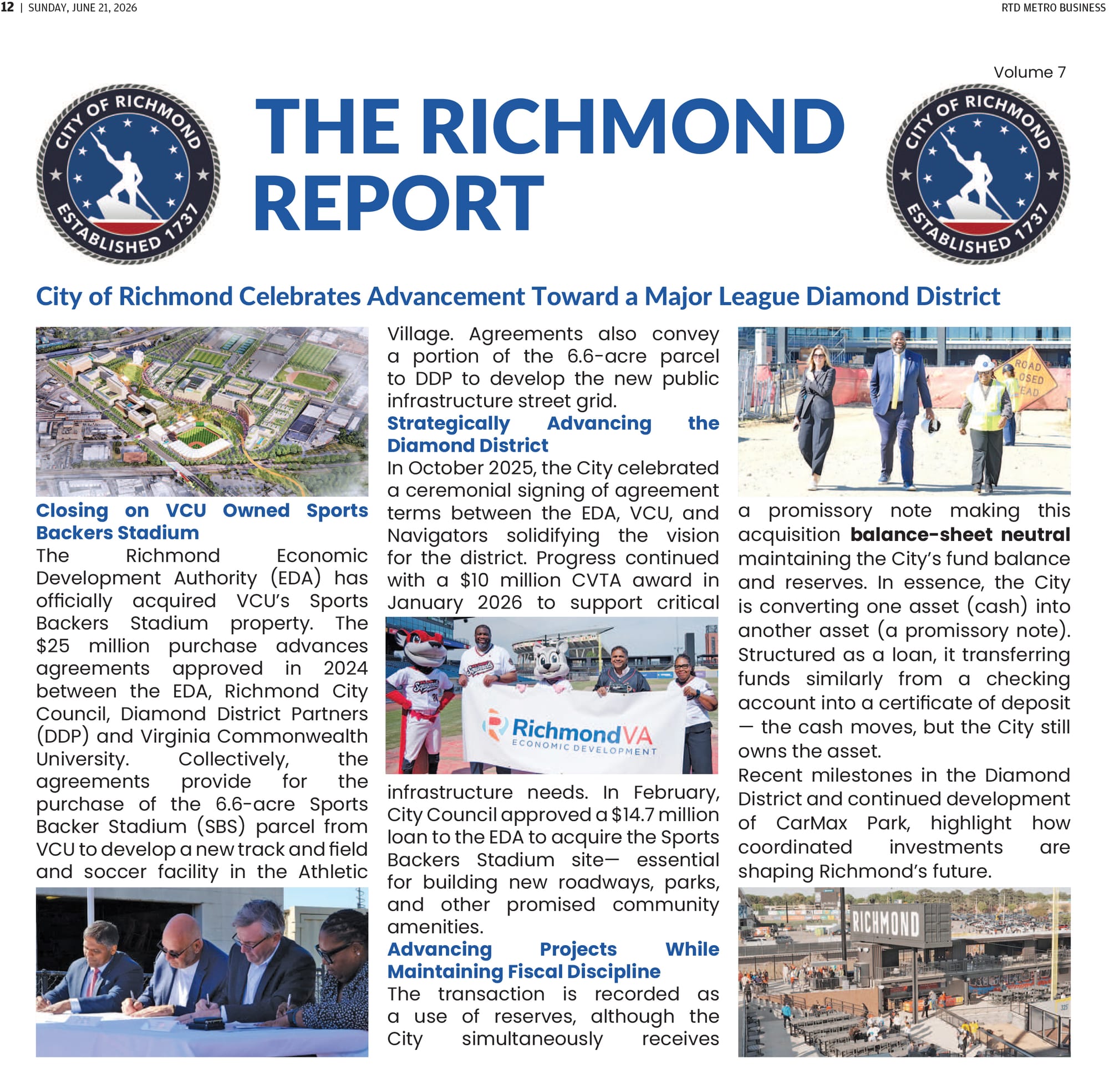
The Richmond Report has touted national awards and recognitions, saying the city “continues transforming into a national model for service excellence.”
It has also highlighted efforts to fix old water meters, plant trees, repair potholes, buy more fire trucks and reduce violent crime.
An edition focused on highlights of the latest city budget — which kept tax rates level but increased utility bills for city residents — called the spending plan a “roadmap to a thriving Richmond.”
Contact Reporter Graham Moomaw at gmoomaw@richmonder.org