State could give Richmond $32.8M for water upgrades, higher than $20M minimum
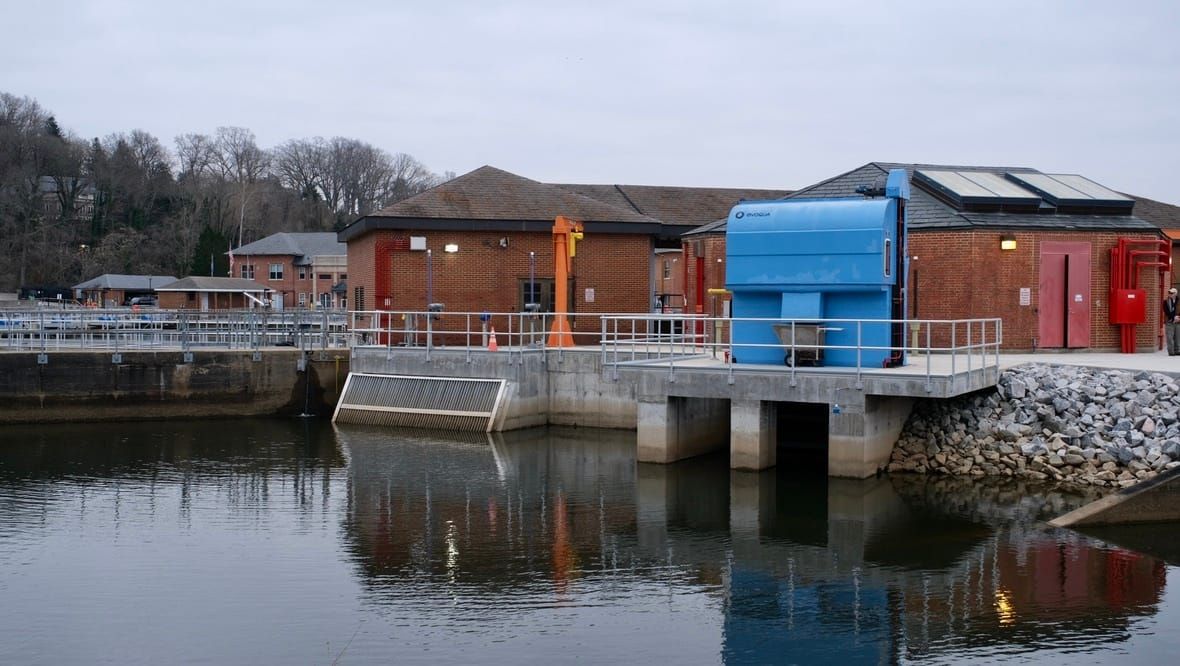
The city of Richmond’s water system could get a bigger boost of state funding than originally planned.
Virginia Department of Health officials deciding how to allocate $50 million for local water projects have recommended about $32.8 million for the Richmond area’s system, more than the $20 million the state budget requires Richmond to get.
The potentially higher funding number was revealed Friday morning at the first meeting of the Richmond Regional Water Workgroup, the state and local panel set up to decide how the funding should be spent to best prevent a repeat of the 2025 water crisis.
In addition to the city, the work group includes representatives from Henrico, Chesterfield and Hanover counties, as well as state officials from VDH’s Office of Drinking Water. Required as a condition of Richmond getting the funds, the new body is meant to give the state and nearby counties that purchase water from the city input into what happens to the money.
There were no final decisions made at Friday’s meeting, but Richmond appears to be on track to get the larger funding amount and win the work group’s approval for the projects the city most wants to fund.
City officials have proposed dedicating the state money to a planned $43.8 million overhaul of the water plant’s filters, as well as moving key electrical equipment to higher ground where it’s less likely to be damaged by flooding.
Water damage was a major problem in January 2025, when a power outage caused equipment malfunctions that led water to pour into a basement-level room. Flooding is an inherent risk in the antiquated design of the facility near the James River, where water flows in via gravity before it’s treated and pumped back out to Richmond homes.
Richmond Director of Public Utilities Scott Morris told the work group the proposal was the best way to maximize the state funding and take advantage of a relatively short window to complete the project.
“This is the only one I can start today,” Morris said.
In addition to replacing the plant’s filters and filter-related equipment, the proposed project also envisions replacing valves and actuators that control the flow of water through the plant. In 2025, valve malfunctions caused by the loss of power led to the uncontrolled flooding that knocked the plant offline for nearly a week.
Because the state can only fund 75% of what Richmond proposed, VDH officials said, the not-yet-final plan envisions about $32.8 million in state money matched by roughly $10.9 million in local dollars.
At Friday’s meeting, utility directors from neighboring counties spoke in support of Morris’s proposal, saying they had already been meeting him to discuss the project and trusted his recommendations.
“The parts and the pieces that broke down in the January 2025 crisis are being addressed,” said Chesterfield DPU Director Matt Rembold.
Henrico DPU Director Bentley Chan agreed.
“There’s a lot of things that hit on concerns that we had,” Chan said. “This is the project that is most helpful in addressing those concerns and is right at the starting line and ready to go.”
Richmond Chief Administrative Officer Odie Donald II said he was pleased by the collaboration between regional utility directors.
“I think a lot of the legwork has been done by the directors,” Donald said. “To a certain extent you’re kind of guiding us.”
The work group meeting, held at a state office building in Mechanicsville, was led by a team from the University of Virginia’s Institute for Engagement and Negotiation.
Tanya Denckla Cobb, the institute’s director, began the session by saying the regional leaders were fortunate to have a clearly defined pot of money as a starting point.
“So often what we are involved in is helping people haggle and negotiate over limited resources and things that we’re missing,” said Cobb, adding that the work group has “money on the table.”
The meeting wasn’t entirely free of cross-government tension.
Henrico County Manager John Vithoulkas raised several objections about the process, saying he felt he was being asked to “rubber stamp” a completed plan at the work group’s first meeting without an opportunity to dig into the details.
“I would’ve appreciated somebody telling me, ‘We’re done. Just vote yes,’” Vithoulkas said. “I just don’t like the way this has been laid out.”
Near the end of the four-hour meeting, Vithoulkas asked to visit the facility to better understand the work the city was proposing.
“Can we just see the project? That’s all I’m asking,” Vithoulkas asked. “Does it harm anything to wait a couple weeks?”
The panel agreed that its next meeting would be a tour of Richmond’s water plant. That site visit will be treated as a closed meeting, officials said, to prevent public access to the water plant and protect details about critical infrastructure.
‘Money that just fell out of the sky’
Though the work group seemed to be broadly in agreement about a path forward, Vithoulkas repeatedly said he took issue with how the process was playing out.
When one of the mediators asked that work group members not air any concerns publicly through the press or social media without first consulting the group, Vithoulkas pushed back, saying the regional partners had enough of a rapport they could speak freely.
“Don’t worry about what we do, what we say, how we say it,” Vithoulkas told the mediator. “This isn't some bureaucratic cog exercise.”
City officials said the proposed filter project was far enough along Richmond had already put some initial work out for bid from contractors, and Vithuolkas asked several questions aimed at whether the state money was or wasn’t replacing local dollars the city already planned to spend.
He said he wanted to ensure projects were being added with the addition of state money, and that the group wasn’t looking at the state funding as “$20 million that fell out of the sky.”
“I don’t think of it as free money that just fell out of the sky,” said Morris.
“I mean, nobody else got $20 million,” Vithoulkas said.
The city officials present stressed that the state funding helps the entire region, including the county customers that buy water from Richmond. If the extra money wasn’t there, they said, it would have to be made up some other way, possibly by water rate increases that would impact both Richmond residents and the counties.
“These are regional funds,” Morris said.
The long-term forecasting models the city uses to set utility bill rates and plan infrastructure spending, Morris said, already assumed some money would be coming from the state.
The state budget language allocating the money for Richmond’s water system specifies that it “may not be used to supplant other local, state or federal funds dedicated to capital improvements and repairs” at Richmond’s water plant. During the meeting, the city acknowledged the planned project would have to be completed anyway to bring the facility into full regulatory compliance.
In response to the probing from Vithoulkas, the city representatives clarified that the Richmond City Council had already authorized a local budget appropriation for the project the state funding could cover. But, they said, there has not yet been an “encumbrance,” or final commitment by the city to spend a particular amount of money.
Richmond being so close to moving forward with the filter project, the city said, would help in a tight timeline for the work group to make a recommendation on how to spend the state funds.
The state budget, which was delayed for months due to a disagreement between Democratic leaders on data center taxes, requires the city to sign a deal with drinking water regulators on how the money will be used. The deadline for that deal is today, and it won’t be met.
“I’m not anticipating that we’re going to be able to make that deadline because we don’t have a recommendation from the work group yet,” said Dwayne Roadcap, director of VDH’s drinking water office.
Missing that deadline was not a major problem, Roadcap said, indicating the work group’s recommendation could wait until after the planned tour at the water plant.
The group spent several minutes haggling over the logistical details of how a legally public body could meet at the water plant for a meeting that has to include a public vote to go into closed session and another post-tour vote that the meeting focused only on sensitive infrastructure.
Work group members proposed going into a closed session on Friday that could technically last weeks until the tour began, or potentially casting votes without being physically assembled in person. Both ideas seemed to be discarded as unworkable.
During the discussion of how to arrange a closed tour of the water plant, Donald urged the group to ensure the plan was fully compliant with open meeting laws, saying Richmond gets “five times the scrutiny of anybody else.”
When the panel was getting a brief rundown on how the Virginia Freedom of Information Act requires transparency in the work ahead, Donald also advised work group members to be mindful of what they put in writing, saying “FOIA is weaponized against us.”
The work group plans to hold a total of three meetings before issuing a report due by Oct. 30.
Contact Reporter Graham Moomaw at gmoomaw@richmonder.org