History, in pink: Barbie exhibit arrives at VMHC
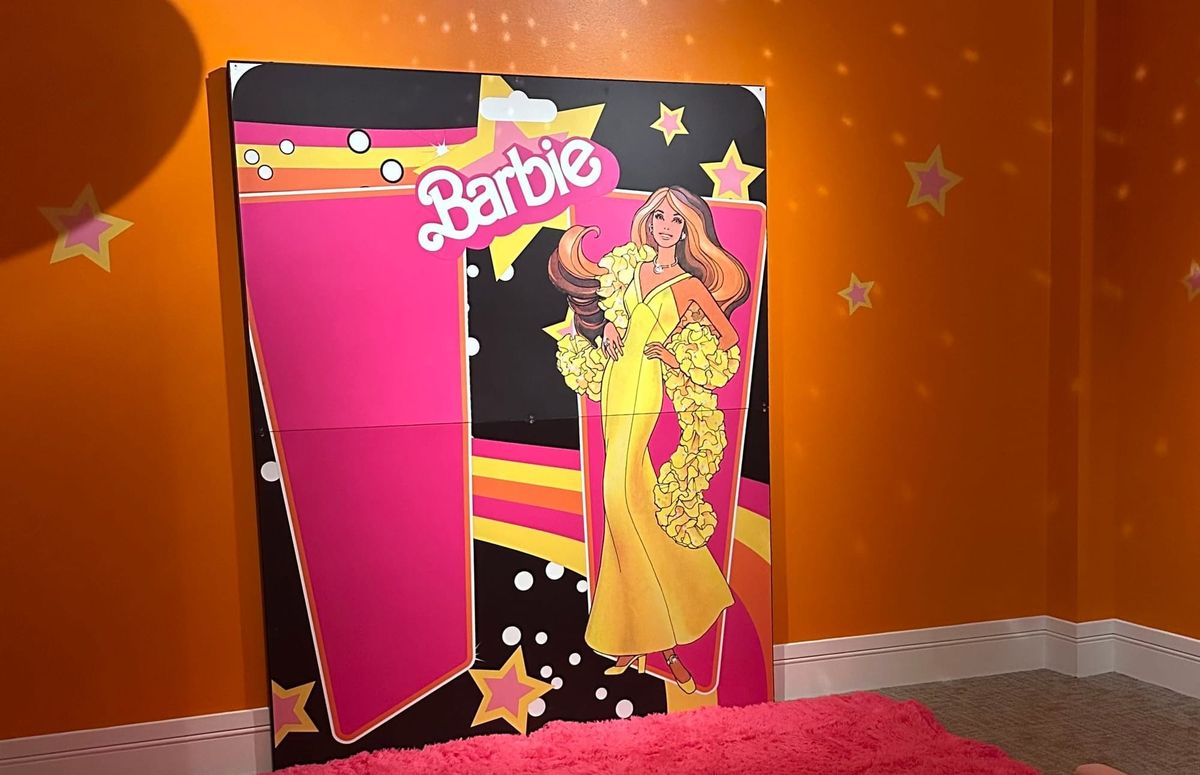
It's history, of a different kind. The Virginia Museum of History and Culture debuts "Barbie: A Cultural Icon" on Saturday, giving visitors a chance to sit inside a room from Barbie's dream house and take a photo inside a Barbie box.
Visitors will step into a world of everything pink and sparkly as they take a tour through the life of Barbie set to a soundtrack the exhibit's curator, Karan Feder, said she selected to be “peppy and poppy” with tunes from artists like Destiny’s Child and Taylor Swift.
True to the museum's mission, the exhibit is also educational.
It is largely presented in chronological order, and Barbie’s story begins with the doll's introduction at the 1959 New York Toy Fair. Barbie No. 1 is on display front and center in her striped swimsuit. There are more than 250 vintage Barbies throughout.
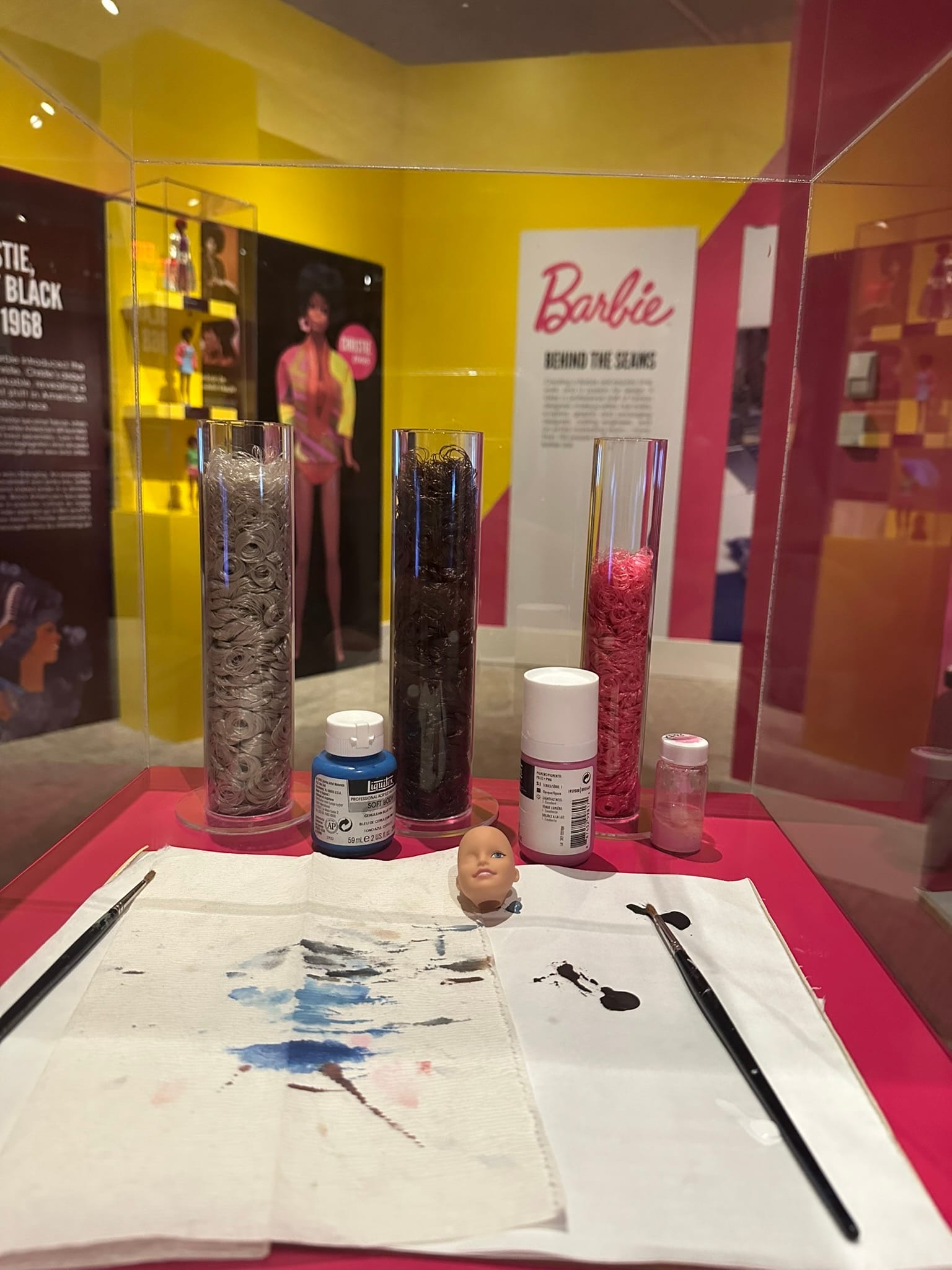
Close to the entrance is also where visitors will find information and examples of how Barbies are manufactured.
Nestled somewhere past the '70s and the power suits of the '80s is the “Virginia is for Barbie” section.
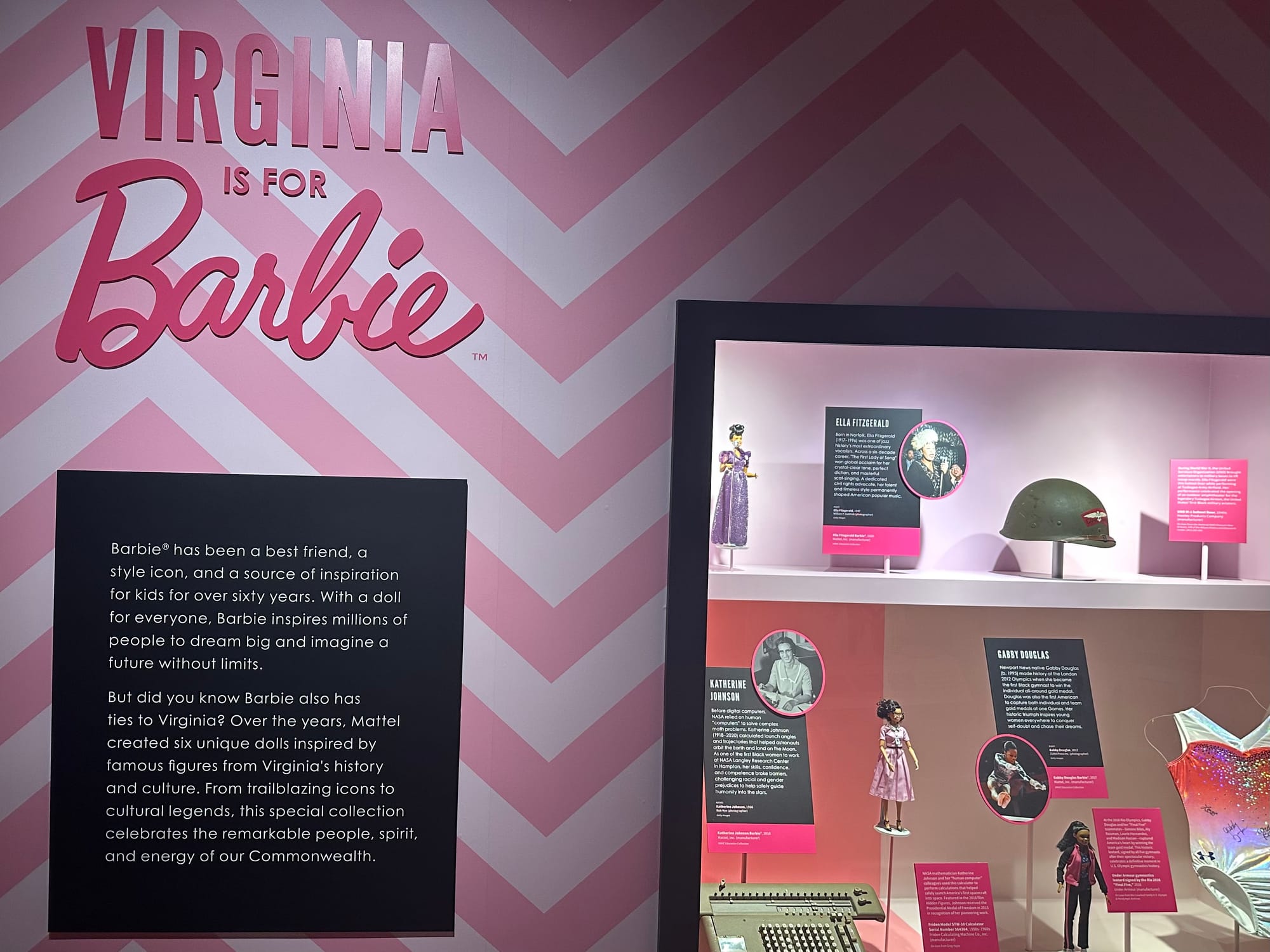
There are six Virginia-specific Barbies, including Virginia Tech and UVA cheerleaders and George Washington. Yes, there is a George Washington Barbie (he is wearing pink).
The 90s is where you’ll find the coveted photo-op – life-sized Barbie and Ken boxes.
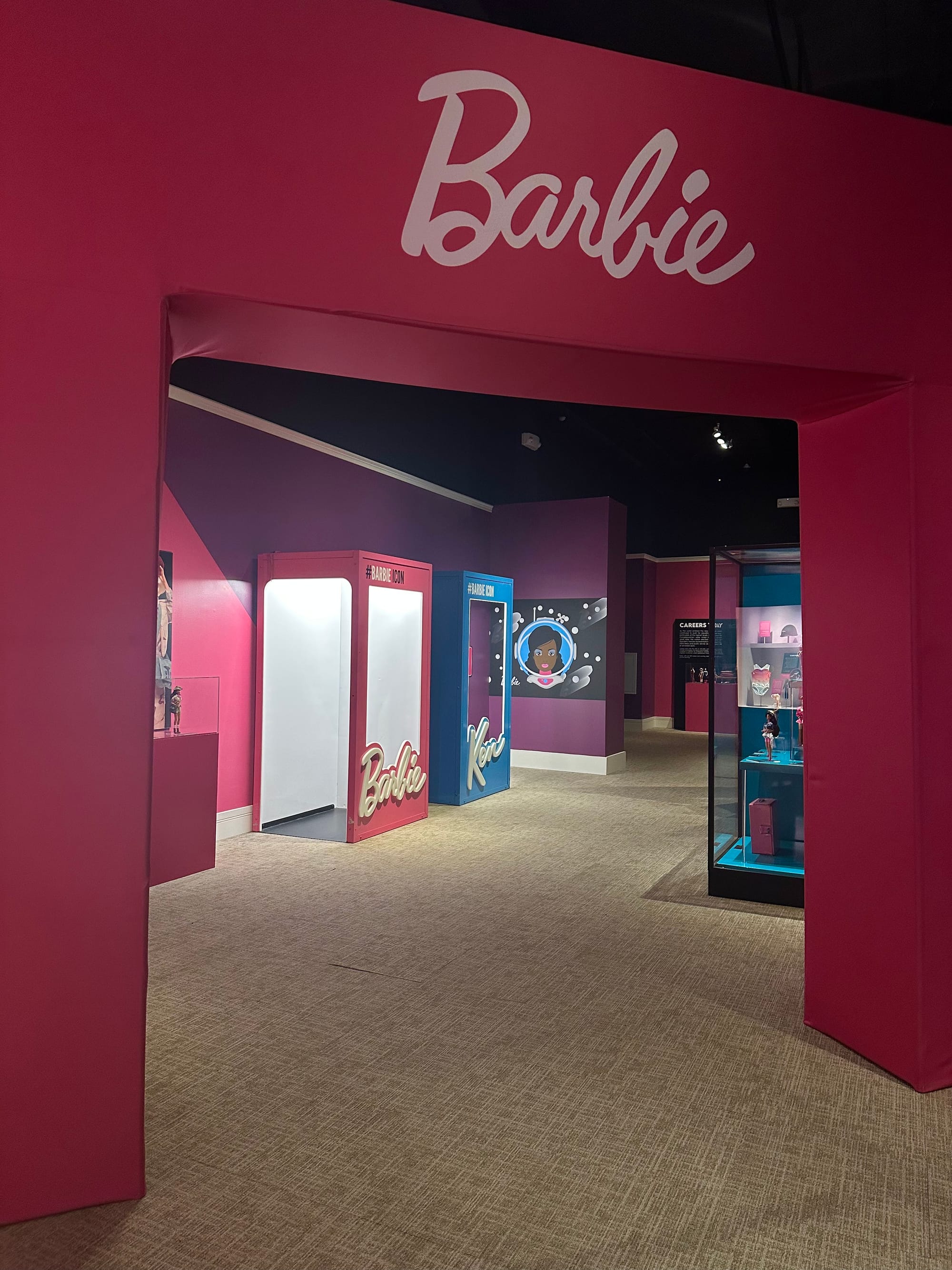
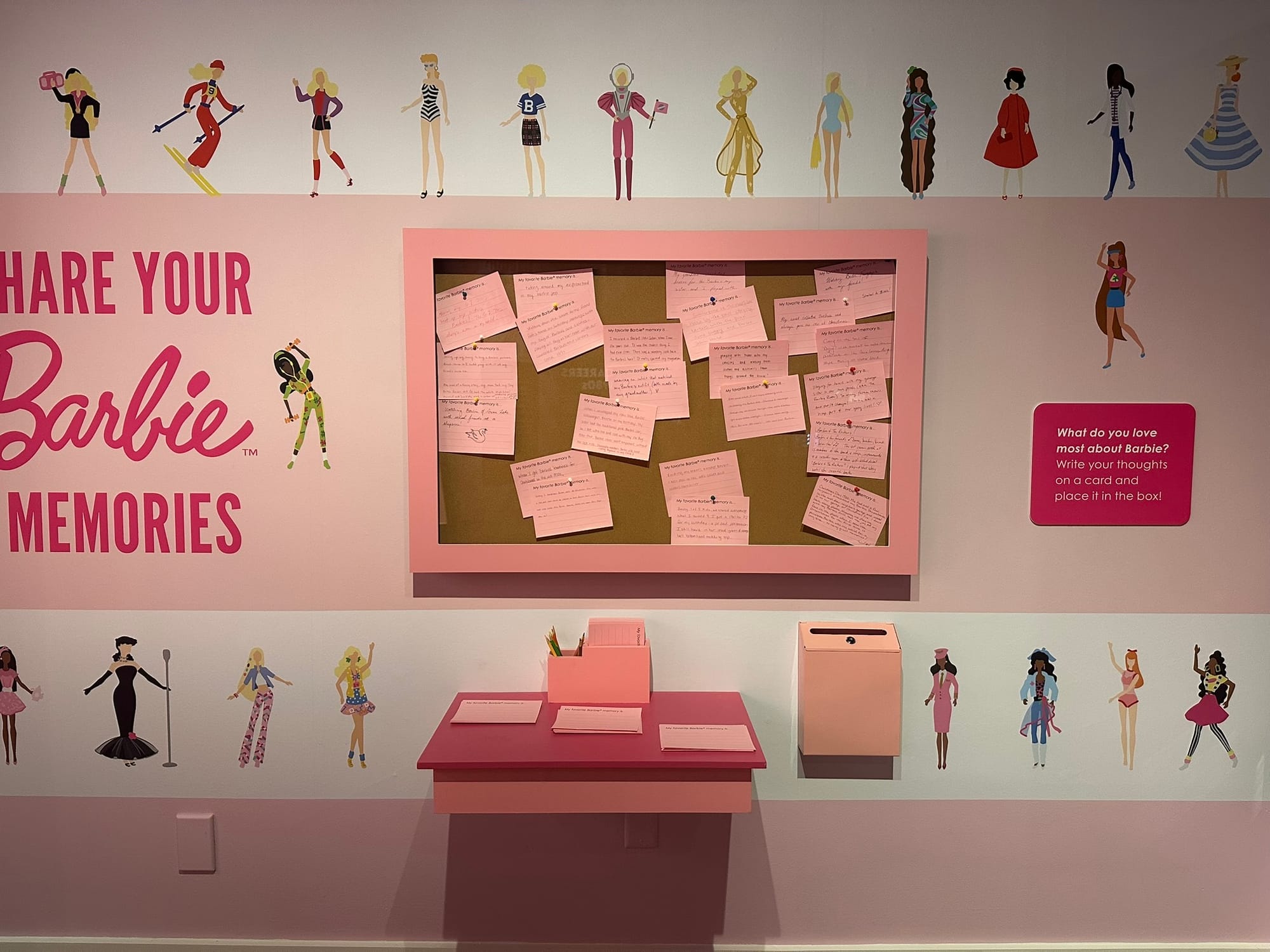
“Barbie's clearly an icon,” Feder said. “Most people have some sort of Barbie memory or Barbie experience, or even if they don't, they know who Barbie is, right? So we really wanted to bring that to Virginia.”
Feder wants multigenerational visitors and families to share in a sense of nostalgia, memory and fun, but also learn something along the way.
“It's a super fun exhibit, but you can learn something if you want to. It's not all pink and fluffy. There is actually a pretty serious historical narrative as well,” she said.
The story of Barbie’s evolution reflects the changing role of women in American culture and society, like the introduction of the first Black Barbie and the first Black and Hispanic Barbie actually named Barbie (not one of her friends) as well as her iconic career changes, according to Feder.
“Especially beginning in the 2000s, there was a bigger emphasis on diversity, not just body type, but skin tone, hair texture, all sorts of things, that really allows kids and young women to see themselves in Barbie,” Feder said.
The exhibit will run until mid-January.