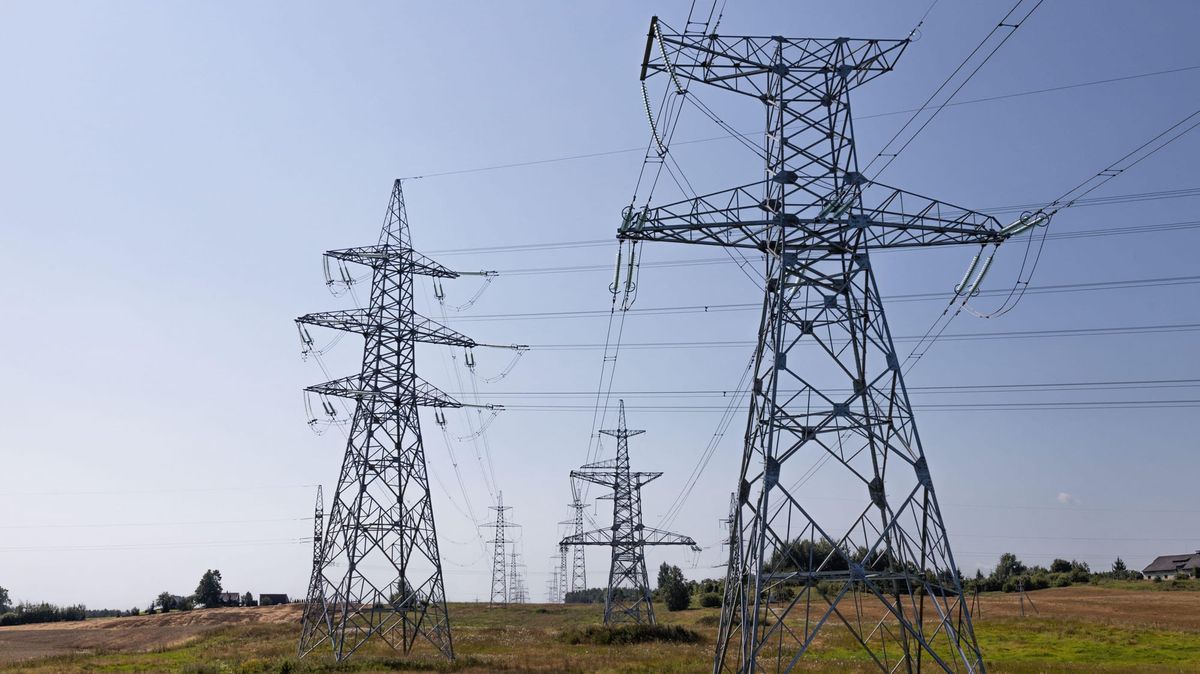
Power grid auction falls short of meeting 2028-29 energy needs, organizing group cites data centers
Chesterfield County became a data center destination in Central Virginia with the arrival of three Google campuses, but a looming electricity shortfall is raising questions about whether the region’s power grid can keep up.
PJM Interconnection coordinates electricity distribution for 67 million people throughout 13 states (including Virginia) and Washington, D.C. — Dominion Energy, which serves Richmond, is one of the participating organizations.
Every year, PJM holds an auction in which energy providers, such as Dominion Energy, purchase commitments for the electricity capacity they’ll need to serve their customers at peak times three years from now.
Shannon Heckt is an energy and environment reporter for The Virginia Mercury and reports on PJM. She said when costs rise at auction, they are ultimately passed on to ratepayers through electricity bills.
“Dominion then has to buy that power at the capacity auction, and then if there's not enough power being generated, it leads to higher prices,” Heckt said. “It means Dominion has to pay more, which means that we all have to pay more.”
On July 14, this year’s PJM auction for the 2028/2029 distribution year (June 2028 to May 2029) fell short of PJM’s standard by nearly 6.8 gigawatts — enough to power at least 2.3 million homes and businesses.
So, why the deficit? PJM says the short answer is data centers.
“The results of the latest capacity auction show continuing trends of rapid large load growth driven by data centers, while generation is coming online at a much slower pace,” a PJM spokesperson wrote to The Richmonder.
Between 2024 and 2030, PJM predicts electricity demand will increase 32 gigawatts — 30 of which are from data centers “primarily in Virginia but also throughout the PJM footprint.”
PJM’s independent watchdog, Monitoring Analytics, said 38.2% of the market change was due to data centers, and recommended removing them from the auction entirely and making them buy power separately.
Other major power sucks — or as the industry calls them, “large loads” — include semiconductor plants and electricity-powered factories. Heckt said many of these are waiting for Dominion to offer them energy, so the company will likely have to build more power to meet demand.
“If they don’t start building more, whether it's gas plants or wind or solar, then there’s going to be more of a reliability crisis,” Heckt said.
Dominion is well aware of the issue. While it agrees data centers are a major component of increased demand, other major contributors are “the retirement of fossil-fuel, dispatchable generation resources and constraints on the transmission system,” a Dominion spokesperson wrote to The Richmonder.
Dominion says base rates are locked until its next biennial review in 2027, and PJM capacity costs will be a component. The auction’s impacts on customers’ bills won’t be known until this review. However, Dominion is confident data-center-driven costs won’t impact residential customers.
“We created a new rate class (GS-5) for high-energy customers, like data centers, as part of our 2025 biennial review and legislation from this year directs the SCC to assure during future biennial reviews that GS-5 customers are not being subsidized by other customers or otherwise causing adverse rate impacts,” Dominion’s emailed statement reads.
Demand for PJM’s resources reached an estimated all-time peak on July 2 at 168,158 megawatts — summer is typically when the most electricity is consumed throughout the year.
If nothing changes and demand increases faster than supply, this problem will likely compound. To curb the trend, PJM said it is using a price cap and floor for auctions until May 2030 to make sure consumers and suppliers don’t bear the brunt of increased costs.
“Reliability is PJM’s North Star. PJM is working on many fronts to rapidly and reliably integrate data centers and other so-called ‘large loads’ without impacting reliability to other customers,” PJM’s emailed statement reads. “Part of this includes constantly improving our forecasting for data center demand, because that information is used to procure generation capacity and plan for high voltage transmission.”
Heckt noted PJM also can kick large load data users — particularly data centers — off the electricity grid and onto backup generators. This option has usually entered the conversation during these super hot times of year. However, PJM has yet to do that.
This particularly affects Virginians. The commonwealth is home to the world’s highest concentration of data centers. Increased demand makes supply more expensive. Besides this, WMRA reported that expansions, repairs and replacements made to the electricity grid could also drive up costs for consumers.
“You just can’t take (data centers) out of the equation when we talk about why we need more power, because largely, in Virginia, it’s because of them,” Heckt said. “Obviously, there are more residents and there’s more electrification of things. Certainly that would increase things, but it’s going up by so much because of the data centers.”
These concerns are reflected in public opinion. A May Gallup poll found that cost-related worries are a major driver behind opposition to data centers, second only to these facilities’ environmental impact.
But development isn’t likely to slow down any time soon. In 2025, Google announced a $9 billion investment in Virginia to expand its cloud and artificial intelligence infrastructure, including three data center campuses planned for Chesterfield. Currently, the county’s Board of Supervisors isn’t interested in inviting more data centers.
Gov. Abigail Spanberger has defended the commonwealth’s commitment to making itself attractive to data center development. In an interview with Politico, Spanberger said data centers have long been a part of Virginia’s economy and support public goods such as schools, libraries and fire stations.
Spanberger also noted that data centers will be constructed one way or another. She argued that if Virginia turned away the industry, it would lose the chance to help set the standard for how data centers are built and operated, including environmental safeguards and technological investments.
“If we were to end that in one fell swoop, that has a major impact on jobs in Virginia, union jobs, electrical jobs, certainly the building trades,” Spanberger told Politico. “It has a major impact on many of our communities.”
Currently, the average wait time to become connected to Dominion’s grid is as many as seven years, Heckt said. What that means for data centers — like the ones setting up shop in Chesterfield — is that they’re securing their permits and starting construction while waiting in the wings.
“What you’re seeing in Chesterfield with these other data centers is that they’re going through the process,” Heckt said. “Obviously they won’t be able to be connected until much later, unless they decide to do behind-the-meter power, where they build their own power — usually gas turbines on site to power themselves — which supposedly shortens that time. But it still takes years to get that kind of infrastructure up.”
As for Dominion, the company says it’s planning for increased demand. The spokesperson said Dominion is looking to keep “building the infrastructure that is needed and at the pace that’s required” to continue meeting customers’ needs.
The Richmonder contacted Google for comment, but didn’t receive a response before publication.
Contact Eleanor Shaw at eshaw@richmonder.org. She is a Report for America corps member. Dominion Energy is a sponsor of The Richmonder but was not allowed to influence or review this story.