Google’s Chesterfield data centers arrive amid shifting opinions on the facilities
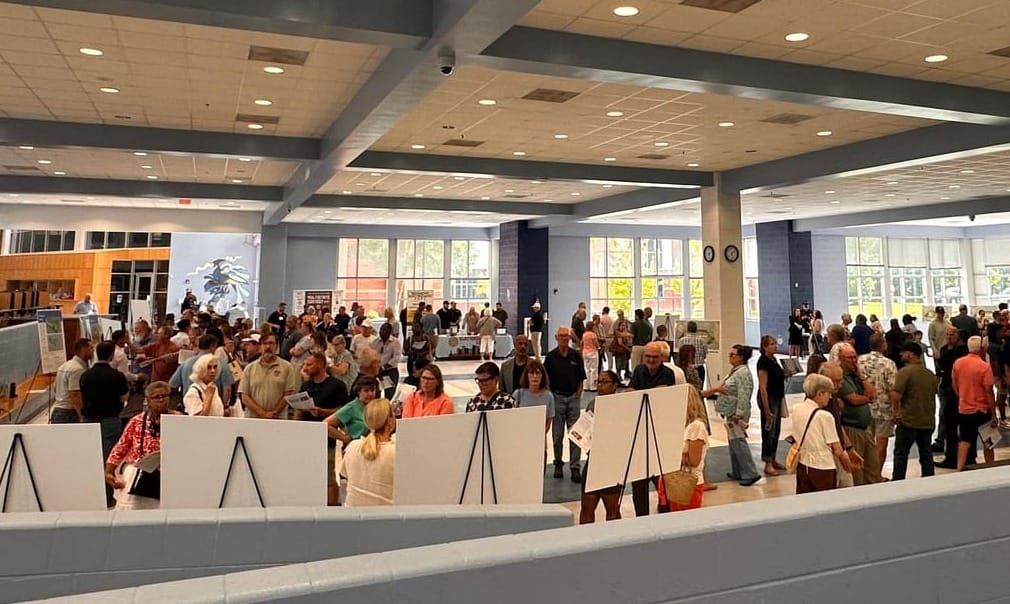
Chesterfield County residents got to meet one of their newest neighbors at Cosby High School on Thursday, as Google invited residents to ask several company representatives about three data center campuses planned throughout the county.
Guests walked around the Cosby High School gym, wandering between stations addressing commonly asked questions — including water sourcing, electricity, community impact, building design and noise pollution.
The conversation around data centers has changed dramatically since Google began planning the project. Last May, a rezoning request for the land was passed with minimal opposition, leading to an August announcement attended by many community leaders.
 Juliana Vandermark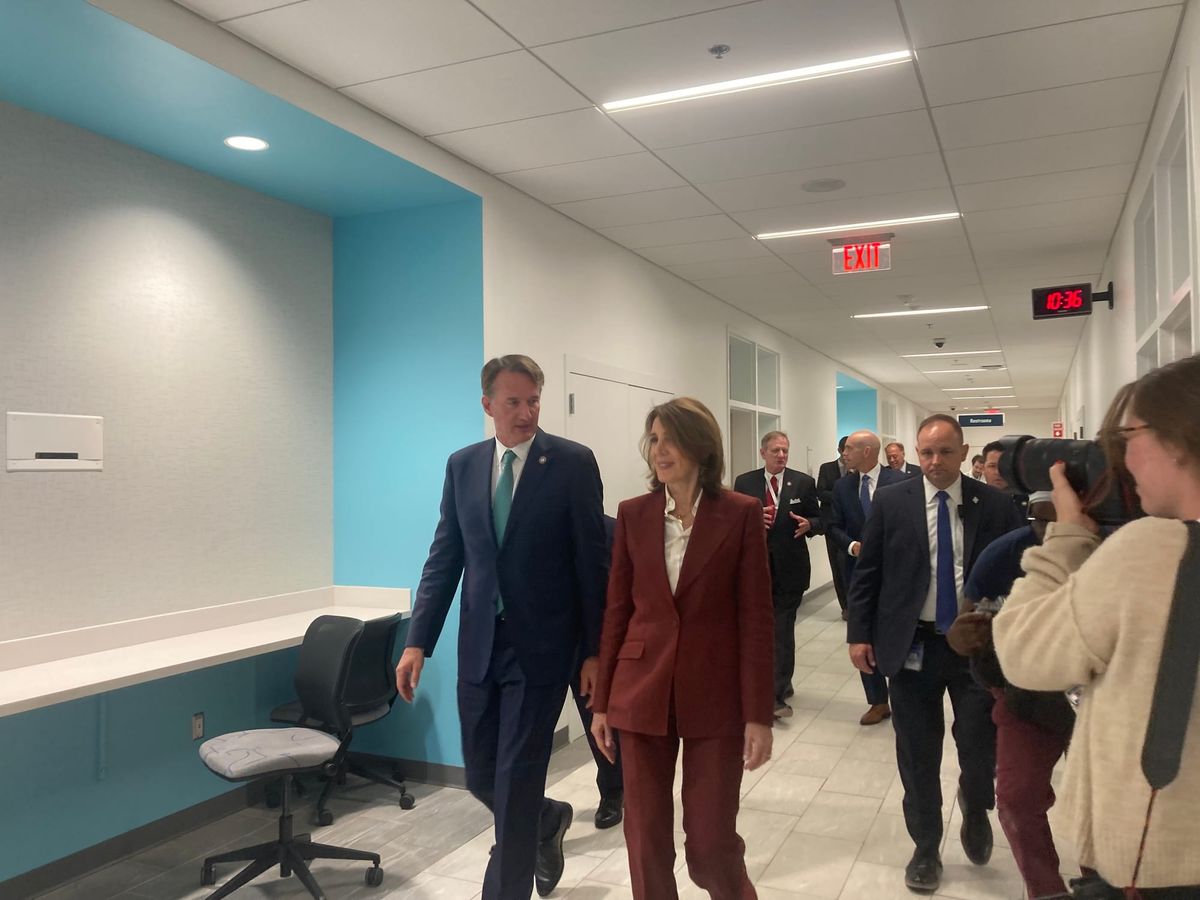
But data centers have become a divisive subject amid soaring energy bills and drought conditions, and Virginia’s state budget process came to a halt in large part over tax breaks for the facilities. A VCU poll released Wednesday said 81% of voters support making data centers pay additional fees to offset increased electricity demand.
Two elected officials were in attendance Thursday: Matoaca District Supervisor Kevin Carroll (R) and Clover Hill District Supervisor Jessica Schneider (D).
Both said they’ve noticed Chesterfield’s concern with data center development has risen alongside increased national attention — Google Trends indicate that searches for “data center” have increased 400% in the past year.
“Data centers weren’t really on people’s brains 18 months ago,” Schneider said, referring to previous public meetings during which data center construction had been discussed. “I think that it wasn’t really top of mind.”
In Carroll’s eyes, data centers will be built no matter what. It’s just a matter of where. The abundance of data centers in other parts of the state (particularly Northern Virginia) is already driving up energy demand, Carroll said. So, Chesterfield might as well benefit from the property tax money that data centers pay, which he said can result in lower property taxes for residents.
“If I save you money on your home, it offsets what you lose on your electricity,” Carroll said.
Schneider said she’s heard rave reviews of Google’s data center dealings from her Northern Virginia counterparts.
“They’ve been the best to deal with — they’re the most invested in paying their own way and investing in their own infrastructure,” Schneider said. “I think it’s the best that we can hope.”
Neither of the two board members is interested in attracting more data centers to the county. In fact, both were pretty clear that Google’s three campuses will be the only ones in Chesterfield under the current board’s management.
“The current board does not have an appetite for any more data centers,” Schneider said.
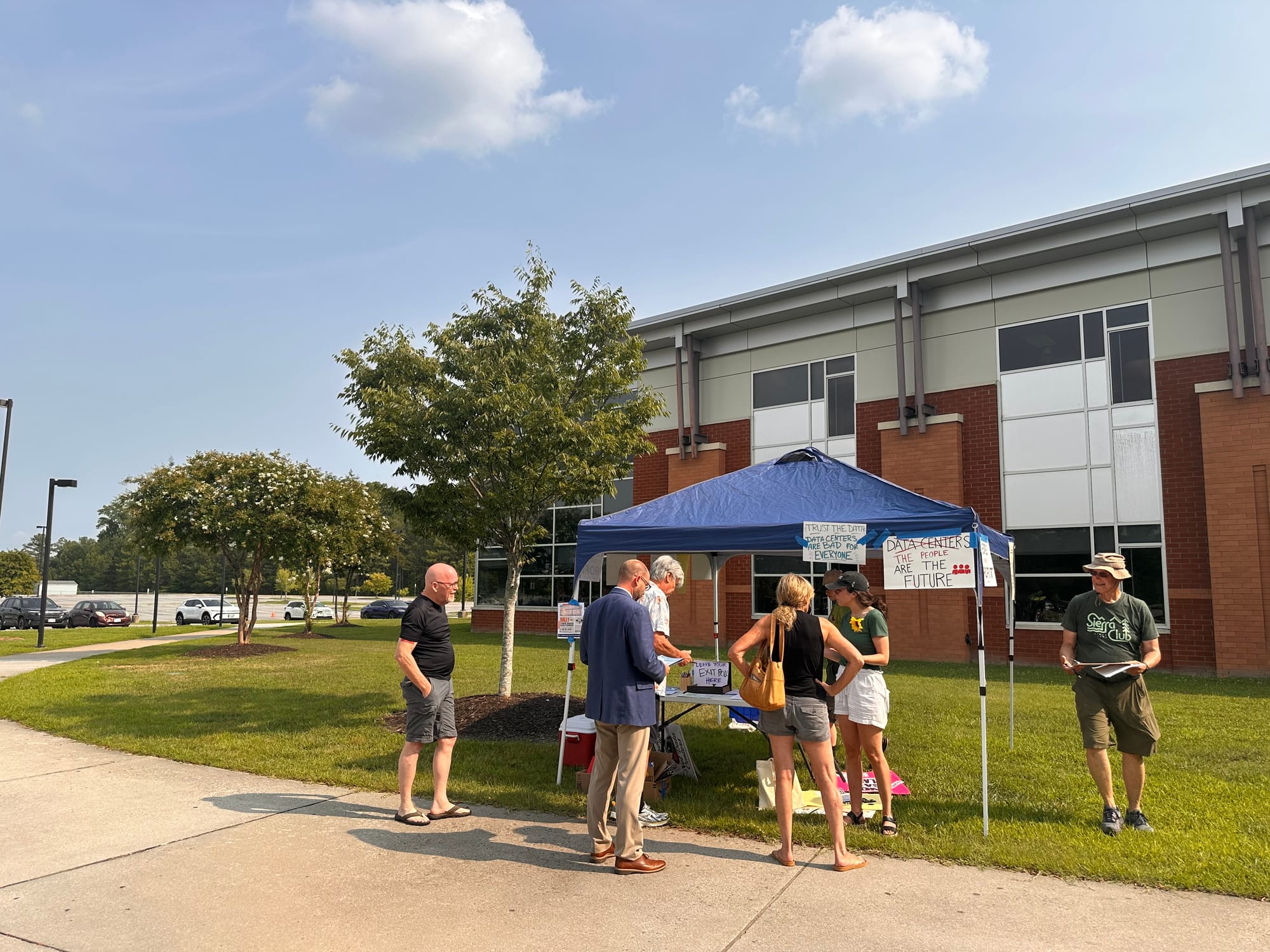
Stationed outside the high school entrance was Data Center Defiance Central Virginia — a coalition of individuals opposed to Google’s move into Chesterfield. Each wore a green outfit and handed out pamphlets to passersby.
One of its members, Courtney Bernhardt, lives within four miles of the Midlothian site.
“They were all welcomed here and invited here under a non-disclosure agreement, and I have been emailing my supervisor at the time we were having the zoning board meetings and the supervisor board meetings,” Bernhardt said. “He said, ‘I can’t tell you anything about it, because we signed an NDA.’”
The non-disclosure agreement Bernhardt referred to was a contract between the county’s Economic Development Authority and Google. In 2021, Richmond BizSense reported that the company had first purchased land under the name “Peanut LLC” starting in 2020, and the authority’s NDA barred it from publicizing further details.
“The county was making decisions on behalf of its residents without any input from its residents, and that really bothers me,” Bernhardt said.
Thursday’s was the second of two open houses, with the first happening at Brightpoint Community College’s Midlothian campus on Wednesday. Both events attracted about 300 people.
“We have found that this is the most efficient way to get all the experts in the room,” said Clay Allsop, who works in Google’s public affairs office. “This is the preferred format because we get the most information to the most people.”
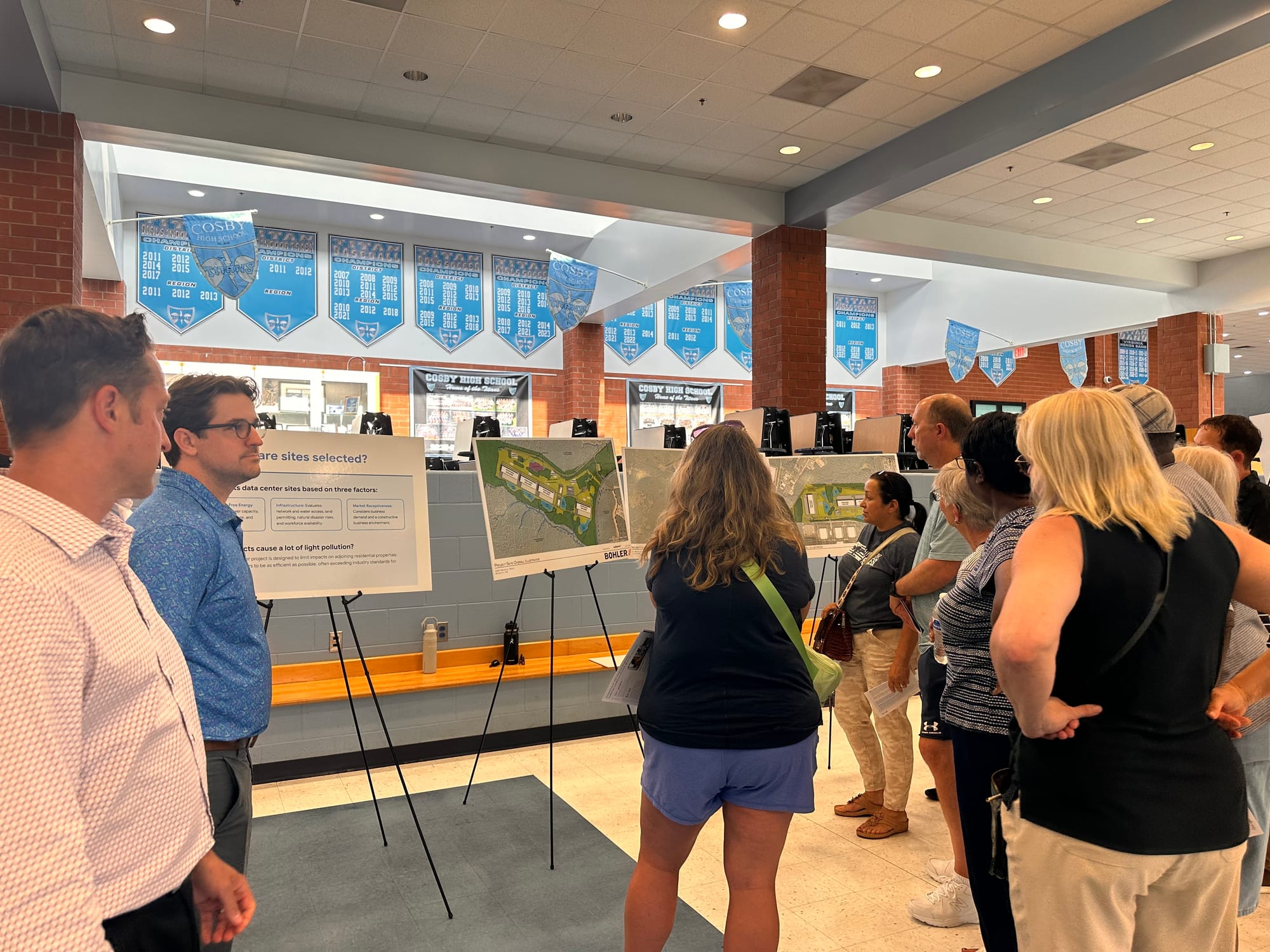
Bernhardt shared several attendees’ concerns about environmental impacts, noise and light pollution, and water and electricity costs. While there was an information station tailored to each of these concerns, some people still walked away having retained their anti-data-center outlook.
But changing minds wasn’t the goal.
“I can say that, anecdotally, some people had a very open outlook, and some people had some [opinions] made up, but, you know what? I’m not here to change anybody’s mind,” Allsop said. “I’m just here to provide the facts for them to decide for themselves.”
The likelihood of the company backing away is slim. Google Strategic Negotiator Cathie Vick said that outside its application to the U.S. Army Corps of Engineers, the data center campuses have received nearly all the necessary OKs from authorities. Construction on its first site, nicknamed “Project Peanut,” has already begun.
“We don’t have any additional permits or anything we need from the county,” Vick said.
Chances are, any changes that come from community feedback will also be largely aesthetic — meaning the external design of the buildings may change, but the buildings themselves won’t.
The event was meant to be a place where Google could state its case to listeners.
“We’re here to be a good community partner,” Vick said. “We really do want to be involved and part of a community and hear from them as well as them hear from us.”
Contact Eleanor Shaw at eshaw@richmonder.org. She is a Report for America corps member. VCU is a sponsor of The Richmonder but was not allowed to influence or review this story.