‘Dark to light’: City unveils plans for infamous Lumpkin’s Slave Jail site
Buried beneath the city for decades, Richmond’s notorious Lumpkin’s Slave Jail will be brought back into the light through new plans to permanently mark the site and commemorate the thousands of men, women and children who passed through it.
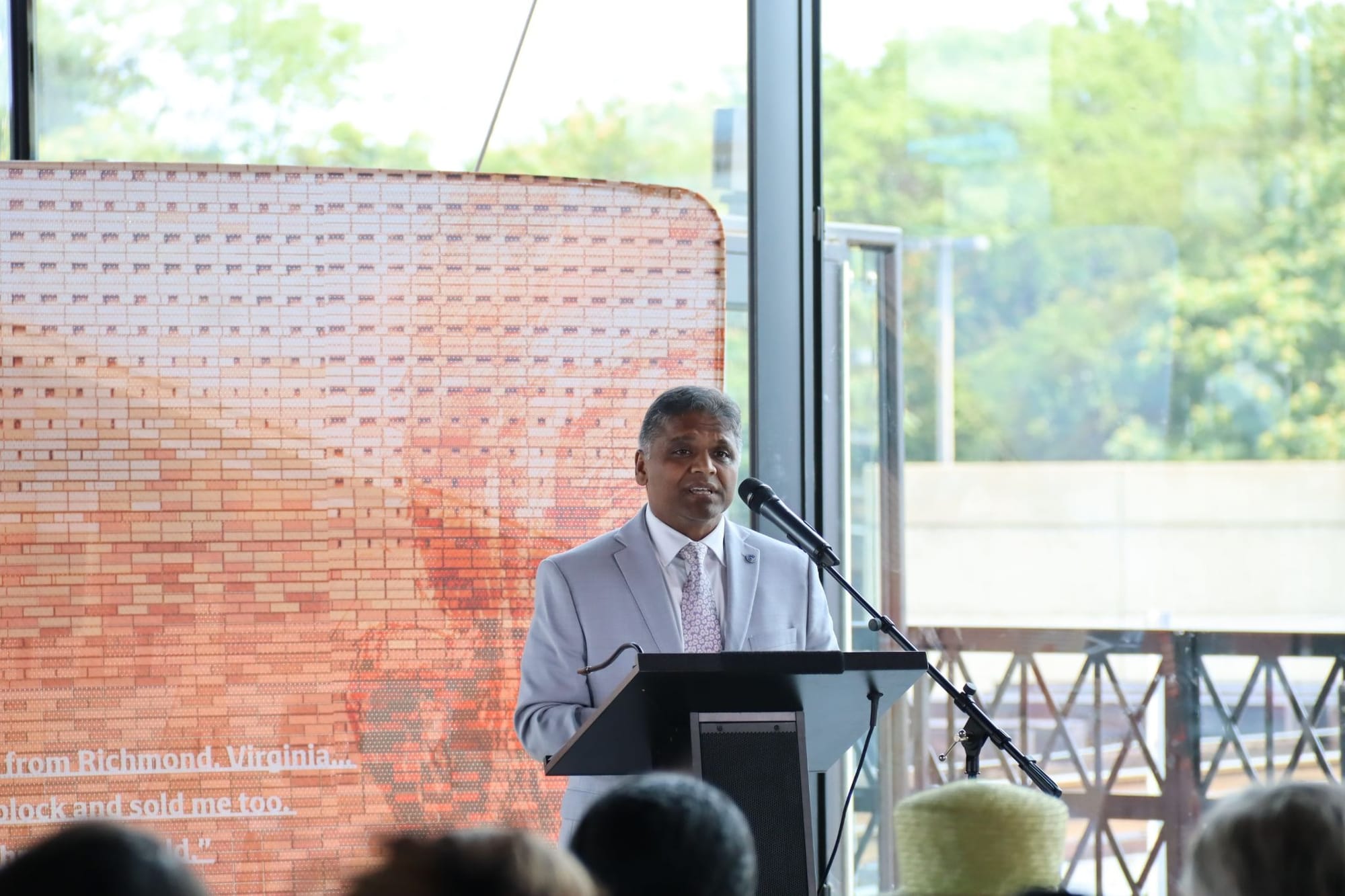
At a Wednesday event, Del. Delores McQuinn (D-Richmond) said the Lumpkin’s Slave Jail Pavilion would remember not only “families separated, names stolen, lives diminished and humanity denied,” but also “the courage, faith, survival, and the determination of a people who refused to surrender their souls.”
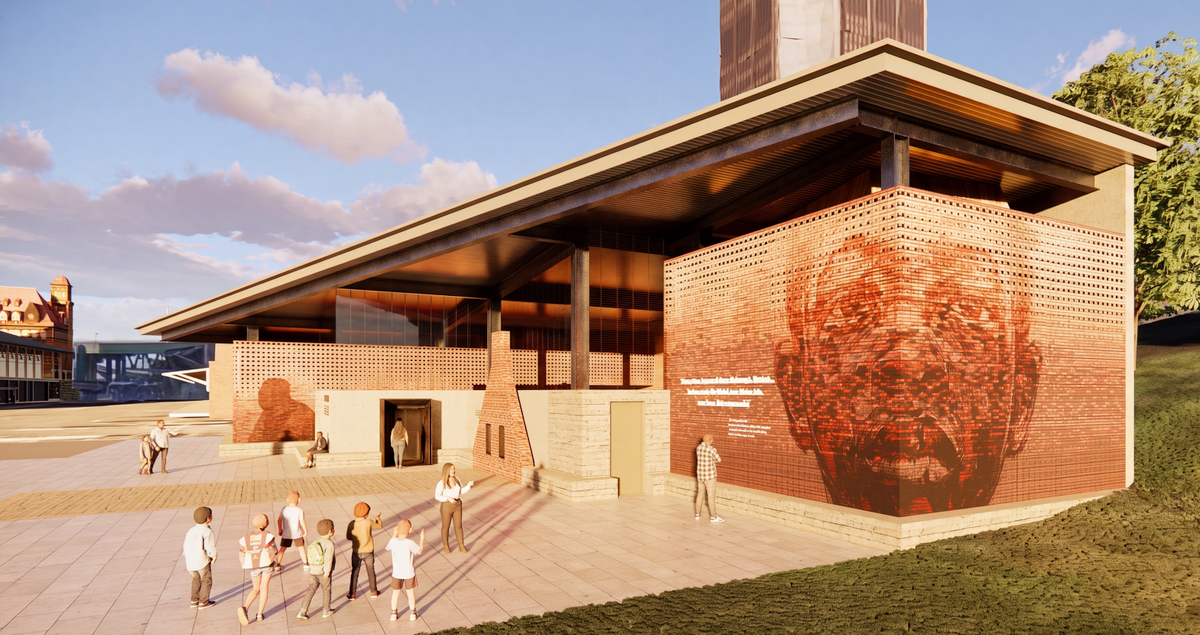
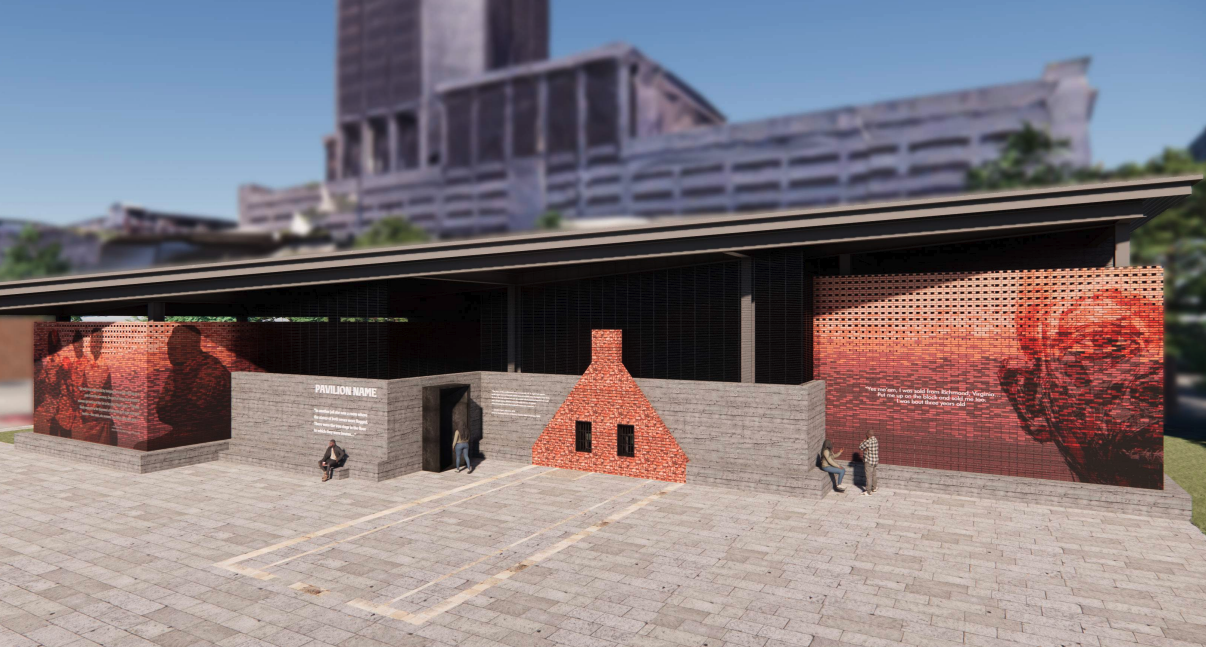
The $18 million project will construct a pavilion around the site of the former Lumpkin’s Slave Jail that will allow visitors to not only view the site known as the “Devil’s Half-Acre” but read witness accounts of the brutal treatment that occurred there.
“Yes ma’am, I was sold from Richmond, Virginia. … Put me up on the block and sold me too. I was bout three years old,” reads one quote from formerly enslaved woman Nely Gray that will be incorporated into the building’s exterior.
Those quotes, along with illustrations of people held in bondage, are intended to bring home the reality and gravity of the site to visitors even during hours when the pavilion is closed.
“We wanted to bring that power to the facade and to the public space without having to go into the building,” Burt Pinnock, principal and chair of architecture firm Baskervill, told the Urban Design Committee Thursday during a review of the plans.
Ultimately, the Lumpkin’s Slave Jail Pavilion will be part of the broader Shockoe Project, a larger campus memorializing Richmond’s role in the slave trade. The first phase, the Shockoe Institute at Main Street Station, opened in April.
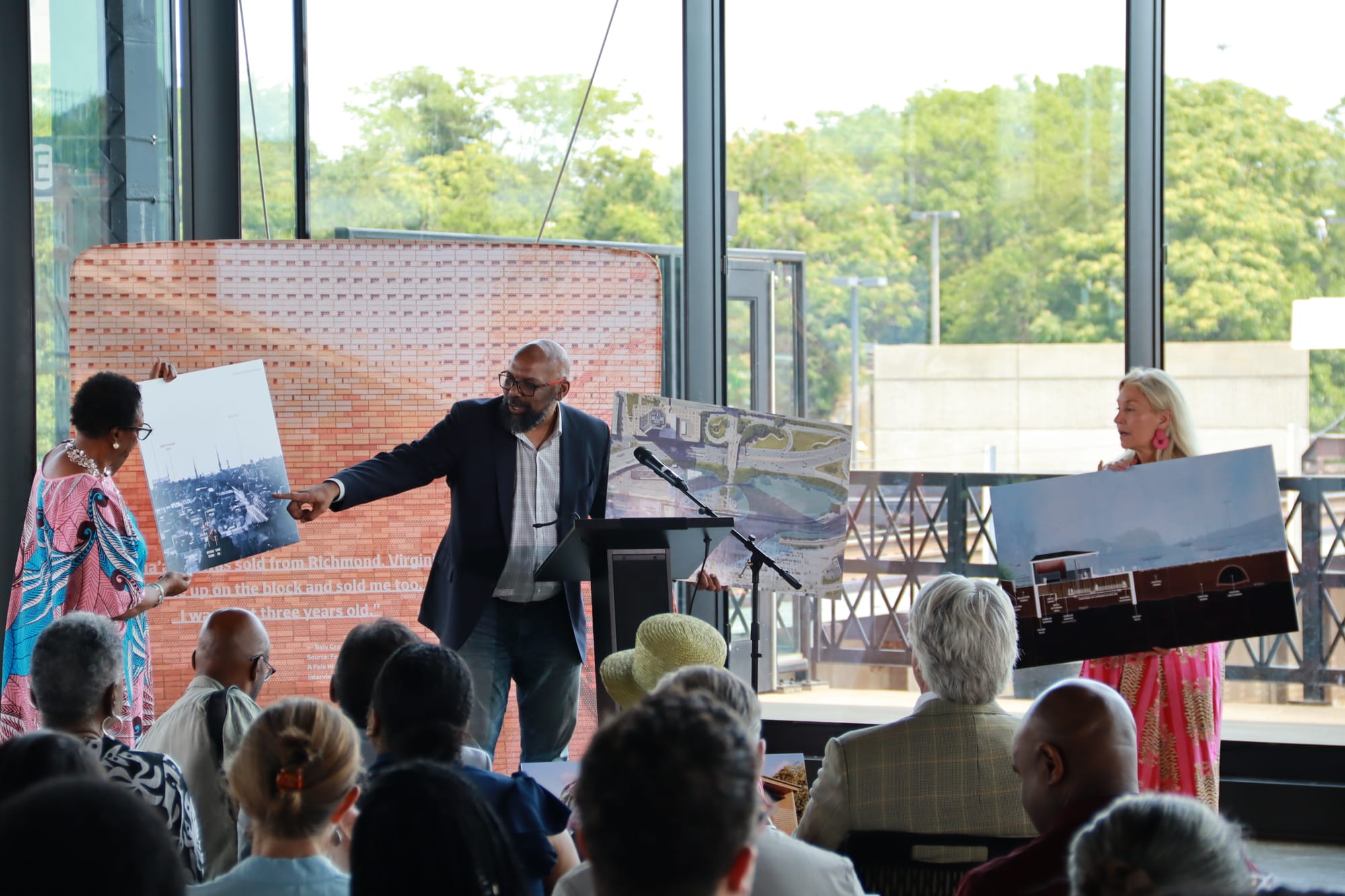
Jeannie Welliver, the city manager for the Shockoe Project, called the uncovering of Lumpkin’s Slave Jail “likely the most important archaeological find in the United States over the past 50 years.”
Its location, however, has made preservation of the site unusually difficult. Like much of the rest of Shockoe Bottom, the location of the jail lies in a floodplain, with part of its footprint encroaching into a floodway. That has both significantly limited what the city is allowed to construct at the site and meant that architects had to build flood protection into their design.
The solution reached by Baskervill will have solid flood walls that ring the site and then become more and more open as they rise toward the top of the building, allowing airflow and light to penetrate the interior above the level any floodwaters might reach.
In that way, the building will also function as a metaphor, said Baskervill: “Something that comes from dark to light or solid to open.”
When finished, the 21,400-square-foot pavilion will include outdoor exhibit space and ramped access to the excavated floor, with an open pavilion to be situated overhead.
A long, dark history
Operated for more than 30 years, Lumpkin’s Slave Jail was known for its particularly brutal and inhumane treatment.
Anthony Burns, an enslaved man who was held at Lumpkin’s Jail after his capture under the Fugitive Slave Act, was confined in a tiny room at the site accessible only by trapdoor.
“He was allowed neither bed nor air,” wrote Charles Emery Stevens, who penned an account of Burns’ case in 1856 and whose words will be included on the building’s exterior. “A rude bench fastened against the wall and a single coarse blanket were the only means of repose. After entering his cell, his handcuffs were not removed.”
While known to be brutal, Lumpkin’s Jail was not unique in Richmond. At the time, there were four other slave jails in the city and “as many as 30 auction sites in the valley,” according to a project overview. Between 1830 and 1860, more than 300,000 enslaved persons were sold at auctions held in Richmond.
“This was right in the middle of the Bottom,” Welliver said Thursday. “It was part of everyday life in Richmond.”
Following his death in 1866, Robert Lumpkin, the final owner of the site after whom the jail was named, left all his land and property to an enslaved woman he “married,” Mary. The land was once home to the Richmond Theological Seminary – formerly known as The Colver Institute – and later became the first site of Virginia Union University.
Excavation and identity
A wider commemoration of Lumpkin’s Jail has been a long time coming, Richmond Mayor Danny Avula said Wednesday.
“The vision started over 30 years ago,” he said. “I absolutely believe that we cannot find our way to healing or to thriving without telling the full story of how we got here.”
Some of the earliest archaeological work at the site occurred more than two decades ago, when the Richmond City Council Slave Trail Commission, Virginia Department of Historic Resources and Alliance to Conserve Old Richmond Neighborhoods found “compelling evidence” that some of the jail’s features survived well below the contemporary street level.
A 2008 excavation, according to a report by the James River Institute for Archaeology, turned up “remarkably intact remains associated with the antebellum slave-trading complex, including the cobbled central courtyard and brick drain features; a massive brick retaining wall that divided the site into upper and lower levels; the footprint of the kitchen building; and two other outbuildings.
“Most importantly,” the report continues, the archaeologists "identified the remains of the jail structure itself at a depth of nearly 15 feet below the modern ground surface.”
That structure will be more closely examined through an archaeological dig before the pavilion itself is built around it.
As planners work to develop the pavilion and the larger campus, they intend to keep a focus on Black Richmonders and their contributions to the city. That attention will emerge even in small details: The font that will be used in the design of the pavilion and other parts of the Shockoe Project is designed by a Black type designer named Tré Seals, and is inspired by an illustration from The Richmond Planet.
At the Urban Design Committee Thursday, members praised the project’s design, describing it as “admirable” and “powerful.”
“Hopefully this kicks off momentum for the other phases of this site,” said Keith Van Inwegen. “This is what Richmond is going to be identified by as people drive through.”
Contact Reporter Sarah Vogelsong at svogelsong@richmonder.org.