Planning Commission votes against West End outdoor event space that has drawn noise complaints from neighbors
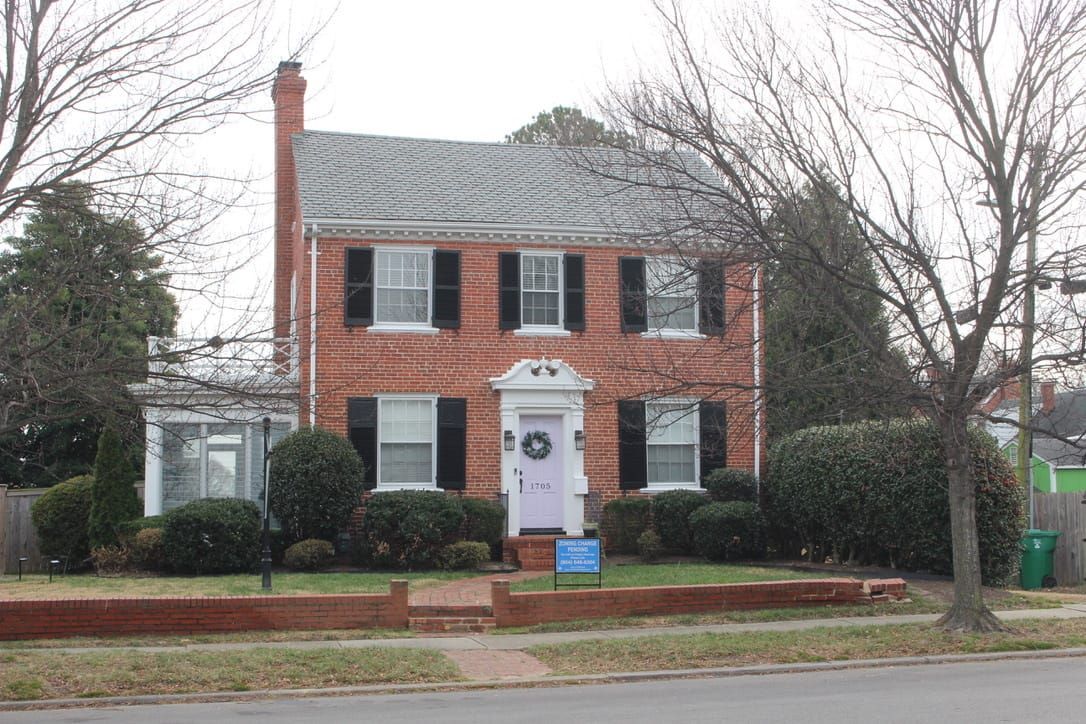
The Richmond Planning Commission voted 8-1 Tuesday night to recommend that the city deny a special use permit for an outdoor event space in the Sauer’s Gardens neighborhood of the near West End that adjoining residents say has caused unacceptable noise and disruptions.
“We are asking an entire city block of people to accept their windows rattling and pictures shaking on their walls, and I just don’t think that’s a reasonable thing for us to codify,” said Commissioner Brian White.
The case, which drew nearly two dozen speakers to City Hall Tuesday, concerns an application from Nadia Anderson, an event planner who operates the Lavender Hill event space out of a residence-turned-office building at 1705 Commonwealth Ave. If granted the special use permit — a decision that will ultimately be made by the City Council — she could hold up to 52 outdoor events a year with as many as 120 attendees and amplified sound.
Many neighbors say that would be intolerable. Some of the events Anderson has held to date, they told the Planning Commission, have been loud enough to disturb children’s sleep, disrupt work-from-home tasks and rattle picture frames on the walls.
“We are having to discuss, unfortunately, the possibility of moving out of the neighborhood or the city for the sake of our child if this SUP passes,” said Brooke Weedon, who lives on the other side of Fitzhugh Avenue with her husband and toddler.
Anderson has acknowledged that immediate neighbors can hear what happens on the property. But she says that most of her events are geared toward smaller crowds and that there hasn’t been enough clarity from the city about what’s allowed or any documentation that prior outdoor events she’s held have violated noise rules. A formal statement she submitted to the Planning Department ahead of Tuesday’s hearing argued that the 65 decibel limitation on amplified sound included in the SUP is “more restrictive than the city noise ordinance.”
“Since I purchased this property, I’ve asked questions of city staff at various levels to try and get an understanding of what zoning and planning ordinances are in place and what’s required to be in compliance with those, and I’ve gotten many different responses depending on who I’ve talked to,” she told The Richmonder.
Uncertainty from city staff about what rules should apply to the property and whether different events held there should be classified as private events, temporary events or “recreation and entertainment uses” that are subject to certain restrictions also led Commissioner Dakia Knight to cast the sole dissenting vote Tuesday.
“I just don’t know that this was a fair playing field for the applicant,” she said. “I think there needs to be clarity and consistency.”
For many neighbors who turned out to oppose the special use permit, though, the situation appeared clear.
“There’s no way you can have 120 people and amplified music in a little backyard like that and not exceed the noise ordinance,” said Sidney Bragg, who lives in one of seven houses on Fitzhugh Avenue that is separated from Lavender Hill by an alley. Members of all seven of those households turned out Tuesday to urge the commission to reject the proposal.
“You can’t get away from it,” said Bragg. “You can’t sleep, you can’t converse, you can’t watch TV, you can’t work.”
Krista Mathis said she lodged her first complaint with Richmond’s Planning Department about Lavender Hill back in May 2022.
“We live in a city,” she said. “There are certain amounts of noise that are going to be expected, and I understand that and live with that. But this is not an expected amount of noise.”
Not everyone agrees. Knight told the Richmonder that “I feel both sides of the picture, but we are in an urban city, and those things come with urban city living.”
“The location is almost Broad Street facing. We’re hitting some of the heart of the city,” she said. “I believe in quietness and quiet and peaceful living. We live in a city, though. And cities have sound.”
Nevertheless, Anderson faces tough odds as the case heads to the City Council for a final decision. Councilor Andrew Breton, who represents the area, has come out in opposition.
“The proposed use is too loud, too close to the affected residences,” he wrote in a statement. “The property could serve as an indoor entertainment space, but the abutting residents should not have to accept the sound levels of an outdoor entertainment venue unless they agree to the terms themselves.”
Questions of capacity
Anderson has owned the Lavender Hill property since 2021, when she purchased it for use as an office and a space to host what she described to the Planning Commission as “intimate gatherings indoors and outdoors.”
Her supporters, several of whom turned out Tuesday, have described those events as thoughtfully and professionally planned and say they believe Anderson has tried to be a good neighbor.
“The community that’s coming to these events are people who want to be in community,” said Patricia Moore, who held a book launch at the site in August and has attended other gatherings there. “They want to talk to each other. … It’s not there to rage or to party.”
While the property looks like a residence, it has for many years been used as an office, Anderson notes. It also straddles two very different areas: Across the alley to the south are the backyards of the residential Fitzhugh Avenue, but a half-block to the north lies the West Broad Street corridor, and next door sits a wine shop. In 2022, the lot was part of a larger Broad Street rezoning to encourage more dense, walkable growth around a major public transit corridor.
But while Anderson’s use of the property as an office was permitted by the city, the events she began to hold were not, and in June 2024 the Planning Department issued her a notice of violation following two neighbor complaints.
Subsequently, she secured a certificate of occupancy allowing indoor events. But a special use permit was required for outdoor events because of a provision in the zoning that prohibits outdoor “recreation and entertainment uses” — which city planners say includes event spaces — within 100 feet of any residential property.
Anderson has emphasized that 70% of her events are for 50 or fewer people, and said that while her website offers clients the ability to rent the property for outdoor gatherings of up to 100, she has only booked one gathering with more than that number of attendees.
Still, she told the Planning Commission, at roughly 3,300 square feet, the backyard can accommodate a large crowd and she wants to be able to give clients wiggle room.
“I want the flexibility to offer folks the ability to go outside and to accommodate a guest list that changes,” she said. “Often when people plan an event, they think they’re going to invite 50 people, and then when they write down their favorite names, the list grows.”
Sharon Ebert, acting as the city administration’s representative on the Planning Commission, said the conditions of the SUP allowing up to 52 events per year with as many as 120 guests went beyond flexibility.
“Our first concern should be to do no harm to our residents, who are entitled to peace and quiet,” she said. “I think that’s too many people.”
Kathryn Weakley, another neighbor, agreed. In a November email, she told the Planning Department and City Councilor Andrew Breton (1st District) that even some of the smaller outdoor events held by Anderson in 2024 — and two larger ones held after the notice of violation, which Anderson has said she believed she was allowed to host — had been “highly disruptive.”
Allowing up to 120 people at events “is incompatible with residential life in this area,” she said.
Enforcement questions
Throughout Tuesday’s discussion, the question of how the city would enforce the limits laid out in the SUP arose again and again.
Enforcement of noise ordinances in Richmond is “complaint driven,” said Planning Director Kevin Vonck — meaning it requires neighbors to call the police to report noise and for officers to be dispatched to the scene to make a determination about whether the rules have been broken.
“Even if the sound limits are written into the permit, the noise enforcement is weak and reactive,” said neighbor Ryan Oliver. “Once the music starts, the disruption’s already been heard.”
Enforceability was a sticking point in earlier city review of the proposal, with the Planning Department in November recommending denial of the application because it said Anderson had not agreed to a set of enforceable conditions. After Anderson agreed to the 52-event maximum, operating hours of 9 a.m. to 10 p.m. and an end to outdoor amplified music of 9 p.m., staff reversed their position to recommend approval.
City Councilor Ellen Robertson (6th District), who also serves on the Planning Commission and voted to recommend denial of the permit Tuesday, expressed sympathy for Anderson, who she said had gone through “extensive work” to secure a staff recommendation of approval only to face opposition from another member of the city administration on the commission — an apparent reference to Ebert.
“I think that it doesn’t speak well of the integrity of the system,” she said.
Other members disagreed. Commissioner Rebecca Rowe contended that staff recommendations are an opinion, not definitive fact. And Commission Chair Rodney Poole pointed out that under the system set up by law, “staff don’t vote.”
“I give great deference to our professional staff because I have such tremendous respect for what they do and how they do it,” said Poole. But at the end of the day, he continued, “each case stands on its own, and this commission has to make a determination.”
Contact Reporter Sarah Vogelsong at svogelsong@richmonder.org