Legendary New York filmmaker visits Richmond on Thursday to screen Best Products documentaries
Architect Don O'Keefe is not modest about the importance of Richmond-based retailer Best Products, and its celebrated impact on the world of store design.
“In terms of those Best stores and their international recognition, I think that it’s the most important design story to come out of Virginia since the time of Thomas Jefferson,” he said earlier this week.
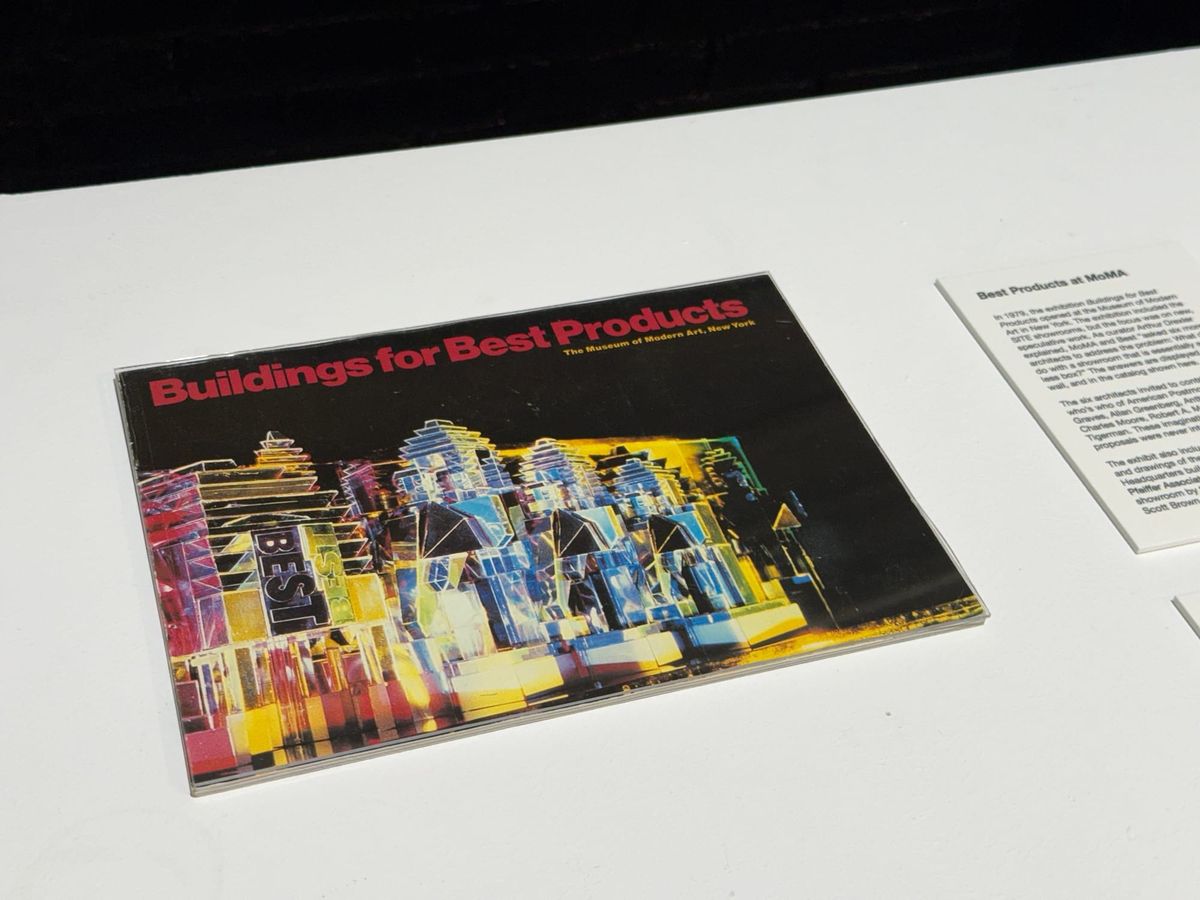
O'Keefe oversaw the creation of the exhibit about Best Products currently showing at the Branch Museum of Design, and on Thursday night, the museum will bring in New York filmmaker Howard Silver for a sold-out screening of his documentary about the Best showrooms, followed by a Q&A.
O’Keefe is the principal architect of O'Keefe & Associates, a design practice in New York City, Tokyo, and Richmond. He also runs the website architecturerichmond.com, a nonprofit that writes about local architectural history.
O’Keefe serves on the Advisory Board for the Branch. For the Best exhibit, he said, “We were thinking about shows that would be great for the Branch Museum and Best Products seemed like an obvious choice. It’s such an important story in the history of American design, known not only in Richmond, but nationally and internationally as well.”
 Rich Griset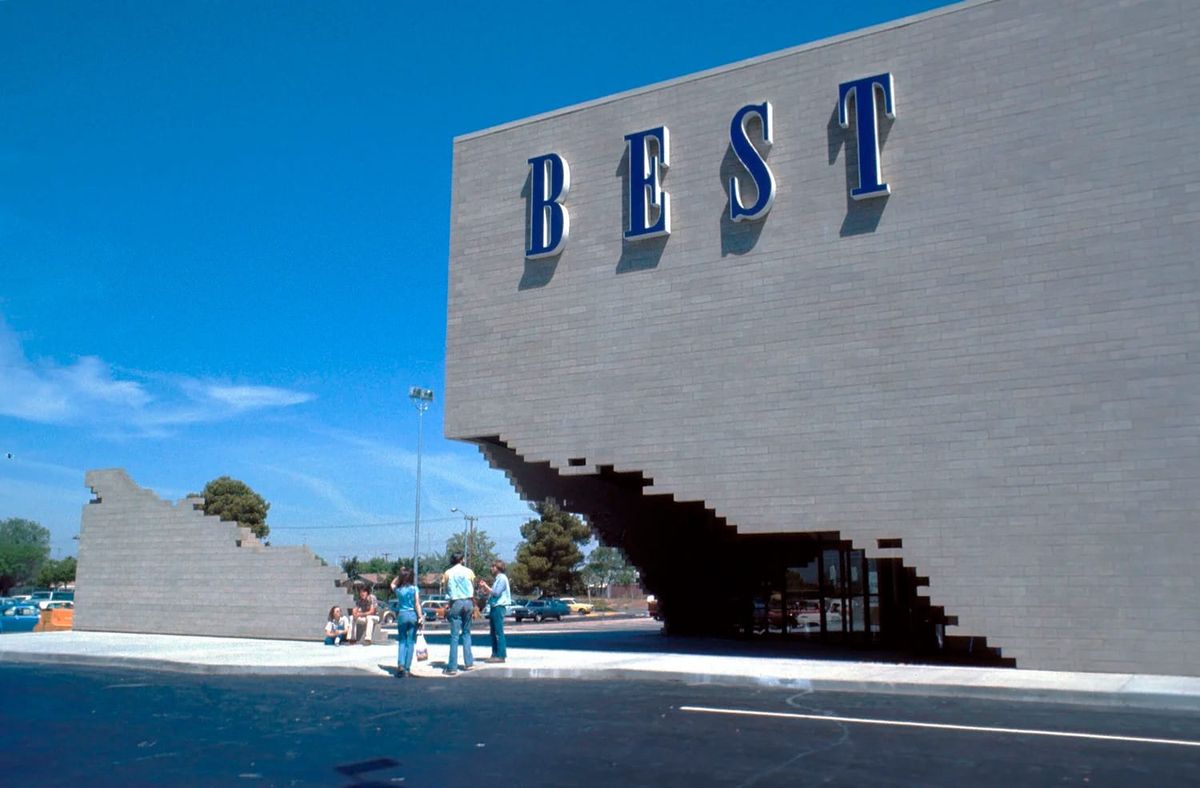
To create the exhibit, O’Keefe worked with his students when he taught a course in the Graduate School of Design at Harvard University.
“The students researched the history of Best Products," he said. "They got to meet some of the people involved, asked questions, and helped develop ideas for the curation of the show.”
Best Products became famous by classifying itself as a warehouse store instead of a retail outlet, a legal loophole that allowed them to undercut retail pricing at the time.
The founders, Sydney and Frances Lewis, were Richmond philanthropists who took an interest in the art scene and were major donors to the VMFA.
“They loved art and also ran this retail business,” O’Keefe said. “In the early 70’s, they began to wonder how to combine those two interests.”
That led to a collaboration with architect James Wines to design outlandish showrooms, which garnered national attention.
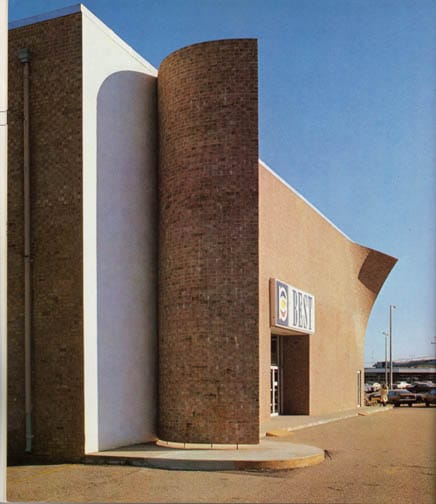
Though Wines was trained primarily as a sculptor rather than an architect, he was nevertheless tasked with re-imagining a Best store that already existed as a box store on Midlothian Turnpike.
This re-imagined design came to be known as “The Peeling Building,” where another layer of brick was added with the illusion that it was peeling off the building.
“They built it and it got a lot of attention,” O’Keefe added, “not only from people around town, but from architecture and even general interest magazines from around the world.”
O’Keefe emphasized that this upwelling of interest kicked off a huge trajectory of architecture and design experimentation, all funded by the Lewis family.
“The building answered the question of how to bring art into these innocuous suburban landscapes,” O’Keefe added.
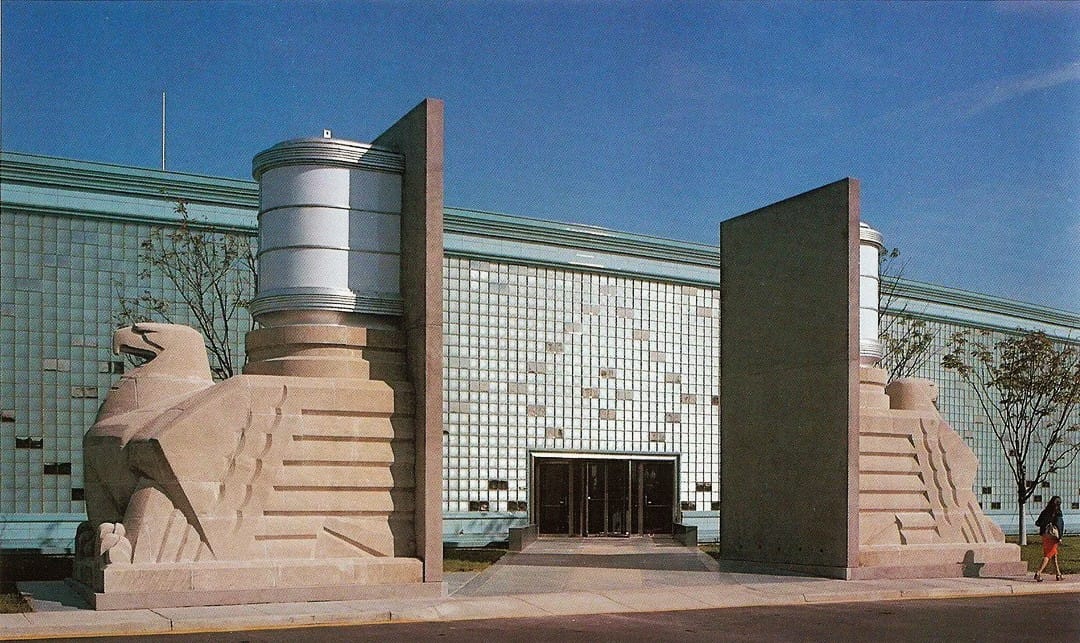
The Best Products headquarters in Henrico, another designed space (this by Hardy Holzman Pfifer Associates from New York), is also featured in the exhibition.
“More than 3,000 people worked there at one time,” O’Keefe said. “It’s an enormous arcing form two stories tall and covered with gigantic glass blocks in a pattern so they are clear. It’s primarily translucent glass blocks with clear ones set into that, creating an enormous, repeating diamond shape, which is a reference to the façade of the Doges Palace in Venice.”
The entrance to the headquarters is perhaps its most striking feature.
“In front of the building there are these two enormous stone eagles 14 feet high," he said. "They came from the top of an art deco skyscraper in New York called the Airlines Terminal Building, which was demolished in the 1970s. The Lewises obtained them to use for an entryway into the Best headquarters.”
In the stores themselves, the Lewis’s sent pieces of artwork to hang behind the registers, and sometimes this art was both valuable and interesting.
They even had a program where they paid artists to create images that would go on the sides of their 18-wheeler delivery trucks. “They called them rolling billboards, and we have a little of that in the exhibit,” O’Keefe said.
The exhibit is on display until June 21.