Latest study finds rezoning will spur most new housing in mixed-use corridors from urban core through West End
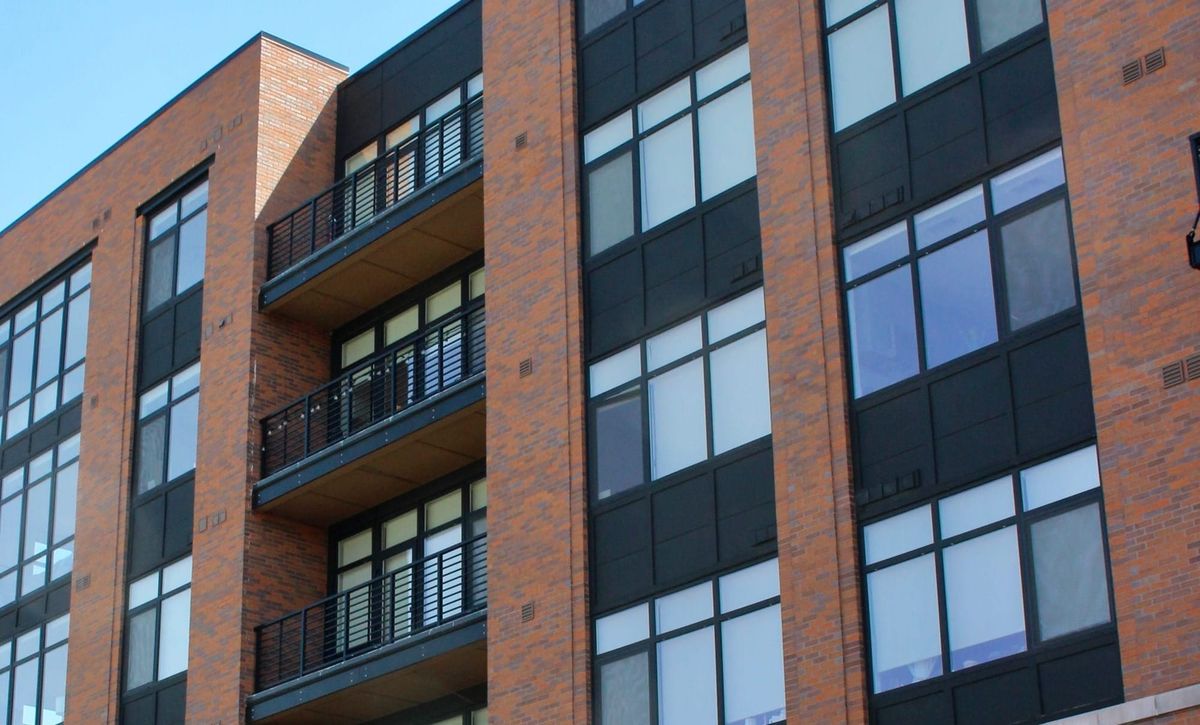
An expanded study of how Richmond’s proposed rezoning is likely to spur development projected that the majority of new housing would be built along mixed-use corridors in and around the city’s urban core and westward through the West End.
“The analysis that we did showed that the areas that had the greatest potential are commercial corridors,” said Kyle Talente, a principal at RKG, the economic planning and real estate consultancy the city has hired to assess the potential impacts of the code refresh in light of Richmond-specific parcel, market and construction data.
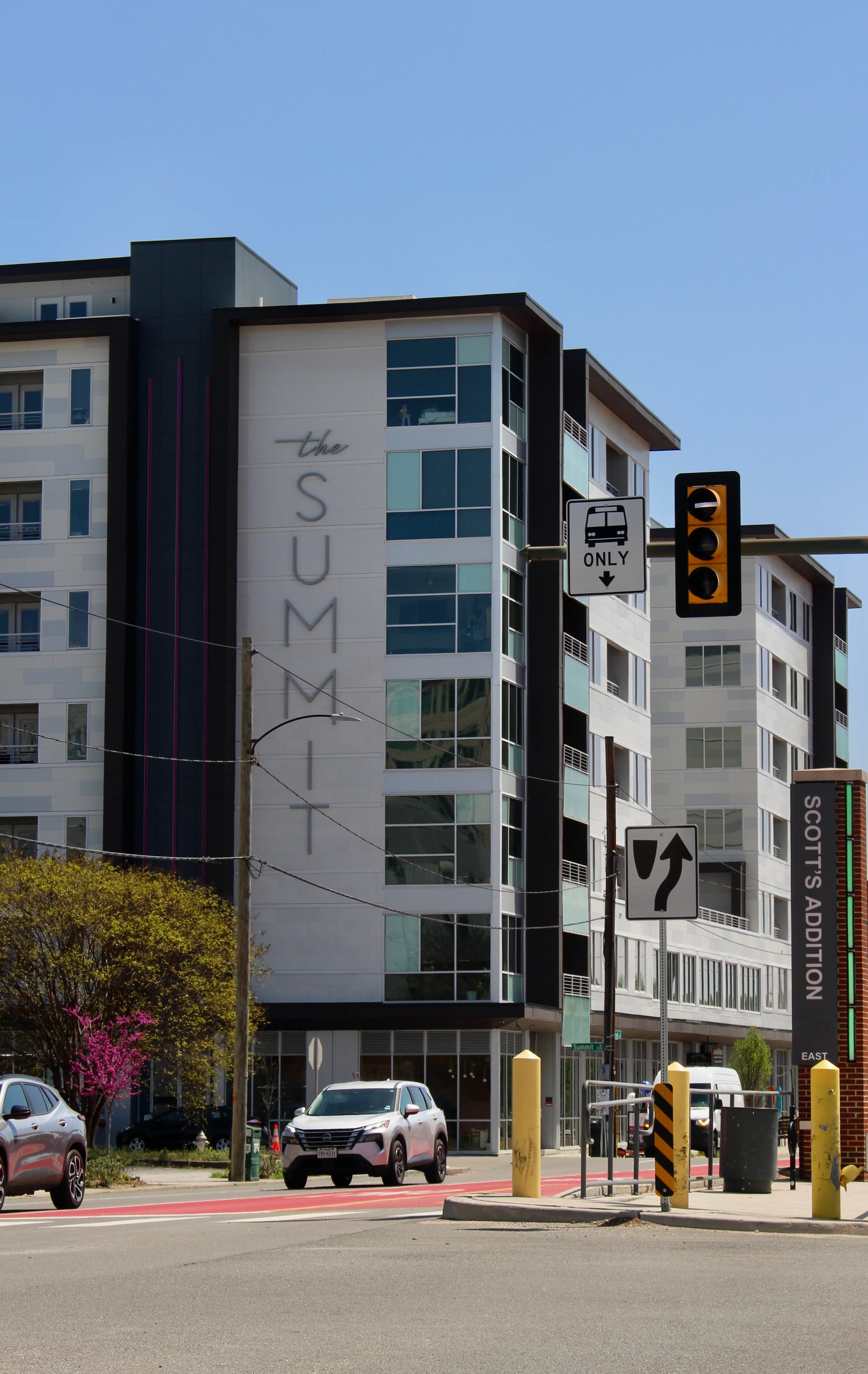
The greatest redevelopment likelihood was predicted to occur along corridors in two parts of the city RKG has designated as Subareas 3 and 4, which cover neighborhoods including downtown, the Manchester area, Jackson Ward, Oregon Hill, VCU’s main campus, Scott’s Addition, the Fan, the Museum District and the West End.
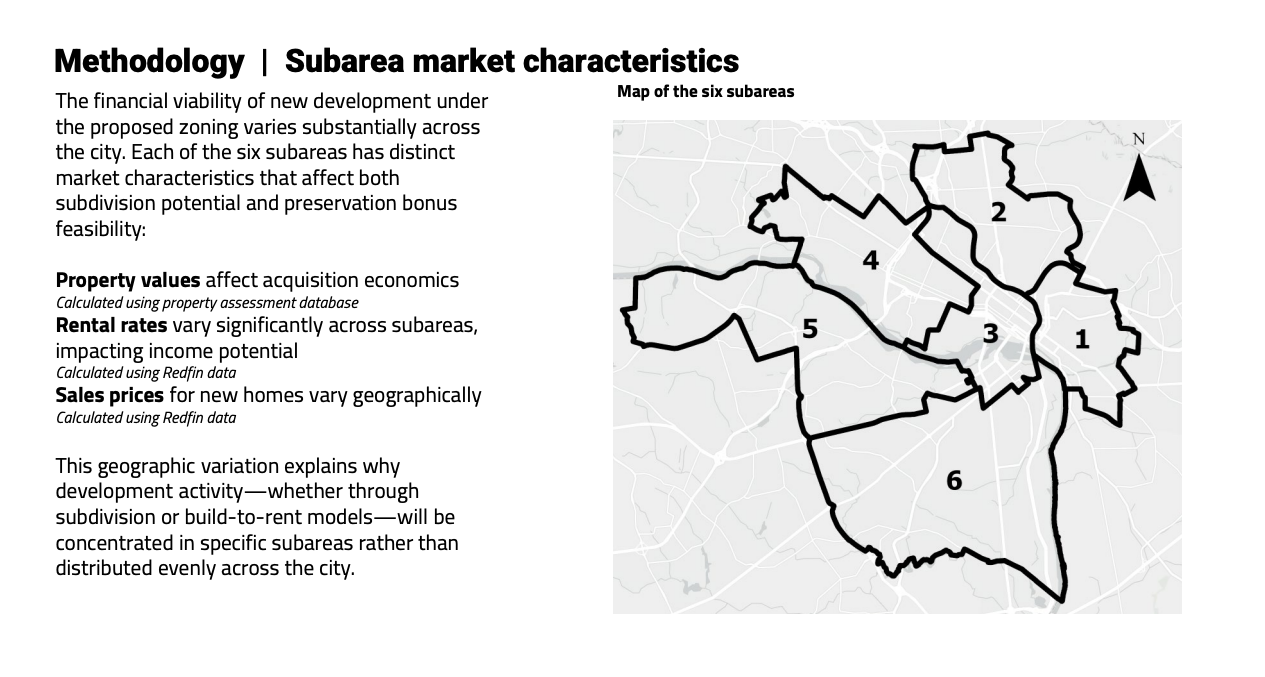
Those projections are only for those parcels that would be zoned as mixed-use under the code refresh.
Overall, RKG predicts that rezoning would produce roughly 1,200 to 1,600 housing units in areas zoned for mixed use, 25 to 80 units in residential multifamily areas and 70 to 110 units in residential attached neighborhoods.
When combined with the results of an earlier study by RKG of how the refresh could impact residential detached neighborhoods — communities made up primarily of traditional single family homes — the analysis finds that about 2,100 housing units could be produced annually as a result of the rezoning.
Richmond Planning Director Kevin Vonck said that estimate is in line with the city’s current housing trends, which see the production of between 2,000 and 2,500 units annually.
Crucially, he noted, the RKG projections are only for market-driven development and do not include any affordable projects, which nearly all rely on financing tools like federal low-income housing tax credits, performance grants and other incentives or subsidies.
While Vonck told The Richmonder he didn’t currently have an estimate of how many extra units were likely to be produced annually as a result of the rezoning, he emphasized that Richmond has seen hundreds of affordable units added to its stock in recent years.
“The actual production is probably going to be higher” than the RKG figures, he said. “It’s not going to be 10 times higher, but I think it is showing some increase in what we’re being able to produce. … This does seem to be unlocking housing possibilities that we don’t have.”
In a discussion of the latest study by the Zoning Advisory Council this May, member Philip Hart — a real estate attorney and past president of the Westhampton Citizens Association who has been critical of some of the code refresh’s pro-density proposals — said the projection that the most housing units would flow to mixed-use corridors was “exactly what Richmond 300 was talking about.”
“This is, in my view, corroborating the decision that was made back when Richmond 300 was done,” he said.
The lack of projected development in mixed-use corridors on the Southside raised an eyebrow from ZAC member Damian Pitt, an associate professor of urban planning at VCU. The city has hoped that the rezoning, among other efforts, could spur increased development in places like Southside Plaza.
“It sounds like you’re projecting that none of that’s going to work and nothing’s going to get built there, which I find a little hard to believe,” he said.
Talente confirmed that RKG’s model does not show much housing growth in Southside’s mixed-use corridors, although he emphasized that it could occur in small pockets and that the city can encourage growth there through incentives.
“This is assuming that there is no other interaction from the city, either through abatements or through incentives or through other means where they can address some of the financial challenges of doing a project,” he said.
 Sarah Vogelsong
Those kinds of incentives would not be new to Richmond, which has tried to stimulate the growth of affordable housing through performance grants — many of which have gone to Southside projects — and its Affordable Housing Trust Fund. Other strategies are possible: Henrico County, for example, waives certain permitting and utility connection fees for projects that receive money from its trust fund.
“It goes back to us in terms of OK, from a public perspective, what are some of the things that we can do to either catalyze or incentivize development along these particular corridors?” Vonck told The Richmonder.
One change that he said could unlock some development: the addition of a north-south Pulse line, a project that is currently in its planning phase.
“From a city perspective, I think adding the transit in would help incentivize that,” he said.
Residential multifamily and attached neighborhoods
Outside of mixed use, the latest RKG study found only modest growth in residential multifamily districts, those that allow multi-unit residential buildings of varying sizes.
The least dense of those zones, RM-A, would allow multifamily buildings with up to six units. The most dense, RM-C, would allow an unlimited number of units.
Talente said that given the way those districts have been applied in the current rezoning proposal, they serve as “more a preservation zone than a redevelopment catalyst.”
“Only about 2% of the parcels are financially realistic redevelopment candidates,” he said. Ultimately, RKG has projected that between 27 and 81 units could be produced in those areas annually.
“As of right now, the data is showing that the current value of those parcels is too strong from a demand perspective to justify acquisition, redevelopment and teardown,” he said.
Vonck said those projections illustrate the ongoing absence of “missing middle” — or medium-density — housing in many Richmond neighborhoods.
 Sarah Vogelsong
Richmond developers “are kind of bifurcated,” he said. “You’ve got people who are really good at building single family homes and townhomes, and you’ve got people who are really good at building apartment complexes over 150 (units). There’s not a huge cadre of developers who do these missing middle pieces.”
As in residential multifamily districts, residential attached districts are projected to produce a limited number of new units annually: 72 to 108, according to RKG.
Today, most parcels that would be rezoned as residential attached are already built out with rowhouses, said Talente, with only about 12% classified as vacant or underutilized.
“As a result, there really are limited redevelopment opportunities,” he told the Zoning Advisory Council.
Many of those opportunities will also be found in Subareas 3 and 4, although RKG found that there were possibilities for infill development in vacant lots citywide.
“Development pencils out in all six subareas,” the consultants wrote, noting that Subarea 6 encompassing much of the Southside had potential for building “simply because it has more undeveloped land available than more dynamic subareas.”
Teardowns for redevelopment are also a possibility in residential attached areas, although RKG has projected they only would make financial sense in Subareas 3 and 4 and would likely hover around 10 per year.
Churches
One factor not considered in the latest RKG modeling was the potential development of properties used as churches and other places of worship, which are scattered throughout the city.
The consultants assumed that churches would be unlikely to develop regardless of market conditions.
But ZAC Chair Elizabeth Greenfield, who also works for the Home Building Association of Richmond, disagreed with that decision.
“I don't think we should write off churches, especially after the General Assembly has given the enabling authority for churches to develop into by right multi-family housing,” she said.
Under the Faith in Housing Act (also known as Yes In God’s Backyard, or YIGBY) passed by the legislature and signed by Gov. Abigail Spanberger earlier this year, religious institutions statewide will be allowed to develop residential and mixed-use projects by right — regardless of local zoning — on their property as long as at least 60% of their units are affordable.
That law will go into effect Jan. 1, 2027 and expire on Jan. 1, 2031.
 Michael Phillips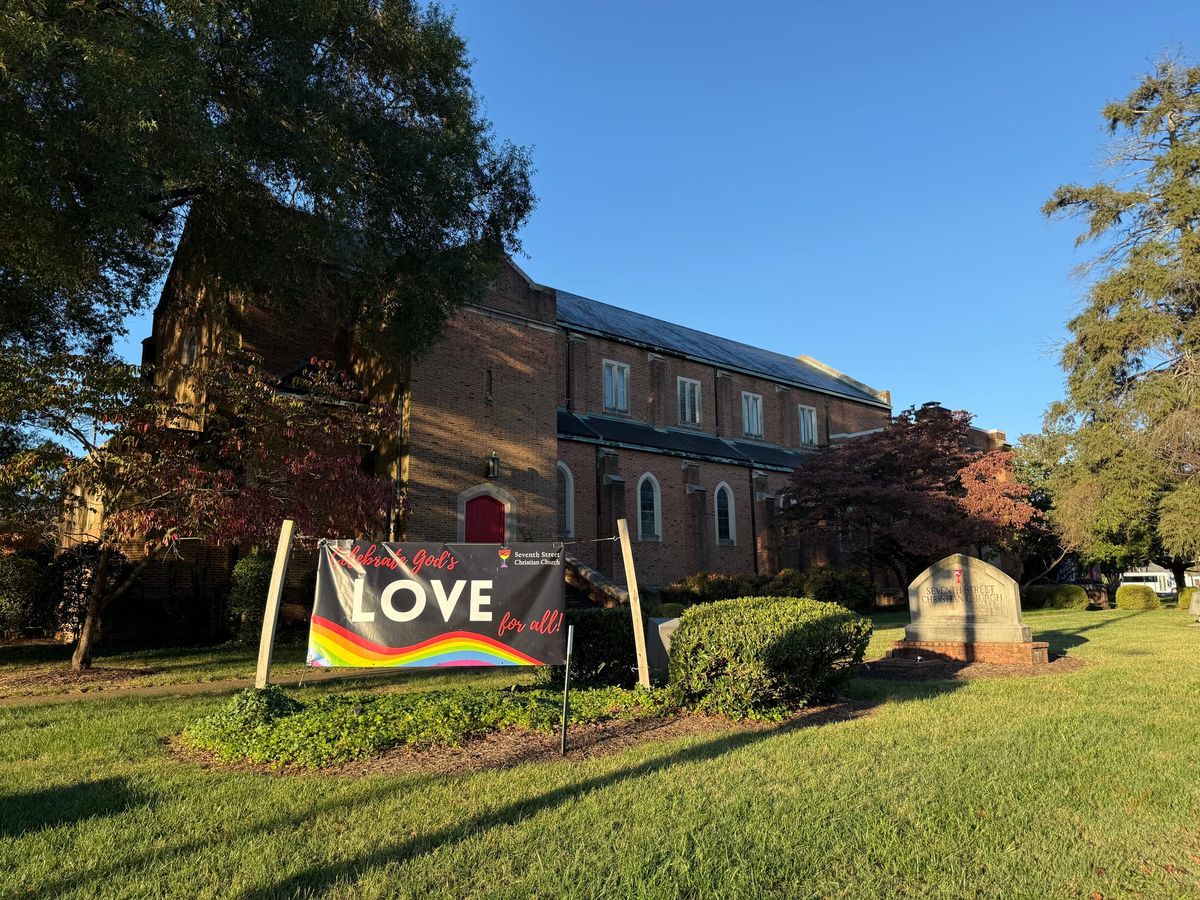
How many churches are likely to exercise their new right in Richmond remains unclear, although some projects are underway. At St. Elizabeth’s Catholic Church in Highland Park, Commonwealth Catholic Charities is developing 56 units, half of which are earmarked for extremely low-income families. Other churches, like the Seventh Street Christian Church in the near West End, have redevelopment plans underway, although to date they are focused on market-rate units.
How to rezone places of worship has been a challenge for Richmond’s Planning Department. Most recently, it proposed rezoning all those parcels as mixed-use properties, although the decision has received pushback from some residents concerned it could allow too much density in residential neighborhoods.
Contact Reporter Sarah Vogelsong at svogelsong@richmonder.org