Facilities Department had ‘haphazard’ processes and lacked work order controls, RPS audit finds
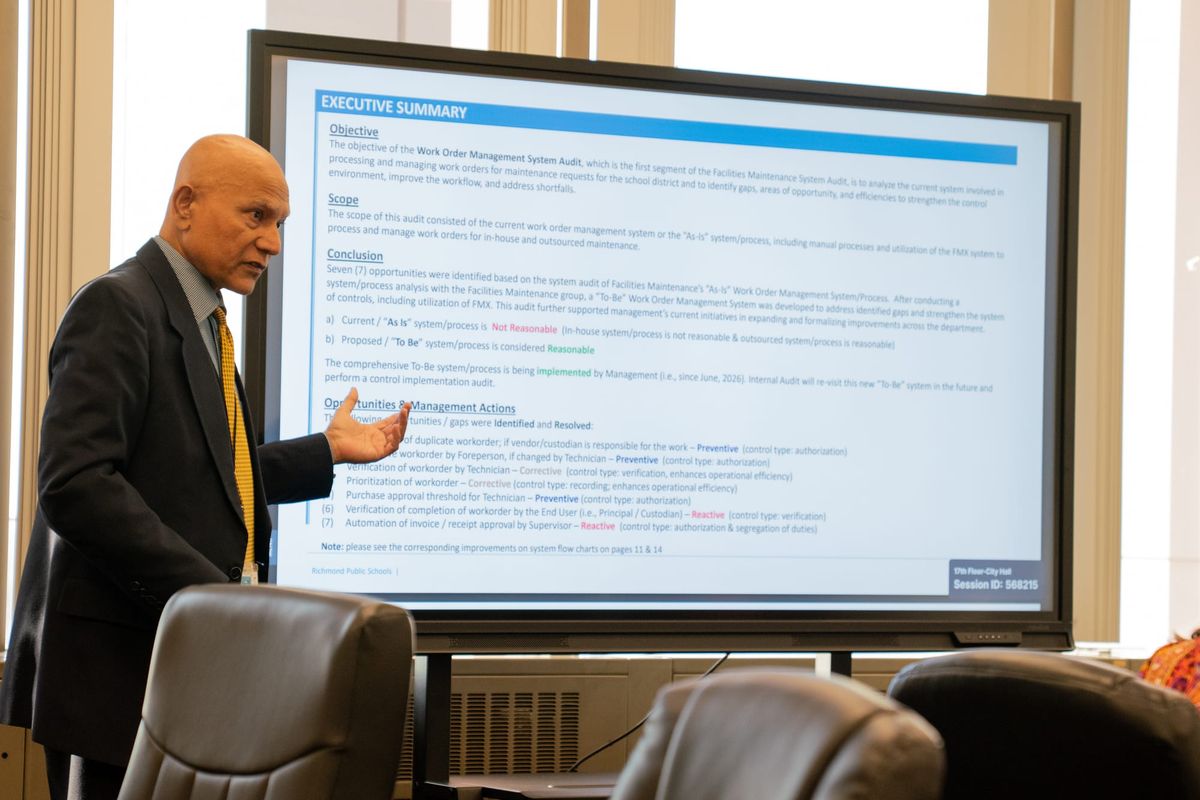
An internal audit into the Facilities Department at Richmond Public Schools discovered seven deficiencies within the work order system, including manual approval of work orders by the facilities director rather than using a maintenance management platform.
Director of Internal Audit Ziauddin Ahmed told members of the Richmond School Board’s Finance and Audit Committee that practices within the department were not consistent across the team, saying that employees were “doing different things in different areas.”
“In reality, it's actually not a very good picture,” he said, referring to his first findings within the division and the state of the department’s operations.
The department was run by former Director Bobby Hathaway, who recently left the division following an internal investigation that alleged he misappropriated school funds.
 Victoria A. Ifatusin
The seven findings are as follows:
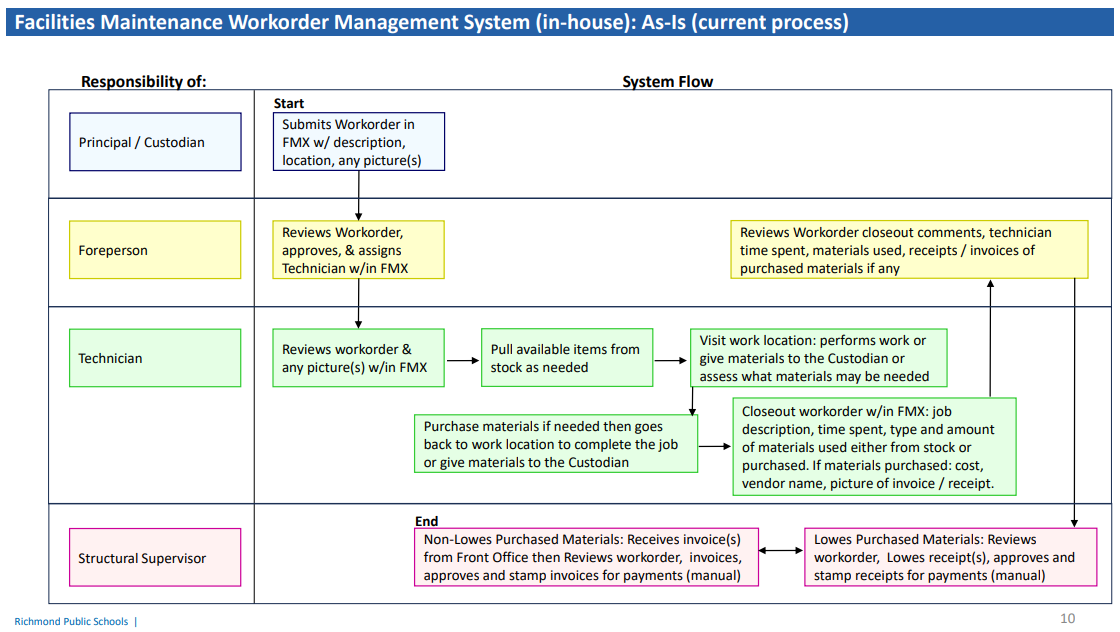
- The department failed to use the maintenance management platform – also known as the FMX system – that was implemented about four years ago and the director manually and unilaterally approved invoices and work orders.
- Employees purchased items with the department’s procurement card with “no control over how much they can buy or who can buy.”
- The department rarely received acknowledgement that the service was completed by the requester.
- The department did not prioritize work orders, conducting projects on a first come first serve basis.
- Employees were performing the work without identifying who was tasked with doing it, or whether it was an internal or external job.
- The department often did not document whether equipment was replaced in the inventory due to not verifying the needs of the work order.
- Work orders are often reapproved by the foreperson if the project was readjusted by the technician, leading to duplicate work orders and lack of priority.
Ahmed said that the gaps can lead to duplicative work orders, performance of incorrect maintenance, delayed maintenance on critical projects and possible unnecessary additional costs from the division. He said he also noticed a trend where offices across the division, like the facilities and finance departments, do not communicate with each other.
A complete audit into the facilities department is not yet complete, as Ahmed plans to review the management of inventory and procurement card use, and preventive maintenance. He said that this audit gave him an early view into noticing that the department has “zero preventive maintenance activities” – a comprehensive list of all the facilities within RPS detailing the status of every aspect of a school building and conducting a routine check of those things.
He pointed to the “newsworthy shortfall” at Barack Obama Elementary School, saying that the issue could have been avoided. School administrators found mold rampant in the building just days before students were set to come back from summer vacation.
 Victoria A. Ifatusin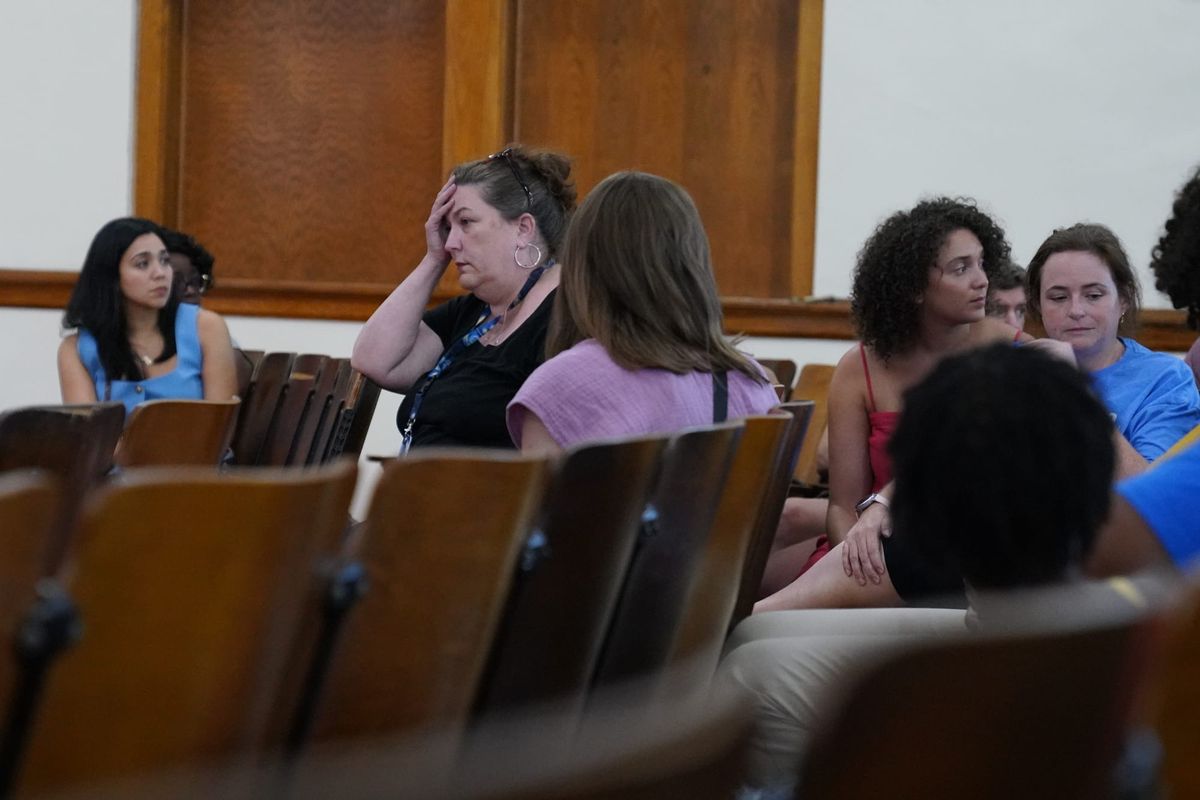
The closest thing to such preventive maintenance is the 2024 lengthy assessment of RPS’ buildings, which Anne Holton (6th District) brought up during the meeting. She also mentioned that the school is over 100 years old and the division is working on a tight budget.
 Victoria A. Ifatusin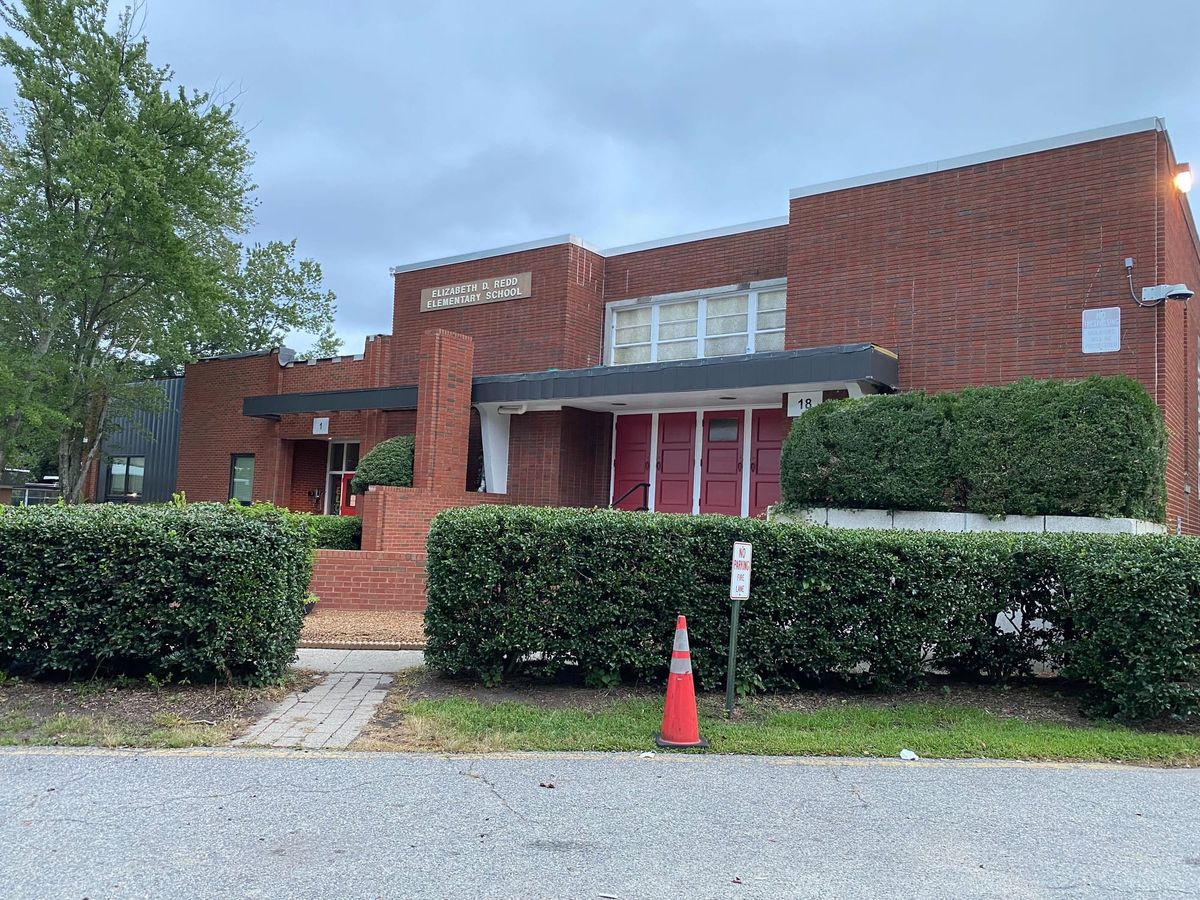
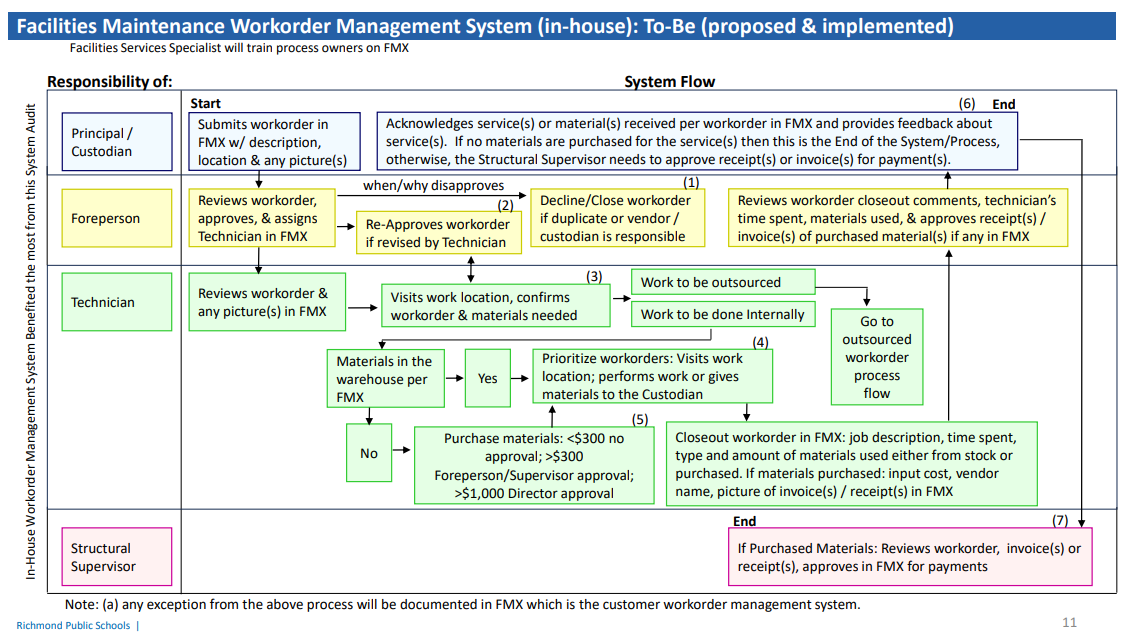
“What could a new facility maintenance work order management system working within the constraints of a very limited capital improvement budget (do)? What could have been different or would have been different?” she asked.
“If we had preventive maintenance, we would have known the situation at the school. We can actually prepare ourselves on how to handle it. It wouldn’t be a surprise,” he responded. “Not knowing is dangerous. Not knowing is – we are playing Russian roulette, God forbid something serious happens.”
The discussion from the audit also touched upon the division’s budget issues and the misconduct of Hathaway, the former director of the facilities department. The department is operating with a $5 million budget this school year.
Holton asked Ahmed about the scope of financial loss to RPS due to Hathaway’s actions, saying that there is some perception from the public that the division has lost “so many millions” as a result. Ahmed responded saying that he and the newly hired junior auditor – Justin Carr – is working to collect all invoices for the last three years from the finance department.
Carr will also be tasked with auditing the division’s Student Activity Fund for this school year, bringing the audit back in-house and saving the division $100,000 yearly.
“The idea of having sort of a fully staffed audit team seemed like some sort of distant fantasy,” said Board member Ali Faruk (3rd District). “And here we are, living the dream.”
Some of the findings listed in Ahmed’s audit were also discoveries internal investigators noted in their probe into Hathaway. He emphasized that the work order system that the department was working under allowed him to flourish without oversight, adding that the director is tasked with overseeing the department, not manually approving invoices and work orders.
“When you have a haphazard process, documentation doesn't exist,” he said. “The director was buying things, approving things, processing the invoices, no one else was involved … No one individual should do everything.”
As a result, Ahmed created a new work order management system that addressed the deficiencies, a system that employees have begun working under since June.
Ahmed said that the new system he is implementing would have prevented or made the misconduct of Hathaway “very difficult to do.”
He said he plans to revisit and audit that system after a few months to ensure that the revised process is working.
“It should be clean,” he said.
Ahmed also reviewed the process for work orders conducted by external contractors, found that system to be working well and simply fine tuned the process to include that a school’s principal or custodian acknowledges completion of the project from the work order.
Board member Emmett Jafari asked if the auditor would incorporate similar procedures in other departments.
“Foreseeably, there were losses and continued losses in all of these departments,” he said.
Ahmed said he plans to do so across the division, adding that the audits will help with public transparency, especially around RPS’ budget.
“Once they start seeing the reports, I believe they will see the actual implementation, actual improvements,” he said.
Contact Reporter Victoria A. Ifatusin at vifatusin@richmonder.org