After-school activity provider says group is facing a funding ‘cliff,’ asks for money from upcoming marijuana tax
When cannabis sales become legal in Virginia next July, Richmond and other localities will have the option to add a 1% to 3.5% tax to fund four priority areas – K-12 education, public health, economic opportunity and substance abuse and prevention.
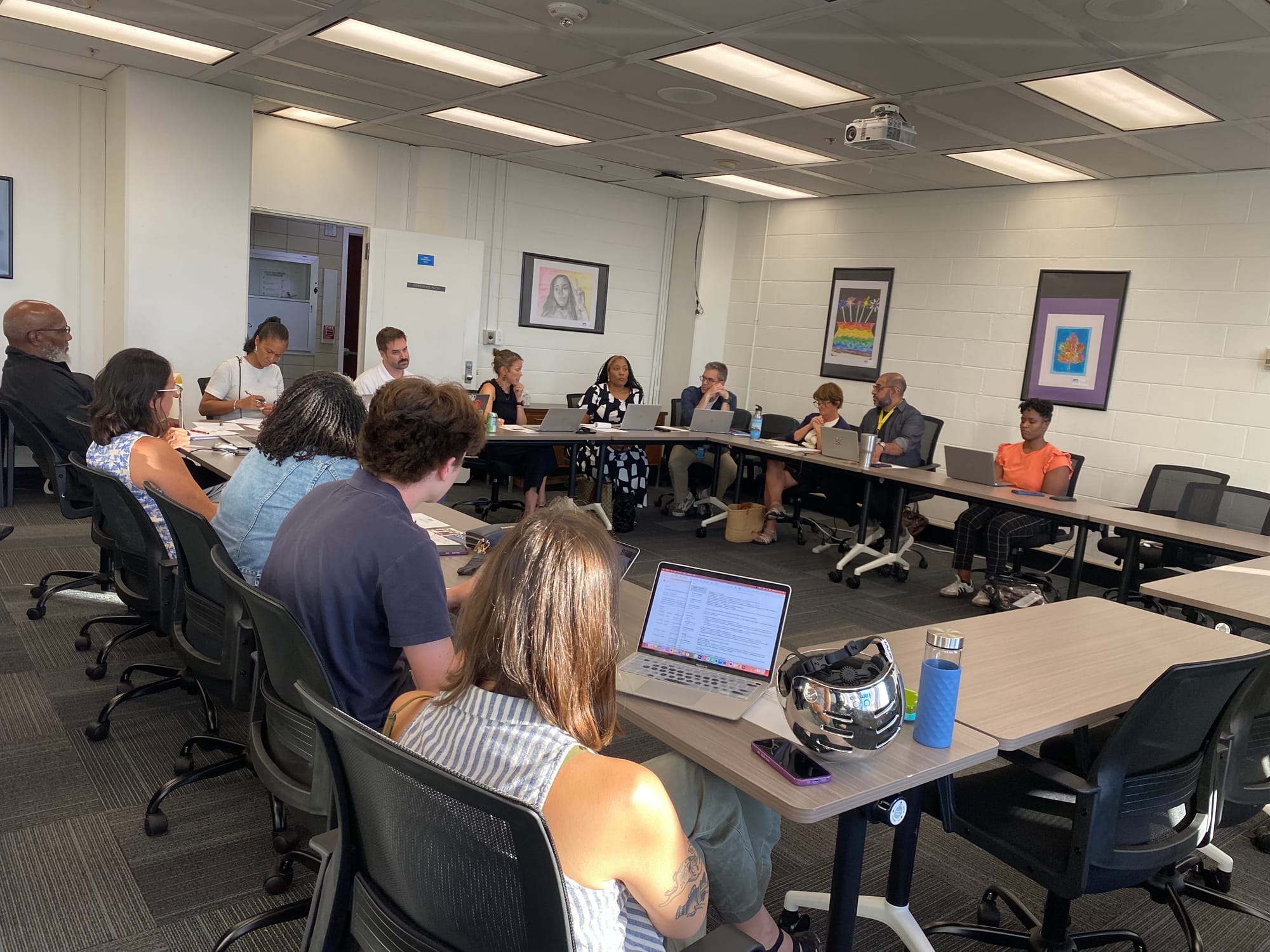
At a recent Richmond School Board Legislative Committee meeting, Traymanesha Lamy, CEO of out-of-school program provider NextUp, asked RPS to join the organization in advocating for that local tax to go towards after-school programming.
Lamy told members that after-school programming hits each of the priority buckets, and addresses a growing funding need.
The passage of the extra tax would ultimately require City Council approval, but RPS produces a legislative “wish list” each year ahead of budget deliberations.
Without local funds, the city could apply for funding from the state’s tax, which is estimated to initially produce roughly $10 million annually, said Matthew Stanley, senior policy and advocacy advisor for Richmond Public Schools. But that would put the city in competition with other jurisdictions that would also vie for the funds, Stanley added.
Lamy pointed to findings from a recent study conducted by the national nonprofit Afterschool Alliance as her reason in asking for the funds. The study showed that only one in five Greater Richmond students are in out-of-school programs, leaving more than 64,000 out.
“We have a large wait list. Programs fill up very, very quickly within the out-of-school time space,” Lamy told members, adding that families also face barriers like costs and transportation.
The gaps in access to out-of-school time programs are also present within pockets of the city’s East End and Southside, she told The Richmonder in an interview. She added that those gaps can only really be filled with funding.
While funding within the out-of-school space has increased, it has not kept up with the demand for programs, she told the RPS committee. NextUp operates on a $4.2 million budget, with 60% of it going towards programming from 177 organizations serving over 2,000 Richmond kids. Just last year, the organization received nearly 200 applications from youth program providers that asked for roughly $3 million, she said.
Lamy particularly painted a somewhat grim picture as it pertains to high school students in the city.
While programming exists for Richmond high schoolers, they are the most underserved in out-of-school time opportunities, she said. Lamy added that there’s a need for more slots for high school students, and it costs $1,800 per student to fund that, depending on the type of program.
“The need is astronomical,” she told The Richmonder.
Most of the existing after-school programs for high schools are funded by the 21st Century Community Learning Centers grant, she said, funding that comes from the federal government to the state and is funneled down to recipients. The grant has changed its requirements to prioritize applications that serve elementary school students, putting high school programs at risk. That change occurred sometime between 2023 and 2024.
“Those programs are on the verge of possibly being cut if their funding is not continued beyond this year,” she told board members. “There's a lot of programming shortfalls on the rise, and we don't want to hit a cliff and then not have enough programming funds.”
On the bright side, the number of after-school program slots needed for middle schoolers has decreased due to the organization’s Middle School Alliance – a collaboration between local youth organizations and the city to provide after school and summer programs in all seven Richmond Public middle schools.
Using funds from cannabis sales towards supporting youth is not a new concept, as states like California, Colorado, New Jersey and Alaska have done the same thing.
Lamy’s pitch seemed to reach the hearts of 1st and 2nd District School Board representatives Matthew Percival and Katie Ricard.
“I do love the point of – this is going to increase access, and so let's at least offer programming after school that will hopefully keep them busy and maybe wind up with an adult, wind up with a mentorship,” Ricard said.
But there were some initial concerns from School Board Chair Shavonda Fernandez (9th District), who believes that “schools shouldn’t be in the cannabis business.”
“I just want to make sure there's a line of delineation between how we're advocating for what's happening on the back end versus us promoting such efforts on the front end,” she told Lamy.
Lamy said she would argue that young people are typically exposed and impacted by substance abuse, making this a potentially valuable program.
“If there was an opportunity to take what's already going to happen and pour it into prevention and positive youth development so that our youth have positive spaces to be in and healthier environments with carrying adults … why not use the dollars towards youth that are actually potentially impacted in a negative way by flipping it and making it positive?”
Lamy told The Richmonder that the out-of-school time programs help keep students in school, have better grades, graduate and thus have careers. Not having access to these programs can stifle that progress, specifically for high schoolers.
“I am deeply, deeply disturbed, because that is our future, that's our future workforce,” she said.
Contact Reporter Victoria A. Ifatusin at vifatusin@richmonder.org