Coming to Scott’s Addition: Bike-ped paths and a little more green
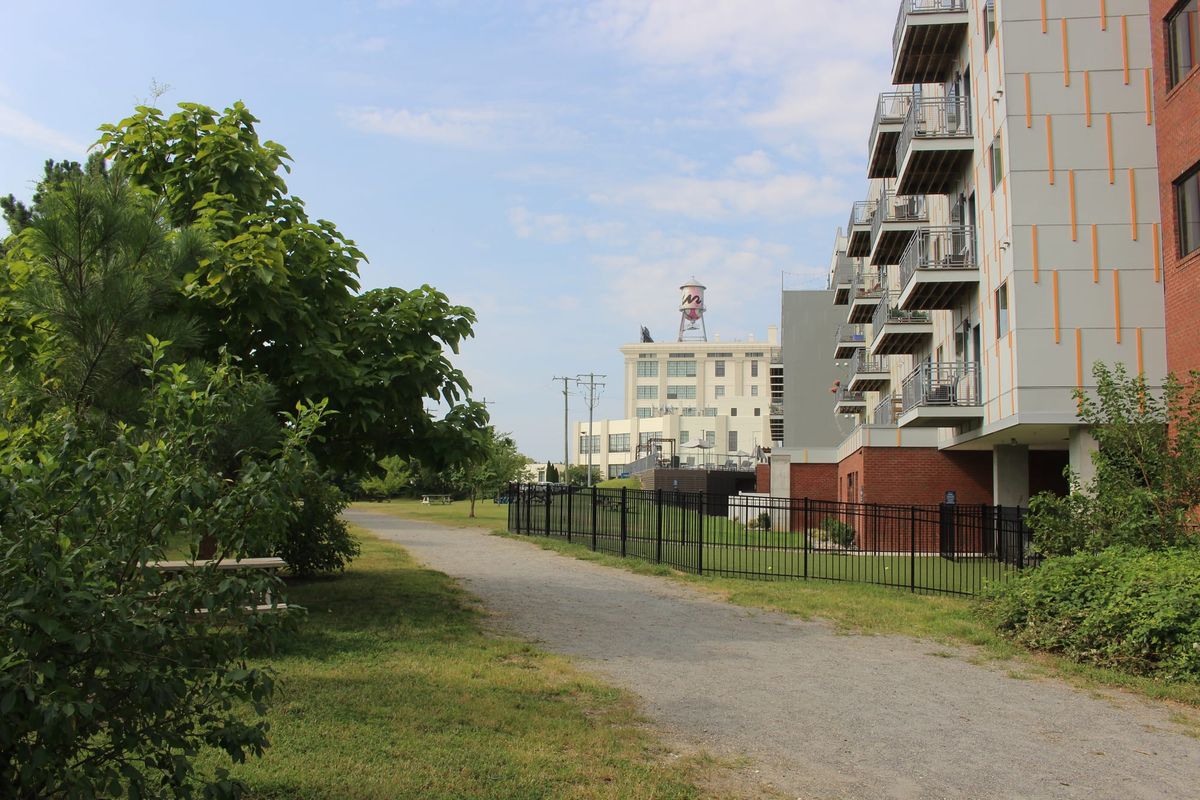
On an August Thursday, the temperature at the intersection of Norfolk and Belleville streets on the northeastern edge of Scott’s Addition is already steamy by 9 a.m. Among the collection of formerly industrial buildings that huddle nearby, there is little shade — save that of a willow oak that Jeremy Hoffman said is “probably among the biggest trees remaining in the neighborhood.”
“We were just 20 feet away, and it feels so much cooler right here,” said the climate scientist and president of the Greater Scott’s Addition Association.
For the past decade, Scott’s Addition has been all about building as developers have scrambled to convert old warehouses into trendy lofts and throw up multistory structures with shops and restaurants on the first floor and hundreds of apartments clustered above.
With that flood of construction has come a flood of people. From about 280 residents in 2010, the population more than tripled to 1,000 in 2017. No formal estimate exists for 2026, but Hoffman said that with around 4,000 apartments now packed into the neighborhood, there could be as many as 7,500 residents within Scott’s Addition.
Now, while building continues apace, some of the focus is shifting away from bricks and sticks to trees, paths and parks as residents and the city try to make one of Richmond’s concrete jungles a more livable place.
“We’re trying to catch up with infrastructure that is appropriate for the changing mixture of uses,” said Councilor Katherine Jordan, whose 2nd District includes Scott’s Addition.
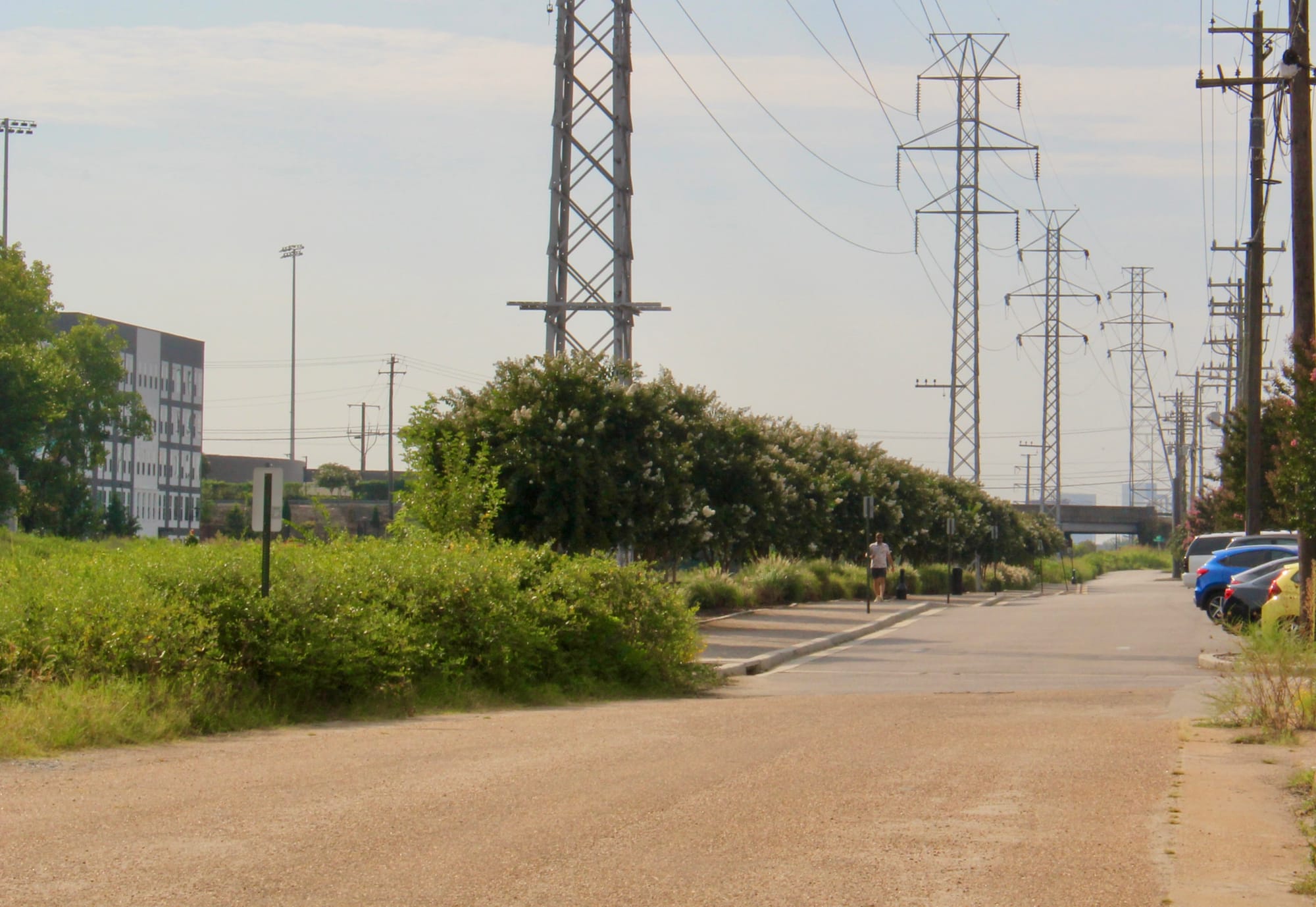
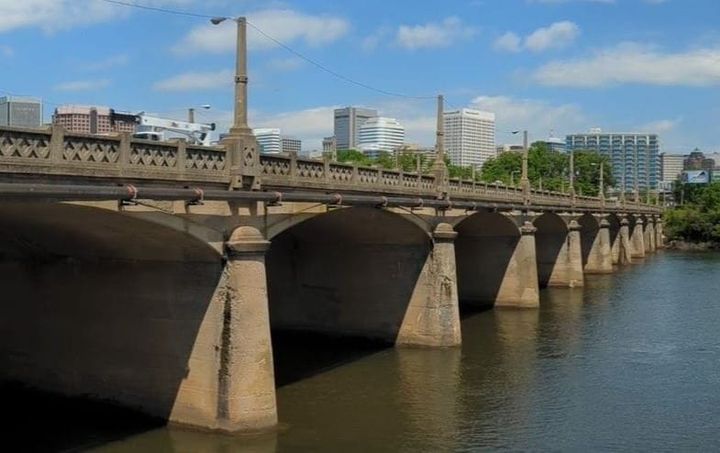
Earlier this month, the Planning Commission approved a new shared use path that will offer bikers and pedestrians a safer, dedicated connection from the Arthur Ashe Boulevard Bridge to the Pulse station at the Science Museum of Virginia. That path is expected to link to the Scott’s Addition Greenway, another planned corridor that will add greenery and a north-south bike-ped linkage along the neighborhood’s eastern edge. Some $18 million is also earmarked for streetscape improvements along West Clay Street.
And, thanks to a generous gift from local business owners Christie and Kevin Barry, the neighborhood is poised to get its first park — right at that hot corner of Norfolk and Belleville.
“We didn’t have public space to begin with,” said Hoffman. “It’s always been an industrial neighborhood, so it’s always been an uphill climb for us to bring back nature into the neighborhood. But every time we’ve done it, people have really liked it.”
Connecting Scott’s Addition for bikers and pedestrians
Despite its thousands of residents and walkability, Scott’s Addition has been at times a risky place for bikers and pedestrians to navigate.
Some blocks lacked sidewalks. Parked cars squeezed up to every intersection impeded visibility. And the long, straight roadways that made up its grid could encourage drivers to speed.
“In the existing condition, the Scotts Addition neighborhood is a high density area but lacks pedestrian and bike infrastructure and has a limited number of exits from the neighborhood with heavy traffic volumes,” the City Council wrote in a 2023 resolution supporting the creation of the Scott’s Addition Greenway.
To improve safety, the city’s Department of Public Works has been installing speed tables, bike lanes and more crosswalks and sidewalks.
“A well-connected street grid does not eliminate the need for safe, comfortable infrastructure for people walking and biking,” said Jensen Gavulic, a spokesperson for the Richmond Department of Transportation, which is housed within DPW. “The department continues to prioritize improvements to the built environment that make it safer and easier for people to walk, bike and use fare-free public transit.”
Two projects currently in the pipeline, however, could go a step further to add dedicated paths for walkers and bikers.
The Terminal Place shared use path would run from West Broad Street up the road between the Cookie Factory Lofts and Children’s Museum of Richmond, skirt the edge of Midtown Green, cross Leigh Street and loop through the Movieland parking lot to the Arthur Ashe Boulevard Bridge, where it will connect with the planned Scott’s Addition Greenway. The entire length will be paved, and construction is expected to start in summer 2028 and finish in fall 2029.
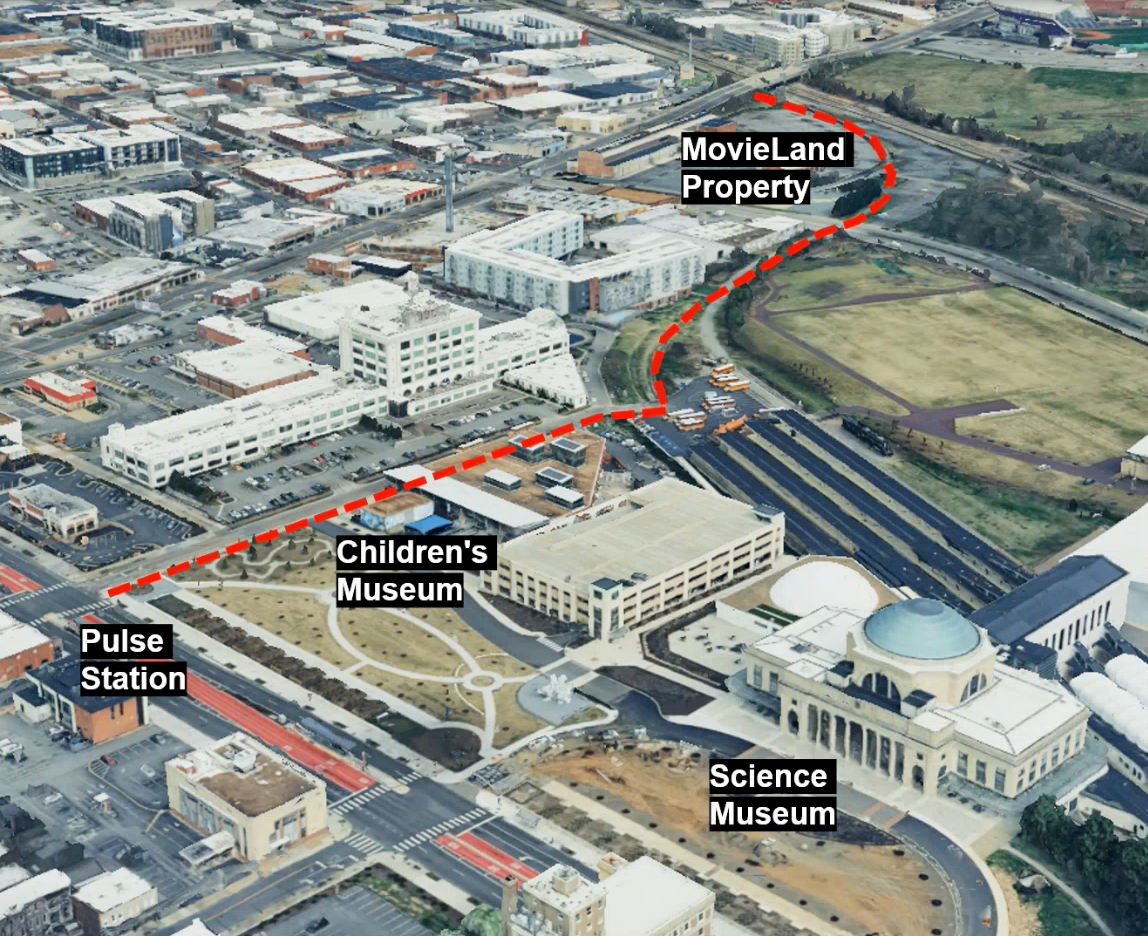
“This is actually a particularly important path shown on the master plan, because the intention is to connect the future Diamond District to the Pulse station on Broad Street via a protected pedestrian path,” planner Ray Roakes told the Urban Design Committee during a review of the plans Aug. 13.
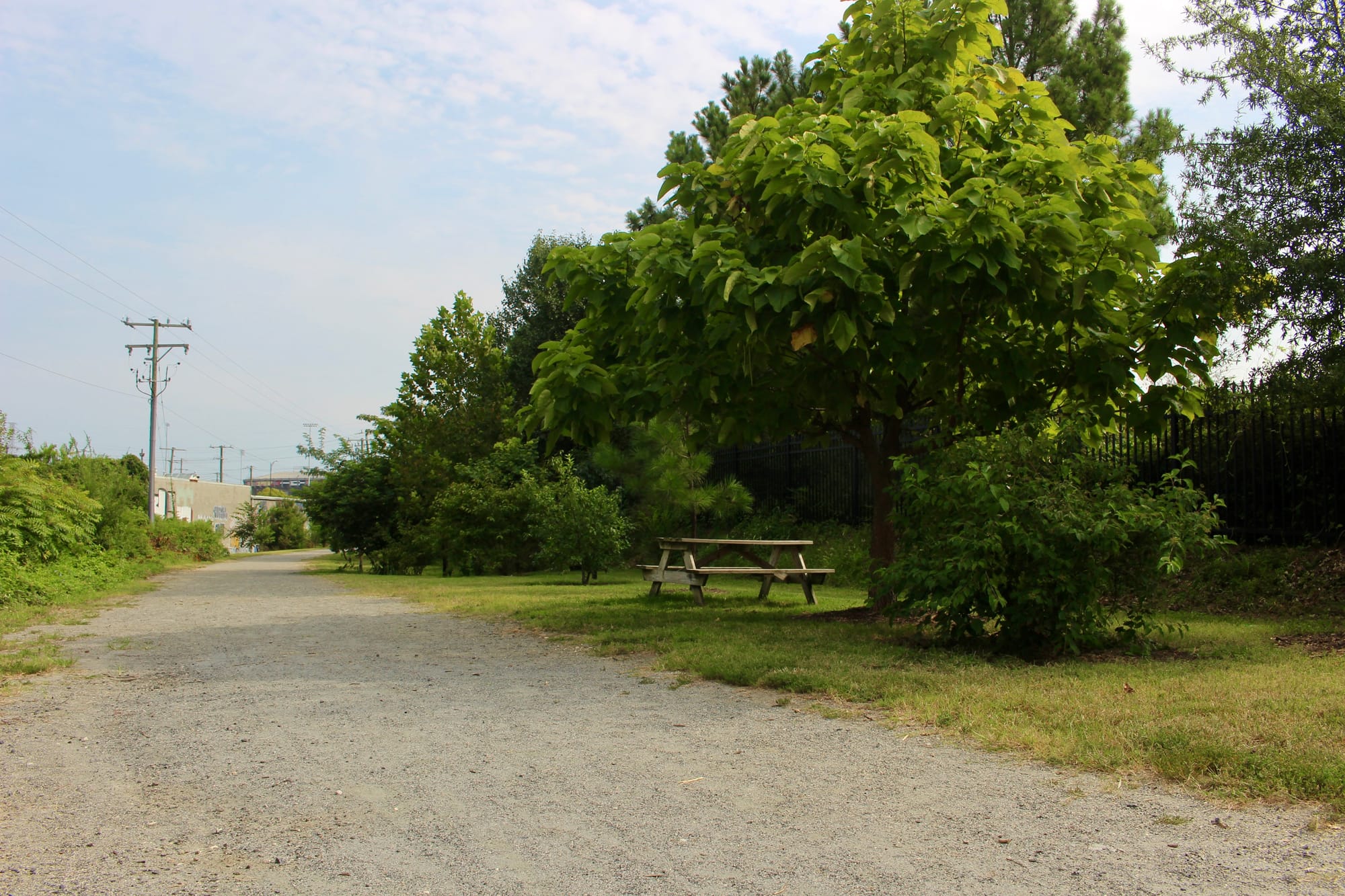
Significant sections of the path will be totally cut off from car traffic. Plans by engineering firm Kimley Horn call for part of the Terminal Place stretch to be shielded from the vehicle lanes by a landscaped 8-foot-wide buffer. At the Science Museum of Virginia parking lot, the route will follow an existing “Proto Path” planted with dozens of native trees and dotted with seating.
Where the path crosses the busy West Leigh Street, engineers have proposed narrowing the road from four vehicle travel lanes to just one in each direction, with landscaped islands and rectangular rapid flashing beacons to alert drivers.
“This is going to choke vehicles down so it requires them to travel at much slower speeds,” Kimley Horn engineer Alysa Baird told the UDC. “Because Leigh Street is kind of a sweeping curve here and people can kind of fly around the turn here.”
Keith Van Inwegen, a member of the committee, said he thought the design had “taken about all the precautions you can take” for pedestrian and bike safety. “Now it’s just up to everybody to look both ways and pay attention.”
Once across Leigh, the city hopes to acquire a permanent access easement across the Movieland parking lot to extend the path to the Arthur Ashe Boulevard Bridge, where it would eventually connect to the Scott’s Addition Greenway.
Initially, Roakes said the city had hoped to provide a separate bridge across the railroad tracks for pedestrians but determined it was “cost-prohibitive.”
“So the intent became to move them on the Arthur Ashe Bridge, which is why it’s so important to get that connection,” he said.
With the bridge also slated for a complete replacement, planners will have to fit together all of the sections of the corridor as each moves through the development process.
Within Scott’s Addition proper — compared to the Greater Scott’s Addition area, which also includes the neighborhoods directly across Arthur Ashe — the Greenway that will stretch along the railroad tracks roughly parallel to the incomplete Patton Avenue is also beginning to take shape in stages.
“Private sections have already been constructed from Summit Avenue to Mactavish Avenue and from Roseneath Road to Belleville Street,” said Gavulic in an email. “The section between Mactavish Avenue and Roseneath Road has been roughed in and is passable.”
However, she said, “because the Greenway is being delivered through several different projects, there is not a single construction timeline for the entire corridor. Some portions have been completed, some are under design, and others are approaching construction.”
Taken together, the two corridors are “extremely important projects,” said Hoffman. “People always want — we consistently hear this — safer places to walk, safer places to cycle, better infrastructure that separates people using active travel from people using car travel. … We’re going to see this really awesome transformation of how people get around when those projects are complete.”
Amid a growing neighborhood of dense construction, Jordan said the goal is to provide balance.
“We want people walking. We want people biking. We want people easily getting to the bus stop,” she said.
Longtime residents leave behind a park
Part of that balance is also adding green spaces — softening the edges of the concrete jungle, as it were.
Over the past few years, the Greater Scott’s Addition Association has experimented with small planted spaces in or around the neighborhood, including the Broad Street Pollinator Park where West Broad Street intersects with North Belmont Avenue, and the short-lived RoseMoore Pocket Park. A recent effort by nonprofit Groundwork RVA planted several dozen trees along Scott’s Addition streets.
For Hoffman, one of the co-authors of the groundbreaking 2019 study that found urban heat islands today roughly correspond to areas once redlined by the federal government, that work makes a critical difference. The Proto Path, he pointed out, is regularly 4 to 5 degrees cooler than other parts of the area.
“While we acknowledge these really big and grand projects that are really going to improve the livability and connectivity of our neighborhood, we also push for small-scale things that we can do on our own or with the assistance of local partners to really move that needle on the concrete jungle, to reduce the heat island effect as much as we can,” he said.
Still, with land in Scott’s Addition commanding sky-high prices, pockets of earth to plant can be scarce.
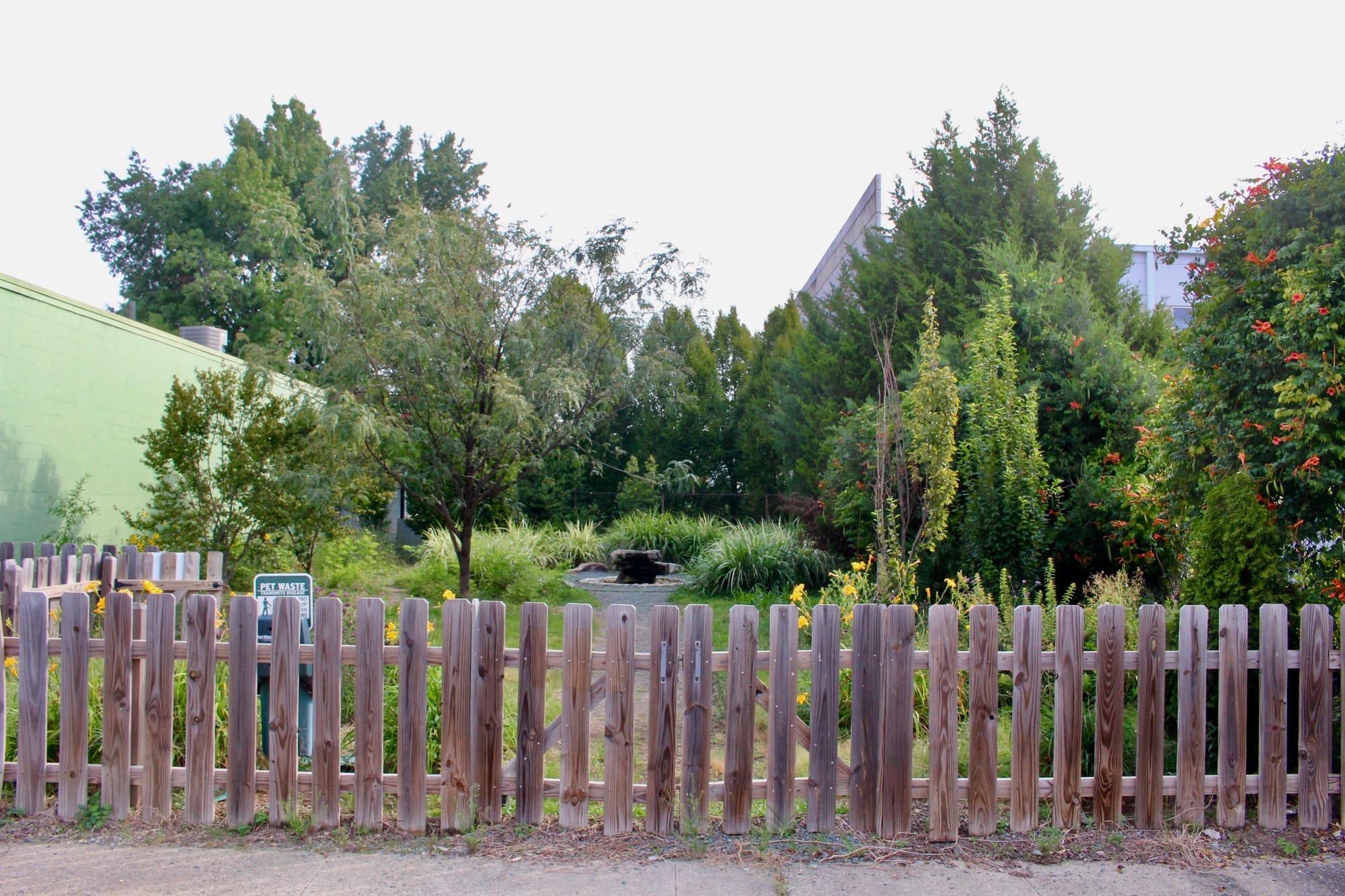
That’s why the decision by the Barrys to transfer their half-acre parcel on Norfolk Street to the Capital Region Land Conservancy for use as a public park was such a windfall for the city, said Hoffman.
Previously operated as Christie’s Fine Gardening & Creative Landscapes, the Norfolk Street lot is home to both a building, a planted garden, an old steel feature and some empty space. Although it is valued at almost $1.8 million, the Barrys agreed to transfer it to the conservancy for just $600,000.
“The Barrys understand the healing benefits that access to outdoor greenspaces have for us all and have devoted their work and now their land to providing these benefits to the community,” said Conservancy Executive Director Parker Agelasto this spring. “The addition of this half-acre, though small, is an important step in helping address the void of greenspace.”
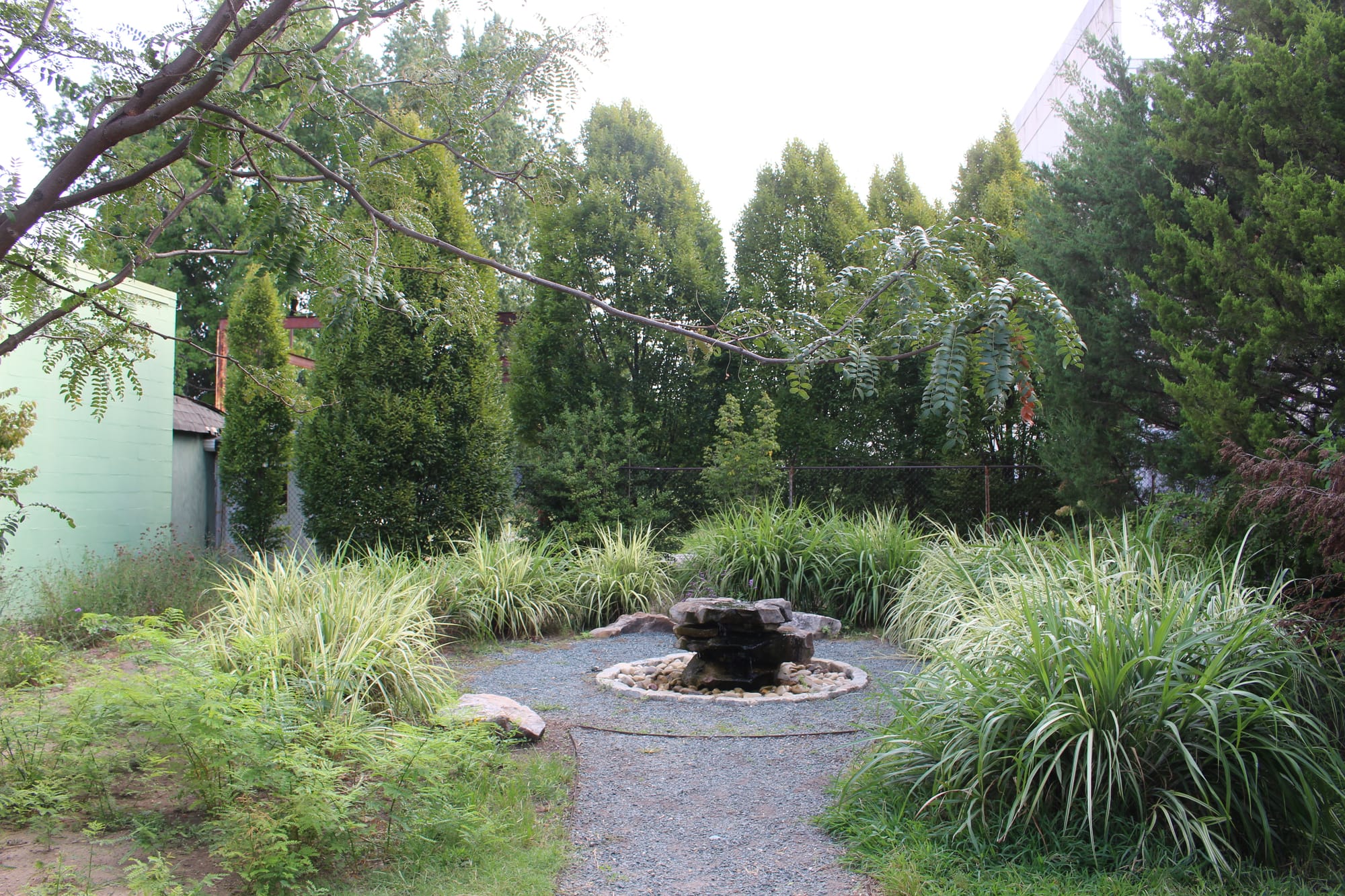
Not all of the money has been secured: Throughout the summer, the conservancy has been vigorously fundraising to fill the remaining gap, with a final Plant a Park Fest planned for Sept. 6. The Flying Squirrels devoted a portion of ticket sales this week to the project, and Hoffman said 26 businesses within Scott’s Addition had also made donations.
“It really takes working with your neighbors and the people that are residents, as well as the new residents, because we've added so many new people to our neighborhood, to keep talking about what is the vision for what we want to see,” he said.
Contact Reporter Sarah Vogelsong at svogelsong@richmonder.org