City says tax exemption program has led to creation or preservation of 300 housing units
Richmond officials said a program that reduces real estate tax bills for homeowners who rehabilitate their properties to add affordable housing has produced just under 300 affordable and market-rate units over the past five years.
“It’s not as many units as we would like to have, but it’s better than zero,” Michelle Brown Peters, Richmond’s deputy director of housing and community development, told a City Council committee Tuesday. “And some of those units were sitting vacant.”
Richmond’s Affordable Housing Partial Tax Exemption Program allows the owner of either a single- or multi-family residential property to get a partial tax exemption if they rehabilitate it to house individuals or families making up to 80% of the area median income.
In the Richmond metro area this year, that would apply to a one-person household making $63,600, a two-person household making $72,650 or four people making $90,800.
Properties have to be at least 20 years old to qualify, and the renovation that owners undertake must be “substantial,” defined as costing at least 20% of the property’s assessed value for buildings with one to four units and 40% of the value for buildings with five or more units.
Rehabilitations can also include market-rate units as long as at least 30% of them are set aside for households that meet the affordability limits.
“You have a vacant building that’s not contributing to the community,” Peters said. “You are going to renovate it or preserve it to provide housing, and you are creating additional opportunities for renters here in the city of Richmond.”
Over the past five years, four completed projects have produced 52 affordable and 117 market-rate units and have preserved 130 affordable units, according to the city.
An additional nine projects are also in the pipeline. All of the partial exemptions last 15 years as long as the owners verify annually that they meet the city’s criteria.
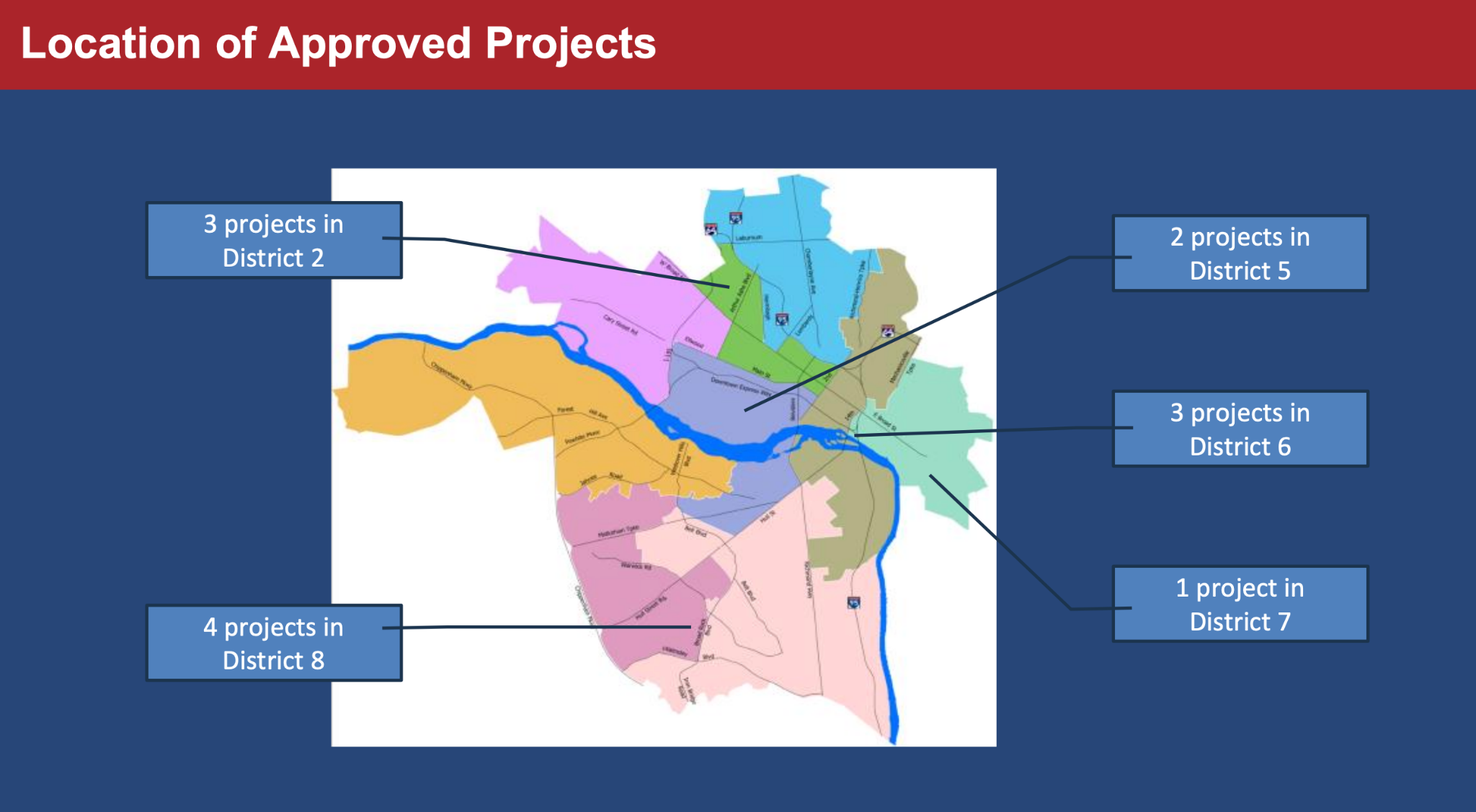
Peters said the market-rate units “have allowed us to have a positive revenue”: Although the tax exemptions have reduced what the city can collect by about $253,000, resulting property value increases have meant the program has produced $87,000 in revenues.
“We think the program is worth the while to continue,” she said.
Councilor Ellen Robertson (6th District) urged the city to “be more sensitive to affordability” as it evaluates the program going forward.
“A lot of single-family homeowners that have 80% income cannot afford a 20% increase in investment,” she said.
Richmond has experimented with various tax exemption and abatement programs over the past decade in an effort to both encourage the rehabilitation of blighted properties and increase housing stock.
An earlier, much more extensive tax abatement program was discontinued by the city in 2019 after a report from VCU found that it was largely being used in higher-income neighborhoods like those in the West End.
At that time, the City Council limited the program to those projects that reserved 30% of units for affordable housing.
On Tuesday, Peters said the city believes it needs “to do a better job of marketing the program” and aims to begin efforts to improve that outreach immediately.
Contact Reporter Sarah Vogelsong at svogelsong@richmonder.org. VCU is a sponsor of The Richmonder but was not allowed to influence or review this story.