City Council rejection of 21-townhouse plan linked to Virginia Home leaves Randolph site in limbo
Richmond’s City Council overwhelmingly rejected a plan that would have built 21 market-rate townhouses in the Randolph neighborhood, with some members and residents expressing hope that affordable housing could be constructed on the site instead.
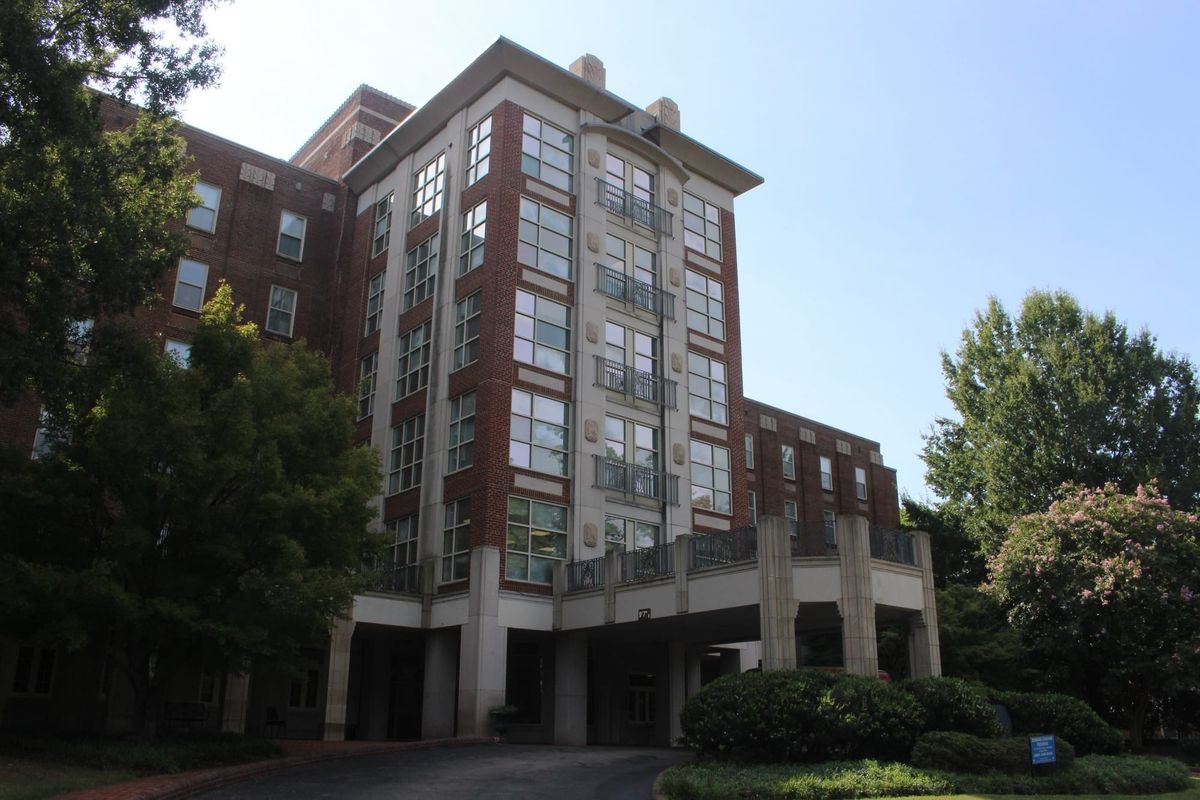
The property, which is vacant and covers the block of South Meadow Street between Winder and Blair streets, is owned by the Virginia Home, a nonprofit that for decades has run a residence for adults with permanent physical disabilities in a six-story facility a block away.
Now the Virginia Home is leaving. Last year, the organization broke ground on a new $128 million facility in Hanover County that will be able to house more residents and will provide better conditions such as semi-private bathrooms.
To help fund the construction, the Virginia Home is selling off its Richmond properties. This September, the City Council approved the redevelopment of the longtime care residence into apartments. But the townhome proposal proved far more controversial.
“This project would present an unbelievable problem for safety and parking,” Reid Carter, who has lived at the corner of South Meadow and Blair streets for some 30 years, told the council Tuesday.
Most of the concerns aired by opponents focused on worries that Randolph’s narrow streets cannot handle additional traffic or sometimes even emergency vehicles. And many were critical of the roughly half-million-dollar price tag that the homes were expected to be sold for — houses that Toni Mounce called “out of character with the area and way too expensive.”
“I can’t sit here and say that we’re building affordable housing. We’re not,” said Councilor Stephanie Lynch, whose 5th District includes Randolph.
Not all neighbors were against the project. Charlie Trochlil, a resident of nearby Powhatan Street, called the proposal “exactly the type of gentle density Richmond and Randolph need.”
“Increasingly as a result of Richmond’s housing shortage, the housing in Randolph is bought by investors and leased or demolished to build bigger,” he said. “If we cannot find opportunities for infill like this one, these trends will continue, which will threaten over time the affordability and character of our neighborhood.”
Would affordable housing come?
Lynch said conversations had been held with affordable developers like the Maggie Walker Community Land Trust and Commonwealth Catholic Charities, nonprofits active in the Richmond market, about the prospect of developing affordable units on the site instead.
But, she told the council, “the parcel was out for open bid for months, and none of those affordable housing nonprofits applied. And some of them have expressed that they’re not interested in applying if it goes back on the market again.”
Councilor Andrew Breton (1st District) cautioned that “people may be holding out for another project that may never come.”
Because the Virginia Home owns the South Meadow property, “we don’t get to pick what goes on this parcel,” he continued. “All we get to do is vote yes or no on specific things that come.”
Lynch warned several times that under the state’s new Faith in Housing legislation — a measure also known as Yes In God’s Backyard, or YIGBY — the Virginia Home would have the right to develop affordable housing on the site without any public input on what it looked like and only minimal guardrails from the Planning Department.
“If they shoot this down, they can and they likely will build a 40-, maybe 50-unit multifamily complex with no parking,” she said. Later she added, “Unless it comes in the form of that Faith in Housing bill, and unless it is a multifamily development, affordable housing going on that parcel is probably not going to happen because we don’t control that parcel. Virginia Home does.”
Still, Councilor Kenya Gibson (3rd District) said residents “would rather see some affordable housing come. And I think that at the end of the day, we are tasked to make a decision about what’s on the table right now.”
“If what comes down the road as a result of this means that there are state laws that kind of fly in the face of common sense and the community, then it is our duty as a body to lift that up as an example,” she said.
The Virginia Home did not respond to two requests for comment on the Tuesday vote or on its plans for the South Meadow property.
Developer’s reductions still deemed too much density
Both the current zoning for the block and proposed zoning under the code refresh would allow the construction of eight single family detached homes as well as an accessory dwelling unit on each, for a potential maximum of 16 units.
While Audeo Partners, the developer chosen by the Virginia Home, had initially proposed 31 attached homes arranged around a central alleyway, that plan was scaled back to 21 homes in response to neighbor concerns. Of those, 15 would have faced South Meadow, with three fronting on Winder Street and three on Blair Street. ADUs likely could also have been built on lots as long as they met other zoning requirements like setbacks. Thirty-two parking spaces would have been provided on the site.
The developer also pledged to plant 15 new street trees and said it intended to construct underground stormwater detention infrastructure to reduce flooding, one concern raised by neighbors.
Walter Parks, the architect on the project, argued the layout would be very similar to what is found on the 1100 and 1200 blocks of South Meadow, which both contain 12 homes, many of them attached.
“When you drive down the street, we will have the same sort of density. That’s how it will appear,” he said.
Opponents disagreed: “We do not want 21 houses to be put on a block that is zoned for eight houses,” said Lynn Burris, a resident of Eggleston Street several blocks away.
Councilors were persuaded by those objections. Eight voted down the project, with only Councilor Ellen Robertson (6th District) in favor of granting the permit.
“There are cases where you can advocate for the project instead and say, ‘This is a good project. Not everyone’s happy, but it’s a good project,’” said Breton. “Unfortunately, I’m not hearing that level of endorsement. I’m hearing a level of a lot of concerns that don’t meet the threshold of granting an exception over the objections of the community.”
Some residents told The Richmonder they had intended to speak in favor of the project virtually Tuesday but had not had the chance because Council President Cynthia Newbille never opened a virtual public hearing for those in support. City Clerk Candice Reid said no one in support had previously submitted a request to speak virtually — a requirement the City Council has imposed.
“Participants who had not requested time in advance were not recognized to speak, regardless of their position on the item,” said Reid.
While the City Council frequently amends special use permits — often significantly — that come before it, its Tuesday decision marks only the seventh denial of an SUP out of more than 500 it has considered since the start of 2021.
 Sarah Vogelsong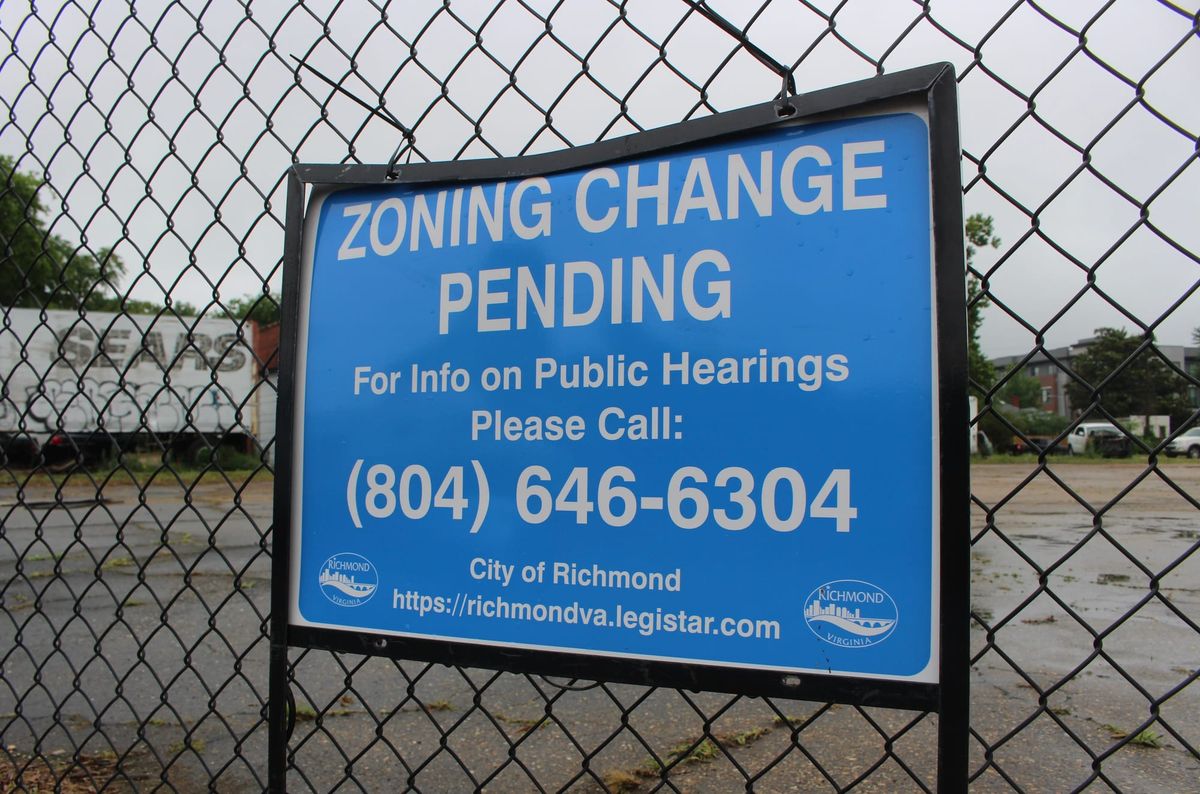
Contact Reporter Sarah Vogelsong at svogelsong@richmonder.org