The Richmonder 25: Shawntee Wynn stands by victims of domestic violence
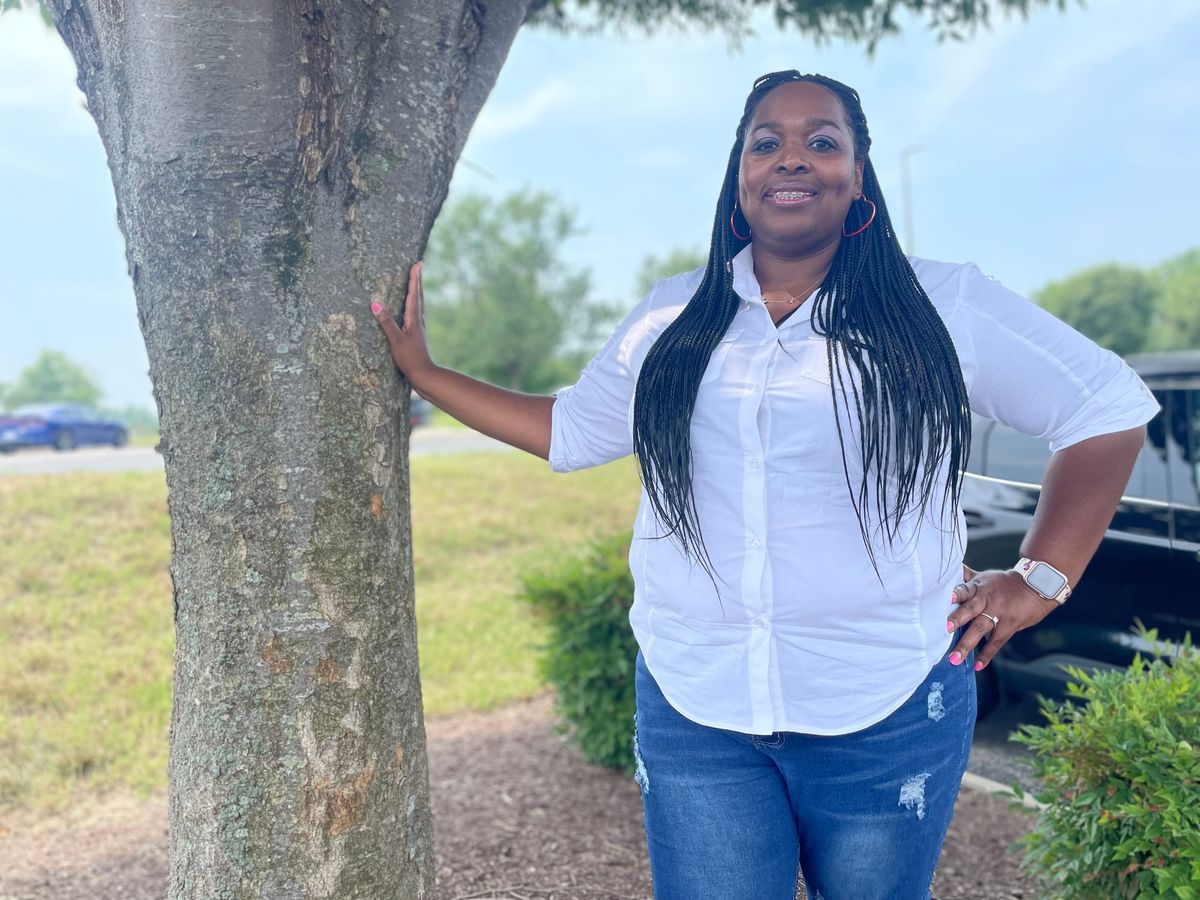

Shawntee Wynn met countless times with survivors of domestic and sexual violence throughout her 18 years with the Young Women’s Christian Association, but she never forgot her first case.
The woman lying in the hospital bed had been physically and sexually assaulted. She was homeless and virtually alone in the world.
Wynn walked into that hospital room nearly 20 years ago not knowing what she’d find. She found heartbreak — a woman facing perhaps the most challenging moments of her life.
Wynn, a young counselor not far removed from her postgraduate studies at VCU, was overwhelmed by the challenge in front of her that day.
She paused. Collected herself and took a deep breath to consider the moment. Then, like a light switching on, she went to work.
*****
That work became her life. Wynn was in her 20s when she first volunteered at the YWCA. which provides services for needy women, children and families throughout the Greater Richmond area. Less than five years after being hired as a counselor, she became a director and then a senior director, in charge of her own team and helping craft the organization’s programs.
Sometimes she sat overnight at an area hospital with victims of violence, then went straight to work for a long shift. Other times she helped suicidal individuals who had called the organization’s hotline, and convinced them to seek help. She has secured funding for marginalized women, pushed for long-term housing and served as an advocate for people dealing with trauma, who perhaps wouldn’t have had one otherwise.
After briefly pursuing a career in physical therapy, a passion since childhood, Wynn began making contacts in the counseling world. They led to the social services office on North 5th Street in Richmond.
“It felt like home,” Wynn recalled in a recent interview. She thought back to her volunteer days. “I said, ‘I’m just going to go learn more and see where it takes me.’ I didn’t know it would lead to a job. It was just my meant-to-be path.”
*****
Her path led to women in crisis. Sometimes, she helped them through grueling moments and never heard from them again. Other times, she developed long-term relationships with those she served.
“We’ve seen people start careers and do really well,” Wynn said, “We’ve seen people come back because the cycle [of abuse] has continued, but we always continue to say, ‘OK, you’re back here and we can help.’ And we know with the cycle of domestic violence, it takes a person on average seven times to leave an abusive situation. And then we know that survivors of sexual assault, it’s such a traumatic experience that the stages [they go through], it’s a process. So just being patient around that and understanding — that’s always important when it comes to helping people.”
One of the highlights of her career is a project called The Heights, a planned complex in Henrico County of 19 one-, two- and three-bedroom apartments billed by the YWCA as “a first-of-its-kind model community in the Commonwealth of Virginia” for survivors of sexual abuse and domestic violence.
It’s a place, Wynn said, that will offer single women and families privacy and stable housing, where they can have access on site to counseling, legal advocacy and case management.
For years, Wynn pushed the idea of additional housing beyond the YWCA’s emergency shelter.
Now, her dream is becoming reality.
“Back in the day, we had one house on Chamberlayne Avenue on the edge of Chesterfield,” Wynn said. “And so you’re talking sharing bedrooms and families in one room. And the chaos of that — you don’t want to pack people in that kind of space with a lot of trauma. You do the best you can, and we knew that then. But we realized we needed something different.”
One goal of the community is to provide longer-term housing.
“What you learn is people need more time,” Wynn said. “If all my documents have been destroyed, if I’ve got to figure out childcare, I’m not gonna do those things in 30 days. Not going to happen. So being able to support people for longer periods, whether that’s 90 days, six months, a little bit longer.”
*****
Julie Samitt sat in her office at the YWCA, and she was frustrated. She wasn’t happy with some of the duties the organization was placing on its clinicians. Samitt, who occupied several roles at the YWCA, including clinician alongside and then under Wynn as part of a roughly 15-year career there, needed someone to talk with.
Wynn walked in and sat down beside her.
“When I’m upset, that’s not an easy place to be — beside me,” said Samitt, who now is clinical director at CEDAR, a firm she co-founded that helps individuals receive anxiety and eating disorder treatment. “With her calm and humor, it just got me to the other side of it, where it helped me realize that [issue] was something I had to accept.”
For Samitt, that interaction typifies Wynn’s ability to empathize with others.
“She could just get on anybody’s level and put her full self into it. … The ability to connect and to care, so much so that in that moment she set aside whatever she was doing to sit down with me. You know, that was not on her agenda for the day,” Samitt said.
Another of Wynn’s former colleagues, Dershawn Jefferson, describes Wynn the same way. She recalled times Wynn offered support at work and help her provide for clients.
“She’s just remarkable as a human,” Jefferson said. “Shawntee — and I say this to my mom and friends of mine — she’s one of the nicest people I’ve ever met in my life. Really pure and authentic.”
*****
The cases — from women who have been physically and sexually assaulted, individuals who are suicidal or seeking to leave an abusive relationship — often arrive to the YWCA through its 24-hour hotline, which serves the Greater Richmond area.
The stories often are dark, full of desperation and despair. And they may signal just the beginning of a long process, not only for those seeking help, but for social workers like Wynn, who after becoming a senior director with a pile of duties still managed to keep a list of clients through the years.
Clinicians are tasked with finding immediate solutions for those in need while dealing with their own emotions. The job is demanding, and it can take its toll.
“It’s a privilege and it’s a lot,” Jefferson, a clinician who worked at the YWCA from 2012 until this year, said. “Some of us have had our own traumas while dealing with people who have had their own traumas. There’s a lot of talk now about work-life balance. It’s very difficult to do in crisis work when you’re prioritizing clients.”
Wynn, who is a victim of childhood sexual abuse, always made sure her team members took time out for themselves.
At one point early in her career, she sought advice from a colleague. “I told her, ‘My nerves are shot all the time,’” Wynn said.
The colleague provided advice Wynn carries to this day.
“She said, ‘You know what helps me? If I get called [to a case], I take it as it’s meant for me to be there,’” Wynn recalled. “That was so powerful for me.”
Then, while telling that story, Wynn paused and nodded.
“It’s meant for me to be here,” she added.
*****
Her work at the YWCA is finished. Wynn recently left the organization — a decision she called “difficult but necessary” — and is unsure what’s next in her career.
But she left her mark on the YWCA, her clients and colleagues.
“She has such an extraordinary gift for not only nurturing but leading people,” Samitt said. “She could just get on anyone’s level. … I’ve just seen her as a model and a beacon of hope.”
Wynn never had all the answers for her clients. She couldn’t magically transform their lives. But she did have the ability to help in the moment, she said. And in the moment, she gave all she had.
Like when the homeless woman in the hospital — the one who represented Wynn’s first case — needed someone by her side. I’m here, I’m able to support, Wynn told herself as she walked into that room.
The woman was in so much pain she could barely speak. Wynn offered soothing words. She wiped tears from the woman’s eyes. She developed a plan to secure help.
Over a span of weeks, Wynn watched as the woman attended group therapy sessions. She was beginning to heal physically; the emotional recovery would take much longer. Wynn connected her with resources for the challenging months to come. And then, as quickly as she’d arrived in Wynn’s life, the woman was gone.
“I always wondered what happened to her,” Wynn said. “But I felt good about being the person who was there.”
Series sponsor:

Proud to call Richmond home, Estes is driven by people who go the extra mile — every day, for every customer. As the nation’s largest privately held freight carrier and a Richmond Top Workplace, we’re always looking for great people to join our team.