Richmond officials roll out ‘trust policy’ to boost protection for immigrants
Since President Donald Trump first took office in early 2017, Richmond officials have characterized Virginia’s capital city as a place that welcomes immigrants.
Now, Mayor Danny Avula and the Richmond City Council are enacting a formal set of rules aiming to put those values into practice.
Broadly, Richmond’s new “trust policy” says the city won’t discriminate based on citizenship status when it comes to providing local services and won’t collect or share immigration-related data about its residents, except when necessary to comply with the law or rules for federally funded programs.
The policy states that the Richmond Police Department won’t question anyone about their immigration status and won’t cooperate with “civil administrative immigration enforcement.” Police officers will only ask for identification documents “for the purpose of establishing a person’s identity,” and failure to provide ID won’t be treated as a criminal offense unless someone gives a false identity.
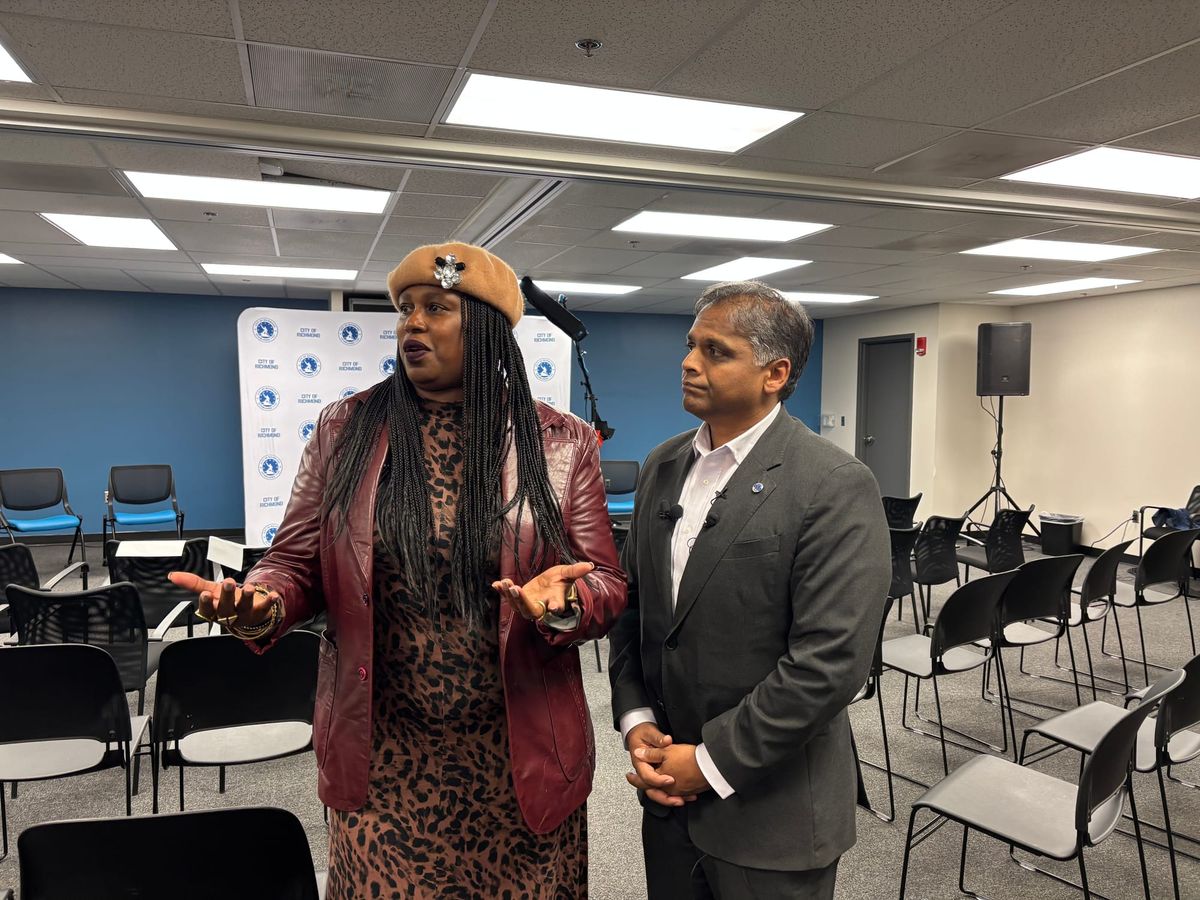
At a news conference Monday at the city’s Southside Community Services Center, Avula said the policy is about making sure every Richmonder can access government services “without fear,” making it clear that city resources won’t be used for federal immigration enforcement and ensuring city employees “understand their responsibilities.”
“It’s about sending a clear message to our immigrant neighbors that you are a part of this community and that your local government is here to serve you,” Avula said.
As someone born in India who came to America at a young age, Avula said the issue is “really personal” to him.
“My early years in this country were filled with experiences where I didn't feel welcomed, or I was outright mocked or misunderstood or just made constantly othered,” Avula said. “So much so that those early experiences in my life resulted in me actively running away from my Indian heritage and rejecting anything that highlighted the ways that I did not fit in.”
In adulthood, the mayor said, he’s come to “appreciate the value and beauty of my culture” and “the ways that my heritage and that of all of our residents contribute to the beauty and the diversity of our society.”
According to 2025 U.S. Census estimates, residents who identify as Hispanic or Latino now make up roughly 10.7% of Richmond’s population.
The trust policy resulted from a joint effort by Avula, the City Council and advocacy groups and citizen activists that have pushed for more official pro-immigrant policy against the backdrop of Trump’s second-term crackdown on undocumented communities. Last month, the Council passed a resolution supporting the creation of the trust policy.
Councilor Nicole Jones, a New York native who now represents Southside’s 9th District, said she too knows what it’s like to be a newcomer.
“I moved to Richmond in the ’90s and built my life here from the ground up. I know what it is to find your footing in a new place, to figure out who you can trust and where you belong,” Jones said. “And I know the difference it makes when a community makes room for you.”
Carolina Luna — who came to Richmond from Guatemala in 2003, became a citizen in 2017 and now serves as an organizer with the Latinx Hispanic Civic Association — said many immigrants are “always scared right now.”
“They worry that simply asking for help could put everything at risk,” Luna said.
Richmond hasn’t been targeted with the same kind of large-scale federal presence some bigger cities have seen since Trump regained the White House partly on promises of stricter immigration enforcement. When ICE activity was at its peak across the country, Avula said, Richmond officials saw “a precipitous decrease in 911 calls and people coming to access services.”
“I think we've kind of seen that plateau over the last, I don't know, six months,” Avula told reporters after Monday’s announcement. “But the fact remains that people are concerned.”
The mayor said frontline city employees will be trained on the new policy, which he expects to be fully implemented by the end of the year. The policy says no city resources can be used to help with civil immigration enforcement and states federal immigration authorities cannot access any city building or property without proper legal authorization. Part of the training, Avula said, will focus on what city employees should do if federal authorities show up.
“The answer to that is in our trust policy we've outlined that the Richmond Police Department would come and verify whether they're there legitimately or not,” Avula said.
The new policy doesn’t apply to the office of Richmond Sheriff Antionette V. Irving, who oversees the city jail, where ICE agents occasionally try to pick up undocumented immigrants arrested on local charges. As a constitutional officer elected to office on her own, the mayor doesn’t have authority over the sheriff. Irving didn’t attend Monday’s press event.
The policy says the city will request yearly information from the sheriff about contact with immigration officials “for transparency and informational purposes.” Avula indicated he could not yet say whether Irving intends to provide that information when asked.
“I’ve not really heard anything from her on it,” Avula told reporters.
The new policy also says the city won’t disclose any “personally identifiable information” that could be used to help with immigration enforcement. It specifies the confidentiality rule doesn’t supersede public-records transparency required by the Virginia Freedom of Information Act.
Avula said the policy largely codifies the city’s existing practices, while also sending a signal to city employees about how they’re expected to interact with immigrant communities.
“We've heard from residents not necessarily that people are asking for information or storing or sharing information that they shouldn't,” Avula said. “But that they're just not feeling welcomed or that they're not feeling like the frontline city staff necessarily are making that extra effort.”
Contact Reporter Graham Moomaw at gmoomaw@richmonder.org