Richmond Free Press donates 34-year archive to city library ahead of building sale
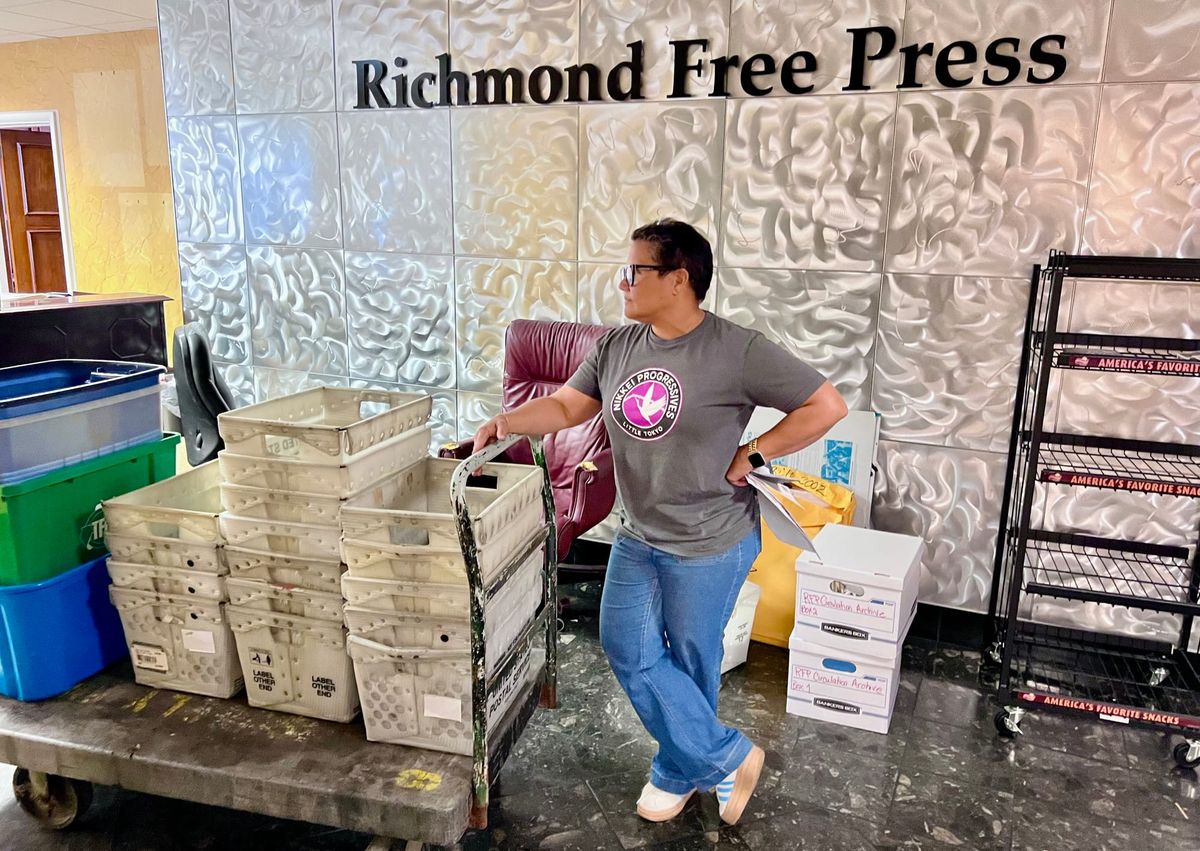
The Richmond Free Press donated its 34-year archive to the Richmond Public Library, transferring hundreds of boxes of files, photographs and back issues ahead of the sale of its downtown building this week.
The collection, which documents decades of life in Richmond from the perspective of the city’s Black community, will be preserved and made accessible to the public.
Richmond Public Library staff called it one of the most important collections documenting African American history in the city.
“We want kids who have to do a paper on a significant figure from Richmond’s history to come here and look through the newspaper’s personality files,” said Ben Himmelfarb, the manager of library and community services at the library’s main branch. “Or someone whose parents owned a business and, maybe they advertised with the Free Press, can find the graphics and other materials they used over the years.”
 Victoria A. Ifatusin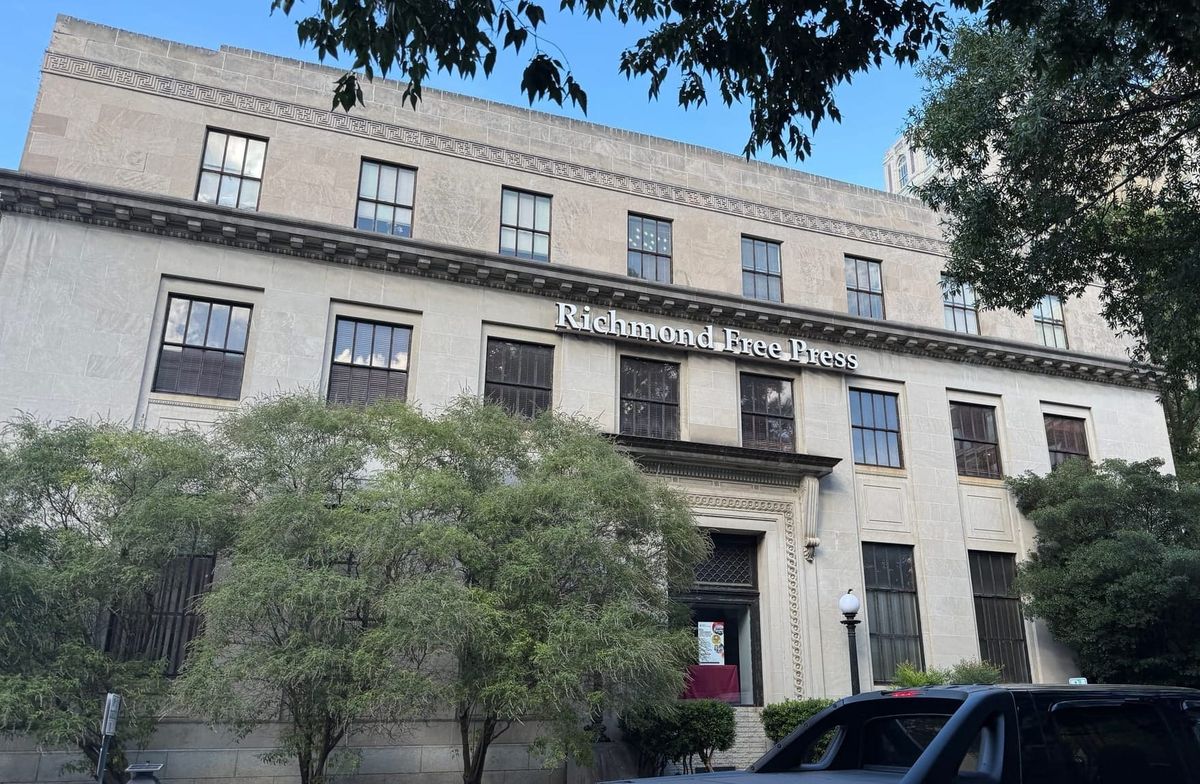
The Free Press closed earlier this year, publishing its last issue in February. Jean Boone, the paper’s former publisher, said she is thrilled to pass the materials on to the library, calling it an opportunity to continue the paper’s legacy of making information open and accessible to the community.
“It’s very much in keeping with our mission,” she said.
The donation includes bound back issues, a complete photo archive and production notes for each issue, which range from drafts of future front pages covered in handwritten editing notes to the plates and transparencies used to commit each week’s edition to print.
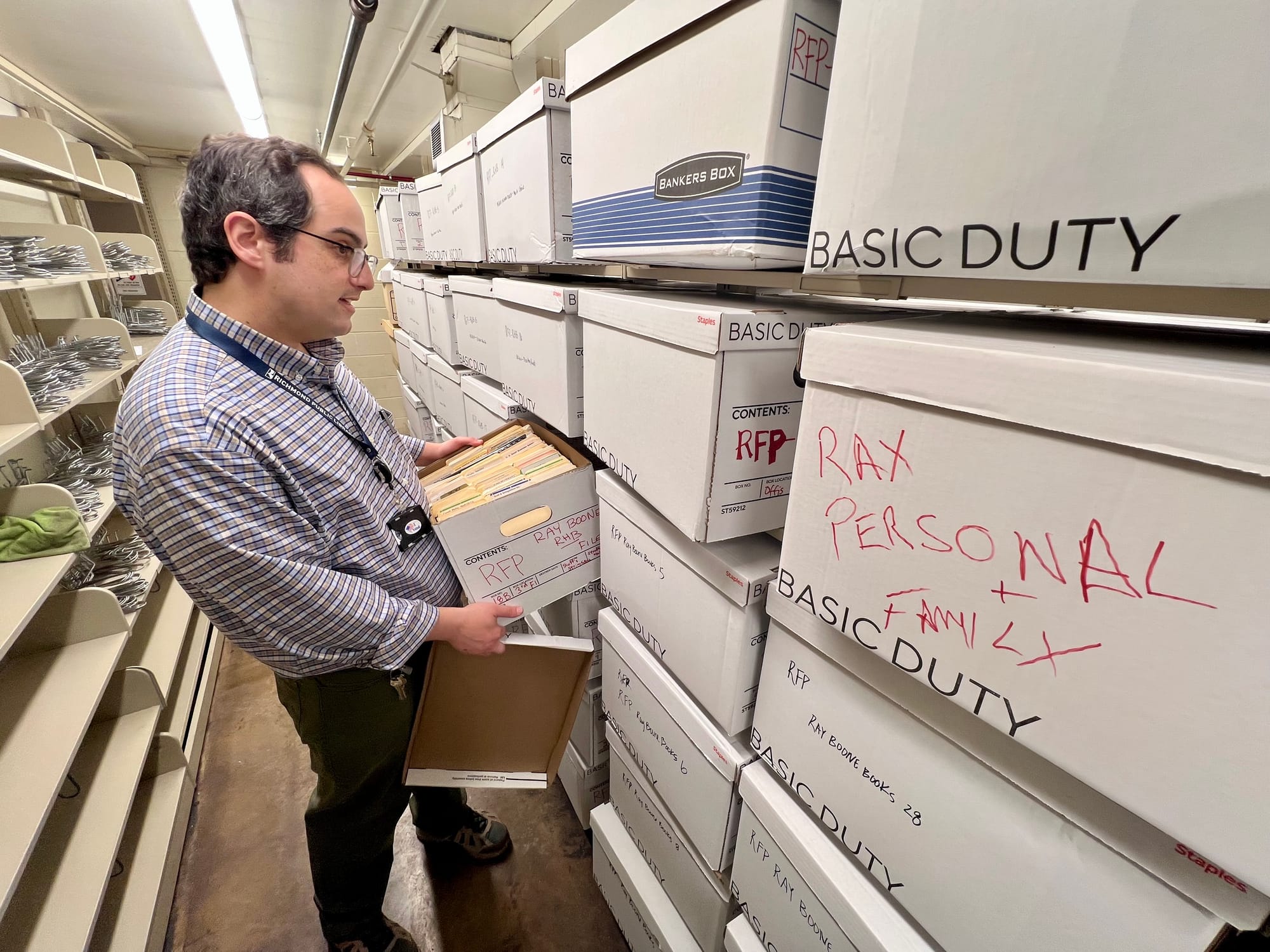
Boone also donated the personal files and library of her late husband, Raymond Boone, who founded the Free Press. The files are extensive and include meticulously organized folders on subjects and people of local interest — a mix of newspaper clippings, reports, documents, letters and personal notes.
Raymond Boone founded the Free Press in 1992 with the mission of covering stories important to the Black community that the white-owned press ignored. He was a crusading journalist who openly challenged the political and business establishment when he felt it was in the interest of his readers, including, famously, inviting Occupy Richmond protesters to camp in his yard in 2011 when his neighbor, then-Mayor Dwight Jones, evicted the group from Kanawha Plaza.
Library staff called his papers a treasure trove for historians and researchers. They said they are still developing plans to catalog and eventually begin digitizing the materials, which now sit in long rows of white bankers boxes in the basement storage facility of the library’s main branch downtown. Himmelfarb said that, until then, the library will attempt to accommodate requests for access to the materials.
A bittersweet farewell
With the archives squared away, Boone spent the last week alongside her daughter, Regina, and a handful of longtime newspaper staffers, triaging the rest of the newspaper’s belongings ahead of a planned building sale, which Boone said she expected to close Friday.
The newspaper had listed the three-story Imperial Building at the corner of Franklin and Fifth streets for $2.8 million. Because the sale is not final, she declined to name the potential buyer or discuss other details of the transaction.
To help clear the building’s contents, Regina Boone put out an open call for people and organizations to come by the building and see if there was anything they could use. Raymond Boone’s former desk went to one-time City Council member Parker Agelasto, whom Regina Boone said her father was fond of. A room’s worth of desks went to Richmond Public Schools. And, in a nod to the practical, a huge cache of back issues was delivered to the SPCA to line kennels.
Boone said the steady flow of people, many former readers, friends and acquaintances, gave the week the feeling of an extended wake. “For me personally, this has been like going through my dad’s death again,” she said as she sat among boxes of documents, many of which bore Raymond Boone’s long, looped cursive.
But Regina, a longtime newspaper photographer, emphasized that she did not view it as a sad moment and was leaving the building with her head held high – a sentiment her mom said she wholeheartedly shared.
“Be happy we documented what we did, pushed for change, wrote, showed up every week,” she said. “It’s OK to rest. It’s OK to stop. It’s OK to tie a bow around this.”
Contact Reporter Ned Oliver at noliver@richmonder.org